
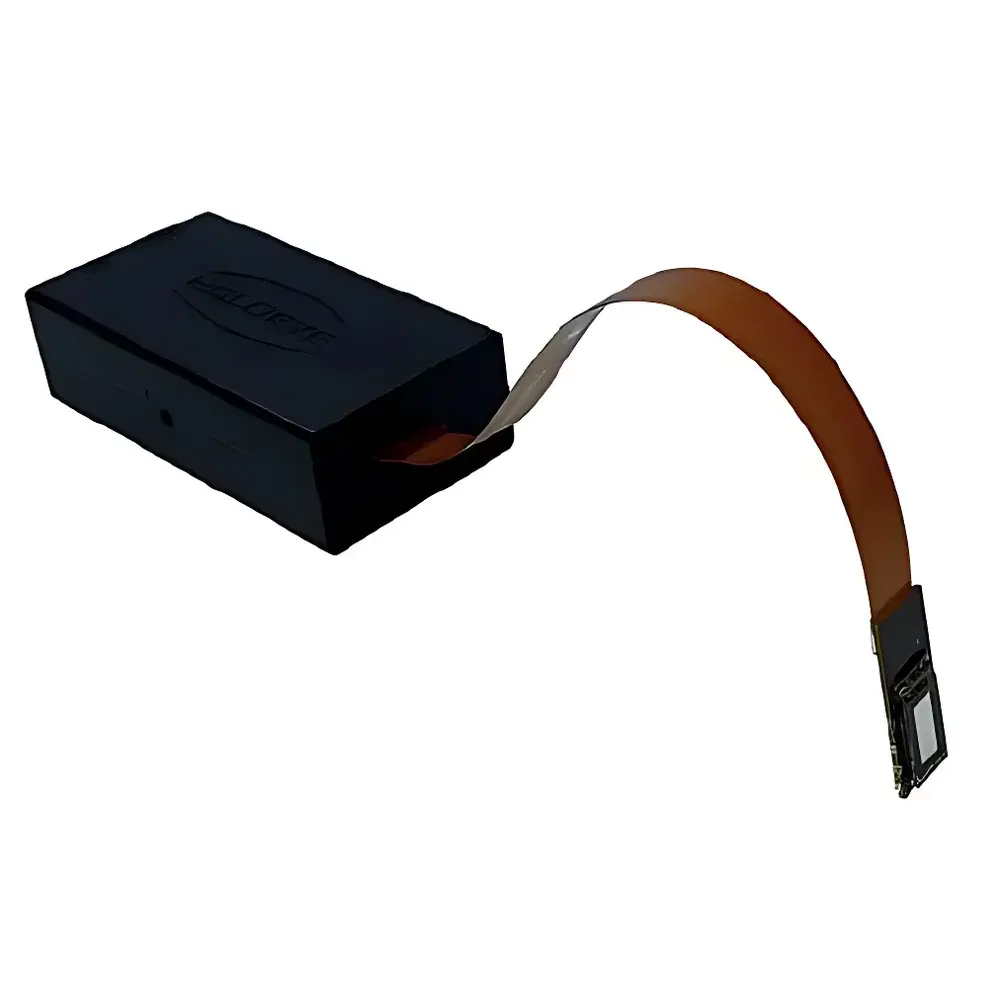
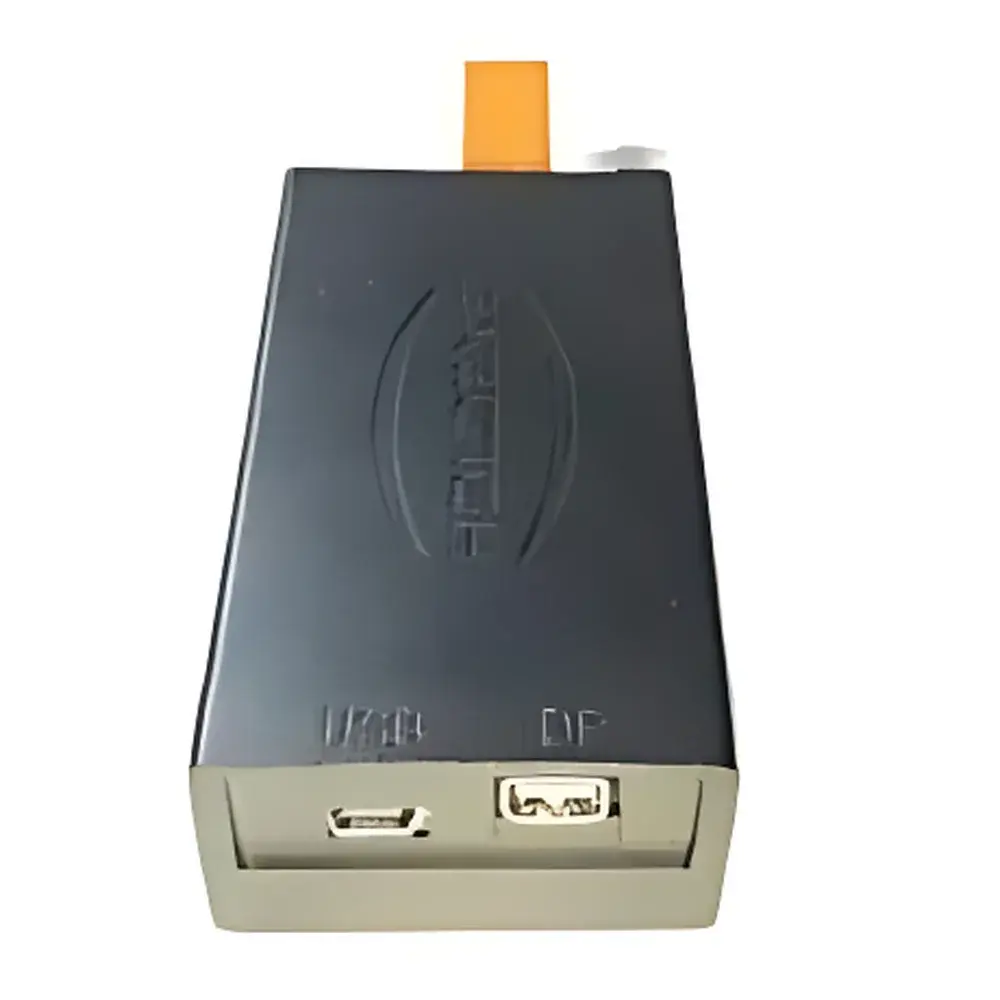
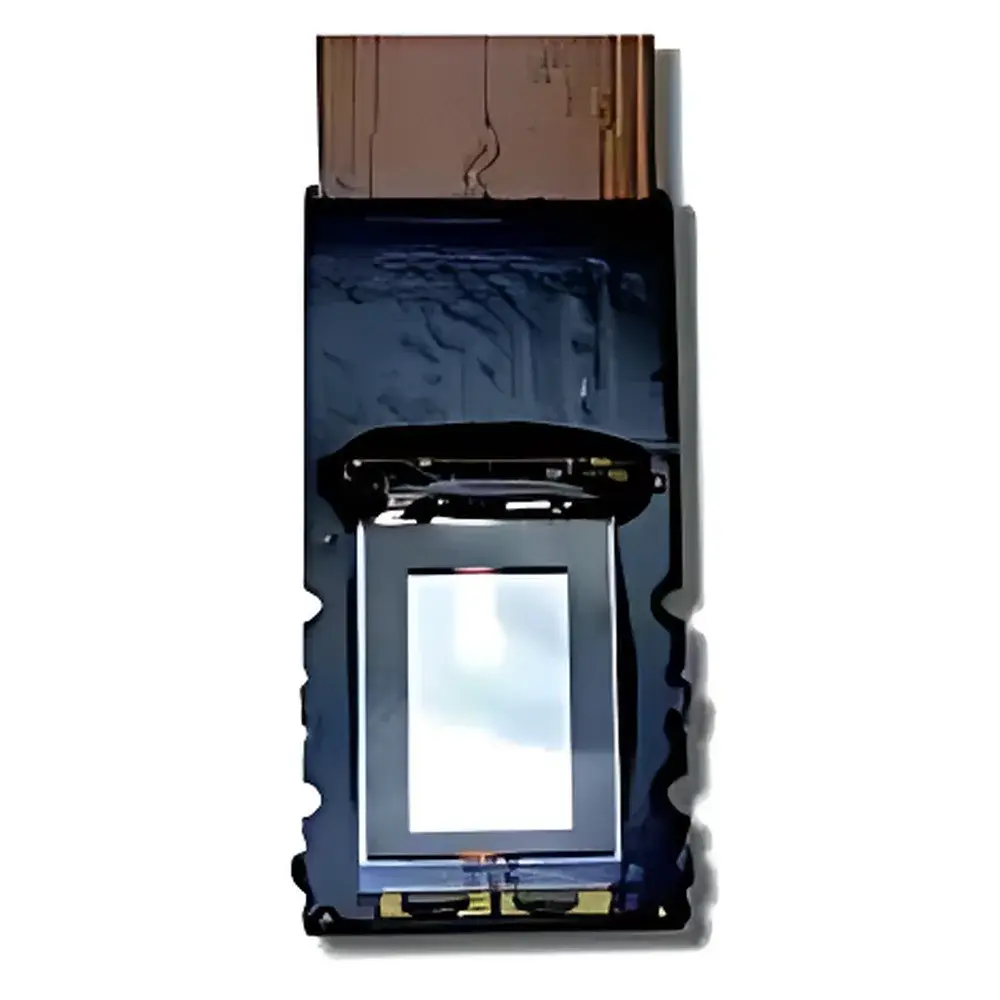
Holoeye Luna Compact Phase-Only Spatial Light Modulator
| Brand | Holoeye |
|---|---|
| Origin | Germany |
| Model | Luna |
| Pixel Resolution | 1920 × 1080 |
| Pixel Pitch | 4.5 µm |
| Active Area | 8.64 × 4.86 mm |
| Wavelength Range | 400–1700 nm (visible & telecom bands) |
| Interface | DisplayPort + USB 2.0 |
| Power Consumption | <2.5 W |
| Operating Mode | Hot-pluggable, phase-only modulation via 8-bit grayscale green-channel input |
| Onboard Processing | Integrated ASIC for real-time pattern preprocessing |
Overview
The Holoeye Luna Compact Phase-Only Spatial Light Modulator (SLM) is a high-resolution, low-power optical modulation device engineered for precise wavefront control in adaptive optics, holographic beam shaping, optical trapping, and quantum optics applications. Based on transmissive liquid crystal on silicon (LCoS) microdisplay technology, the Luna SLM operates exclusively in phase-only modulation mode—introducing controlled spatial phase delays without significant amplitude modulation—enabling high diffraction efficiency and minimal zero-order leakage. Its 1920 × 1080 pixel array with a 4.5 µm pitch delivers fine spatial sampling across an active aperture of 8.64 × 4.86 mm, supporting diffraction-limited performance in both visible (400–700 nm) and near-infrared (780–1700 nm) spectral regions. Designed for integration into space-constrained optical systems—including portable laser labs, field-deployable interferometers, and embedded photonic modules—the Luna leverages an integrated application-specific integrated circuit (ASIC) to offload real-time pattern preprocessing, eliminating reliance on host GPU computation for basic phase map transformations.
Key Features
- Compact form factor: Driver electronics housed in a 44 × 85 × 23.5 mm enclosure—among the smallest commercially available LCoS-SLM platforms.
- Hot-pluggable operation: Seamless plug-and-play compatibility with standard DisplayPort video outputs; no system reboot required.
- Dual-interface architecture: DisplayPort for high-bandwidth 8-bit grayscale phase pattern streaming (via green channel), and USB 2.0 for firmware updates, calibration parameter loading, and advanced timing configuration.
- Low thermal load & power draw: Total system power consumption remains below 2.5 W, enabling battery-powered or thermally isolated operation without active cooling.
- Onboard ASIC processing: Performs gamma correction, pixel addressing remapping, and basic Fourier-domain precompensation—reducing host CPU/GPU latency and improving temporal stability.
- Wide spectral coverage: Optimized LC alignment and anti-reflection coatings support calibrated phase response from 400 nm (violet) to 1700 nm (O-band telecom), with model variants tailored per wavelength band.
Sample Compatibility & Compliance
The Luna SLM is compatible with standard optical mounts (e.g., SM1-threaded cage systems) and integrates directly into collimated free-space beam paths. It requires no external bias voltage or temperature stabilization—operating reliably at ambient temperatures between 15 °C and 35 °C. While not certified to specific regulatory standards (e.g., IEC 61000 or FDA 21 CFR Part 11), its design adheres to general laboratory equipment safety guidelines (EN 61010-1) and electromagnetic compatibility requirements for Class B digital devices. Calibration data—including pixel-wise phase response curves and retardance uniformity maps—is provided per unit and traceable to NIST-traceable interferometric measurements. The device supports GLP-compliant documentation workflows when used with Holoeye’s optional LabVIEW and Python SDKs, enabling full audit trails for phase pattern generation, timestamping, and hardware state logging.
Software & Data Management
Holoeye provides native drivers and application software for Windows (x64) supporting real-time phase map rendering at up to 60 Hz full-frame update rate. The included GUI allows direct import of common image formats (.bmp, .png, .tiff) and mathematical phase functions (e.g., vortex, lens, grating). For automated workflows, MATLAB, Python (NumPy/SciPy), and LabVIEW APIs are supplied with comprehensive documentation and example scripts—including closed-loop wavefront correction using Shack-Hartmann sensor feedback. All software enforces strict data integrity protocols: phase maps are validated for bit-depth compliance prior to upload, and USB-configured parameters (e.g., gamma tables, frame delay offsets) are stored non-volatilely in onboard EEPROM. No proprietary cloud services or telemetry are employed; all data remains local and under user control.
Applications
- Dynamic holography and computer-generated hologram (CGH) projection for optical trapping and micromanipulation of dielectric particles.
- Adaptive optics correction in microscopy (e.g., multiphoton, confocal) and astronomy testbeds.
- Programmable diffractive optical elements (DOEs) for structured illumination, beam splitting, and mode conversion (e.g., LP01 → OAM modes).
- Quantum information experiments requiring high-fidelity single-photon wavefront engineering.
- Miniaturized optical correlators and compact interferometric sensors for industrial metrology.
- Educational platforms for teaching Fourier optics, diffraction theory, and spatial filtering principles.
FAQ
Is the Luna SLM suitable for high-speed modulation applications?
Yes—its native frame rate supports up to 60 Hz at full resolution; for reduced-resolution patterns (e.g., 960 × 540), frame rates exceed 120 Hz via subregion addressing.
Does it support phase-only or amplitude-phase modulation?
The Luna is strictly phase-only; amplitude modulation is suppressed by >30 dB through optimized LC cell design and polarization management.
Can it be used with femtosecond laser pulses?
Yes—when operated within specified average power density limits (<100 mW/cm² at 800 nm), it maintains stable phase response without thermal distortion or damage.
What is the typical phase depth and linearity accuracy?
At 633 nm, it achieves ≥2π phase depth with ≤3% RMS nonlinearity over the full 0–255 gray-level range, as verified by interferometric calibration.
Is OEM integration supported?
Yes—Holoeye offers mechanical drawings, electrical pinouts, and SDK licensing for embedded integration into third-party instruments under NDA.






