
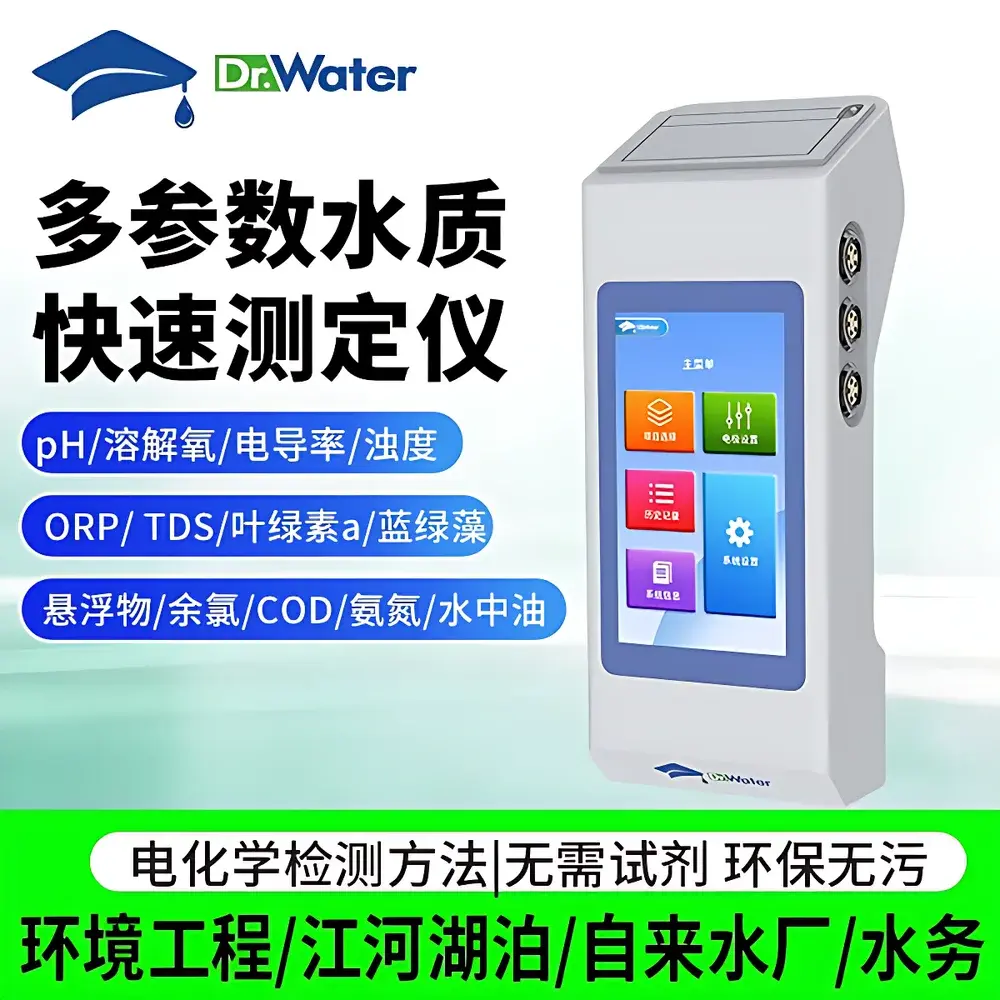
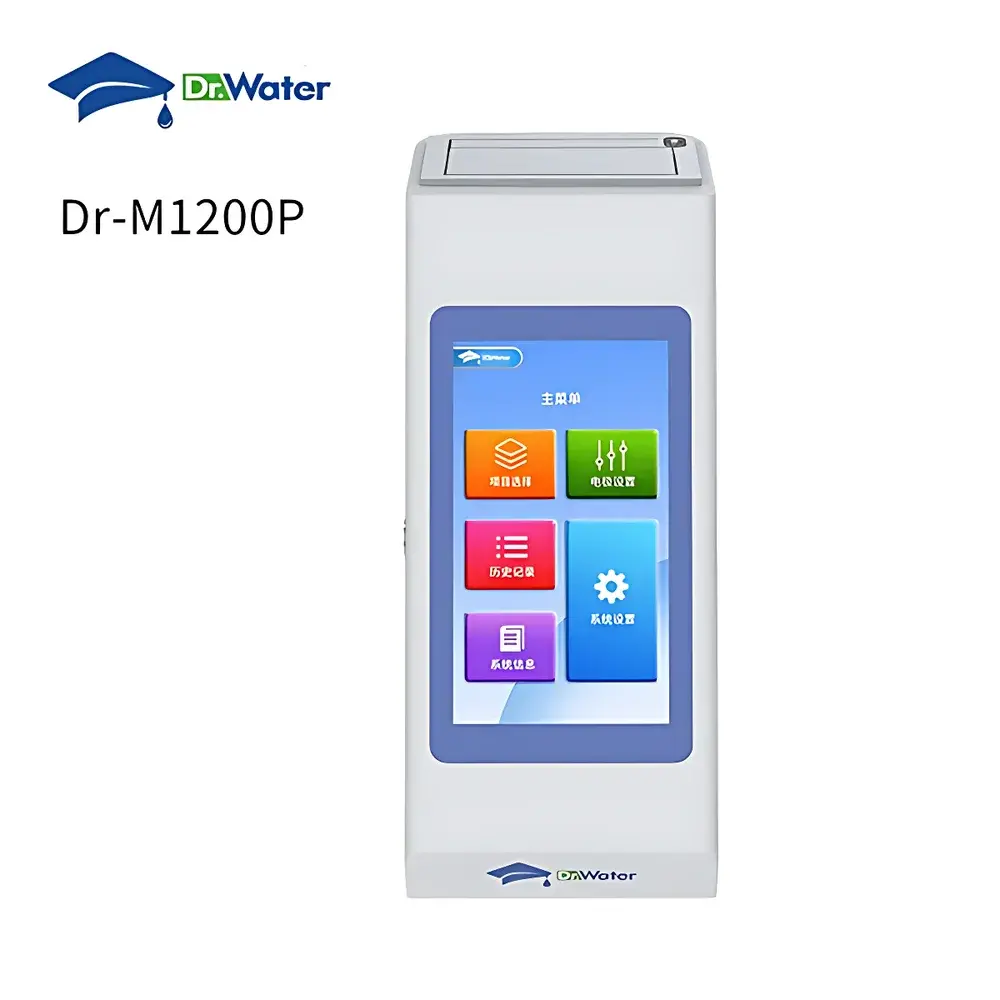
Dr-M1200P Portable Multi-Parameter Water Quality Analyzer by DoctorWater
| Brand | DoctorWater |
|---|---|
| Origin | Hunan, China |
| Model | Dr-M1200P |
| Instrument Type | Portable / Handheld Water Quality Analyzer |
| Detection Principle | Electrochemical Sensing (pH, DO, ORP, Conductivity, TDS), Optical Sensing (Turbidity, Chlorophyll-a, Phycocyanin, Oil-in-Water, SS), Amperometric/Colorimetric (Residual Chlorine, COD, Ammonia-N) |
| Measurement Range | pH: 0–14 |
| Temperature | 0–50 °C |
| Dissolved Oxygen | 0–20 mg/L (or 0–200% saturation) |
| Conductivity | 0–200 mS/cm |
| Turbidity | 0–1000 NTU |
| ORP | −1500 to +1500 mV |
| TDS | 0–100,000 ppm |
| Salinity | 0–50 ppt |
| Residual Chlorine | 0–5 mg/L |
| COD | 0–1500 mg/L (via preloaded reagent vials) |
| Ammonia-N | 0–100 mg/L (via preloaded reagent vials) |
| Chlorophyll-a | 0–200 µg/L |
| Phycocyanin | 0–100 µg/L |
| Oil-in-Water | 0–100 ppm |
| Suspended Solids | 0–5000 mg/L |
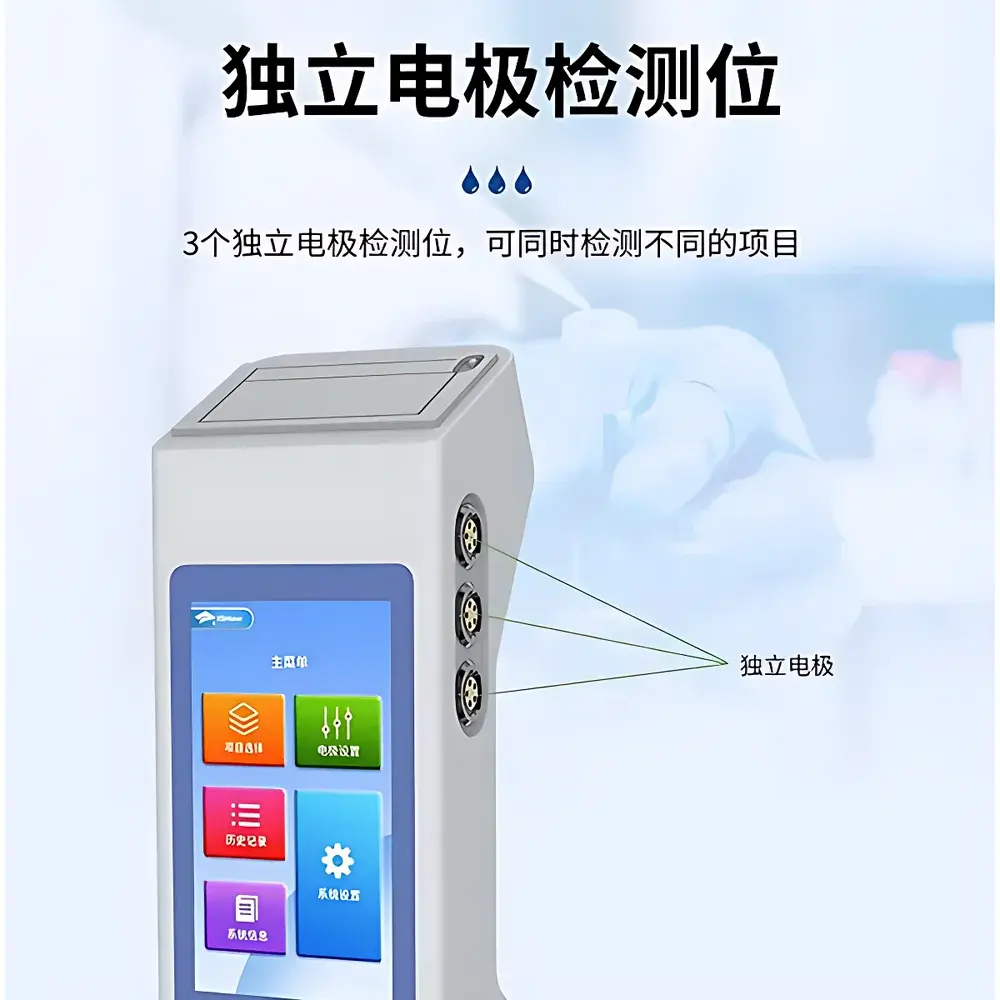
| Electrode Interface | 3 independent digital sensor ports |
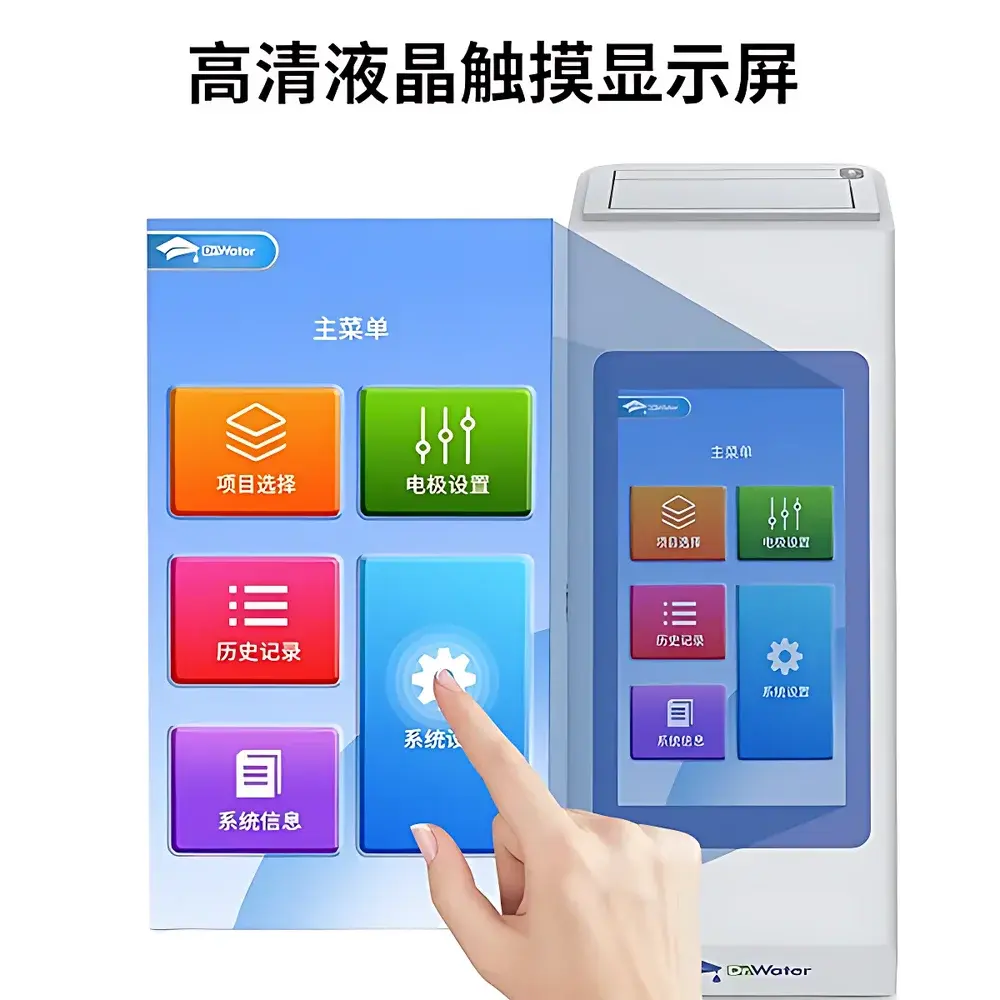
| Display | 5-inch capacitive color touchscreen |
| Data Storage | 1,000,000 measurement records with timestamp, location (optional GPS), and operator ID |
| Power Supply | Rechargeable Li-ion battery (≥16 h continuous operation) |
| IP Rating | IP68 probe housing |
| Operating Environment | 0–50 °C, ≤85% RH (non-condensing) |
| Compliance | Meets ASTM D1293 (pH), ASTM D888 (DO), ISO 7888 (conductivity), ISO 7027 (turbidity), USP <643> (TOC proxy via conductivity), and supports GLP-compliant data logging with audit trail metadata |
Overview
The Dr-M1200P Portable Multi-Parameter Water Quality Analyzer by DoctorWater is an engineered field-deployable platform designed for simultaneous, real-time quantification of up to 15 critical water quality parameters using hybrid electrochemical, optical, and amperometric detection modalities. Unlike benchtop analyzers requiring reagent addition or laboratory infrastructure, the Dr-M1200P integrates calibrated digital sensors—including solid-state pH electrodes, Clark-type dissolved oxygen probes, four-electrode conductivity cells, and dual-wavelength optical turbidity/algae sensors—into a single ruggedized handheld chassis. Its core architecture follows the principles of in-situ electrochemical equilibrium (Nernst equation for pH/ORP), polarographic current response (for DO and residual chlorine), and nephelometric light scattering (for turbidity and suspended solids). The system operates without consumable reagents for baseline parameters (pH, DO, EC, ORP, temperature, turbidity), minimizing operational cost and environmental footprint while maintaining traceable accuracy against NIST-traceable standards.
Key Features
- Triple independent digital sensor interface supporting hot-swappable, auto-recognized probes—eliminating manual calibration mapping and reducing setup time by >70% versus legacy analog systems.
- Intelligent temperature compensation algorithm compliant with ISO 17025 Annex A.2, applying dynamic polynomial correction across full 0–50 °C operating range for all thermally sensitive parameters (pH, DO, conductivity, ORP).
- Dual-power architecture: integrated high-capacity lithium-ion battery (rated ≥16 h at 1 Hz sampling) + universal USB-C DC input (5–12 V), enabling uninterrupted operation in remote field sites and seamless transition to lab-based AC-powered analysis.
- Three adaptive reading modes—real-time (continuous streaming), timed endpoint (user-defined duration), and interval logging (programmable from 1 s to 24 h)—configured via intuitive touch interface with on-screen guidance per parameter.
- IP68-rated sensor housings and IP65-rated main unit ensure reliable performance in immersion, rain, dust, and chemically aggressive environments (e.g., wastewater influent channels, coastal monitoring stations).
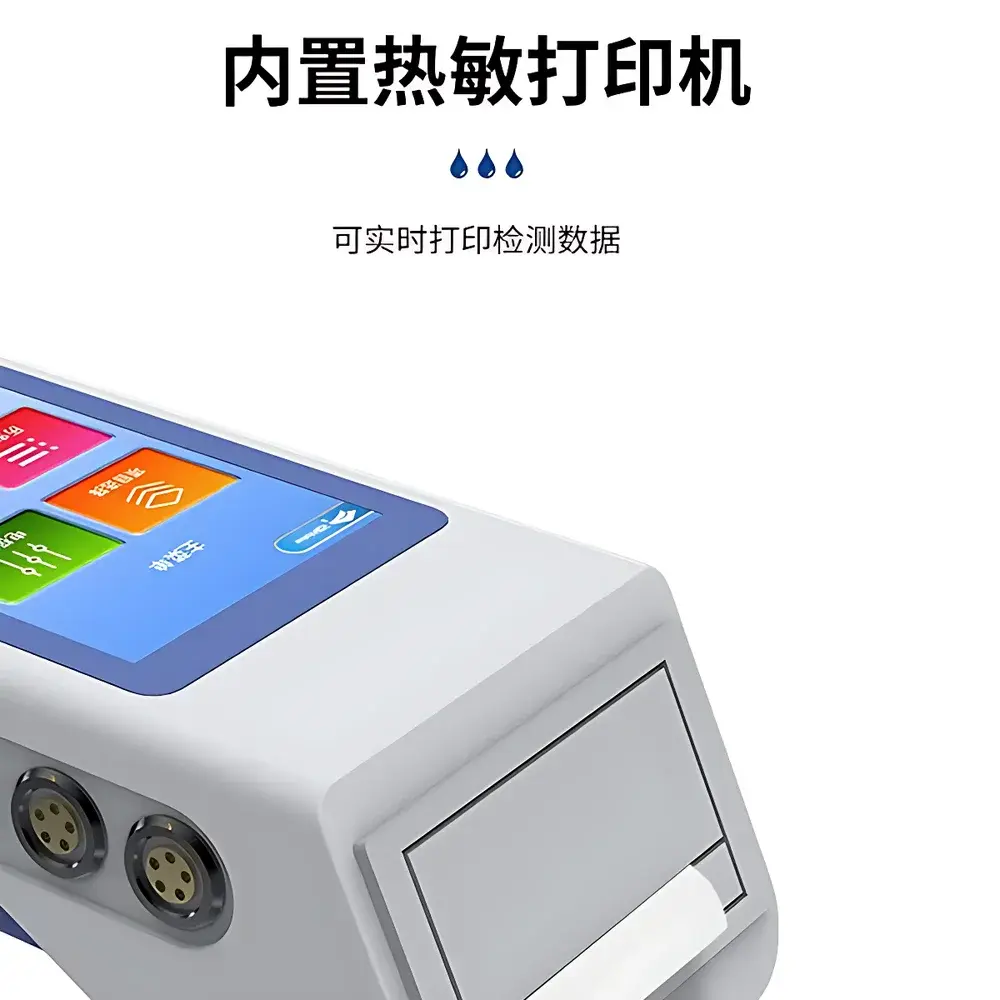
- Onboard thermal printer with direct PDF report generation (including calibration history, QC checks, and metadata stamps) satisfies immediate documentation requirements during regulatory inspections or third-party audits.
Sample Compatibility & Compliance
The Dr-M1200P is validated for use with natural waters (freshwater, estuarine, seawater), treated drinking water, wastewater effluents, industrial process streams, aquaculture ponds, and cooling tower circuits. Sensor configurations support matrix-specific interferences mitigation—for example, salinity-compensated DO measurement in brackish water, ORP offset correction for sulfide-rich anaerobic zones, and turbidity compensation for colored dissolved organic matter (CDOM). The analyzer complies with method equivalency requirements under EPA Method 150.1 (conductivity), ASTM D3370 (sampling protocols), and ISO 5667-3 (sample preservation). Data export formats (CSV, XML, PDF) are structured to align with LIMS integration frameworks and meet minimum metadata requirements specified in ISO/IEC 17025:2017 clause 7.5.2.
Software & Data Management
Embedded firmware provides full GLP-compliant data governance: each stored record includes timestamp (RTC-synced), operator ID, probe serial number, calibration verification status, ambient temperature/humidity (from internal sensors), and optional GNSS coordinates (when paired with external Bluetooth GPS module). Data transfer occurs via USB-C mass storage mode or encrypted Wi-Fi upload to cloud-hosted platforms (e.g., AWS IoT Core or on-premise SQL databases). The included PC software (DoctorWater DataLink v3.2) supports statistical trending, QC charting (X-bar/R charts per parameter), outlier detection via Grubbs’ test, and automated report generation compliant with ISO 14001 environmental management documentation. Audit trails retain immutable logs of all configuration changes, calibration events, and data exports—fully traceable for FDA 21 CFR Part 11 readiness when configured with user authentication and electronic signature modules.
Applications
The Dr-M1200P serves as a primary field tool for environmental compliance monitoring (e.g., NPDES permit reporting, watershed health assessments), operational control in municipal water utilities (intake screening, distribution system integrity checks), process optimization in biopharmaceutical manufacturing (clean-in-place rinse water validation), and ecological research (eutrophication tracking via chlorophyll-a/phycocyanin ratios). It is routinely deployed by national environmental agencies for rapid response to contamination incidents, by EPC contractors for commissioning verification of WWTP upgrades, and by academic researchers conducting longitudinal limnological studies. Its multi-parameter convergence eliminates need for parallel single-analyte meters—reducing field crew burden, cross-contamination risk, and total cost of ownership over 3+ year service life.
FAQ
Does the Dr-M1200P require annual recalibration by an accredited lab?
No—digital sensor self-diagnostics and factory calibration certificates (NIST-traceable) allow user-performed verification using certified buffer solutions and standard reference materials. Full recalibration is recommended every 12 months or after 500 immersion cycles, whichever occurs first.
Can the device store calibration curves for multiple electrode sets?
Yes—up to 10 unique probe profiles (including slope, offset, date, and technician ID) can be saved and recalled automatically upon connection.
Is raw sensor output (e.g., mV, µA) accessible for custom algorithm development?
Yes—firmware exposes low-level sensor signals via USB-C virtual COM port using ASCII protocol documentation provided under NDA for OEM integration.
How is data integrity ensured during power loss or unexpected shutdown?
All measurements are written to non-volatile flash memory with journaling file system; incomplete records are flagged and excluded from export until verified.
Are replacement electrodes supplied with individual calibration certificates?
Yes—each high-precision digital electrode ships with a unique certificate listing lot-specific calibration values, uncertainty budgets (k=2), and expiration date.
Related Products







