
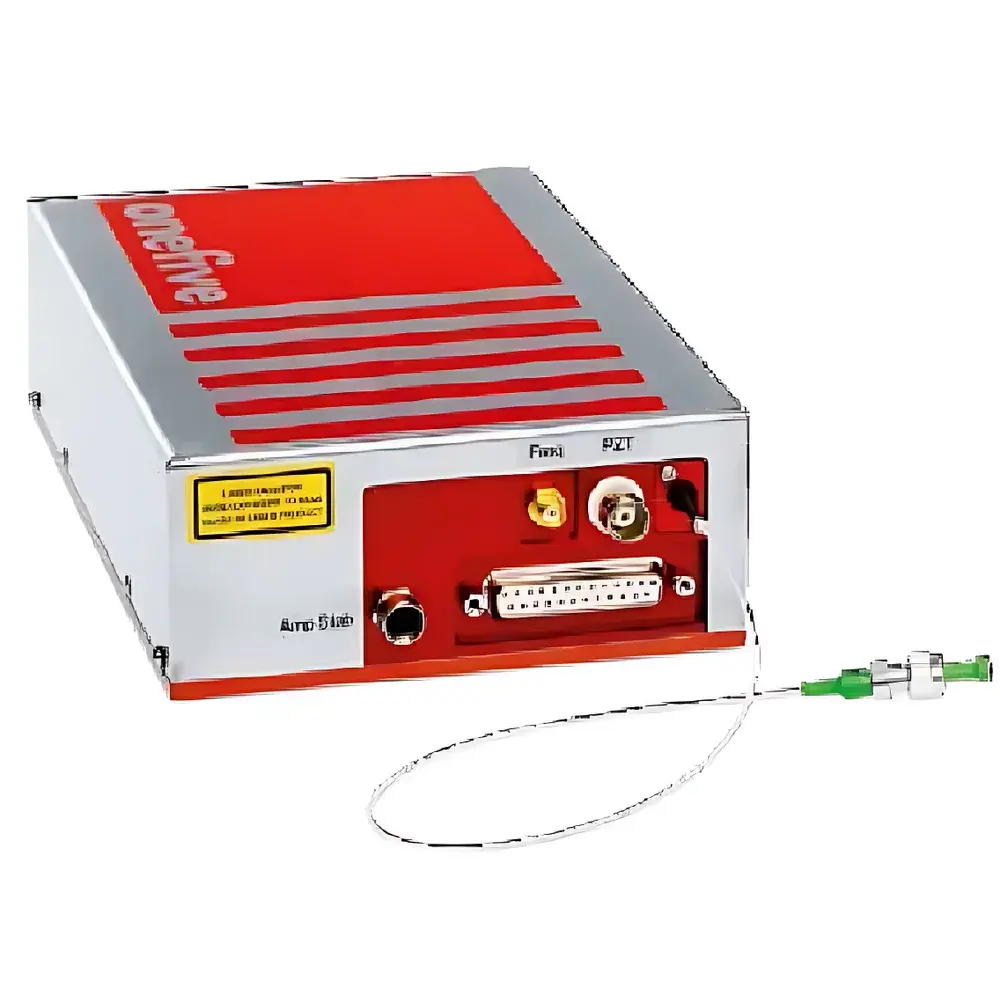
Onefive Genki Series Low-Noise Picosecond Mode-Locked Laser
| Brand | Onefive |
|---|---|
| Origin | Switzerland |
| Model | Genki |
| Type | Solid-State Mode-Locked Picosecond Laser |
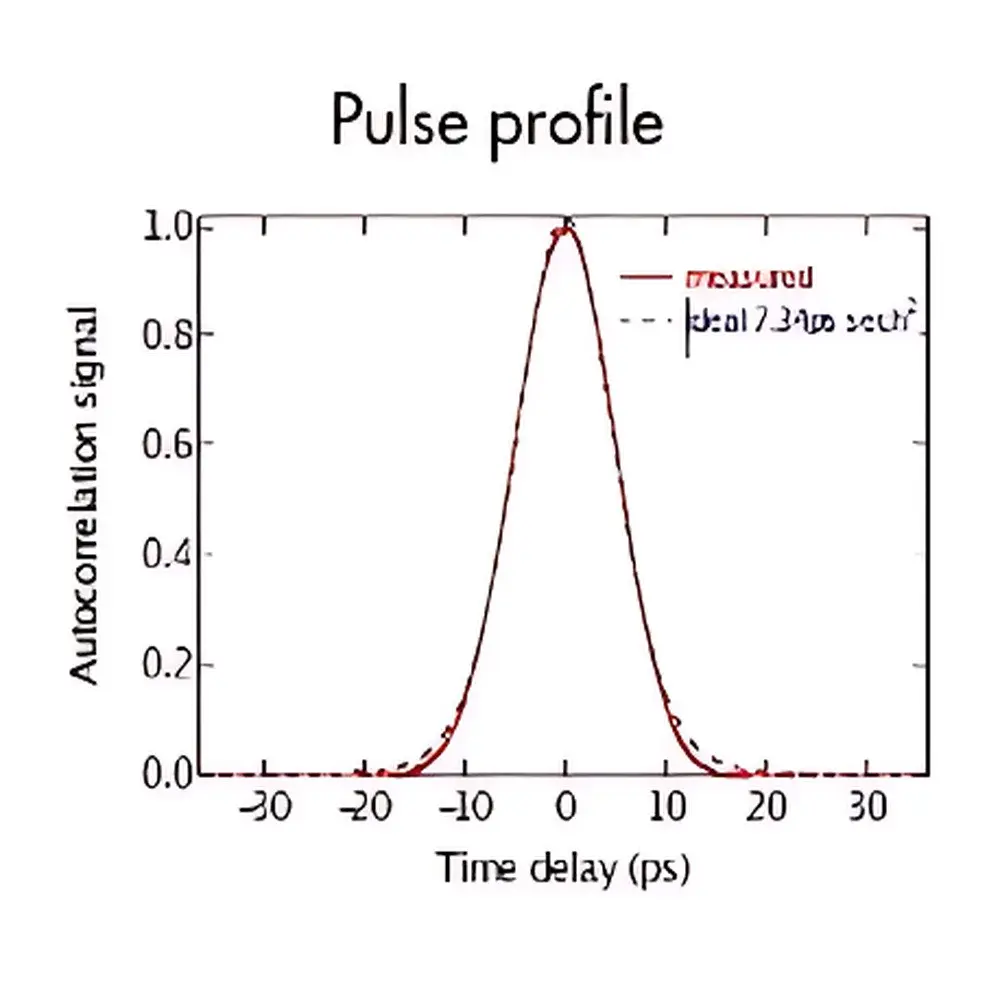
| Pulse Width | 4–45 ps (tunable) |
| Center Wavelength Options | 1030–1064 nm (Genki-10/10s), 1530–1575 nm (Genki-15) |
| Average Power | Up to 250 mW |
| Pulse Energy | Up to 5 nJ |
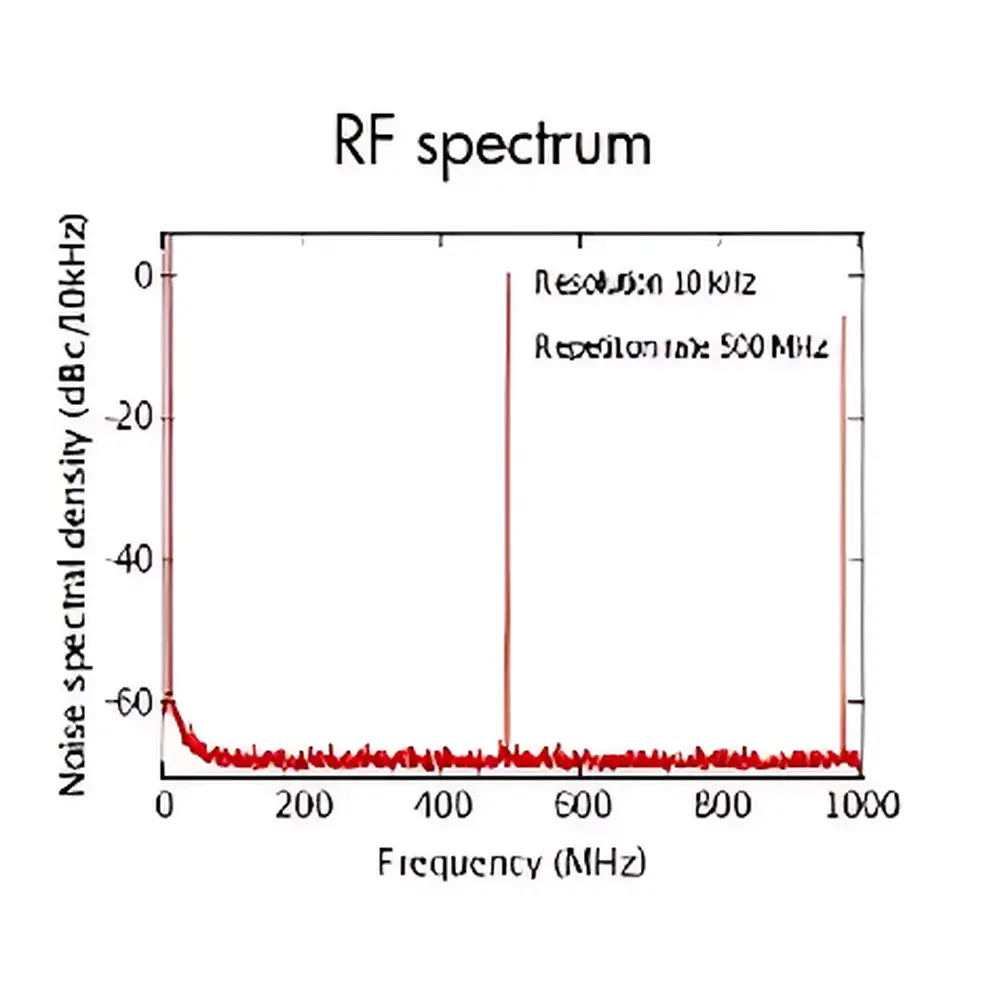
| Repetition Rate | 30 MHz – 10 GHz (model-dependent) |
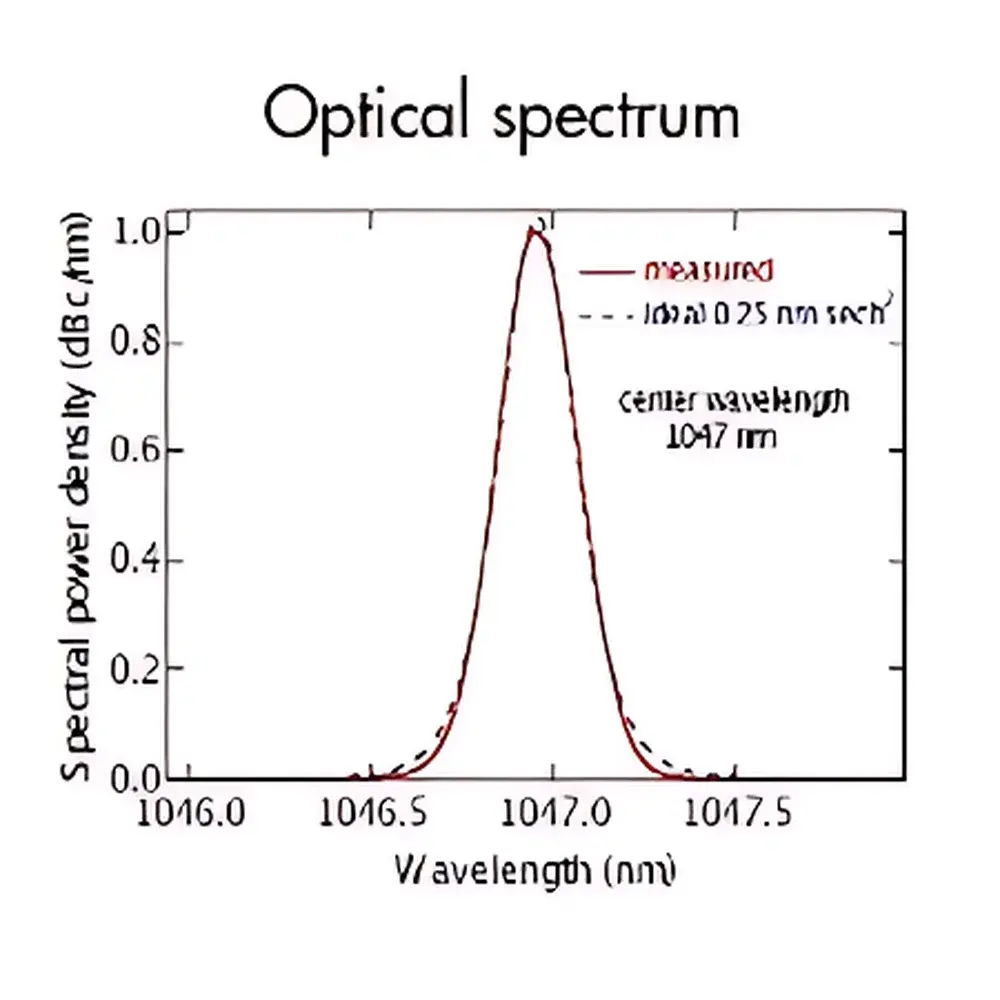
| Spectral Bandwidth | <1 nm (10xx nm), <5 nm (15xx nm) |
| Amplitude Noise | <1% RMS (24 h), <3% pk-pk |
| Beam Quality | M² < 1.1, TEM₀₀ |
| Polarization Extinction Ratio | >20 dB |
| Output | Polarization-Maintaining Fiber or Free-Space Collimated |
| Cooling | Air-Cooled |
| Operating Temperature | 18–32 °C |
| Dimensions (Laser Head) | 150 × 200 × 30 mm³ |
| Weight (Laser Head) | 2 kg |
| Power Supply | 24 VDC / 2.5 A or 90–264 VAC, 47–63 Hz |
| Power Consumption | <15 W |
Overview
The Onefive Genki Series is an industrial-grade, solid-state mode-locked picosecond laser engineered for ultra-low amplitude noise, exceptional temporal stability, and long-term reliability in demanding scientific and industrial environments. Based on a hybrid architecture integrating monolithic solid-state gain media with fiber-coupled oscillator design, the Genki leverages proven Kerr-lens mode-locking (KLM) or semiconductor saturable absorber mirror (SESAM) techniques—depending on configuration—to generate transform-limited pulses with durations tunable from 4 to 45 ps. Its optical architecture is optimized for minimal timing jitter, near-diffraction-limited beam quality (M² < 1.1), and superior pointing stability (<5 µrad drift over 24 h), making it suitable as a seed source for high-energy amplifier systems, time-resolved spectroscopy platforms, and precision photonic testbeds. Manufactured in Switzerland under ISO 9001-certified processes, each unit undergoes rigorous thermal cycling, vibration (IEC 60068-2-6), shock (IEC 60068-2-27), and mechanical durability testing (IEC 60068-2-29) to ensure uninterrupted 24/7 operation across ambient temperatures of 18–32 °C.
Key Features
- Ultra-low amplitude noise: <1% RMS intensity fluctuation over 24 hours, enabling high-fidelity pump-probe and heterodyne detection applications
- Transform-limited pulse generation with near-Fourier-limited time-bandwidth product, verified via autocorrelation and FROG measurements
- Robust all-solid-state oscillator platform with integrated thermal management, eliminating water cooling and reducing system footprint
- Hermetically sealed, vibration-insensitive mechanical design ensuring stable output under laboratory-grade and light-industrial conditions
- Plug-and-play operation: fully factory-aligned with <10-minute warm-up time and no user adjustment required post-installation
- Flexible output interface: polarization-maintaining single-mode fiber (PM980 or PM1550) or collimated free-space beam (with optional kinematic mount)
- Comprehensive remote control via USB 2.0 and RS-232 interfaces, supporting SCPI command set for seamless integration into automated test systems
Sample Compatibility & Compliance
The Genki Series is designed for compatibility with standard ultrafast optics infrastructure, including Ti:sapphire amplifiers, optical parametric amplifiers (OPAs), and electro-optic sampling setups. Its narrow spectral bandwidth (<1 nm at 1030–1064 nm; 100 µm), facilitating interferometric applications such as frequency comb stabilization and cavity-enhanced absorption spectroscopy. All models comply with IEC 61000-6-3 (EMI emission) and IEC 61000-6-2 (immunity) standards. Laser safety classification meets IEC 60825-1:2014 Class 4 requirements, with built-in interlock circuitry and key-switch enable logic conforming to EN 61511 for functional safety in integrated systems. Documentation includes full Declaration of Conformity (DoC), RoHS compliance statement, and CE marking for EU deployment.
Software & Data Management
Onefive provides the Genki Control Suite—a cross-platform application (Windows/macOS/Linux) supporting real-time monitoring of output power, repetition rate, internal temperature, and lock status. The software implements audit-trail logging compliant with FDA 21 CFR Part 11 requirements when deployed with optional password-protected user roles and electronic signature capability. Raw sensor data (e.g., photodiode feedback, thermistor readings) are exportable in CSV or HDF5 format for traceability in GLP/GMP-regulated environments. API support via Python SDK enables custom scripting for automated parameter sweeps, synchronization with external DAQ systems, and integration into LabVIEW or MATLAB-based measurement frameworks. Firmware updates are delivered through secure signed packages validated via SHA-256 checksums.
Applications
- Seed source for regenerative and multipass amplifiers requiring low-noise, high-repetition-rate picosecond pulses
- Time-resolved fluorescence lifetime imaging (FLIM), transient absorption spectroscopy, and pump-probe experiments
- Photonic analog-to-digital conversion (PADC), microwave photonics, and optical arbitrary waveform generation (OAWG)
- Fiber-optic component characterization, including dispersion mapping and nonlinear coefficient measurement
- Optical clock distribution networks and low-jitter timing reference distribution in synchrotron or XFEL facilities
- Quantum optics experiments requiring high-fidelity heralded photon sources and entangled pair generation
FAQ
Is the Genki laser compatible with external RF synchronization?
Yes—optional external clock input (SMA, 50 Ω) supports synchronization to master oscillators with sub-100 fs RMS jitter, enabling phase-locked operation across multi-laser systems.
Can repetition rate be tuned continuously across its specified range?
For Genki-10 and Genki-10s models, repetition rate is digitally adjustable between 30 and 100 MHz in 100 kHz steps; Genki-15 offers fixed 40 MHz or tunable RF-driven options up to 10 GHz via external modulation.
What is the expected lifetime of the gain medium under continuous operation?
The Nd:YVO₄ or Er-doped gain crystals are rated for >20,000 hours MTBF under nominal operating conditions, validated by accelerated aging tests per Telcordia GR-468-CORE.
Does the system include built-in diagnostics for pulse duration verification?
No standalone autocorrelator is integrated, but the laser is pre-characterized using second-harmonic generation (SHG) autocorrelation and FROG; users may connect external commercial autocorrelators via the provided fiber port or free-space output.
Are OEM integration kits available for embedded system developers?
Yes—Onefive offers OEM evaluation kits including mechanical mounting templates, electrical pinout schematics, firmware development guides, and custom firmware build services upon NDA.





