
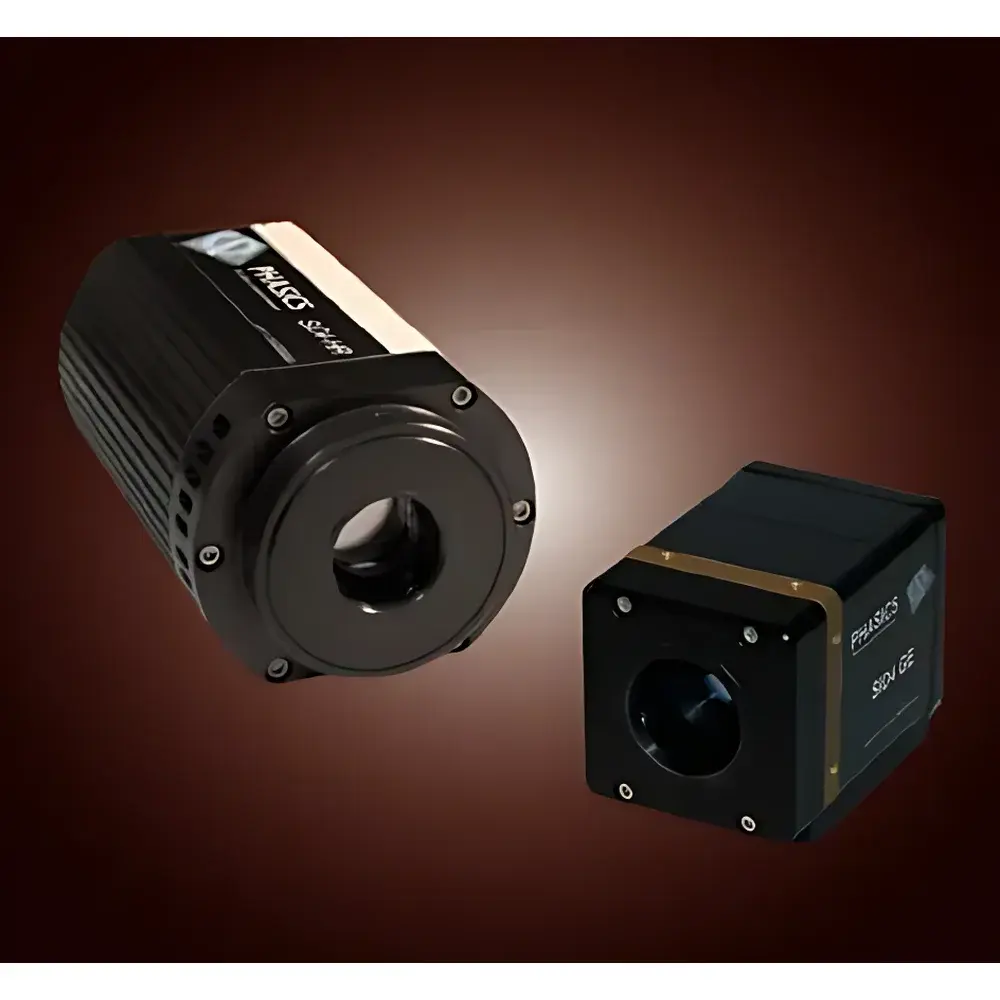
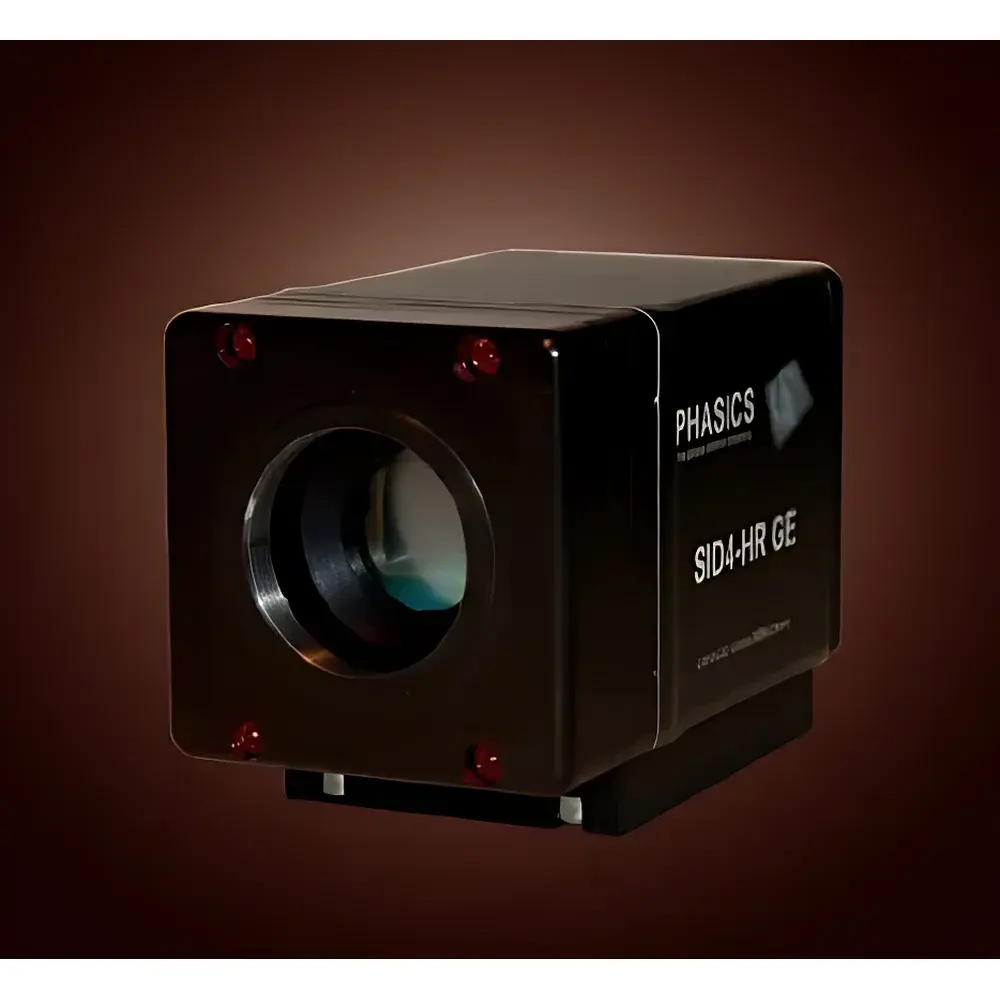
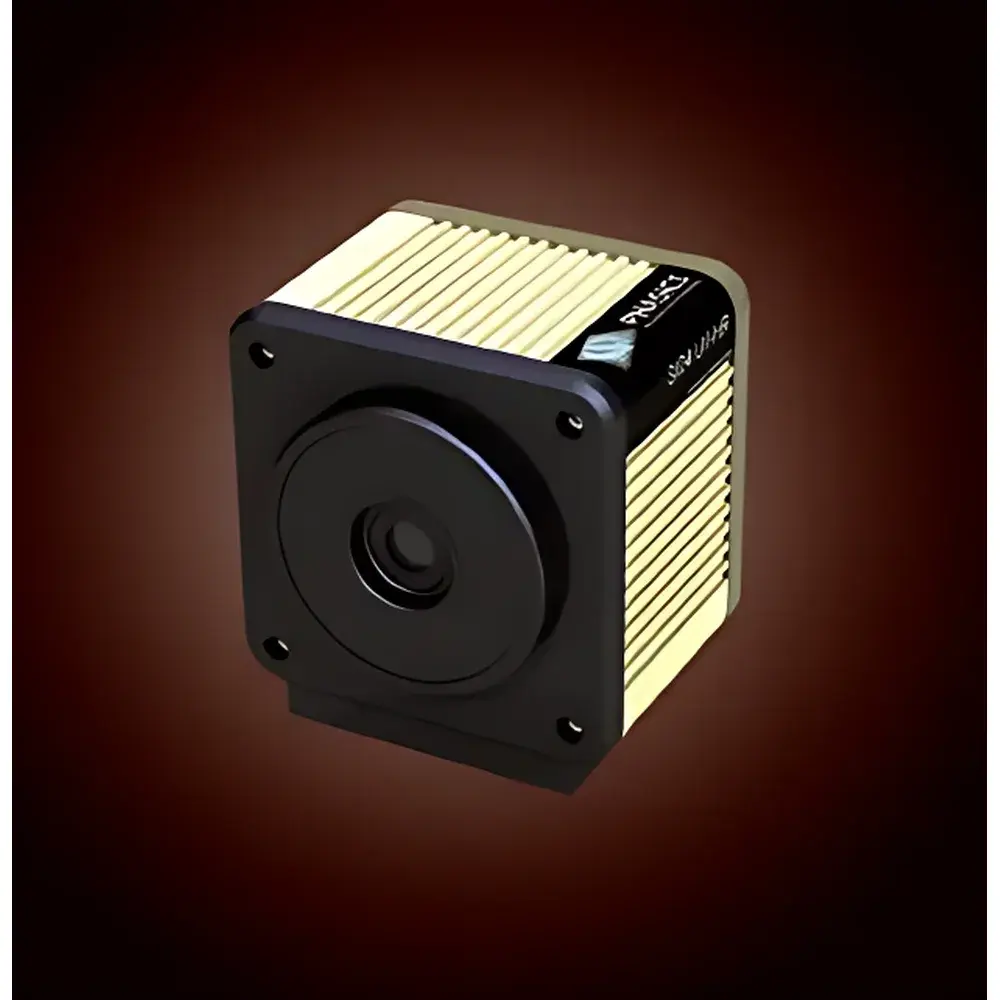
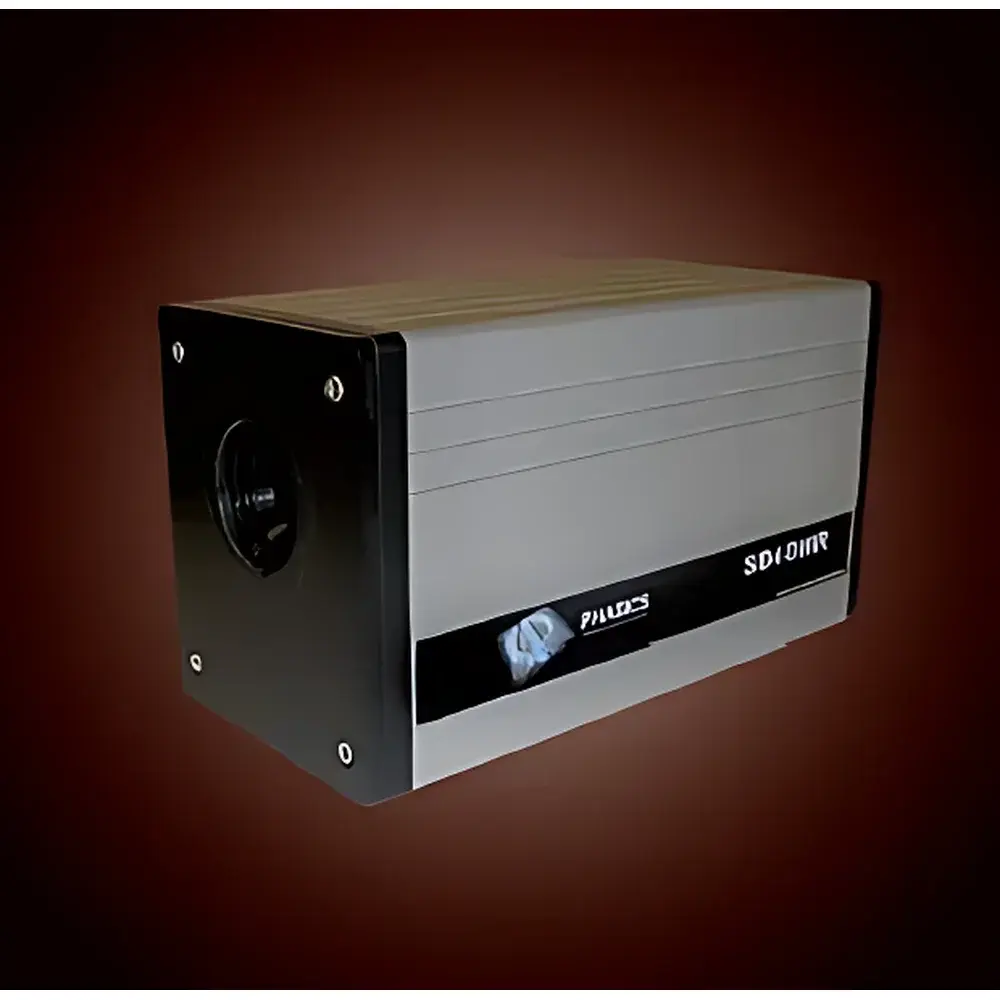
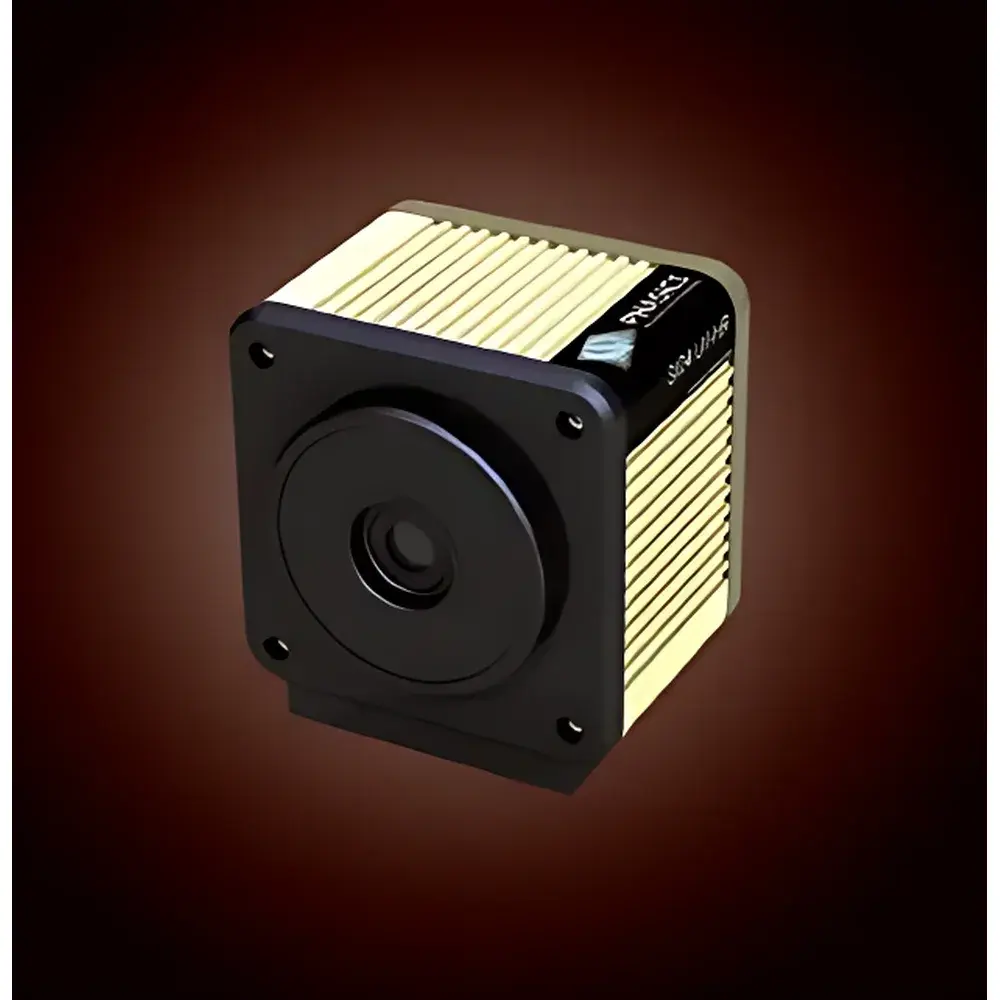
Phasics SID4 and SID4-HR Wavefront Sensors
| Brand | Phasics |
|---|---|
| Origin | Germany |
| Distributor Type | Authorized Distributor |
| Import Status | Imported |
| Model Series | SID4, SID4-HR |
| Operating Principle | Shack–Hartmann-based wavefront sensing with quadriwave lateral shearing interferometry (QWLSI) |
| Imaging Modality | 3D quantitative phase imaging |
| Deployment | Ground-based and airborne platforms |
| Spectral Range | 400–1100 nm |
| Spectral Resolution | 0.025 nm |
| Spatial Resolution (IFOV) | 29.6 µm |
| Field of View (TFOV) | 5° |
| Frame Rate | Up to 60 fps (SID4), ≥10 fps (SID4-HR) |
| Pixel Array | 160 × 120 (SID4), 400 × 300 (SID4-HR) |
| Dynamic Range | >100 µm (SID4), >500 µm (SID4-HR) |
| Phase Measurement Accuracy | 10 nm RMS (SID4), 15 nm RMS (SID4-HR) |
| Sensitivity | <2 nm RMS (SID4), <2 nm RMS (SID4-HR) |
| Optical Aperture | 3.6 × 4.8 mm² (SID4), 8.9 × 11.8 mm² (SID4-HR) |
| Dimensions | 54 × 46 × 75.3 mm (SID4), 54 × 46 × 79 mm (SID4-HR) |
| Weight | 250 g (both) |
Overview
The Phasics SID4 and SID4-HR wavefront sensors are high-precision, compact interferometric instruments engineered for real-time, quantitative phase measurement across visible and near-infrared spectra (400–1100 nm). Unlike conventional Shack–Hartmann sensors, these devices employ QuadriWave Lateral Shearing Interferometry (QWLSI)—a patented, single-shot, self-referencing technique that eliminates the need for reference beams or moving parts. This principle enables direct, absolute wavefront reconstruction with sub-nanometer sensitivity and high spatial fidelity, making them ideal for applications demanding rigorous metrological traceability and robust field operation. Designed for integration into optical test benches, adaptive optics loops, laser diagnostics setups, and industrial inspection systems, the SID4 series delivers calibrated, distortion-free phase maps without wavelength-dependent recalibration—leveraging its intrinsic achromatic design across the full CCD detection range.
Key Features
- Single-shot, full-field wavefront acquisition at up to 60 Hz (SID4) or ≥10 Hz (SID4-HR), enabling dynamic process monitoring and closed-loop control.
- Achromatic optical architecture: maintains calibration integrity from 400 nm to 1100 nm without mechanical filter changes or software reconfiguration.
- High-resolution phase mapping: 160 × 120 sampling points (SID4) and 400 × 300 (SID4-HR), supporting detailed characterization of highly divergent or aberrated beams—including high-NA laser outputs and extended thermal sources.
- Compact, ruggedized housing (54 × 46 × 75.3 mm; 250 g) certified for ground-based laboratory use and airborne deployment under vibration and thermal cycling conditions.
- Direct measurement capability for wavefronts with divergence angles exceeding ±5°, eliminating the need for beam collimation or relay optics in many OEM integrations.
- Traceable metrology-grade performance: phase accuracy ≤10 nm RMS (SID4), ≤15 nm RMS (SID4-HR); sensitivity <2 nm RMS under standard illumination conditions.
Sample Compatibility & Compliance
The SID4 platform supports a broad class of optical sources and samples—ranging from CW and pulsed lasers (including ultrafast Ti:sapphire and fiber lasers), to extended thermal emitters, plasma plumes, and biological specimens in transmission or reflection geometry. Its non-contact, label-free operation is compatible with ISO 10110-5 (surface irregularity), ISO 14999-2 (interferometric testing), and ASTM E2844 (laser beam parameter measurement) standards. For regulated environments, the sensor’s deterministic output format and timestamped data streams support audit-ready documentation aligned with GLP and GMP workflows. While not FDA 21 CFR Part 11–certified out-of-the-box, the SDK provides hooks for implementing electronic signatures, audit trails, and secure data export—facilitating validation in QC/QA laboratories subject to regulatory oversight.
Software & Data Management
Bundled with Phasics’ QWLSI Control Software (v6.x), the system offers real-time visualization of Zernike decomposition, PV/RMS wavefront error, Strehl ratio, M² estimation, and intensity-normalized phase gradients. All measurements are exported in HDF5 and CSV formats, preserving metadata (wavelength, exposure time, gain setting, calibration ID) for reproducible analysis. The comprehensive C++/Python SDK enables seamless integration with LabVIEW, MATLAB, Python-based automation frameworks (e.g., PyVISA, OpenCV), and custom control architectures. Raw interferograms and reconstructed phase maps are stored with embedded calibration fingerprints, ensuring long-term comparability across instrument lifecycles and multi-site deployments.
Applications
- Laser Beam Characterization: Quantitative M², BPP, and focus shift analysis for industrial fiber lasers, UV excimer systems, and ultrafast oscillators—without iterative scanning or knife-edge assumptions.
- Adaptive Optics Calibration: Real-time wavefront feedback for deformable mirror control in astronomy, ophthalmology, and free-space optical communications.
- Optical Component Metrology: Surface figure error, transmitted wavefront distortion, and coating uniformity assessment of lenses, mirrors, and aspheric elements per ISO 10110-5.
- Biomedical Phase Imaging: Label-free quantification of cellular dry mass, membrane dynamics, and refractive index gradients in unstained live-cell microscopy (e.g., combined with inverted microscopes).
- Plasma & Thermal Source Diagnostics: In-situ wavefront evolution tracking during laser-induced breakdown spectroscopy (LIBS), arc discharge studies, and combustion front analysis.
FAQ
What distinguishes QWLSI from traditional Shack–Hartmann sensing?
QWLSI uses a single-element, etched grating to generate four laterally sheared replicas of the input wavefront, enabling direct phase retrieval from one interferogram—eliminating centroid-fitting errors, dynamic range limitations, and wavelength-specific calibration dependencies inherent in Shack–Hartmann arrays.
Can the SID4-HR be used with pulsed lasers?
Yes—the sensor supports gated acquisition synchronized via TTL input, with minimum exposure times down to 1 µs. Pulse energy thresholds depend on wavelength and detector gain; typical operation requires ≥1 µJ/cm² at 633 nm for optimal SNR.
Is factory recalibration required annually?
No—Phasics’ QWLSI architecture is inherently stable. Recalibration is only recommended after physical shock, extreme thermal cycling (>50°C ambient variation), or when traceability to NIST-traceable standards is mandated by internal QA protocols.
Does the system support third-party camera integration?
The SID4 series embeds a monochrome CMOS sensor and does not support external camera coupling. However, the SDK allows synchronization and metadata tagging of external imaging streams (e.g., for multimodal correlative analysis).
How is spectral resolution of 0.025 nm achieved?
This value refers to the resolving power of the integrated spectrometer module used in hyperspectral wavefront variants (e.g., SID4-NIR). The base SID4/SID4-HR models are broadband wavefront sensors; spectral discrimination is enabled only when paired with optional external diffraction gratings or tunable filters.




