
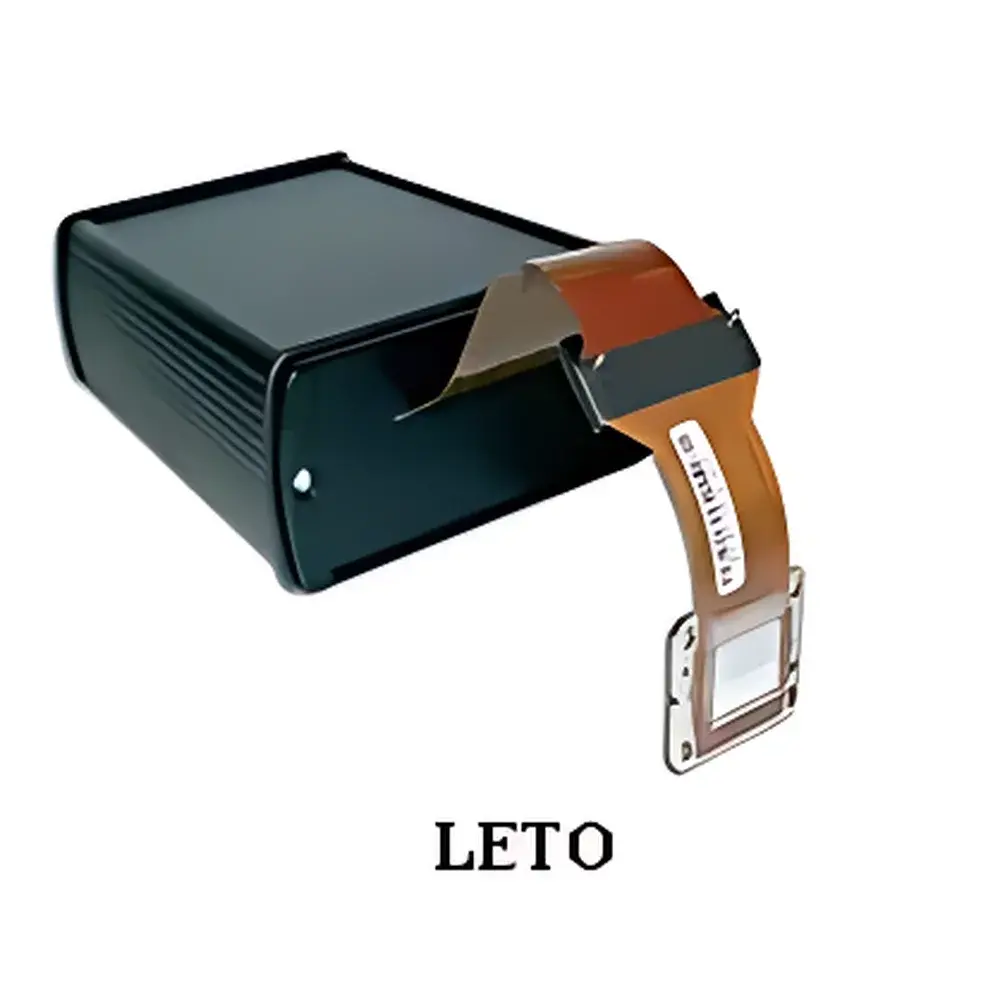
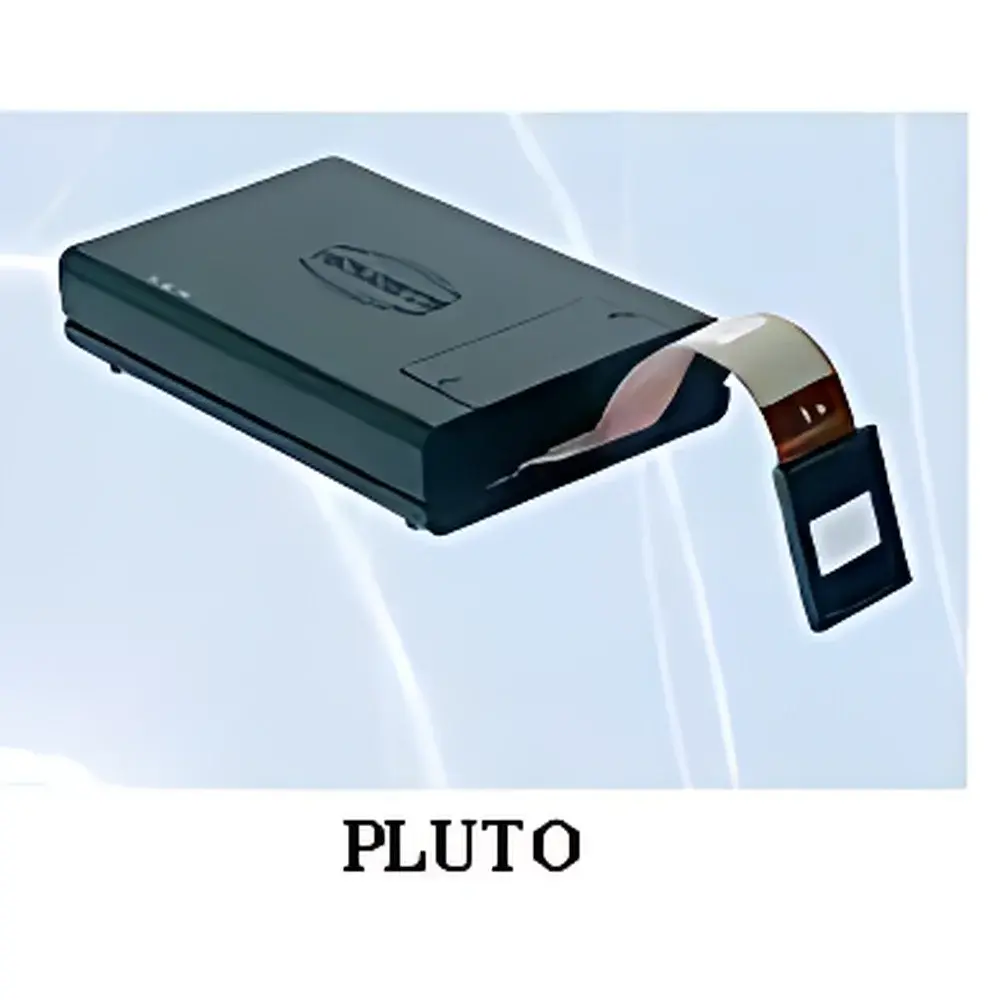
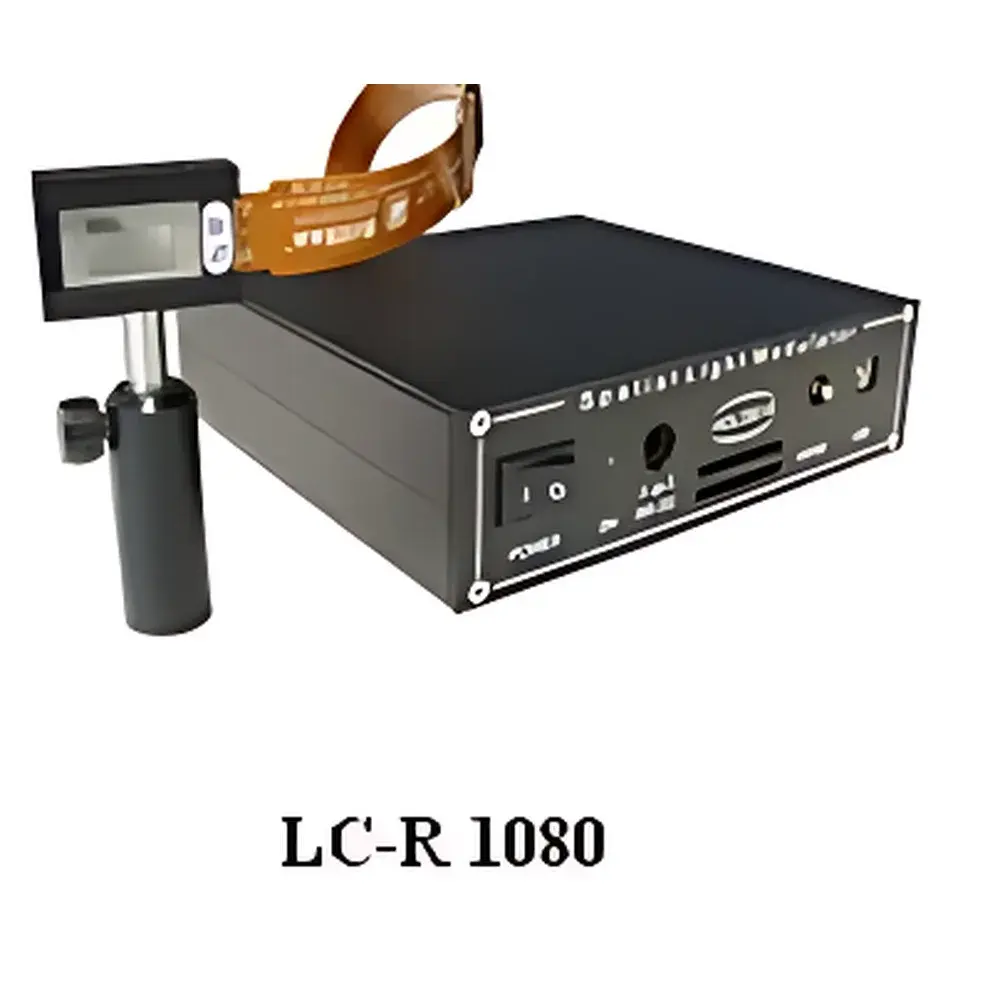
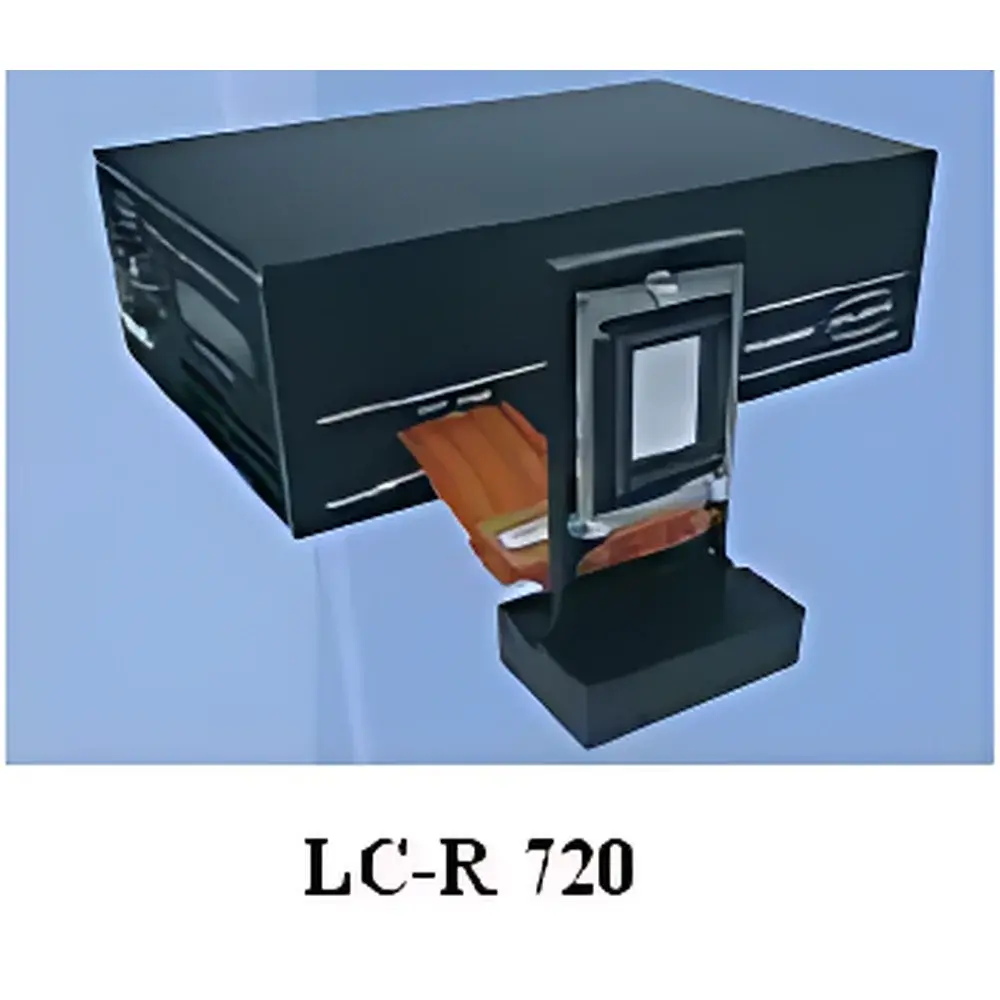
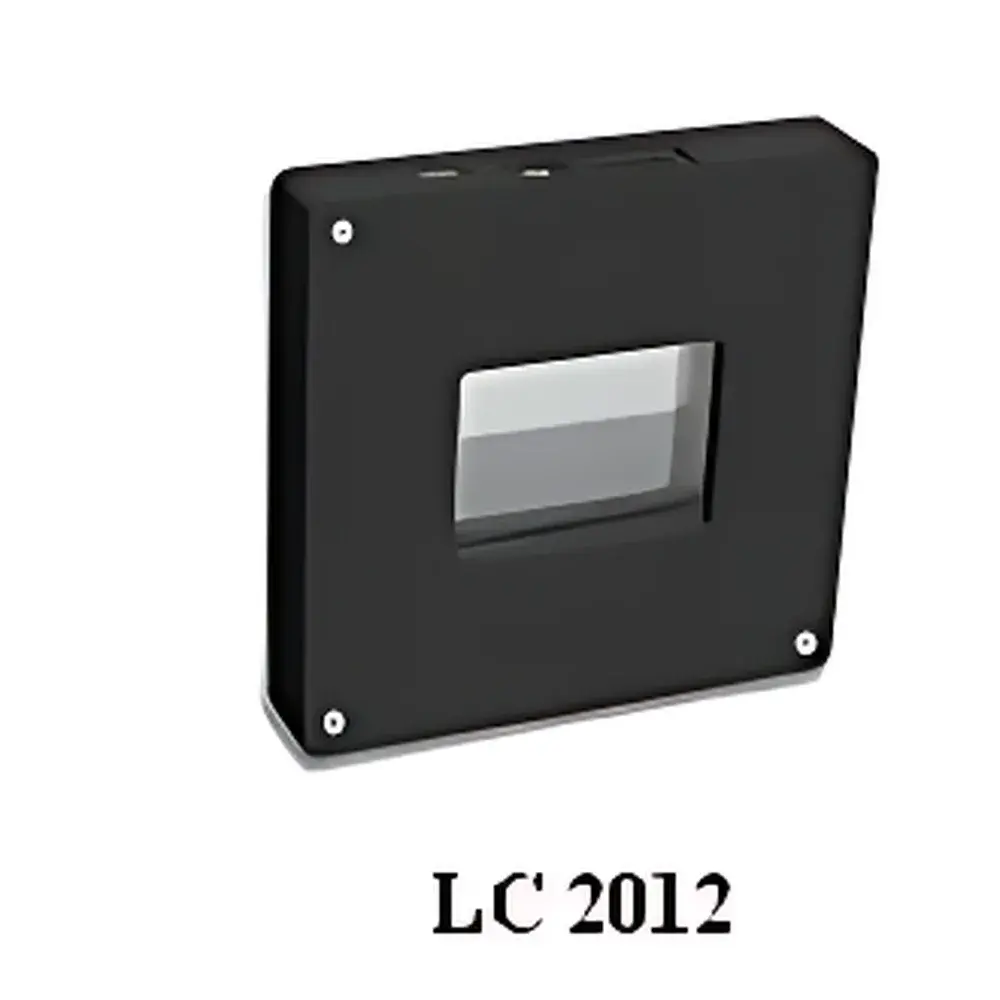
Holoeye LETO Pure-Phase Spatial Light Modulator
| Brand | Holoeye |
|---|---|
| Origin | Germany |
| Model | LETO Pure-Phase |
| Modulation Type | Pure Phase |
| Liquid Crystal Type | Reflective LCoS |
| Resolution | 1920 × 1080 |
| Pixel Pitch | 6.4 µm |
| Active Area | 12.29 mm × 6.91 mm |
| Phase Range | 6.2π @ 405 nm, 1.6π @ 1064 nm |
| Dynamic Range | >1000:1 (typ.) |
| Fill Factor | 93% |
| Frame Rate | 60 Hz |
| Response Time (VIS) | ~25 ms |
| Diffraction Efficiency | 75% |
| Max. Optical Power Density | 2 W/cm² |
| Spectral Range | 400–1100 nm |
| Interface | HDMI / DVI |
Overview
The Holoeye LETO Pure-Phase Spatial Light Modulator (SLM) is a high-performance reflective liquid crystal on silicon (LCoS) device engineered for precise, pixel-level wavefront control in advanced optical systems. Operating on the principle of spatially resolved phase retardation via voltage-controlled birefringence in nematic liquid crystal layers, the LETO SLM enables diffraction-limited beam shaping, holographic projection, and adaptive optics applications requiring high fidelity and stability. Its pure-phase modulation architecture eliminates amplitude coupling artifacts, ensuring minimal intensity distortion during complex wavefront synthesis—critical for interferometric metrology, coherent imaging, and quantum optics setups where phase accuracy directly determines system resolution and signal-to-noise ratio.
Key Features
- High-resolution active matrix: 1920 × 1080 pixels with 6.4 µm pitch, delivering fine spatial sampling for sub-wavelength wavefront control.
- Pure-phase modulation mode with >93% fill factor, minimizing zero-order leakage and maximizing usable diffraction efficiency (up to 75% in optimized configurations).
- Wide spectral compatibility: validated operation from 400 nm to 1100 nm; optional variants cover VIS (420–700 nm), broadband (400–1100 nm), NIR (1000–1064 nm), and telecom (1520–1620 nm) bands.
- Robust thermal and mechanical design: aluminum housing with integrated heat-sinking ensures stable phase response under continuous illumination at up to 2 W/cm² optical power density.
- Low-latency digital interface: supports HDMI and DVI inputs with native 60 Hz frame rate, compatible with standard graphics cards and real-time pattern generation hardware.
- OEM-ready architecture: compact board-level integration option available with FPGA-based controller, enabling seamless embedding into custom optical platforms without external driver electronics.
Sample Compatibility & Compliance
The LETO SLM is compatible with collimated free-space beams across its specified wavelength range and accommodates standard Ø25.4 mm or Ø50.8 mm optical mounts. Its reflective configuration requires polarization alignment (typically s-polarized incident light) and integration with a quarter-wave plate for optimal phase-only operation. The device conforms to CE marking requirements for electromagnetic compatibility (EMC Directive 2014/30/EU) and low-voltage safety (LVD Directive 2014/35/EU). While not certified as medical or industrial safety-critical hardware, it meets general laboratory equipment standards per IEC 61010-1 for measurement, control, and laboratory use. For regulated environments (e.g., ISO 17025-accredited labs), traceable calibration reports for phase uniformity and temporal stability can be provided upon request.
Software & Data Management
Holoeye supplies the SLM Control Software Suite (v5.x), a Windows-based application supporting real-time phase pattern upload, gamma correction, and multi-pattern sequencing. The software includes built-in algorithms for Gerchberg-Saxton hologram generation, Zernike decomposition, and kinoform encoding. APIs (C/C++, Python, MATLAB) enable full programmatic control—including dynamic phase map streaming at frame-synchronized intervals—facilitating integration with LabVIEW, Python-based automation frameworks, or custom DAQ systems. All phase data are stored in IEEE 754-compliant 16-bit TIFF format, preserving quantitative reproducibility. Audit trails, user access logs, and version-stamped configuration files support GLP/GMP-aligned workflows where documentation integrity is required.
Applications
- Adaptive Optics: Real-time aberration correction in microscopy (e.g., two-photon, STED) and astronomy testbeds using Shack-Hartmann feedback loops.
- Holographic Projection: High-fidelity computer-generated holography (CGH) for 3D display systems, optical trapping arrays, and structured illumination patterning.
- Laser Beam Shaping: Generation of Bessel, Airy, vortex, and flat-top profiles for materials processing, lithography, and ultrafast pulse front tilt control.
- Quantum Optics: Mode sorting in orbital angular momentum (OAM) multiplexing, single-photon state preparation, and entanglement engineering.
- Coherent Imaging: Digital holographic microscopy (DHM), synthetic aperture imaging, and phase-retrieval-assisted tomography.
- Pulse Shaping: Spectral phase modulation in 4f pulse shapers for coherent control experiments in ultrafast spectroscopy.
FAQ
What is the difference between pure-phase and phase-amplitude modulation modes?
Pure-phase modulation applies spatially varying optical path delays without altering local intensity—essential for high-efficiency diffraction and minimal ghost image formation. Phase-amplitude devices introduce unintended intensity modulation due to polarization crosstalk, reducing contrast in interference-based applications.
Can the LETO SLM operate at wavelengths outside its specified range?
Operation beyond 400–1100 nm is not guaranteed. UV exposure (1100 nm induces excessive absorption and thermal drift. Custom coatings for extended ranges require factory modification and validation.
Is the device suitable for closed-loop adaptive optics systems?
Yes—its 60 Hz refresh rate, sub-25 ms VIS response time, and programmable phase linearity make it compatible with Shack-Hartmann wavefront sensors and real-time control loops when paired with appropriate FPGA or GPU acceleration.
Does Holoeye provide calibration data for phase uniformity?
Yes—each unit ships with a measured phase map (per-pixel deviation from ideal sawtooth response) and RMS nonuniformity value referenced to 633 nm HeNe illumination, traceable to NIST-traceable interferometric standards.
What mounting options are available for OEM integration?
Standard kinematic mounts (SM1-threaded) and custom machined flanges (e.g., C-mount, M42) are supported. Mechanical drawings and thermal expansion coefficients are included in the OEM integration kit documentation.





