
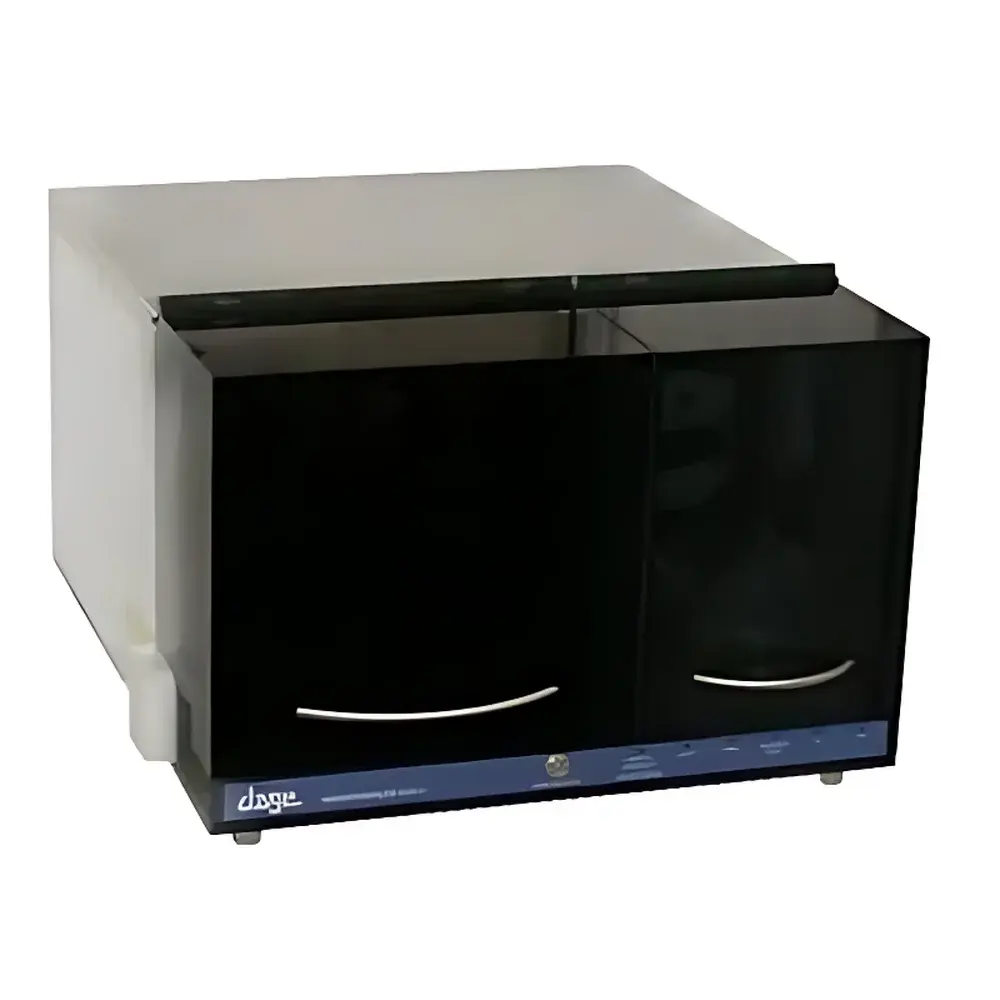
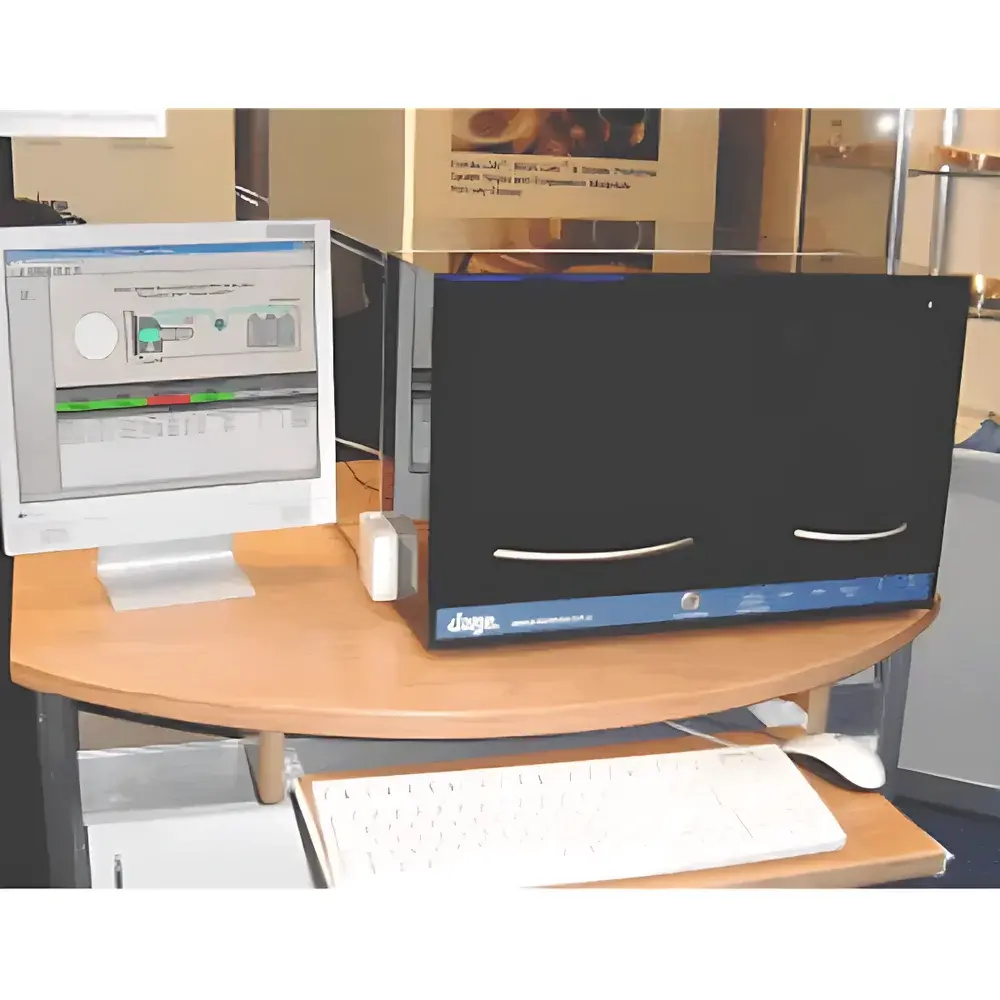
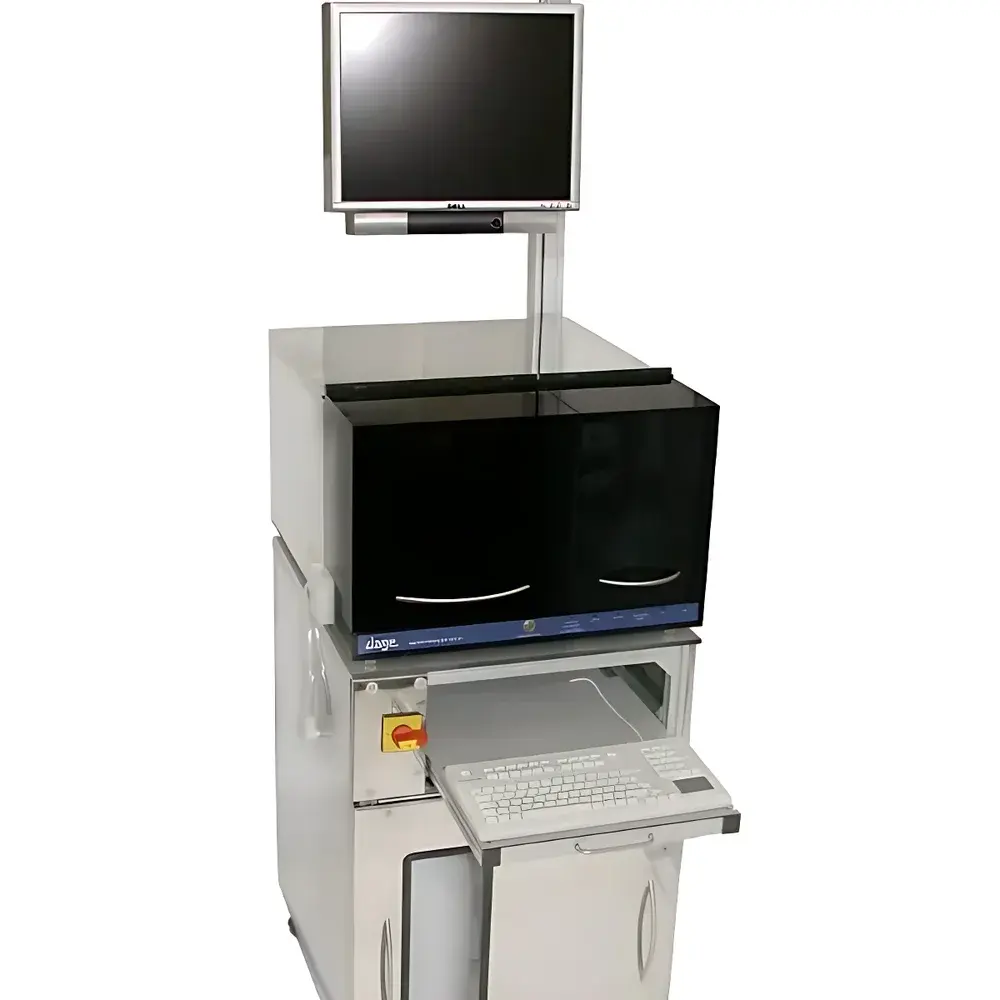
WEP CVP21 Electrochemical Capacitance-Voltage Profiler (ECV) for Dopant Concentration & PN-Junction Depth Analysis
| Brand | WEP |
|---|---|
| Origin | Germany |
| Model | CVP21 |
| Instrument Type | Electrochemical CV Profiler |
| Carrier Concentration Range | 1×10¹¹ cm⁻³ to 1×10²¹ cm⁻³ |
| Depth Resolution | down to 1 nm |
| Measurable Depth Range | 1 nm – 10 µm |
| Sample Compatibility | Dry-in/Dry-out handling |
| Compliance | ASTM F1391, ISO/IEC 17025-aligned operation, GLP-supporting audit trail |
Overview
The WEP CVP21 Electrochemical Capacitance-Voltage Profiler is a precision-engineered instrument designed for quantitative depth-resolved dopant profiling in semiconductor materials. It operates on the fundamental principle of electrochemical capacitance–voltage (ECV) measurement: a controlled anodic etching process is synchronized with high-fidelity C–V scanning across a semiconductor/electrolyte interface. As the electrolyte selectively removes material layer-by-layer, real-time capacitance measurements—converted via the Mott–Schottky relation—are used to calculate local carrier concentration (NA or ND) as a function of depth. This technique delivers direct, non-destructive (prior to etching), and calibration-free quantification of doping profiles in planar and textured substrates—including pyramid-textured silicon wafers widely used in photovoltaics. Unlike secondary ion mass spectrometry (SIMS) or spreading resistance profiling (SRP), the CVP21 requires no ultra-high vacuum, specialized operator training, or expensive isotopic standards; it provides rapid turnaround (<15 min/sample), nanoscale vertical resolution, and intrinsic compatibility with production-integrated R&D workflows.
Key Features
- Modular, cleanroom-compatible architecture with physically isolated optical, electronic, and electrochemical subsystems—ensuring long-term stability and minimizing cross-talk during multi-parameter acquisition.
- Auto-calibrating analog front-end electronics with sub-femtofarad capacitance resolution and <±0.5% full-scale linearity over 1 kHz–1 MHz frequency range.
- Dry-in/Dry-out sample handling protocol: no pre-metallization, no photoresist masking, and no surface passivation required—enabling direct analysis of as-diffused, as-implanted, or as-epitaxially grown wafers.
- Integrated color CCD imaging system with real-time etch-front monitoring and post-measurement image export for spatial correlation of profile anomalies with surface topography.
- Predefined, user-editable measurement templates—including step-scan, ramp-scan, and adaptive etch modes—optimized for Si, GaAs, InP, GaN, SiC, ZnO, CdTe, and HgCdTe.
- Full automation of voltage sweep, current-controlled etching, data acquisition, and profile reconstruction—reducing operator dependency and enhancing inter-lab reproducibility.
Sample Compatibility & Compliance
The CVP21 supports a broad spectrum of semiconductor material systems without hardware modification. Validated substrates include elemental (Si, Ge), IV–VI (SiC), III–V (GaAs, InP, AlGaAs, GaInP, AlInAs, AlGaInP), III–N (GaN, AlGaN, InGaN, AlInN), and II–VI (ZnO, CdTe, HgCdTe) compounds. It accommodates samples from 4 × 2 mm chips to full 200 mm (8″) wafers—including textured, porous, or heteroepitaxial structures. The system complies with key industry standards: measurement traceability aligns with ASTM F1391 (Standard Test Method for Determination of Junction Depth by Electrochemical Capacitance–Voltage Profiling); software architecture supports 21 CFR Part 11-compliant electronic signatures and audit trails; and operational protocols are consistent with ISO/IEC 17025 requirements for testing laboratories. All electrolytes are commercially available, low-cost, and consumed at rates <1 mL per 50 measurements—minimizing hazardous waste generation and logistical overhead.
Software & Data Management
The proprietary WEP ProfilerSuite™ v6.x software provides a unified interface for instrument control, real-time visualization, and metrology-grade data reduction. It implements automated Debye-length correction, series resistance compensation, and built-in Mott–Schottky inversion algorithms compliant with IUPAC-recommended semiconductor electrochemistry conventions. Raw C–V datasets are stored in HDF5 format with embedded metadata (timestamp, operator ID, electrolyte lot, temperature, etch rate). Export options include CSV, MATLAB .mat, and industry-standard SECS/GEM-compliant XML for integration into MES and SPC platforms. The software maintains full GLP audit capability: every action—from parameter change to report generation—is time-stamped, user-attributed, and non-erasable. Optional modules enable batch processing, statistical process control (SPC) charting, and cross-tool correlation with ellipsometry or SIMS reference data.
Applications
The CVP21 serves as a primary metrology tool in photovoltaic R&D (e.g., emitter optimization in PERC, TOPCon, and heterojunction cells), compound semiconductor device development (HEMTs, LEDs, laser diodes), and advanced packaging qualification (TSV doping uniformity, SiGe strain engineering). It is routinely deployed for: junction depth verification in diffusion and ion implantation processes; dopant activation assessment after rapid thermal annealing; grading analysis in graded-bandgap heterostructures; quality control of epitaxial layers (e.g., AlGaN buffer layers for GaN-on-Si); and failure analysis of shunt paths or dopant segregation in multi-junction solar cells. Its ability to resolve sub-10 nm transitions makes it indispensable for next-generation devices relying on ultrashallow junctions (<50 nm) and atomic-layer doping strategies.
FAQ
Does the CVP21 require sample metallization or ohmic contact formation prior to measurement?
No. The system uses electrolyte-mediated capacitive coupling and operates under dry-in/dry-out conditions—eliminating the need for sputtered contacts, evaporation, or lithographic patterning.
Can the CVP21 measure heavily compensated or semi-insulating materials?
Yes. With configurable low-frequency C–V sweeps (100 Hz–10 kHz) and adaptive bias sequencing, it resolves net carrier concentrations down to 1×10¹¹ cm⁻³ even in compensated GaN or semi-insulating InP.
Is calibration required between measurements or across different material systems?
No. The fully self-calibrating electronics and integrated reference capacitor eliminate manual recalibration. Material-specific electrolyte selection—not instrument adjustment—determines measurement validity.
How is measurement repeatability ensured across labs and operators?
Through standardized SOP templates, encrypted measurement logs, and traceable reference wafers (NIST-traceable Si:P/Si:B certified standards available upon request).
What support is provided for method development on novel materials?
WEP offers remote application engineering assistance, electrolyte compatibility consultation, and free monthly validation measurements—including full analytical reports—for all registered CVP21 users.
Related Products




