
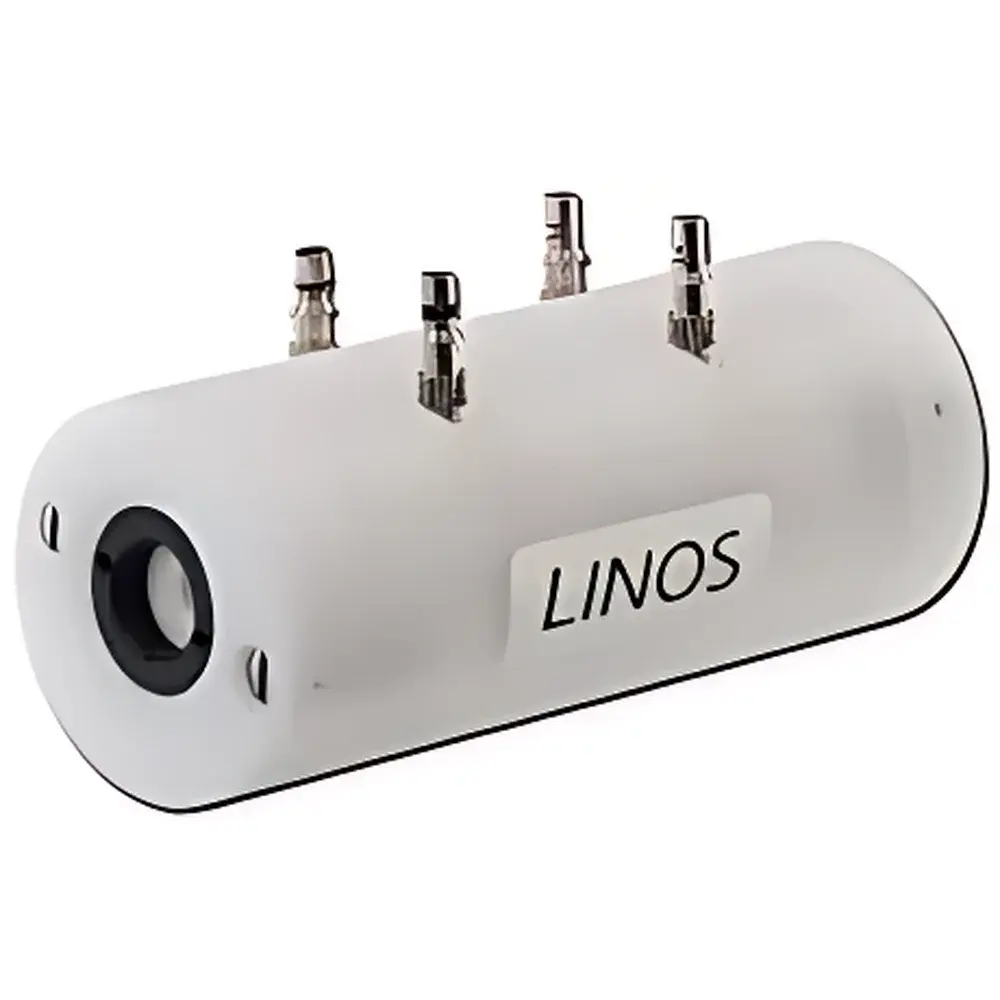
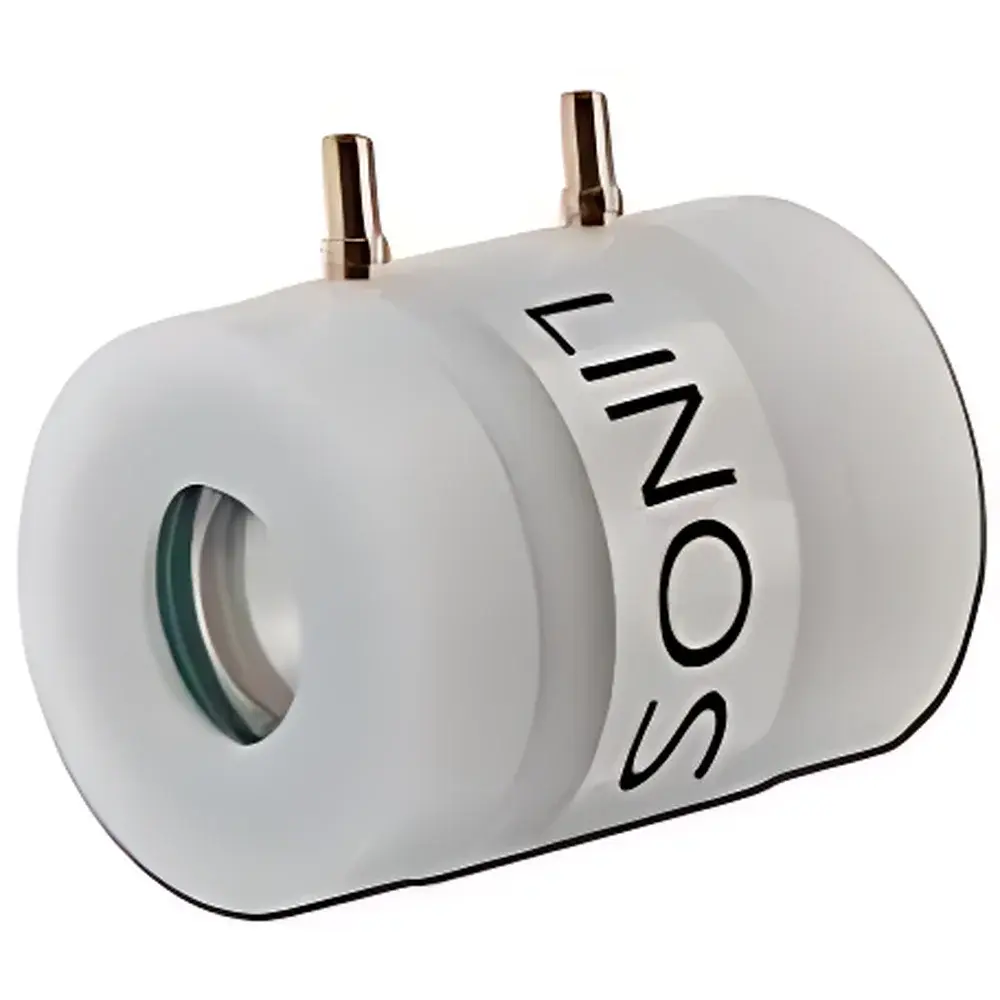
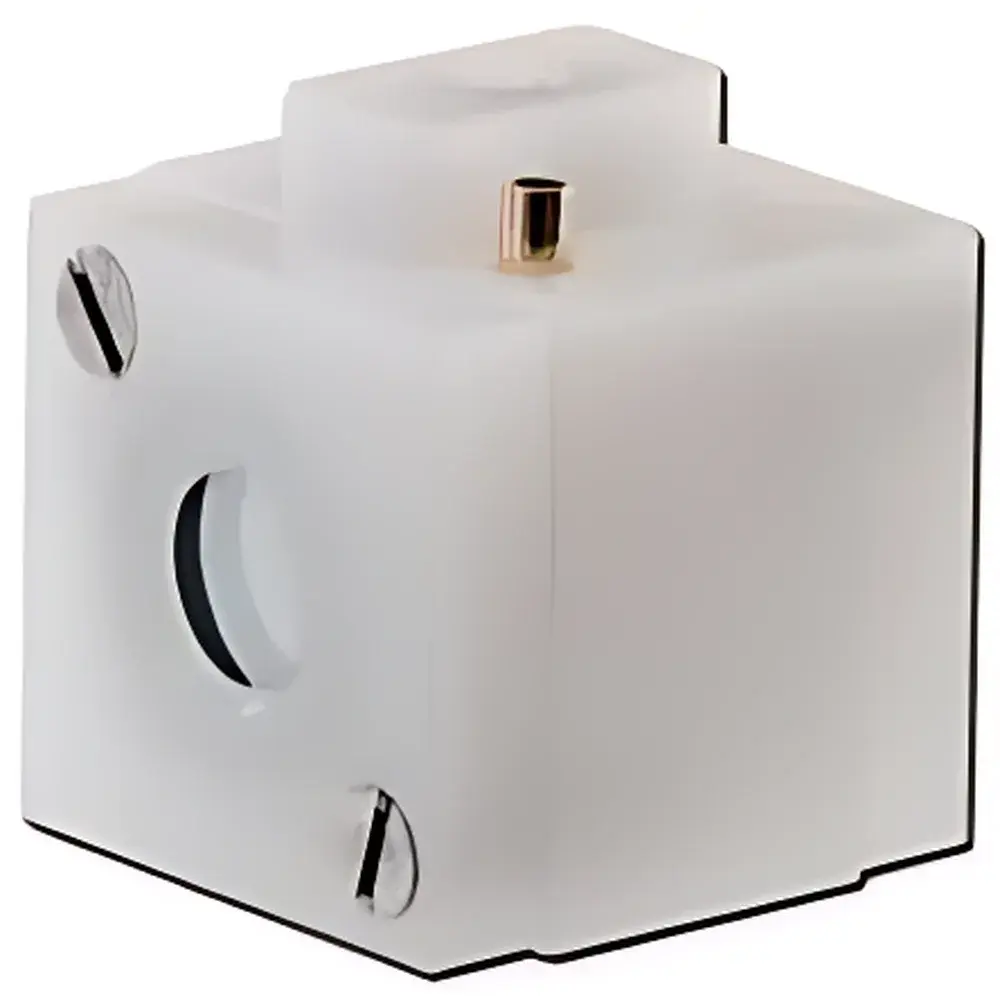
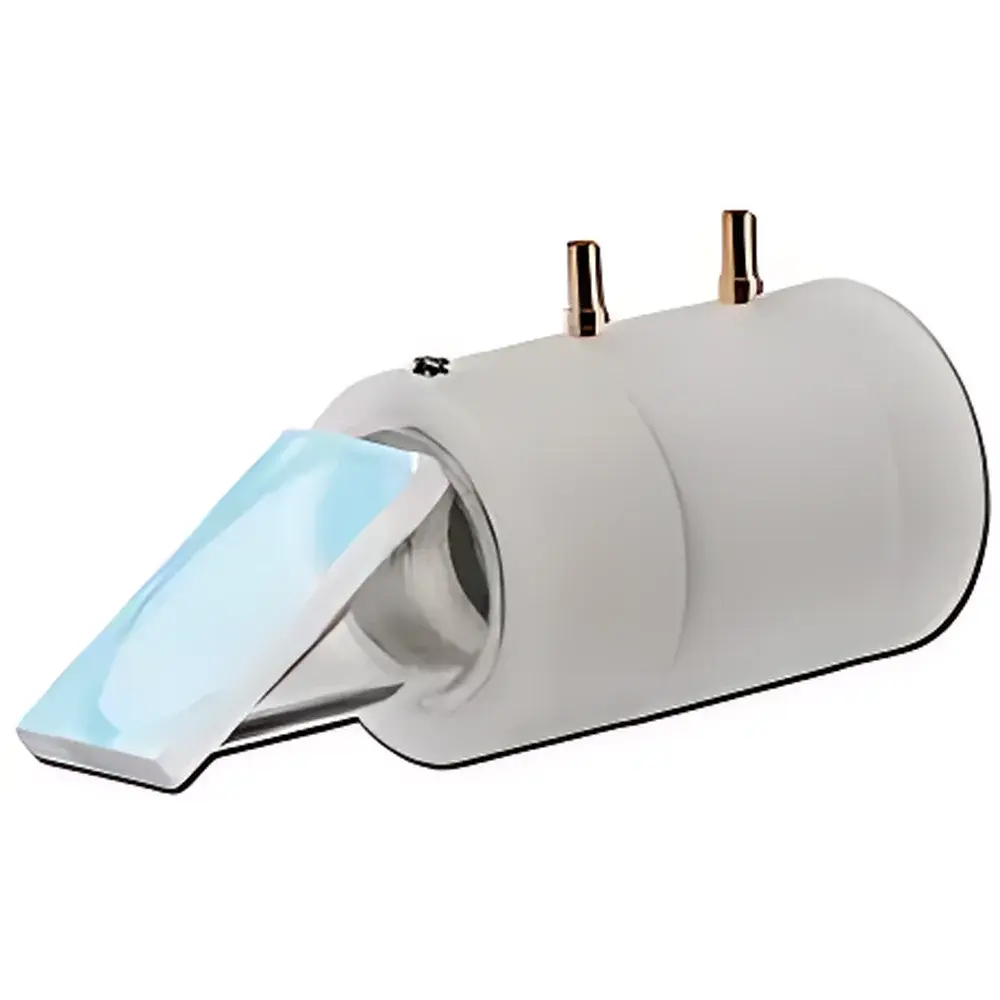
LINOS Pockels Cell (KDP & BBO Crystal Types)
| Brand | LINOS |
|---|---|
| Origin | Germany |
| Product Category | Optical Component |
| Crystal Types | KD*P, BBO, RTP, LiNbO₃ |
| Aperture Diameter | Ø2.6–Ø15 mm |
| Transmission | 84–99% |
| Extinction Ratio (Zero Voltage) | 100:1–3000:1 |
| Half-Wave Voltage (at 1064 nm) | 1.8–8 kV |
| Capacitance | 3.6–6.0 pF |
| Damage Threshold | >100–600 MW/cm² (1064 nm, 10 ns, 1 Hz) |
| Wavefront Distortion | <λ/4 |
| Mounting Compatibility | Up to 35 mm cell diameter |
| Operating Modes | Standard, Water-Immersion (IM), Sol-Gel (SG) |
Overview
The LINOS Pockels Cell is an electro-optic modulator engineered for precise, high-speed control of laser polarization and intensity in demanding optical laboratory and industrial applications. Based on the linear electro-optic (Pockels) effect, it induces birefringence in non-centrosymmetric crystals—such as potassium dideuterium phosphate (KD*P), beta-barium borate (BBO), rubidium titanyl phosphate (RTP), and lithium niobate (LiNbO₃)—in proportion to an applied DC or pulsed electric field. This enables nanosecond-scale switching, Q-switching of solid-state lasers, cavity dumping, optical gating, and polarization rotation with exceptional temporal fidelity and low insertion loss. Designed and manufactured in Germany, each unit undergoes rigorous wavefront and extinction ratio verification to ensure consistency across OEM integration and research-grade setups.
Key Features
- Multiple crystal options optimized for distinct wavelength ranges and performance requirements: KD*P (high deuterium content >98%, ideal for 355–1064 nm), BBO (broad UV transparency and high repetition-rate Q-switching capability), RTP (superior damage threshold >600 MW/cm² at 1064 nm), and LiNbO₃ (compact footprint, suitable for mid-IR up to 2 µm)
- Wavefront distortion maintained below λ/4 over full aperture, ensuring minimal beam degradation in interferometric and ultrafast applications
- High extinction ratios ranging from 100:1 to 3000:1 (measured at zero bias), critical for high-contrast pulse picking and background suppression
- Three mechanical configurations available: standard air-spaced, water-immersion (IM) for reduced reflection losses and thermal management, and sol-gel (SG) bonded variants for enhanced stability under vibration or thermal cycling
- Integrated precision mounting platform featuring micrometer-adjustable pitch, yaw, and rotational alignment—compatible with cells up to 35 mm diameter and designed for long-term mechanical stability in vacuum or cleanroom environments
Sample Compatibility & Compliance
The LINOS Pockels Cell supports a broad range of continuous-wave and pulsed laser sources, including Nd:YAG (1064 nm, 532 nm, 355 nm), Ti:sapphire (700–1000 nm), and frequency-doubled or -tripled systems. All crystal variants comply with ISO 10110 optical surface quality standards (scratch-dig ≤ 10-5) and meet RoHS Directive 2011/65/EU for hazardous substance restrictions. While not certified to specific IEC 61000-6-3 EMC or FDA 21 CFR Part 11 requirements (as it is a passive electro-optic component), its low-noise voltage interface and stable dielectric behavior support integration into GLP- and GMP-aligned laser systems when paired with compliant high-voltage drivers and data acquisition modules.
Software & Data Management
As a hardware-level optical modulator, the Pockels Cell itself does not include embedded firmware or native software. However, it is fully compatible with industry-standard high-voltage pulse generators (e.g., Stanford Research Systems DG645, Quantum Composers 9500 series) and LabVIEW-, Python-, or MATLAB-controlled driver platforms. When integrated into automated test benches, its response linearity and repeatability enable traceable calibration against NIST-traceable photodetectors and power meters. Full documentation—including voltage-transmission curves, capacitance vs. temperature profiles, and thermal lensing coefficients—is provided per batch to support metrological traceability and system-level uncertainty budgeting in ISO/IEC 17025-accredited laboratories.
Applications
- Q-switching of diode-pumped solid-state lasers (DPSSL) operating at kHz–MHz repetition rates
- Ultrafast pulse selection and synchronization in regenerative amplifiers and OPCPA systems
- Polarization state modulation for ellipsometry, quantum optics experiments, and optical coherence tomography (OCT) gating
- Beam blanking and shuttering in laser micromachining, lithography, and LIBS (Laser-Induced Breakdown Spectroscopy)
- OEM integration into medical laser systems requiring CE-marked optical subassemblies with documented optical performance specifications
FAQ
What is the typical rise time for LINOS Pockels Cells?
Rise time depends primarily on driver impedance and cell capacitance; for a 5 pF BBO cell driven by a 50 Ω source, theoretical RC-limited rise time is ~250 ps—practically achievable with appropriate high-bandwidth pulsers.
Can these cells be used in vacuum environments?
Yes—standard and IM versions are vacuum-compatible up to 10⁻⁶ mbar; SG-bonded units require validation for outgassing compliance per ASTM E595.
Is custom electrode geometry or anti-reflection coating available?
Yes—LINOS offers AR coatings optimized for specific wavelengths (e.g., R<0.2% @ 1064 nm ±10 nm) and custom electrode layouts for asymmetric apertures or multi-electrode configurations upon request.
How is damage threshold validated?
Each production lot undergoes statistical sampling per ISO 21254-1 using calibrated fluence mapping and CCD-based plasma detection; reported values reflect mean performance—not guaranteed minimums—as specified in the delivery certificate.
Do you provide driver compatibility guidance?
Yes—technical datasheets include recommended voltage slew rates, maximum dV/dt limits, and grounding topology diagrams to minimize ringing and parasitic discharge in high-repetition-rate operation.




