
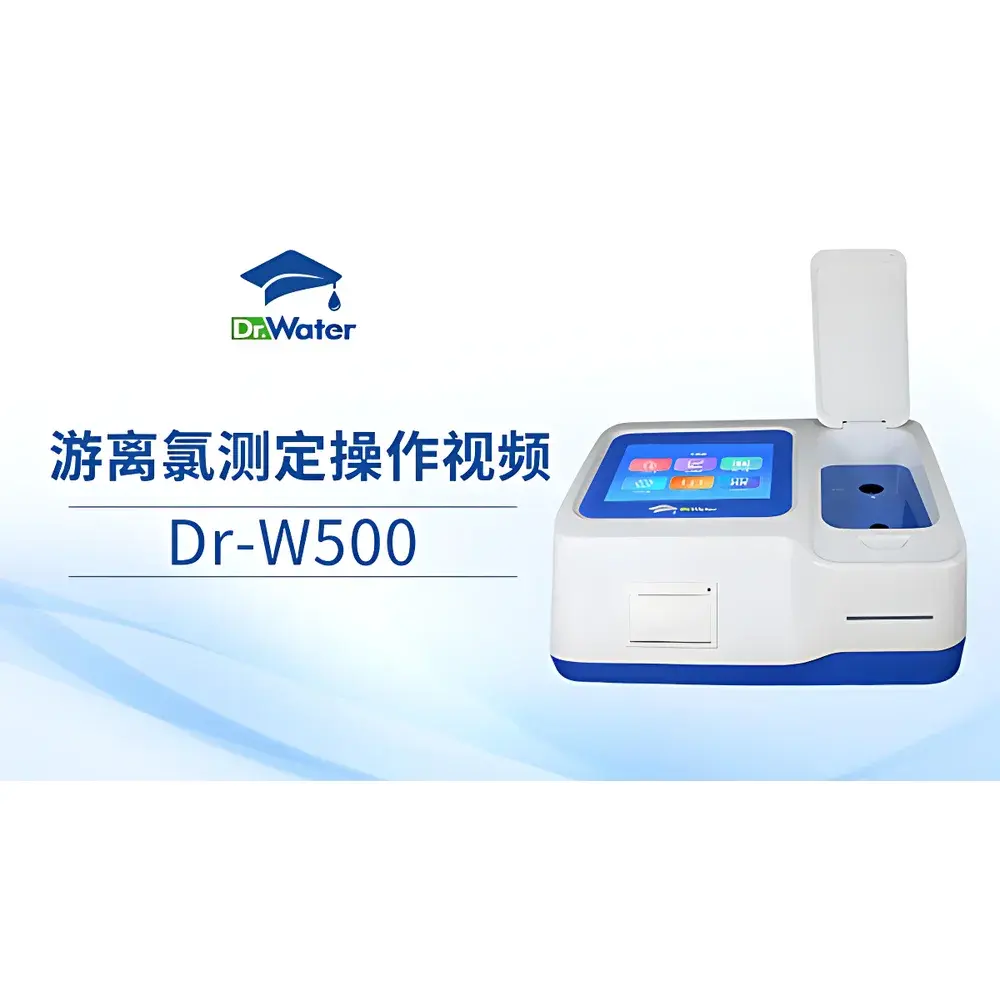
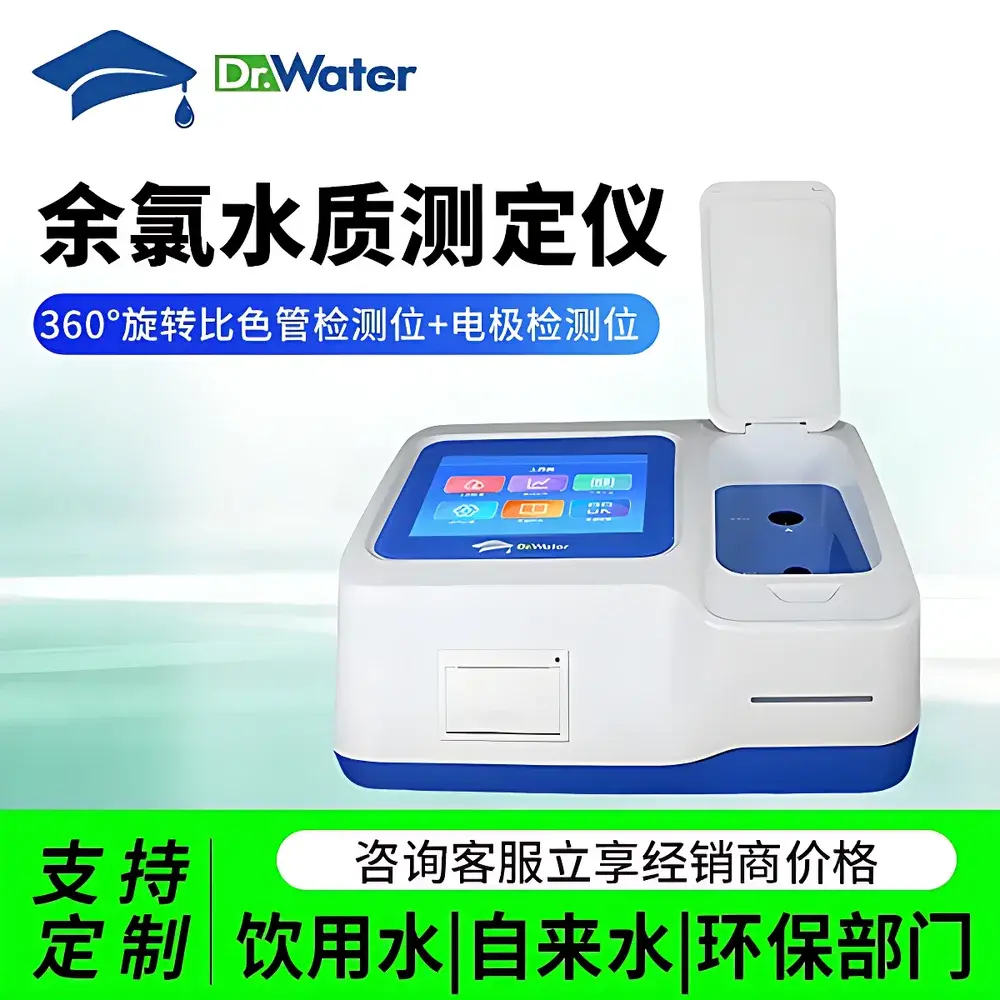
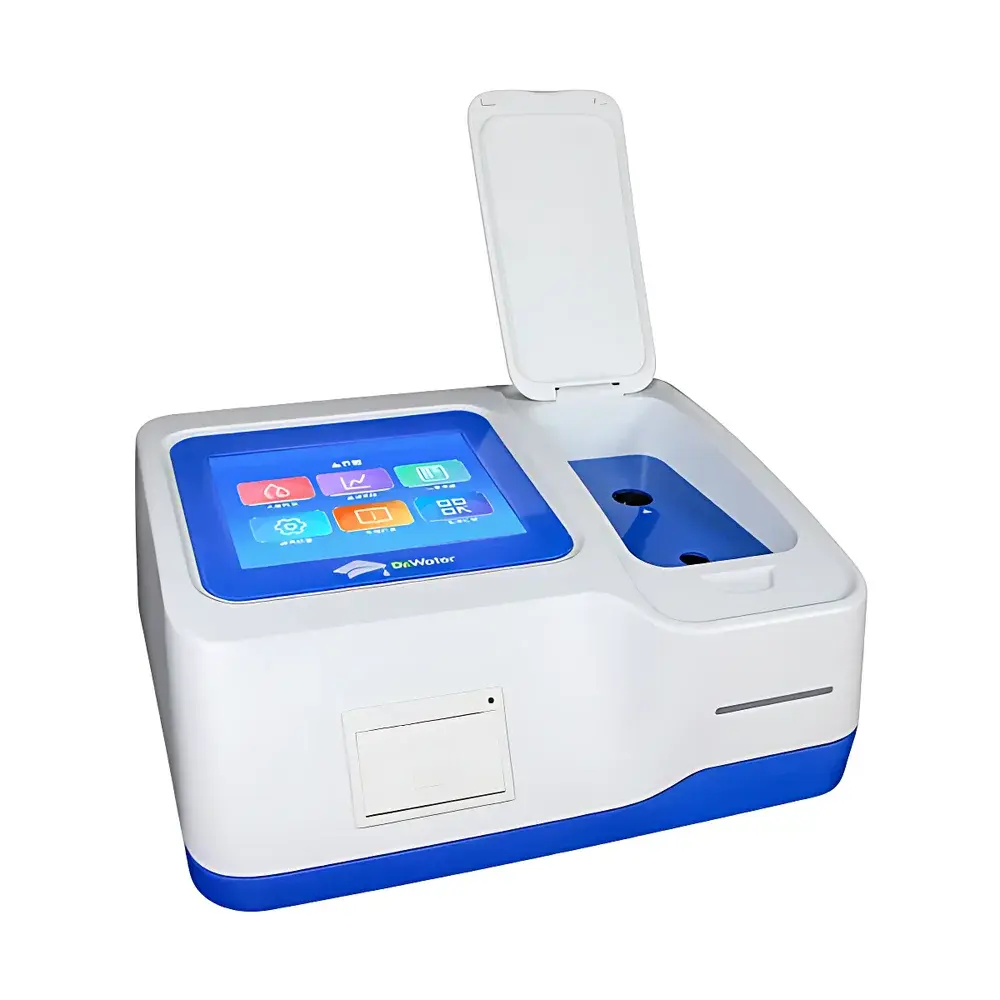
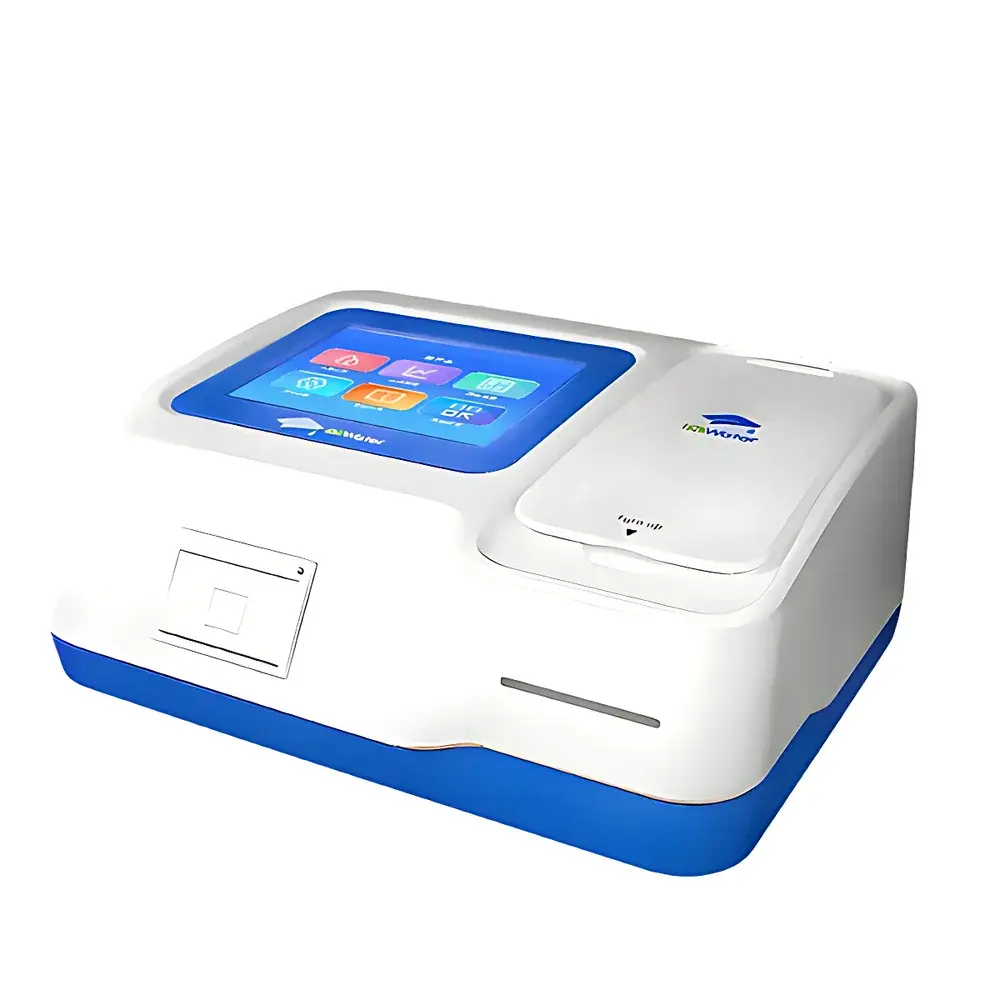
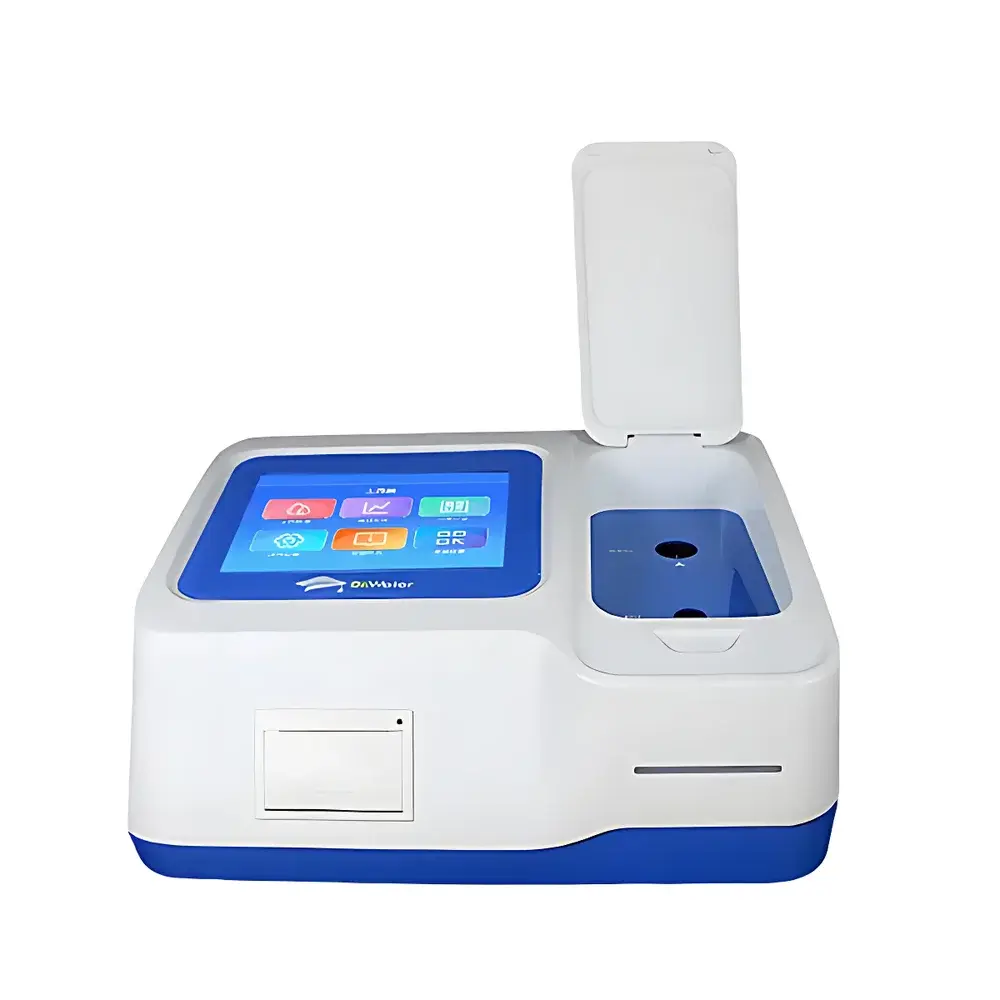
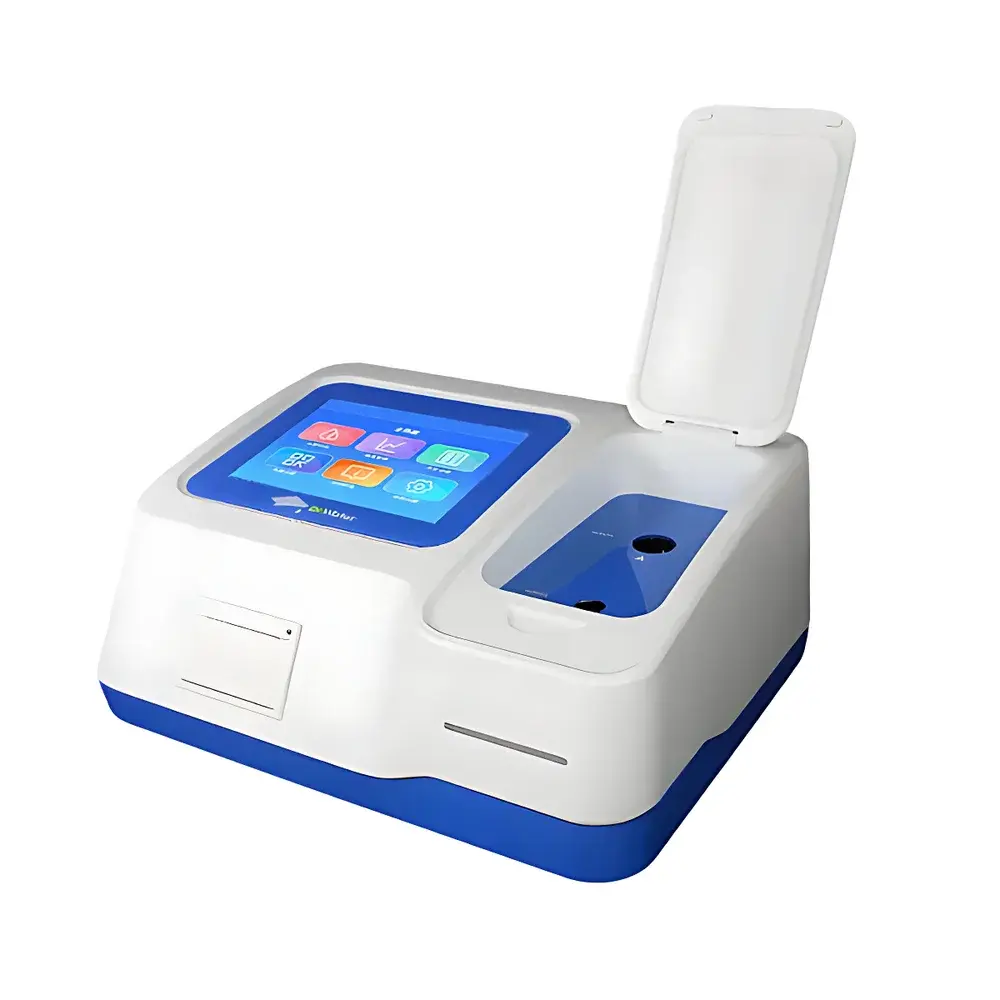
Water Doctor Dr-WCI Residual Chlorine Analyzer
| Brand | Water Doctor |
|---|---|
| Origin | Hunan, China |
| Model | Dr-WCI |
| Instrument Type | Benchtop Laboratory Analyzer |
| Measurement Principle | DPD Colorimetric Spectrophotometry (ASTM D1253, ISO 7393-2, EPA 330.5) |
| Measuring Parameter | Free Chlorine (Residual Chlorine) |
| Range | 0.02–2.00 mg/L as Cl₂ |
| Accuracy | ≤ ±5% of reading |
| Repeatability | ≤ ±2% RSD |
| Detection Limit | 0.02 mg/L |
| Absorbance Resolution | 0.001 Abs |
| Wavelength Range | 330–900 nm |
| Wavelength Accuracy | ±5 nm |
| Optical Stability | ≤ ±0.005 Abs / 20 min |
| Display | 8-inch HD capacitive touchscreen |
| Language Support | English & Chinese |
| Sample Holders | Rotatable 16-mm cuvette position + fixed 25-mm cuvette position |
| Calibration Modes | Blank, Factor, and Multi-point Curve Calibration |
| Data Storage | Up to 1,000,000 measurement records |
| Connectivity | USB port for data export |
| Output Modes | Concentration (mg/L) or Absorbance (Abs) |
| Printer | Built-in thermal printer |
| Housing Material | Flame-retardant ABS with chemical resistance |
| Dimensions (W×D×H) | 392 × 315 × 170 mm |
| Light Source | Long-life imported cold LED (rated >100,000 hours) |
Overview
The Water Doctor Dr-WCI Residual Chlorine Analyzer is a benchtop spectrophotometric instrument engineered for precise, trace-level quantification of free chlorine in water matrices using the standardized N,N-diethyl-p-phenylenediamine (DPD) colorimetric method. It operates in full compliance with internationally recognized protocols—including ASTM D1253 (Standard Test Method for Determining Free Chlorine in Water), ISO 7393-2 (Water Quality — Determination of Free and Total Chlorine — Part 2: Colorimetric Method), and U.S. EPA Method 330.5—ensuring regulatory acceptability across drinking water utilities, public health laboratories, environmental monitoring agencies, and GMP-compliant manufacturing facilities. The analyzer integrates an auto-wavelength positioning optical system with dual-cuvette compatibility (rotatable 16-mm and fixed 25-mm positions), enabling consistent photometric alignment and minimizing pathlength-induced variability. Its high-stability cold LED light source (>100,000 h lifetime) and temperature-compensated detector architecture deliver long-term photometric integrity, critical for multi-shift or unattended operation in routine QC environments.
Key Features
- 8-inch HD capacitive touchscreen interface with intuitive icon-driven navigation and real-time feedback; supports seamless switching between English and Chinese language modes.
- Dual-cuvette detection geometry: 360° rotatable holder for standard 16-mm round tubes and dedicated 25-mm rectangular cell position—optimized for both field-collected samples and standardized lab reagents.
- Dynamic optical stabilization: built-in initialization status monitoring suppresses transient signal drift during warm-up, ensuring reliable baseline establishment prior to measurement.
- Hybrid quantification algorithm combining polynomial interpolation and least-squares regression curve fitting—enhancing accuracy across nonlinear DPD response ranges while accommodating inter-batch reagent variability.
- On-device dilution factor configuration: users input sample dilution ratio directly; concentration results are automatically corrected and displayed without manual calculation.
- Programmable timed assay mode: define start time and interval for sequential measurements—ideal for batch processing or overnight stability studies without operator presence.
- Triple-mode calibration framework: blank calibration (zero adjustment), factor calibration (slope verification), and multi-point curve calibration (up to 8 points)—enabling traceable validation per ISO/IEC 17025 requirements.
- User-defined alert thresholds: configurable upper/lower limits trigger on-screen warnings and optional audible alerts when measured values exceed predefined operational bands.
- Interference compensation engine: digitally corrects for spectral overlap from sample coloration and photometric attenuation due to light scattering—critical for turbid or organically stained waters.
- Multi-algorithm turbidity assessment: four selectable modes (Standard, Low-Turbidity, Signal-Averaging, and Rapid Sedimentation) support method-specific reporting aligned with ISO 7027 and APHA Standard Methods 2130B.
Sample Compatibility & Compliance
The Dr-WCI accepts aqueous samples from diverse sources including potable water, wastewater effluent, swimming pool recirculation streams, pharmaceutical process water, beverage production lines, and cooling tower systems. It accommodates common DPD-based reagent kits (e.g., Hach, Palintest, or equivalent third-party formulations) and supports open-method flexibility for custom calibration curves. All optical and electronic components meet IEC 61010-1 safety standards for laboratory equipment. Firmware implements audit-trail-capable logging (time-stamped events, user IDs, calibration history) compatible with GLP/GMP documentation workflows. While not FDA 21 CFR Part 11 certified out-of-the-box, its data export functionality (USB mass storage mode) enables integration into validated LIMS or ELN platforms where electronic record integrity is enforced at the system level.
Software & Data Management
Embedded firmware provides full local control over measurement execution, parameter configuration, and result review. Each stored record includes timestamp, operator ID (if assigned), cuvette position used, calibration status flag, raw absorbance value, calculated concentration, and method identifier. Internal memory retains up to 1,000,000 entries with chronological indexing and searchable filtering by date range or parameter range. Export is performed via standard USB 2.0 interface in CSV format—compatible with Microsoft Excel, LabArchives, and industry-standard statistical analysis tools. Optional thermal printing outputs hard-copy reports containing full metadata, ideal for field audits or shift handover documentation. No cloud connectivity or remote access features are implemented, preserving data sovereignty in regulated environments.
Applications
- Routine disinfectant residual monitoring in municipal water distribution networks and treatment plants.
- Compliance verification against WHO Guidelines for Drinking-water Quality (GDWQ) and national standards (e.g., GB/T 5750.11–2023 in China).
- Process control in bottled water and soft drink manufacturing, where chlorine residuals must be minimized pre-filtration.
- Environmental compliance testing for discharge permits under NPDES or similar regulatory frameworks.
- Validation of point-of-use (POU) and point-of-entry (POE) chlorination systems in healthcare and hospitality infrastructure.
- Educational use in university environmental science and analytical chemistry laboratories for method validation exercises.
FAQ
What regulatory methods does the Dr-WCI support?
It fully implements ASTM D1253, ISO 7393-2, and EPA Method 330.5 for free chlorine determination using DPD reagents.
Can the instrument store calibration curves from multiple reagent lots?
Yes—up to eight multi-point curves can be saved and recalled independently, each tagged with lot number and expiration date.
Is external software required for data analysis?
No—onboard calculation and reporting functions eliminate dependency on proprietary desktop applications.
How is optical drift compensated during extended use?
The system performs automatic dark-current correction before each measurement cycle and monitors baseline stability every 20 minutes per IEC 62722-1 guidelines.
Does the Dr-WCI require annual factory recalibration?
No—its solid-state optical design and self-diagnostic routines enable user-performed verification using NIST-traceable neutral density filters; formal recalibration is recommended only after physical impact or major environmental exposure.
Related Products







