
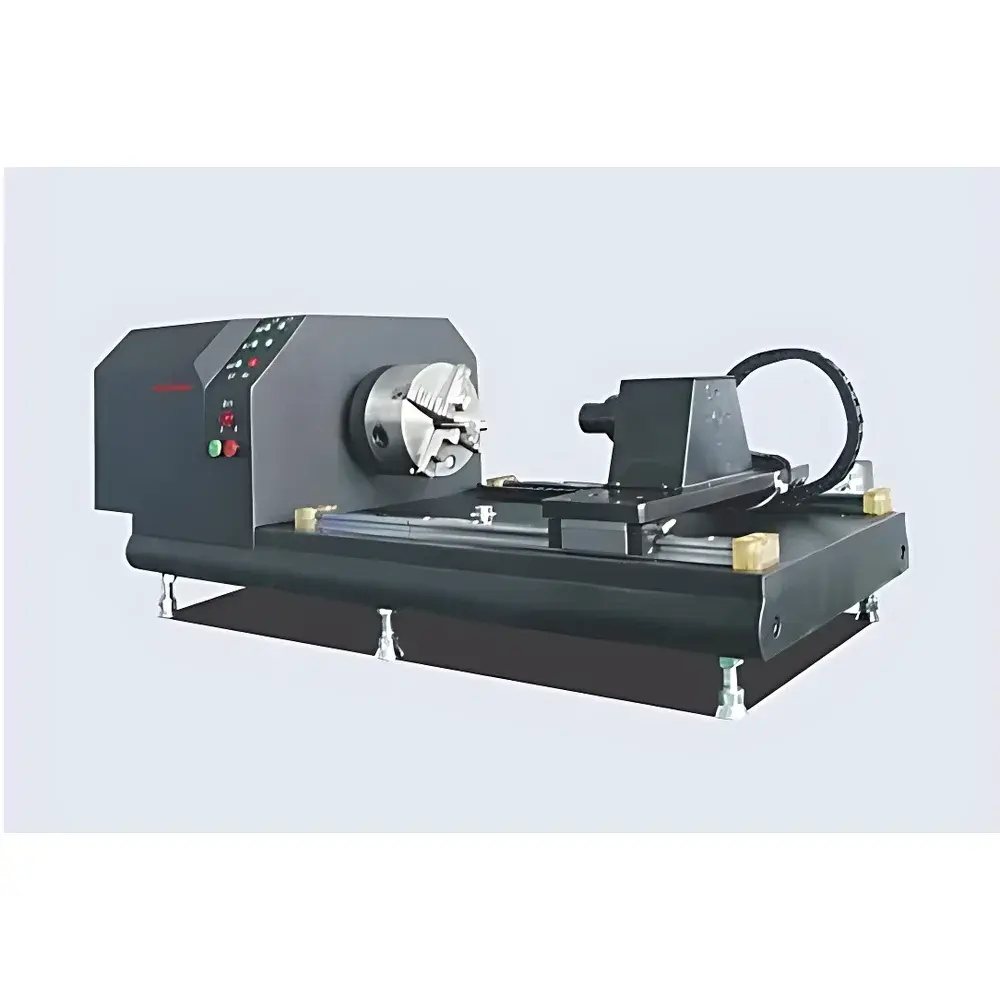
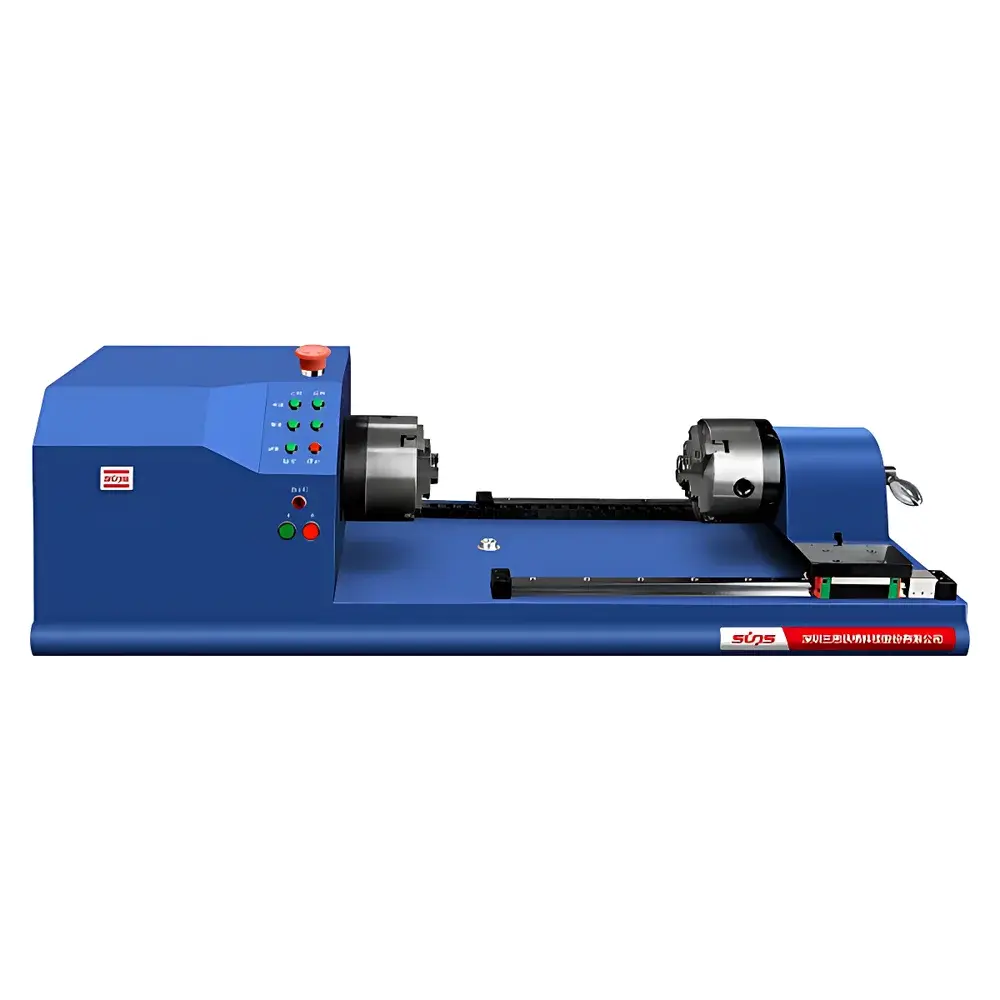
SUNS TTM Dedicated Torsion Testing Machine for Orthopedic Bone Screws
| Brand | SUNS |
|---|---|
| Origin | Shenzhen, China |
| Manufacturer Type | Direct Manufacturer |
| Product Category | Domestic |
| Model | TTM |
| Quotation | Upon Request |
| Maximum Torque | 20 N·m to 50 N·m |
| Torque Measurement Range | 1%–100% of Full Scale |
| Torque Resolution | 0.0001 N·m to 0.0003 N·m |
| Torsion Angle Measurement Range | 0°–10000° |
| Motor Power | 100 W–200 W |
Overview
The SUNS TTM Dedicated Torsion Testing Machine is an electromechanical test system engineered specifically for the mechanical evaluation of orthopedic bone screws in accordance with international regulatory and quality assurance frameworks. It operates on the principle of controlled quasi-static torsional loading, applying precise rotational displacement or torque to metallic implant screws while simultaneously measuring angular deformation and resisting torque response. The system is designed to quantify critical biomechanical parameters—including torsional strength, maximum breakaway torque, and angular displacement at fracture—under repeatable, traceable, and auditable conditions. Its architecture integrates high-fidelity torque transduction, sub-degree angular resolution, and closed-loop servo control to ensure compliance with stringent medical device testing requirements.
Key Features
- Servo-motor-driven actuation system delivering stable, programmable torsion rates (e.g., 0.1°/s to 10°/s) with minimal speed drift (< ±0.5% of setpoint), essential for ISO 6475 and ASTM F543 stepwise or continuous ramp protocols.
- High-efficiency cycloidal pinwheel gear reducer providing low backlash ( 1.2 × 10⁵ N·m/rad), and smooth torque transmission across the full 0–10000° angular range.
- Precision linear guideways with preloaded V-groove rails ensuring axial alignment tolerance ≤ ±5 µm over 300 mm travel, minimizing eccentric loading that could compromise screw neck stress distribution during testing.
- Dual-channel digital control unit supporting real-time PID tuning, dynamic load compensation, and configurable safety thresholds—including hardware-based torque overload cutoff (adjustable from 105% to 120% FS) and emergency stop with < 20 ms response time.
- Integrated torque sensor with calibrated rangeability (1%–100% FS), resolution down to 0.0001 N·m, and thermal drift compensation (±0.02% FS/°C), traceable to national metrology standards.
Sample Compatibility & Compliance
The TTM accommodates standard orthopedic screw geometries per YY 0018–2008 and ASTM F543, including cortical, cancellous, cannulated, and variable-pitch designs with diameters from 2.0 mm to 7.0 mm and lengths up to 120 mm. Fixture adaptability supports both head-retained and shaft-clamped configurations using hardened steel collets and self-centering chucks. All test procedures align with the mechanical test clauses of ISO 6475:1989 (Clause 6.2: Torsional Strength Test), YY/T 0662–2008 (Section 5.3), and ASTM F543–02 (Annex A2). The system supports GLP-compliant operation through user-accessible audit trails, electronic signature support, and parameter lockout functionality—enabling validation under FDA 21 CFR Part 11 when deployed in regulated QC environments.
Software & Data Management
The Windows-based TTM Control Suite provides a validated, role-based interface compliant with IEC 62304 Class B software safety requirements. It enables test method definition (e.g., constant-rate torsion, torque-controlled hold, or fracture detection via slope threshold), real-time plotting of torque vs. angle curves with dual-axis scaling, and automated calculation of key outputs: peak torque (N·m), fracture angle (°), torsional modulus (N·m/rad), and post-yield angular displacement. Raw data export is available in CSV, XML, and PDF formats—with embedded metadata (operator ID, timestamp, calibration certificate ID, environmental temperature/humidity logs). All test records are stored with SHA-256 hashing for integrity verification and support version-controlled method archiving.
Applications
- Pre-release mechanical validation of stainless steel and titanium alloy bone screws for ISO 13485-certified manufacturers.
- Routine quality control in orthopedic implant production lines, including incoming raw material verification and final lot release testing.
- Comparative evaluation of thread design variants (e.g., asymmetric vs. symmetric profiles) under standardized torsional fatigue precycling per YY/T 0662 Annex C.
- Supporting regulatory submissions (e.g., FDA 510(k), CE Technical File) by generating test reports containing full traceability to reference standards, equipment calibration status, and environmental monitoring data.
- Research applications in biomaterials labs assessing degradation-induced torsional weakening of resorbable polymer screws under simulated physiological aging.
FAQ
Does the TTM comply with FDA 21 CFR Part 11 requirements for electronic records and signatures?
Yes—the software includes configurable audit trail logging, electronic signature enforcement, and data integrity safeguards aligned with Part 11 Subpart B expectations when deployed on validated IT infrastructure.
Can the system be calibrated to ISO/IEC 17025-accredited laboratories?
Yes—torque and angular measurement channels are modular and traceably calibratable; SUNS provides calibration certificates with uncertainty budgets referenced to NIM (China National Institute of Metrology) standards.
Is third-party verification of test method equivalence (e.g., vs. Instron or Zwick systems) supported?
Yes—the open API and standardized data output format facilitate cross-platform correlation studies; application notes for ASTM F543 inter-laboratory comparison are available upon request.
What maintenance intervals are recommended for long-term GMP compliance?
Preventive maintenance is scheduled every 12 months or 2000 test cycles—covering gear lubrication, guideway recalibration, torque sensor zero-drift verification, and safety circuit functional testing per manufacturer SOP MNT-TTM-01.



