
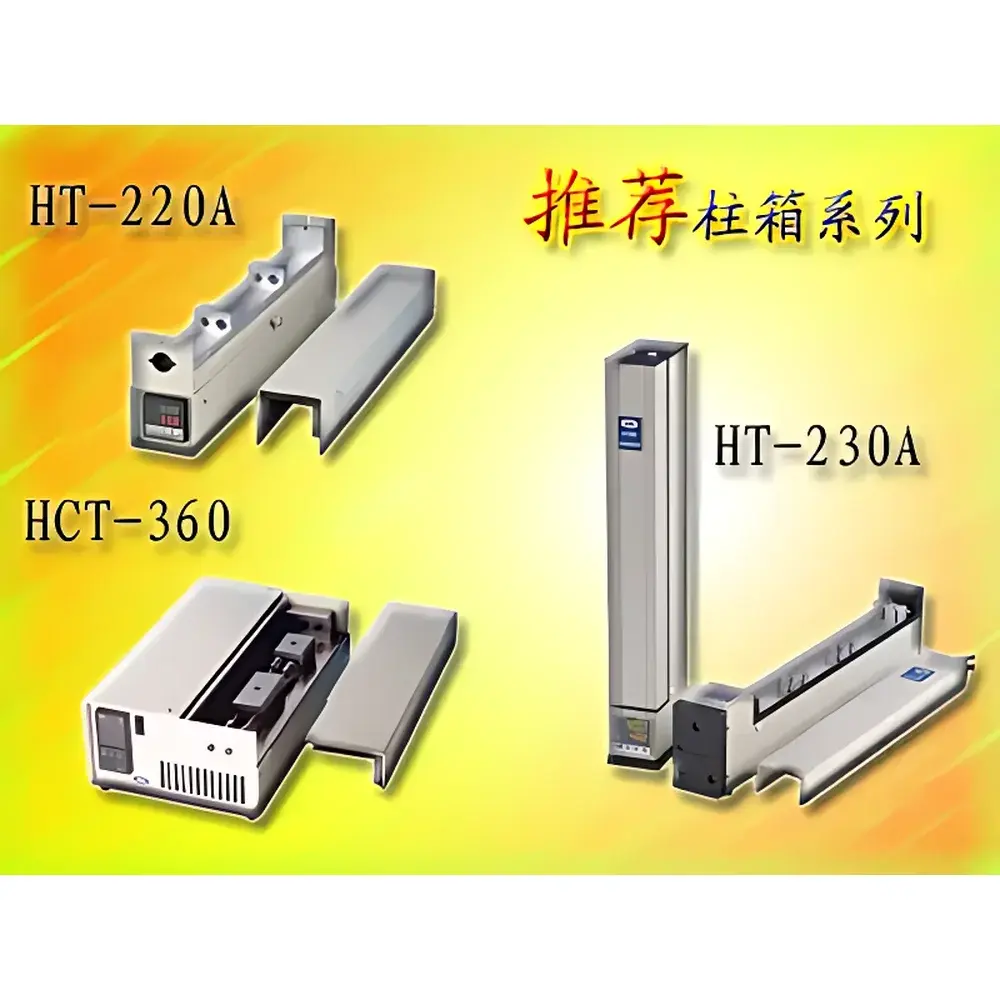
DT-230C Chromatography Column Oven
| Origin | Shanghai, China |
|---|---|
| Manufacturer Type | Authorized Distributor |
| Origin Category | Domestic (China) |
| Model | DT-230C |
| Pricing | Available Upon Request |
| Temperature Stability | ±0.1 °C |
| Absolute Accuracy at 50 °C | ±0.1 °C |
| Repeatability | ±0.1 °C |
| Temperature Range | Ambient to 100 °C |
| Power Supply | 220 V AC, 50 Hz |
| Heating Chamber Dimensions (L×W×H) | 465 × 104 × 84 mm |
| Column Capacity | Up to three semi-preparative or gel-filtration columns |
Overview
The DT-230C Chromatography Column Oven is a precision-engineered thermal management system designed specifically for high-performance liquid chromatography (HPLC) and preparative-scale chromatographic applications. It operates on the principle of active resistive heating combined with closed-loop PID temperature control, ensuring thermally stable environments for chromatographic columns—critical for retention time reproducibility, peak symmetry, resolution enhancement, and backpressure mitigation. Unlike ambient-conditioned column placement, this oven maintains isothermal conditions across the entire column length, minimizing axial thermal gradients that induce band broadening and retention drift. Its design complies with analytical requirements specified in pharmacopoeial methods (e.g., USP , EP 2.2.46) and regulatory guidance emphasizing controlled column temperature as a critical process parameter (CPP) under ICH Q2(R2) and FDA CGMP (21 CFR Part 211).
Key Features
- PID-controlled microprocessor architecture using high-stability platinum RTD sensors (Class A tolerance), enabling auto-tuning and real-time thermal feedback with <0.1 °C deviation over extended operation.
- Dual-line LED display with intuitive touch-sensitive interface for rapid setpoint entry, status monitoring, and parameter recall.
- Robust thermal insulation and optimized airflow distribution ensure uniform temperature distribution (<±0.15 °C spatial variation across chamber volume) and minimal thermal lag during ramping.
- Integrated overtemperature protection circuitry triggers audible/visual alarm and cuts heater power if chamber exceeds user-defined safety threshold (default: 105 °C).
- Horizontal chassis configuration accommodates up to three semi-preparative columns (e.g., 10 mm ID × 250 mm L) or standard gel-filtration columns (e.g., 16/600 or 26/60 formats), with accessible cable routing and low-profile footprint for integration into compact HPLC workstations.
- Front-access transparent quartz window allows non-invasive visual inspection of column fittings, solvent flow paths, and packing integrity without thermal interruption.
Sample Compatibility & Compliance
The DT-230C supports stainless steel, PEEK, and fused-silica capillary columns ranging from analytical (2.1–4.6 mm ID) to semi-preparative (10–21.2 mm ID) dimensions. Its chamber geometry is compatible with common column hardware including Swagelok®-style ferrules, Waters® Column Heater Adapters, and Thermo Fisher™ column retention clips. The unit meets electromagnetic compatibility (EMC) requirements per IEC 61326-1 and electrical safety standards per IEC 61010-1. While not certified for GxP environments out-of-the-box, its deterministic thermal behavior, audit-ready parameter logging (via optional RS-232/USB interface), and configurable alarm thresholds support qualification under GLP and GMP frameworks when integrated into validated HPLC systems.
Software & Data Management
The DT-230C operates as a standalone instrument with embedded firmware supporting manual setpoint control, real-time temperature readout, and event-triggered alarms. For laboratory informatics integration, an optional serial communication module enables bidirectional data exchange with third-party chromatography data systems (CDS) such as Waters Empower™, Agilent OpenLab CDS, or Thermo Chromeleon™. Logged temperature profiles—including ramp rates, dwell times, and deviation alerts—are exportable in CSV format for inclusion in electronic lab notebooks (ELN) and 21 CFR Part 11-compliant audit trails when paired with compliant CDS platforms.
Applications
- Method development and transfer requiring strict column temperature control per ICH Q5C stability-indicating assays.
- Pharmaceutical QC testing where retention time RSD must remain <0.5% across 20 injections (e.g., assay of monoclonal antibody aggregates via SEC-HPLC).
- Chiral separations sensitive to thermal-induced enantioselectivity shifts (e.g., polysaccharide-based columns operating at 35–45 °C).
- Preparative purification workflows using large-diameter columns where heat dissipation from high-flow mobile phases necessitates active thermal regulation.
- Environmental analysis involving temperature-dependent elution of PAHs or PCB congeners on reversed-phase C18 columns.
FAQ
Does the DT-230C support external temperature calibration verification?
Yes—its RTD sensor output is accessible via test points on the rear panel, allowing traceable calibration against NIST-traceable reference thermometers per ISO/IEC 17025 procedures.
Can the unit maintain temperature stability during ambient fluctuations of ±5 °C?
Yes—the oven achieves <±0.1 °C stability over 8-hour continuous operation even when room temperature varies between 18–28 °C, provided ventilation clearance ≥5 cm is maintained.
Is the heating chamber compatible with organic solvent vapors from methanol/acetonitrile mobile phases?
The chamber interior uses chemically resistant anodized aluminum and silicone-free gasket materials; however, prolonged exposure to saturated solvent vapor is not recommended—ventilation hoods are advised for long-term use with high-boiling solvents.
What is the warm-up time to reach 60 °C from ambient (25 °C)?
Approximately 12 minutes under no-load conditions, verified per ASTM E2500-13 Annex A3 thermal performance protocol.
Does the unit include documentation for IQ/OQ protocol execution?
A comprehensive User Manual, Factory Calibration Report, and blank IQ/OQ checklists aligned with ISO 9001:2015 Annex SL are supplied with each shipment.



