
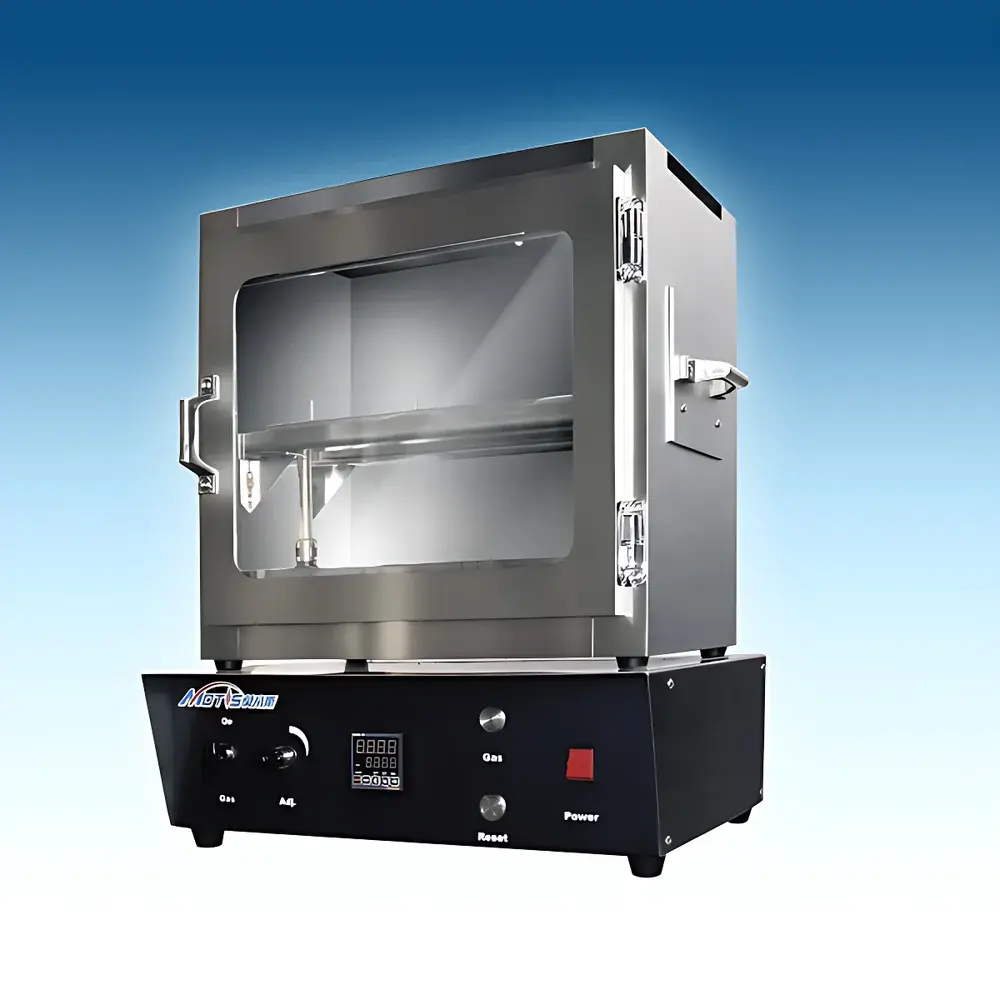
MOTIS HFT Horizontal Burning Tester
| Brand | MOTIS |
|---|---|
| Origin | Jiangsu, China |
| Manufacturer Type | Authorized Distributor |
| Country of Origin | China |
| Model | HFT |
| Price Range | USD 1,400 – 7,000 (FOB) |
| Application Domain | Automotive Interior Materials Testing |
| Compliance | GB 8410, FMVSS 302 |
| Ignition Time Setting | 15 s (automatically terminated) |
| Gas Control | Integrated needle valve and ball valve for precise propane flow regulation and shutoff |
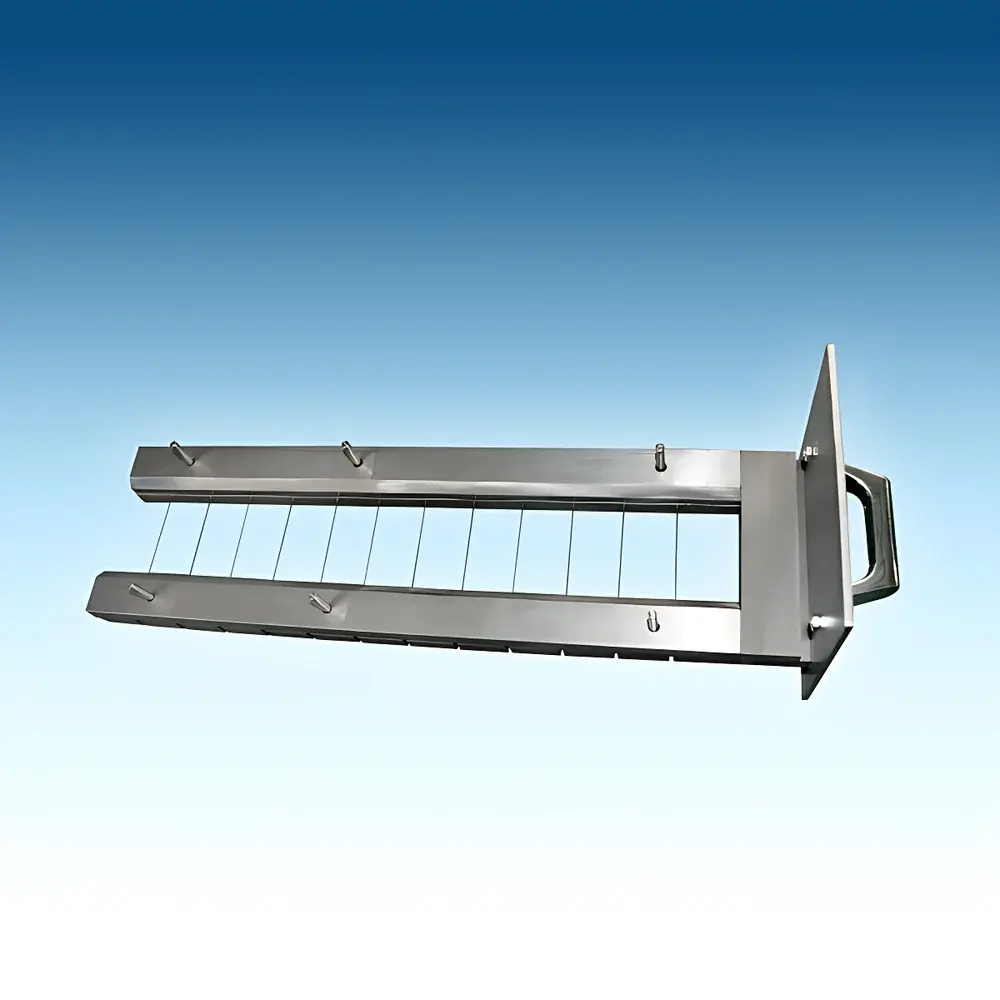
| Sample Holder Options | Two interchangeable specimen holders |
| Specimen Mounting | Right-side insertion design for ergonomic operation |
Overview
The MOTIS HFT Horizontal Burning Tester is an engineered benchtop combustion test apparatus designed specifically for evaluating the flammability characteristics of automotive interior materials under standardized horizontal orientation conditions. It operates on the principle of controlled flame impingement—where a calibrated Bunsen-type burner delivers a defined propane-air flame to the free end of a horizontally clamped specimen for a fixed duration (15 seconds), after which flame propagation distance, afterflame time, and afterglow time are measured in accordance with regulatory pass/fail criteria. This test method quantifies surface flame spread behavior, a critical parameter for assessing fire hazard potential in vehicle cabins. The instrument is purpose-built to replicate the thermal exposure profile specified in GB 8410–2018 (“Motor Vehicle Interior Materials Combustion Characteristics”) and FMVSS 302 (“Flammability of Interior Materials”), both of which mandate horizontal specimen orientation, defined flame geometry, and strict environmental conditioning protocols (e.g., 23 °C ± 2 °C, 50% ± 5% RH prior to testing). Its mechanical architecture ensures repeatable burner positioning, consistent gas flow dynamics, and operator-safe sample handling—key prerequisites for inter-laboratory reproducibility in regulatory compliance testing.
Key Features
- Precision-engineered horizontal specimen holder assembly with dual interchangeable clamp configurations—optimized for flat sheet materials (e.g., fabrics, foams, laminates) and irregular or layered composites commonly used in automotive seating, headliners, and door trims.
- Integrated dual-valve gas control system: a fine-adjustment needle valve for accurate propane flow tuning, paired with a robust quarter-turn ball valve for rapid, leak-tight shutoff—ensuring compliance with FMVSS 302 Section 5.2.2 requirements for flame termination reliability.
- Automated 15-second ignition timer with audible and visual end-of-test indication; timer circuitry is independent of operator input to eliminate human timing variability.
- Ergonomic right-side specimen insertion mechanism—reducing operator reach, minimizing thermal exposure risk during loading, and improving alignment consistency across sequential tests.
- Stainless-steel burner tube and flame deflector assembly, calibrated to deliver a 38 mm high blue flame with tip temperature ≥ 960 °C, meeting the thermal intensity specifications outlined in Annex A of GB 8410.
- Modular base frame with non-combustible ceramic fiber insulation and integrated drip pan—designed to contain molten drips and prevent secondary ignition events per FMVSS 302 Clause 4.2.3.
Sample Compatibility & Compliance
The HFT accommodates specimens measuring 356 mm × 100 mm × thickness ≤ 13 mm, conforming to dimensional tolerances required by both GB 8410 and FMVSS 302. It supports single-layer and multi-layer substrates—including polyurethane foam, PVC-coated textiles, thermoplastic olefin (TPO) skins, and composite laminates—without requiring adhesive bonding or mechanical reinforcement that could alter intrinsic flammability response. All test procedures align with ISO/IEC 17025–2017 general requirements for competence of testing laboratories. Data records generated during operation satisfy audit-trail expectations under GLP (Good Laboratory Practice) frameworks and support traceability for OEM Tier-1 supplier qualification dossiers. While not certified to UL 94 HB directly, its test configuration is functionally equivalent to the horizontal burn portion of UL 94 and serves as a primary screening tool prior to vertical rating assessments.
Software & Data Management
The MOTIS HFT operates as a standalone electromechanical system without embedded firmware or proprietary software. All operational parameters—including ignition start time, flame duration, and manual stopwatch-based measurement of flame front travel—are recorded manually in laboratory notebooks or LIMS-integrated electronic worksheets. This analog-digital hybrid approach ensures full transparency, eliminates software validation overhead (per FDA 21 CFR Part 11 exemptions for non-GxP manual data entry), and facilitates straightforward integration into existing quality management systems. Test reports include specimen ID, conditioning history, ambient temperature/humidity at time of test, observed flame spread distance (mm), afterflame time (s), afterglow time (s), and pass/fail determination against ≤100 mm maximum burn length per GB 8410 Clause 5.3.
Applications
- Pre-certification screening of automotive interior trim components for Tier-1 suppliers supplying to OEMs including BYD, Geely, SAIC, and international brands operating in China.
- Quality control release testing of seat covers, carpet backing, pillar trims, and parcel shelf materials in manufacturing facilities aligned with IATF 16949 clause 8.5.1.2 (process validation for special characteristics).
- Root cause analysis of flame spread anomalies during material formulation development—e.g., evaluating halogen-free flame retardant efficacy in bio-based polyolefins.
- Comparative benchmarking of alternative sustainable materials (e.g., kenaf fiber composites, recycled PET nonwovens) against legacy petroleum-based substrates under identical thermal exposure conditions.
- Training and procedural validation for laboratory personnel performing FMVSS 302 audits in accordance with NHTSA guidance documents.
FAQ
Does the HFT comply with ISO 3795?
Yes—the test methodology, specimen dimensions, burner calibration, and pass criteria are technically harmonized with ISO 3795:2022 (“Road vehicles — Determination of burning behaviour of interior materials”), which is the international counterpart to GB 8410 and FMVSS 302.
Is propane the only approved fuel gas?
Per GB 8410 Clause 4.3.2 and FMVSS 302 Section 5.2.1, only commercial-grade propane (≥95% purity, with ≤5% propylene) is permitted; natural gas or butane are not acceptable substitutes due to differing stoichiometric flame temperatures and laminar flow profiles.
Can the instrument be used for aerospace material testing?
No—the HFT is not configured for FAR 25.853 Appendix F or OSU heat release rate protocols; it lacks radiant panel integration, oxygen depletion monitoring, or smoke density measurement capabilities required for aircraft interior certification.
What maintenance is required for long-term calibration stability?
Monthly verification of burner orifice diameter (0.178 mm ± 0.005 mm) using optical comparator, quarterly inspection of valve seat integrity, and annual recalibration of digital stopwatch instruments used for timing measurements.
Is third-party certification available for this model?
MOTIS provides factory calibration certificates traceable to CNAS-accredited standards; full ISO/IEC 17025 accreditation for the HFT itself is held by end-user laboratories—not the instrument manufacturer—as required under ILAC P10:2022 guidelines for test equipment conformity assessment.



