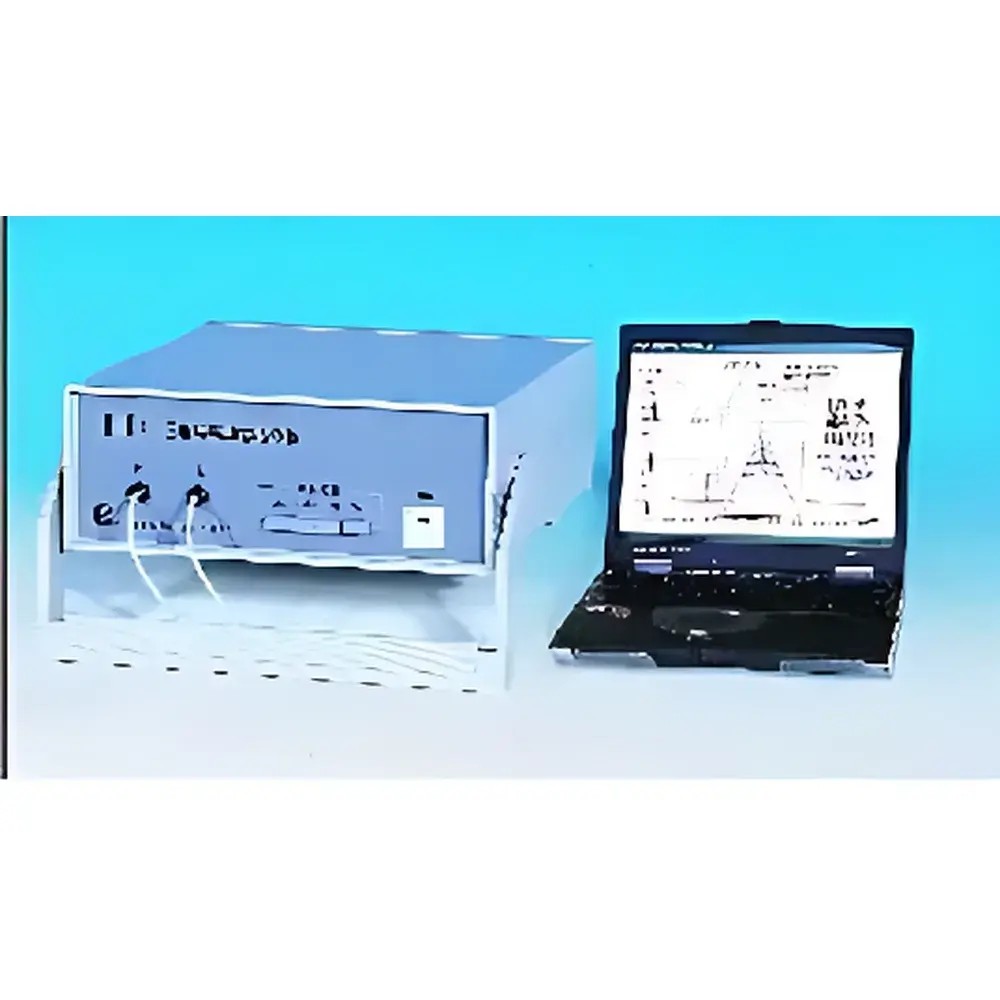
HD-B Computer-Based Conductivity Data Acquisition System
| Key | Origin: Shanghai, China |
|---|---|
| Manufacturer Type | Distributor |
| Product Origin | Domestic (China) |
| Model | HD-B |
| Price | USD 1,280 (FOB Shanghai) |
| Dimensions | 230 mm × 230 mm × 100 mm |
| Measurement Range | 0–2 × 10⁴ µS/cm |
| Stability | ±1% |
| Accuracy | ±1% F.S. |
| Standard Electrode Constant | J = 1 |
| Optional Electrode Constants | J = 0.01, 0.1, 10 |
| Interface | Dual RS-232C Serial Ports |
| OS Requirement | Windows XP (legacy support only) |
| Compatible Instruments | HD-4 and HD-5 Conductivity Detectors |
Overview
The HD-B Computer-Based Conductivity Data Acquisition System is a dedicated signal interface unit engineered for precise, real-time acquisition and digital transmission of conductivity measurements from laboratory-grade conductivity detectors—specifically designed to integrate with the HD-4 and HD-5 series conductivity detection modules. Operating on the principle of two-electrode or four-electrode conductometric measurement, the HD-B converts analog voltage signals proportional to solution conductivity into stable digital data streams via high-resolution analog-to-digital conversion. Its architecture supports direct synchronization of optical absorbance (“A” value) and conductivity (µS/cm) outputs when paired with compatible HD-series detectors—enabling simultaneous monitoring of electrophoretic buffer integrity, gel running conditions, or purification elution profiles in nucleic acid and protein workflows. While developed for legacy compatibility, the system maintains functional relevance in regulated academic labs and QC environments where traceable, low-cost conductivity logging remains essential for buffer preparation validation and electrophoresis protocol documentation.
Key Features
- Dual RS-232C serial interface enables concurrent connection to both a conductivity detector (e.g., HD-4/HD-5) and a host PC—supporting synchronized dual-parameter acquisition without external multiplexing hardware.
- Configurable electrode constant selection (J = 0.01, 0.1, or 10 cm⁻¹) allows accurate scaling across wide conductivity ranges—from ultra-pure water (sub-µS/cm) to concentrated saline solutions (up to 20 mS/cm)—without recalibration.
- Stable analog front-end with ±1% full-scale accuracy and ±1% short-term stability ensures reproducible readings under variable ambient temperature and power supply conditions typical in shared lab spaces.
- Compact benchtop form factor (230 × 230 × 100 mm) facilitates integration into existing electrophoresis rigs, gel documentation stations, or chromatography workstations with minimal footprint.
- Designed for long-term operational continuity in environments where Windows XP-based legacy acquisition software remains validated—common in GLP-compliant teaching labs and regional research facilities with documented software qualification records.
Sample Compatibility & Compliance
The HD-B system interfaces exclusively with aqueous and buffered electrolyte solutions used in life science applications—including TAE/TBE electrophoresis buffers, column equilibration salts, dialysis media, and cell culture rinse solutions. It does not support non-aqueous solvents, viscous polymer solutions, or highly oxidizing media (e.g., concentrated HNO₃). While the device itself carries no CE, UKCA, or FDA listing, its measurement methodology aligns with fundamental principles defined in ASTM D1125–22 (Standard Test Methods for Electrical Conductivity of Water) and ISO 7888:2019 (Water quality — Determination of electrical conductivity). When deployed within validated electrophoresis protocols, raw conductivity logs generated via the HD-B may serve as supporting evidence for buffer lot release per internal SOPs compliant with ISO/IEC 17025 requirements for testing laboratories.
Software & Data Management
The HD-B operates in conjunction with proprietary Windows XP-compatible acquisition software (supplied separately), which provides real-time plotting of conductivity vs. time, manual annotation of gel run stages (e.g., “loading,” “migration,” “staining”), and export of timestamped CSV files containing paired A-value and µS/cm columns. No cloud connectivity, database integration, or audit trail functionality is included. For regulatory environments requiring electronic record integrity, users must implement supplementary controls—such as controlled user access to the host PC, periodic backup verification, and adherence to 21 CFR Part 11–aligned procedural documentation for software use and data review. The system supports basic GLP-aligned data handling when embedded in documented, paper-based workflow logs.
Applications
- Monitoring conductivity drift during horizontal or vertical electrophoresis to detect buffer exhaustion or contamination prior to gel imaging.
- Validating deionized water quality before preparing SDS-PAGE or agarose gels—ensuring consistent ion strength for reproducible band migration.
- Tracking conductivity changes across FPLC or AKTA fraction collector outputs to identify elution peaks in ion-exchange or size-exclusion chromatography of proteins and nucleic acids.
- Supporting teaching laboratory exercises in biophysical chemistry where students correlate conductivity with ionic strength, dissociation constants, or buffer capacity.
- Logging baseline conductivity in UV transilluminator cooling baths to prevent thermal degradation of ethidium bromide or SYBR-safe stained gels.
FAQ
Is the HD-B compatible with modern Windows operating systems (e.g., Windows 10 or 11)?
No. The HD-B requires native Windows XP drivers and legacy serial port enumeration logic. USB-to-serial adapters and virtual machine emulation are not supported due to timing-critical RS-232 handshake dependencies.
Can the HD-B be used with third-party conductivity probes?
Only probes conforming to the HD-series analog output specification (0–5 V DC, linear with conductivity) and mechanical mounting interface are guaranteed compatible. Non-HD branded electrodes may yield uncalibrated or unstable readings.
Does the system include calibration verification tools?
No. Calibration is performed externally using NIST-traceable KCl standard solutions (e.g., 1413 µS/cm at 25°C); the HD-B provides no built-in calibration routine or reference voltage source.
What is the maximum sampling rate supported?
The system acquires data at a fixed 1 Hz rate, optimized for slow-drift processes such as buffer equilibration or long-duration electrophoresis runs—not for transient event capture.
Is technical support available outside mainland China?
Limited remote diagnostics and documentation are provided globally; however, hardware repair and calibration services are restricted to authorized service centers located in Shanghai and Beijing.
Related Products