
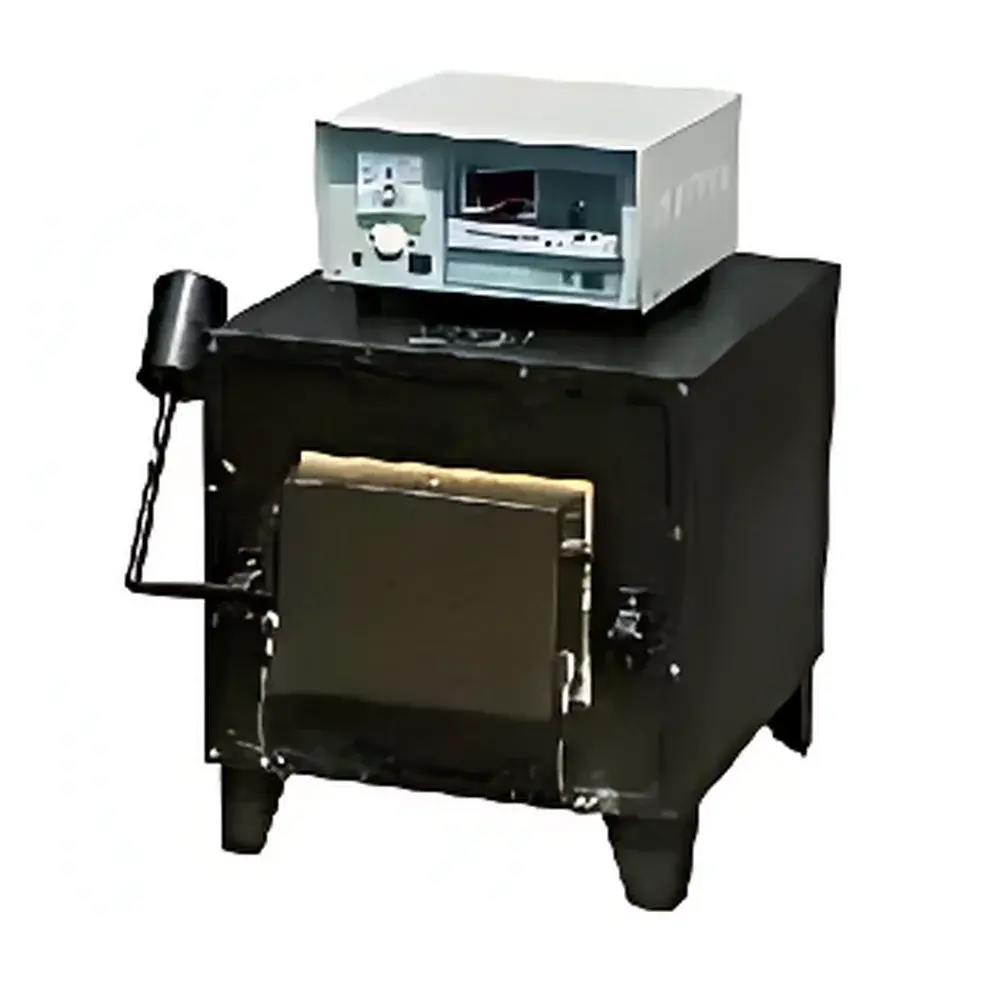
XL-1 High-Temperature Muffle Furnace with Fume Hood (Box-Type Resistance Furnace)
| Origin | Shanghai |
|---|---|
| Manufacturer Type | Authorized Distributor |
| Origin Category | Domestic (China) |
| Model | XL-1 |
| Price | USD 315 |
Overview
The XL-1 High-Temperature Muffle Furnace with Fume Hood is a robust, benchtop box-type resistance furnace engineered for precise, repeatable thermal processing in laboratory and light industrial environments. It operates on the principle of resistive heating—where high-resistance alloy heating elements (typically Fe-Cr-Al or Ni-Cr type) generate uniform thermal energy within a thermally insulated chamber. The furnace achieves a maximum operating temperature of 1000 °C, classifying it as a medium-temperature muffle furnace per IEC 60519-1 and ASTM E1142 standards for laboratory heating equipment. Its integrated fume hood assembly enables safe handling of volatile, oxidizing, or off-gassing samples by directing combustion byproducts away from the operator and ambient lab space—critical for ashing organic matrices, calcining catalysts, or pre-treating geological or biological specimens prior to elemental analysis (e.g., AAS, ICP-OES). The unit complies with general safety requirements for Class II electrical appliances (IEC 61000-6-3 EMC, IEC 60335-1), and its structural design supports GLP-aligned documentation practices when paired with external temperature validation tools.
Key Features
- Sturdy welded steel outer casing with electrostatic powder-coated finish for corrosion resistance and long-term dimensional stability
- Refractory ceramic fiber-lined chamber (density ≥ 128 kg/m³) providing low thermal mass and rapid heat-up/cool-down cycles
- High-efficiency Kanthal A1 heating elements embedded in grooves along chamber walls for uniform radial and axial temperature distribution (±5 °C at setpoint across 325 × 200 × 125 mm working zone)
- Counterbalanced lever-action door mechanism enabling secure, pressure-sealed closure without mechanical latches—minimizing thermal leakage and ensuring consistent atmosphere integrity during hold periods
- Integrated fume extraction interface (Ø100 mm duct port) compatible with standard lab exhaust systems; includes adjustable airflow damper for controlled draft management
- Front-panel analog control with calibrated bimetallic thermometer and manual voltage regulator (220 V AC, 4 kW input) — suitable for non-regulated thermal protocols requiring stable ramp-and-hold operation
Sample Compatibility & Compliance
The XL-1 accommodates crucibles (alumina, silica, platinum), porcelain boats, and stainless-steel trays up to 300 mm in length. It is routinely employed for gravimetric ashing (ASTM D3174, ISO 1171), loss-on-ignition (LOI) testing of soils and sediments (EPA Method 9040B), pre-combustion conditioning of polymer composites, and annealing of small metal coupons (ASTM E112 grain size analysis prep). While not intrinsically rated for inert or reducing atmospheres, its sealed muffle configuration prevents direct flame contact and minimizes oxidation interference during air-based thermal treatments. The furnace meets basic CE marking prerequisites for laboratory electrical equipment and supports audit-ready usage logs when operated in conjunction with external calibrated thermocouple data loggers (Type K, NIST-traceable).
Software & Data Management
As a manually controlled analog furnace, the XL-1 does not incorporate embedded digital controllers or firmware. However, it is fully compatible with third-party temperature monitoring systems—including USB-connected thermocouple readers (e.g., Omega HH309A) and PC-based DAQ platforms (NI LabVIEW, MATLAB Data Acquisition Toolbox)—enabling real-time profile recording, deviation alerts, and CSV export for 21 CFR Part 11–compliant electronic records (when paired with validated timestamping and user access controls). Optional retrofit kits are available for adding programmable PID controllers with ramp/soak capability and audit trail functionality.
Applications
- Elemental analysis sample preparation: ashing food, feed, plant tissue, and wastewater sludge prior to metal quantification
- Thermal treatment of metallurgical samples: stress-relieving, tempering, and normalization of tool steels and aluminum alloys
- Ceramic and refractory R&D: binder burnout, sintering trials, and thermal expansion coefficient calibration
- Quality control in cement and construction materials labs: sulfate content determination via high-temperature decomposition
- Environmental testing labs: LOI testing per APHA Standard Methods 2540E and ASTM D7348 for organic carbon estimation
FAQ
What is the maximum continuous operating temperature of the XL-1?
The XL-1 is rated for continuous operation at 1000 °C. Sustained use above this temperature will degrade heating element life and compromise insulation integrity.
Can the XL-1 be used under nitrogen or argon atmosphere?
No—the unit lacks gas inlet/outlet ports and pressure-rated seals. For inert-atmosphere applications, a dedicated tube furnace or gas-tight muffle model is required.
Is the fume hood assembly supplied with ducting or extraction fan?
The XL-1 includes only the hood structure and mounting flange. Users must provide compatible lab exhaust ductwork and a centrifugal blower meeting minimum 150 CFM flow rate at 0.5″ SP.
Does the furnace include temperature uniformity certification?
Factory calibration covers only the built-in bimetallic indicator. ISO/IEC 17025-compliant temperature mapping requires on-site verification using a 9-point thermocouple array and accredited provider.
What maintenance is recommended for optimal performance?
Inspect heating elements quarterly for sagging or hot-spot discoloration; vacuum ceramic fiber insulation annually to remove dust accumulation; verify door gasket compression force biannually using a digital force gauge.



