
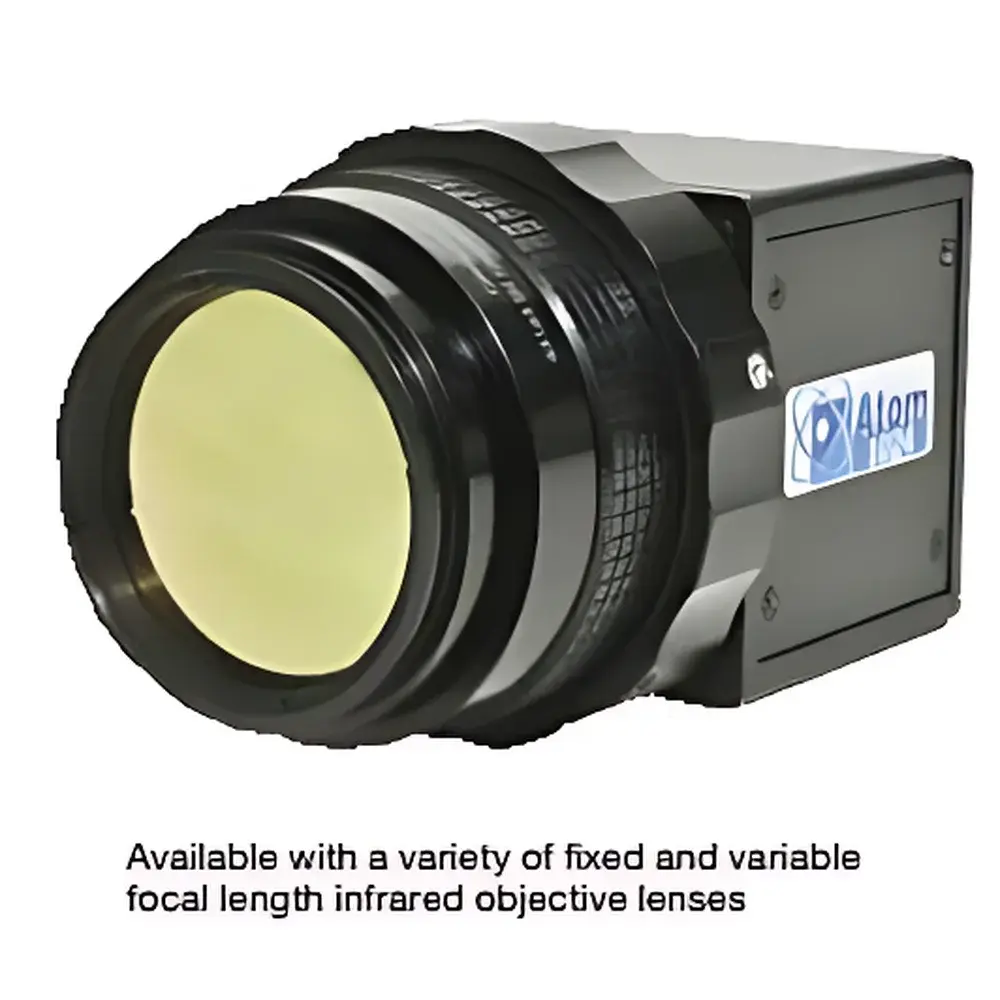
Electrophysics ATOM1024 Uncooled XGA Thermal Imaging Camera
| Brand | Electrophysics |
|---|---|
| Origin | USA |
| Model | ATOM1024 |
| Detector Resolution | 1024 × 768 (XGA) |
| Pixel Pitch | 17 µm |
| Spectral Range | 8–14 µm |
| Frame Rate | 30 Hz (XGA), 60 Hz (VGA) |
| NETD | < 50 mK (f/1) |
| Thermal Time Constant | < 10 ms |
| Power Consumption | < 3.6 W |
| Operating Temperature | −40 °C to +60 °C |
| Output Interface | Camera Link / GigE / LVTTL |
| Bit Depth | 14-bit |
| Weight (body only) | < 0.4 kg |
| Dimensions (W × H × L) | 2.4″ × 2.7″ × 2.7″ |
Overview
The Electrophysics ATOM1024 is an uncooled microbolometer-based thermal imaging camera engineered for high-fidelity, real-time infrared observation in resource-constrained and mission-critical environments. Utilizing a native 1024 × 768 XGA resolution vanadium oxide (VOx) microbolometer focal plane array (FPA), the ATOM1024 delivers exceptional spatial detail within the long-wave infrared (LWIR) band (8–14 µm), where atmospheric transmission is optimal and thermal contrast across ambient-temperature targets is maximized. Unlike cryogenically cooled detectors, its uncooled architecture eliminates mechanical refrigeration, resulting in near-instant startup (< 4 s), ultra-low power draw (< 3.6 W), and robust field reliability—making it suitable for embedded integration in electro-optical/infrared (EO/IR) systems where size, weight, power, and cost (SWaP-C) are tightly governed. The camera’s thermal time constant of less than 10 ms ensures minimal motion blur during high-speed tracking or vehicle-mounted surveillance, while its < 50 mK noise-equivalent temperature difference (NETD) at f/1 enables reliable detection of subtle thermal gradients in low-contrast scenes.
Key Features
- XGA resolution (1024 × 768) with 17 µm pixel pitch—provides >2× linear resolution over standard VGA (640 × 480) thermal sensors, significantly enhancing target identification range and edge definition.
- Configurable frame rates: 30 Hz in full XGA mode or 60 Hz in interpolated VGA mode—enabling flexibility between spatial fidelity and temporal responsiveness.
- Low-power design: Typical power consumption < 2.2 W (ATOM1024-01 variant); electronics-only mass < 0.1 kg—optimized for battery-operated handheld platforms and UAV payloads.
- Three standardized interface variants: Camera Link (ATOM1024-01), Gigabit Ethernet (ATOM1024-02), and LVTTL-level serial UART (ATOM1024-03)—supporting seamless integration into legacy and next-generation image processing architectures.
- Onboard non-uniformity correction (NUC), auto/manual gain control, bad-pixel replacement (BPR), digital zoom, and real-time spatial filtering—reducing post-processing latency and computational load on host systems.
- Ruggedized mechanical design compliant with MIL-STD-810G environmental test profiles; operating temperature range from −40 °C to +60 °C; optional hard-carbon-coated lens housing for abrasion resistance in harsh deployment conditions.
Sample Compatibility & Compliance
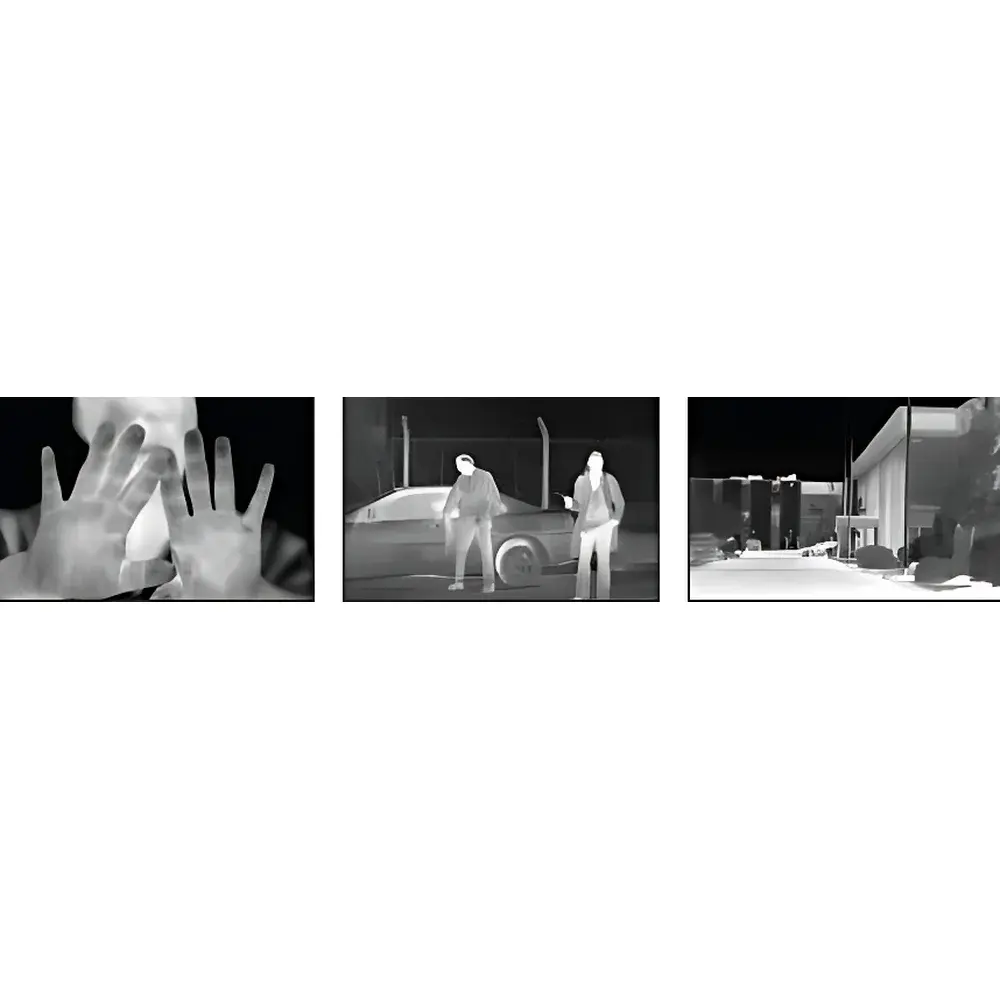
The ATOM1024 is designed for passive thermal radiometry of objects emitting within the LWIR band—ideal for observing uncooled or mildly heated targets (e.g., human subjects, vehicle exhausts, electrical faults, composite material delaminations) without active illumination. Its spectral response is fully compatible with ISO 18434-1 (condition monitoring — thermography), ASTM E1934 (standard guide for examining electrical and mechanical equipment with infrared thermography), and military standards including MIL-STD-461G (EMI/EMC) when integrated with appropriate shielding. While the camera itself does not carry FDA or CE medical certification, its raw 14-bit radiometric output supports traceable calibration workflows aligned with NIST-traceable blackbody references. All variants meet RoHS 3 and REACH compliance requirements for hazardous substances.
Software & Data Management
Electrophysics provides a cross-platform GUI application (Windows/Linux/macOS) supporting real-time display, region-of-interest (ROI) temperature profiling, radiometric video capture (14-bit TIFF/RAW), and batch NUC calibration. The SDK includes C/C++, Python, and MATLAB APIs with full access to register-level control, enabling custom integration with LabVIEW, HALCON, OpenCV, or proprietary vision pipelines. GigE variants support GenICam-compliant metadata embedding—including timestamp synchronization via IEEE 1588 PTP—and optional hardware-triggered acquisition for multi-sensor fusion. Audit-ready logging (timestamped configuration changes, NUC history, gain/offset tables) satisfies GLP/GMP documentation requirements for industrial QA/QC applications.
Applications
- Military & defense: Integration into man-portable night vision systems, ground vehicle driver vision enhancers (DVE), and small-UAV EO/IR gimbals requiring SWaP-optimized LWIR sensing.
- Industrial predictive maintenance: Detection of overheating bearings, loose electrical connections, insulation degradation, and steam trap failures under operational load.
- Research & development: Material emissivity mapping, thermal transient analysis of PCBs and power electronics, and non-destructive evaluation (NDE) of composites and welds.
- Automotive ADAS validation: Pedestrian and cyclist detection in total darkness or obscurants (fog, smoke, dust), supporting SAE J3016 Level 2+ sensor redundancy studies.
- Firefighting & search/rescue: Rapid structural hot-spot localization and victim detection through smoke or light debris—leveraging high thermal sensitivity and fast response time.
FAQ
Is the ATOM1024 calibrated for quantitative radiometry?
Yes—the camera outputs calibrated 14-bit radiometric data referenced to a two-point NUC routine using internal shutterless algorithms; external blackbody calibration is recommended for traceable absolute temperature measurement.
Can it operate without an external cooler or thermoelectric stabilizer?
Yes—its uncooled VOx microbolometer operates stably across the full −40 °C to +60 °C range without active temperature stabilization, though performance specifications assume operation within this envelope.
What lens options are available?
Standard configurations include f/1.0, 19 mm and 50 mm germanium lenses with hard-carbon anti-scratch coating; custom FOV and focus mechanisms (motorized/manual) are available under OEM agreements.
Does the GigE variant support Power over Ethernet (PoE)?
No—the ATOM1024-02 requires separate 6–12 VDC power input; however, it supports GPIO-triggered acquisition and hardware-synchronized multi-camera triggering via TTL signals.
Is firmware upgradable in the field?
Yes—firmware updates are delivered via USB or network interface using signed binaries; version history and rollback capability are maintained in non-volatile memory for audit compliance.



