
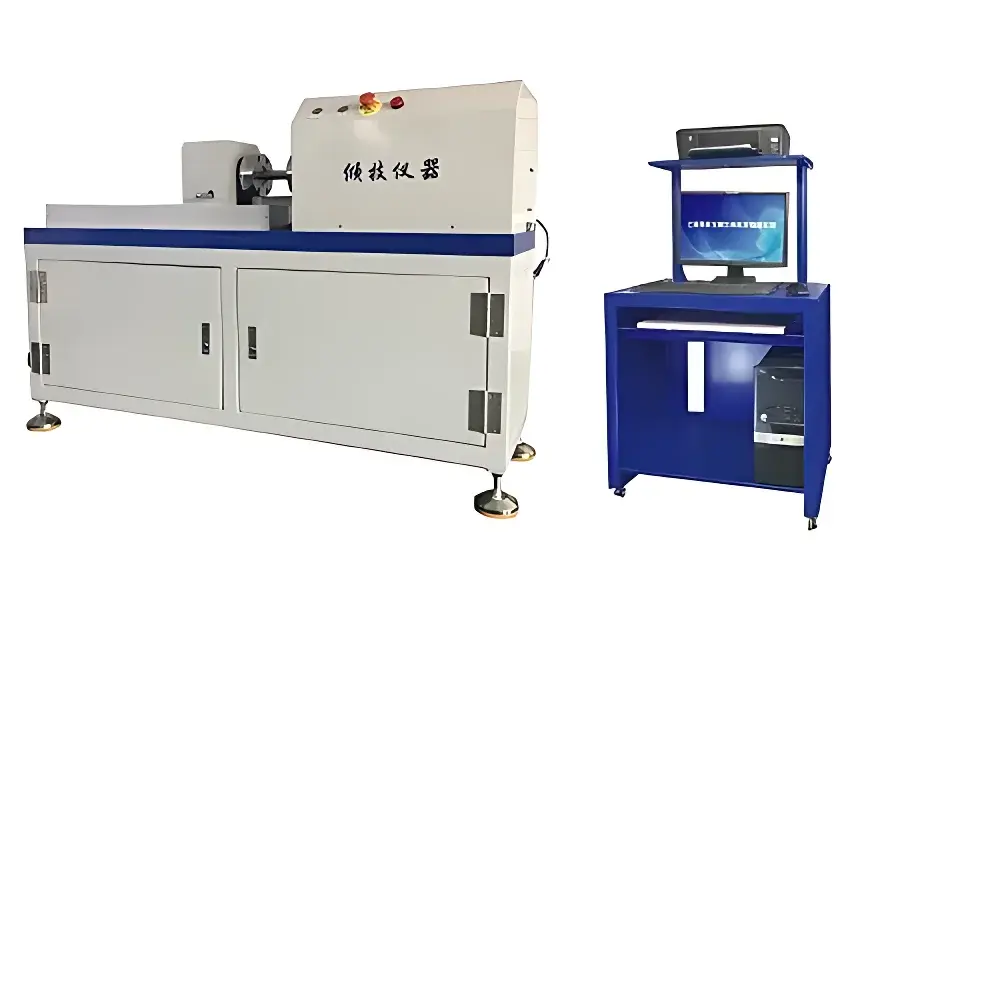
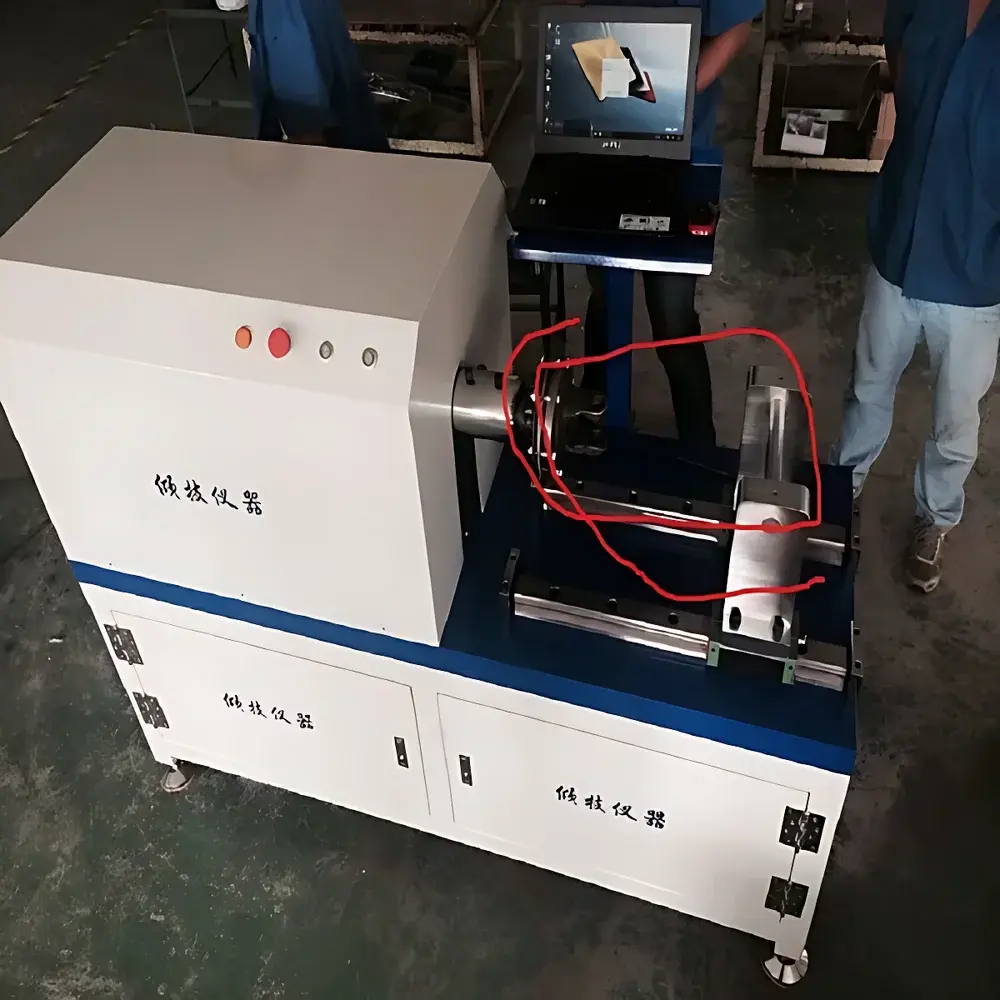
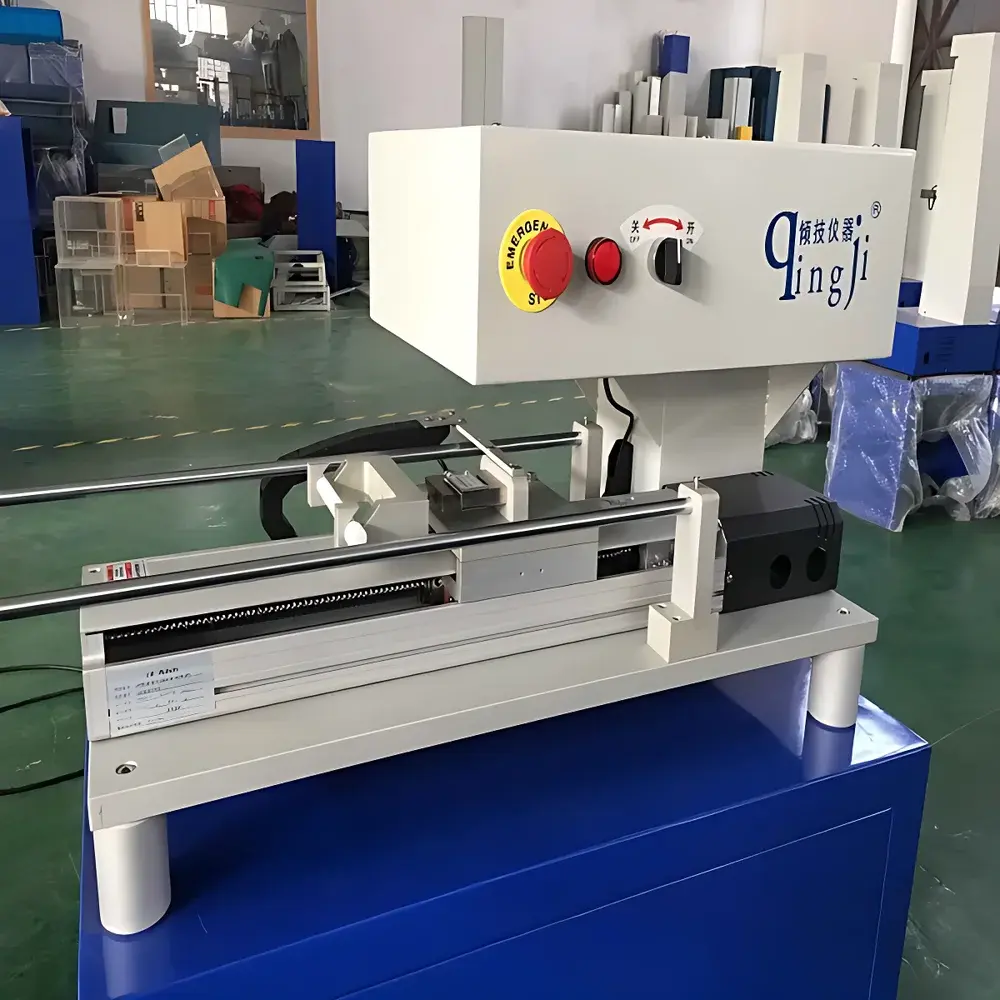
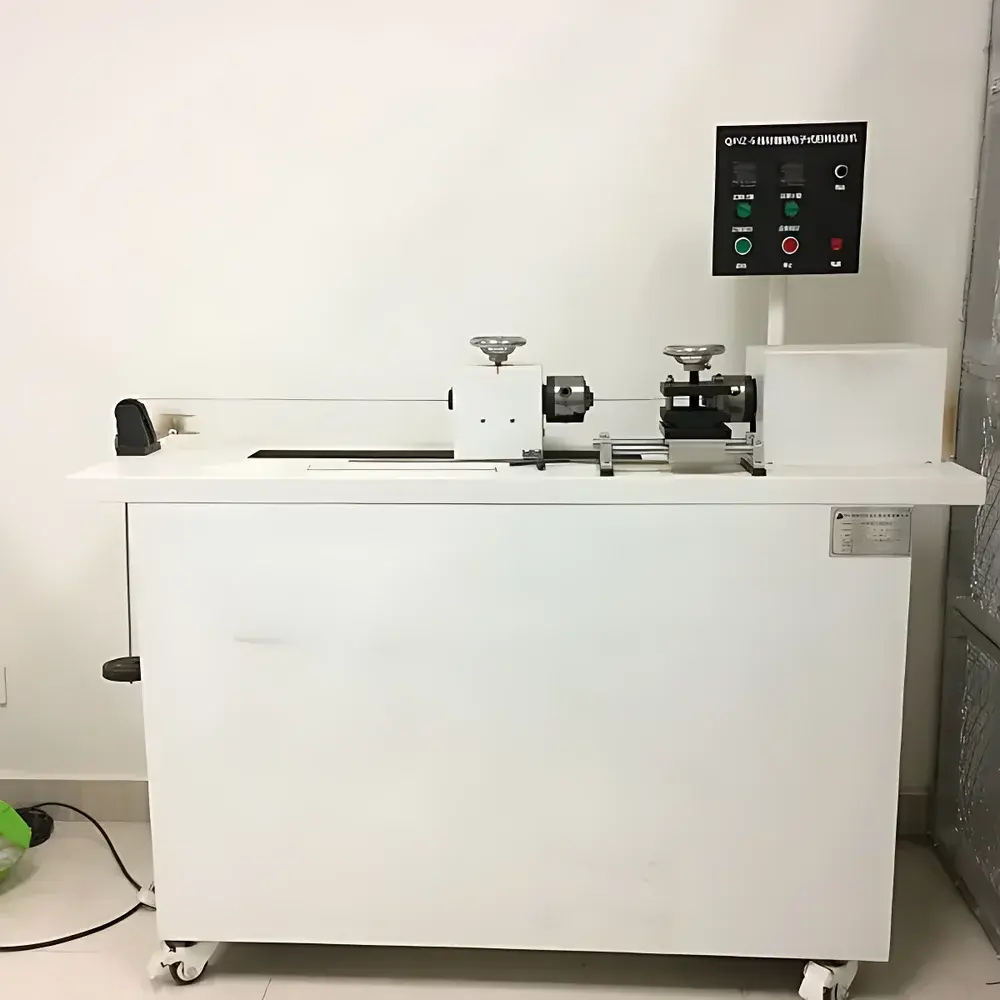
Qinji QJ-NZ Threaded Bolt Torsion Testing Machine
| Brand | Qinji |
|---|---|
| Origin | Shanghai, China |
| Model | QJ-NZ |
| Max Torque | 10,000 N·m |
| Torque Measurement Range | 0–10,000 N·m |
| Torque Resolution | ±0.001° (angular) |
| Torsion Angle Range | 0 to ±100,000° |
| Motor Power | 2 kW |
| Torque Measurement Accuracy | ±0.5% FS |
| Torsion Angle Accuracy | ±0.5% FS |
| Angular Resolution | 0.001° |
| Torsion Speed Range | 0.01–1,000 °/min (infinitely variable) |
| Gauge Length Adjustment | up to 1,500 mm |
| Specimen Clamping Diameter | Φ8–Φ40 mm (expandable) |
| Dimensions (L×W×H) | 2800 × 4700 × 1250 mm |
| Weight | 1,500 kg |
Overview
The Qinji QJ-NZ Threaded Bolt Torsion Testing Machine is a high-capacity, precision-engineered electromechanical system designed for static and quasi-static torsional characterization of threaded fasteners, bolts, rods, shafts, and other cylindrical or prismatic structural components. It operates on the principle of controlled angular displacement applied via a servo-motor-driven torque actuator, with simultaneous high-fidelity measurement of applied torque and rotational angle. The machine complies with key international and national mechanical testing standards—including ISO 7539 (stress corrosion cracking in torsion), ASTM F548 (torsional strength of medical bone screws), and GB/T 9370–1999 (torsion testing methods for metallic materials)—ensuring data traceability and regulatory acceptability in quality assurance, R&D, and third-party certification environments.
Key Features
- High-torque capacity up to 10,000 N·m, enabling evaluation of large-diameter structural bolts (M30–M64) and heavy-duty automotive or aerospace fasteners.
- True dual-range torque sensing architecture: full-scale resolution maintained across 0–10,000 N·m without range switching; minimum torque resolution equivalent to 1/350,000 of full scale.
- Precision angular encoder with 0.001° resolution and ±0.009° absolute accuracy, supporting rigorous determination of shear modulus (G), non-proportional torque (Tp), yield torque, ultimate torque, and plastic deformation thresholds.
- Infinitely variable torsion speed control from 0.01 to 1,000 °/min, programmable in closed-loop mode for stepwise, ramp, or dwell profiles per ISO 6892-2 and ASTM E143.
- Adjustable test span up to 1,500 mm between chucks, accommodating extended specimens such as drive shafts or long-threaded anchor rods.
- Modular chuck system compatible with cylindrical specimens from Φ8 mm to Φ40 mm (custom jaws available for larger diameters), featuring hydraulic or mechanical self-centering clamping to minimize eccentric loading.
- Robust welded steel frame with vibration-damped base, rated for continuous operation under industrial laboratory conditions.
Sample Compatibility & Compliance
The QJ-NZ accommodates standardized fastener geometries (ISO 898-1, ASTM A325/A490), cold-formed and heat-treated alloy steels, stainless grades (A2/A4, 17-4PH), titanium alloys (Ti-6Al-4V), and high-strength composites used in bolted joints. Its mechanical design and calibration protocol conform to JJG 269–1981 (Chinese national verification regulation for torque measuring instruments) and GB/T 239–1999 (torsion testing method for metallic wires). When operated with optional micro-angle measurement accessories, it supports derivation of shear modulus G per ASTM E143 and ISO 14322, satisfying requirements for material property certification in GLP-compliant laboratories and ISO/IEC 17025-accredited testing facilities.
Software & Data Management
Control and analysis are executed via a Windows-based virtual instrumentation platform built on LabVIEW architecture. The software provides real-time torque–angle curve visualization, automatic yield point detection (using ASTM E83 secant offset method), multi-step test sequencing, and export-ready reporting compliant with ISO 17025 documentation requirements. All test parameters, raw data streams, operator IDs, timestamps, and calibration metadata are logged with audit-trail integrity—fully compatible with FDA 21 CFR Part 11 electronic record requirements when deployed with user authentication and digital signature modules. Data formats include CSV, XML, and PDF reports with embedded calibration certificates and uncertainty budgets.
Applications
- Verification of torque-tension relationships in preloaded bolted joints per VDI 2230 and ISO 16047.
- Determination of torsional yield strength, ultimate torsional strength, and fracture angle for fasteners subjected to combined axial-torsional loading.
- Quality conformance testing of high-strength bolts (e.g., ASTM A490, EN 14399) in manufacturing QA/QC workflows.
- Research into thread stripping resistance, nut compatibility, and lubrication effects under torsional stress.
- Evaluation of torsional fatigue precursors via monotonic twist-to-failure protocols.
- Calibration support for secondary torque transducers and reference standards in metrology labs.
FAQ
What standards does the QJ-NZ comply with for torque calibration and verification?
The system meets JJG 269–1981 (national torque instrument verification regulation) and is traceable to NIM (National Institute of Metrology, China) through factory calibration certificates with expanded uncertainty (k=2) stated for both torque and angular measurements.
Can the machine perform torsional fatigue testing?
No—the QJ-NZ is optimized for static and quasi-static torsion tests only. For cyclic torsional fatigue, a dedicated servo-hydraulic torsion fatigue system with dynamic torque capability and phase-controlled actuation is required.
Is remote diagnostics and software update support available?
Yes—Qinji provides secure remote desktop access for firmware updates, parameter optimization, and troubleshooting, subject to customer-configured firewall permissions and IT policy alignment.
What maintenance intervals are recommended for long-term accuracy retention?
Annual recalibration of torque and angular sensors is advised; biannual inspection of chuck alignment, drive belt tension, and encoder coupling integrity ensures repeatability within ±0.5% FS over 5+ years of typical lab use.
Does the system support integration with LIMS or MES platforms?
Yes—via TCP/IP API and configurable OPC UA server, enabling bidirectional data exchange with laboratory information management systems (LIMS) and manufacturing execution systems (MES) for automated result ingestion and workflow synchronization.



