
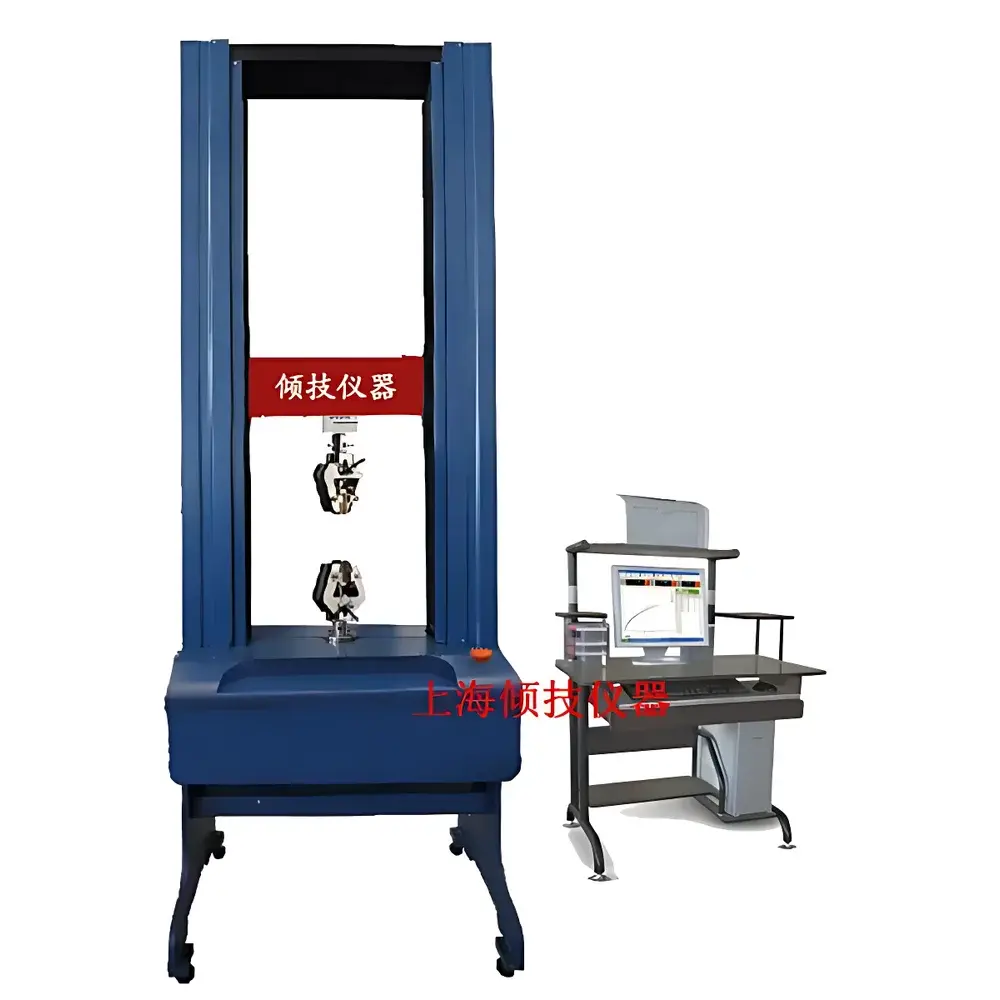
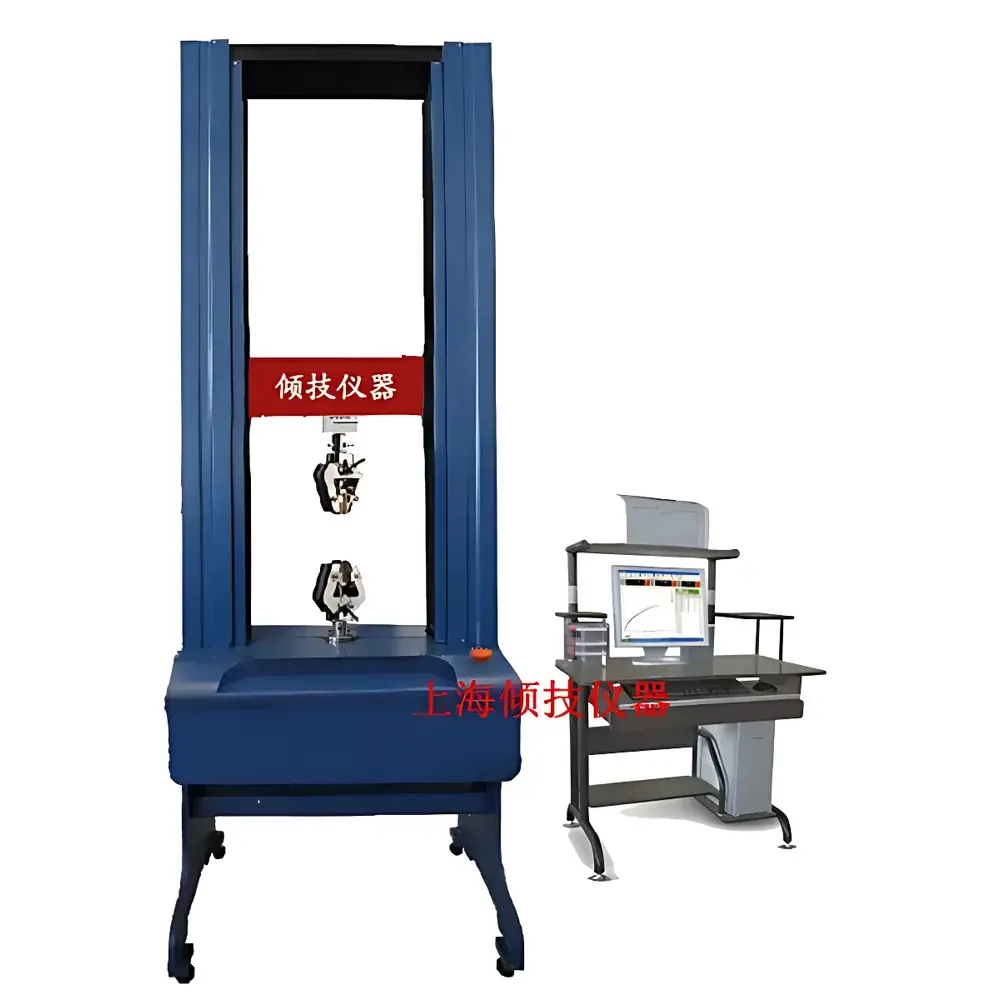
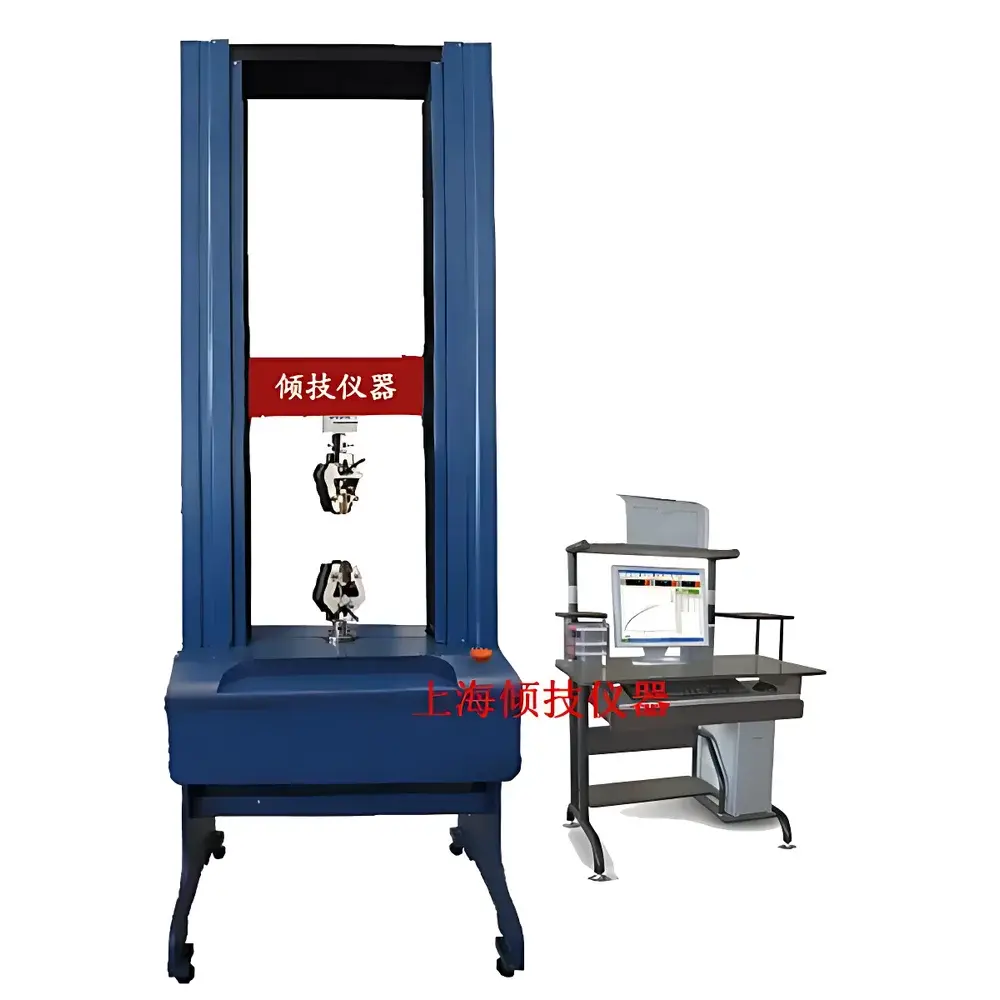
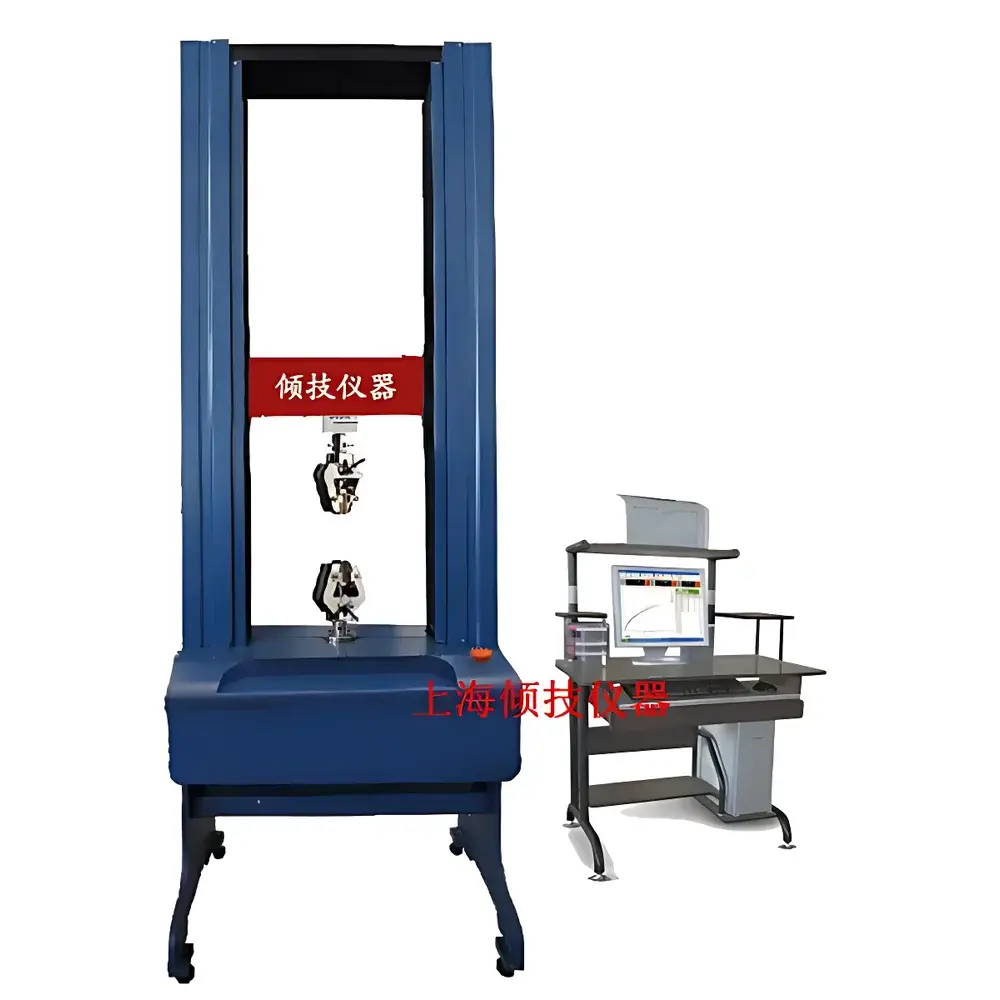
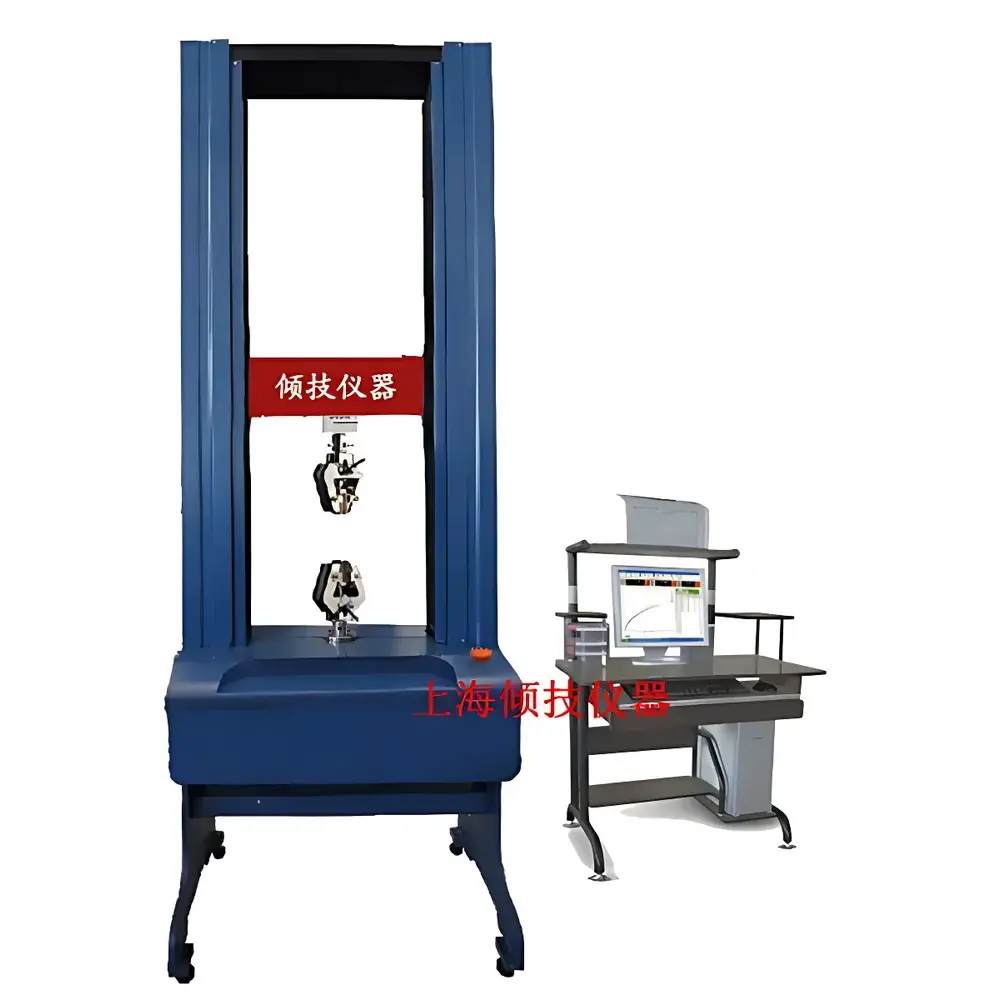
QJ211 Advanced Tensile Testing Machine for Weld Joint Strength Evaluation
| Brand | Qinsun |
|---|---|
| Origin | Shanghai, China |
| Model | QJ211 New |
| Max. Test Load | 1 kN |
| Force Measurement Range | 0.2–100% FS |
| Force Accuracy | ±0.5% of reading |
| Crosshead Travel | 800 mm |
| Displacement Resolution | 0.001 mm |
| Test Speed Range | 0.001–500 mm/min |
| Speed Accuracy | ±0.5% of set value |
| Position Accuracy | ±0.5% of reading |
| Load Cell | High-precision U.S.-sourced strain gauge sensor |
| Control System | Panasonic full-digital AC servo controller |
| Software | Full-closed-loop test platform supporting constant load, constant strain, and constant displacement modes |
| Effective Test Width | 420 mm |
| Power Supply | 220 V, 50 Hz, 750 W |
| Dimensions (L×W×H) | 690 × 465 × 1970 mm |
| Weight | 280 kg |
| Compliance | ASTM E8/E21, ISO 6892-1, GB/T 228.1, JJG 475 |
Overview
The QJ211 Advanced Tensile Testing Machine is a precision-engineered electromechanical system designed for quantitative mechanical evaluation of welded joints and structural adhesion interfaces in R&D laboratories, quality assurance departments, and third-party testing centers. Built upon a rigid dual-column frame architecture and driven by a Panasonic digital AC servo motor, the instrument implements uniaxial quasi-static loading per ISO 6892-1 and ASTM E8/E21 standards. Its core function is to apply controlled tensile, compression, bend, peel (90° and 180°), shear, and pull-out forces to specimens—enabling direct measurement of ultimate tensile strength (UTS), yield strength, elongation at break, modulus of elasticity, and fracture energy. The machine is particularly optimized for small-scale weld integrity validation—including spot welds, seam welds, laser welds, and resistance welds on thin-gauge metals, polymer composites, and dissimilar material assemblies—where high force resolution (down to 0.01 N) and sub-micron displacement tracking are critical for detecting interfacial failure modes.
Key Features
- Full-closed-loop digital control architecture enabling precise execution of multi-step test protocols—including ramp-to-load, hold-at-load, and displacement-controlled rupture.
- High-stability load cell with U.S.-sourced strain gauge technology, delivering ±0.5% force accuracy across the full 1 kN range without internal range switching.
- Adjustable crosshead speed from 0.001 to 500 mm/min, calibrated to ±0.5% of setpoint—suitable for both quasi-static characterization and accelerated durability screening.
- Dual-mode positioning system: fast jog (100 mm/min) for rapid specimen setup and fine-tuned test initiation (0.001 mm/min increments).
- Integrated electronic limit switches and software-based overload protection (triggered at 110% of full scale) ensure operator safety and hardware integrity.
- Modular fixture interface compatible with standardized wedge grips, pneumatic clamps, peel fixtures, and custom-designed tooling for micro-weld coupons, wire bonds, or miniature PCB interconnects.
Sample Compatibility & Compliance
The QJ211 accommodates specimens ranging from 0.1 mm diameter microwires to 420 mm wide laminated composites. It supports standardized test geometries per ASTM D3039 (polymer matrix composites), ISO 14130 (adhesive bond strength), and GB/T 2651 (welded joint tensile testing). All mechanical outputs—including stress-strain curves, load-displacement hysteresis loops, and time-dependent creep data—are traceable to national metrological standards. The system meets GLP documentation requirements through automatic timestamped data logging, user-access-level audit trails, and export-ready CSV/Excel formats. Optional configurations support 21 CFR Part 11-compliant electronic signatures when paired with validated PC environments.
Software & Data Management
The embedded test software provides real-time visualization of load, displacement, and calculated engineering parameters during acquisition. Users may define up to 16 independent test steps per protocol, assign pass/fail thresholds based on peak load, elongation, or energy absorption, and generate compliant reports with embedded calibration certificates and uncertainty budgets. Curve manipulation tools include overlay comparison of up to eight datasets, derivative analysis for modulus calculation, and automatic identification of yield point via ASTM E111 tangent offset method. Raw data exports retain full 500,000-count resolution for post-hoc statistical process control (SPC) or Weibull reliability modeling.
Applications
- Quantification of fusion zone strength in automotive sheet metal resistance spot welds.
- Evaluation of interfacial shear strength in laser-welded battery tab connections (Cu–Al, Ni–steel).
- Mechanical qualification of ultrasonic metal bonding in MEMS packaging.
- Adhesion strength assessment of solder joints under thermal cycling preconditioning.
- Tensile performance mapping of dissimilar metal welds (e.g., stainless steel to titanium alloys) for aerospace repair validation.
- Quality gate testing for medical device laser welds on nitinol tubing and stainless cannulas.
FAQ
What standards does the QJ211 comply with for weld strength testing?
ASTM E8/E21, ISO 6892-1, GB/T 228.1, and ISO 14130 for metallic and adhesive joint characterization.
Can the system perform cyclic or fatigue testing?
No—the QJ211 is configured for static and quasi-static loading only; fatigue-capable variants require separate servo-hydraulic platforms.
Is calibration certification included with delivery?
Yes—a factory-issued calibration report traceable to CNAS-accredited reference standards is provided with each unit.
How is data integrity ensured during long-duration tests?
All acquired values are written directly to non-volatile memory at 100 Hz sampling rate; power-loss recovery resumes from last valid data point.
Are custom fixtures available for non-standard weld geometries?
Yes—fixture design and CNC fabrication services are offered under NDA for proprietary joint configurations.



