
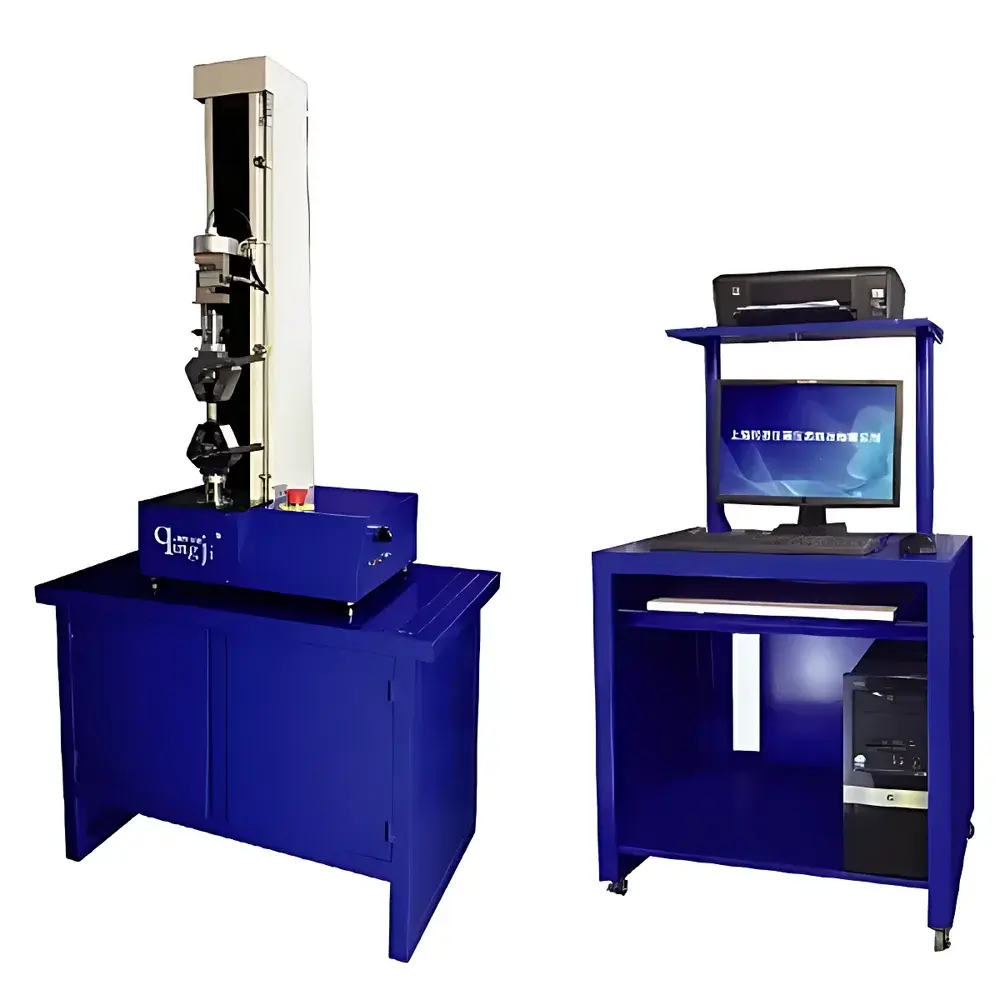
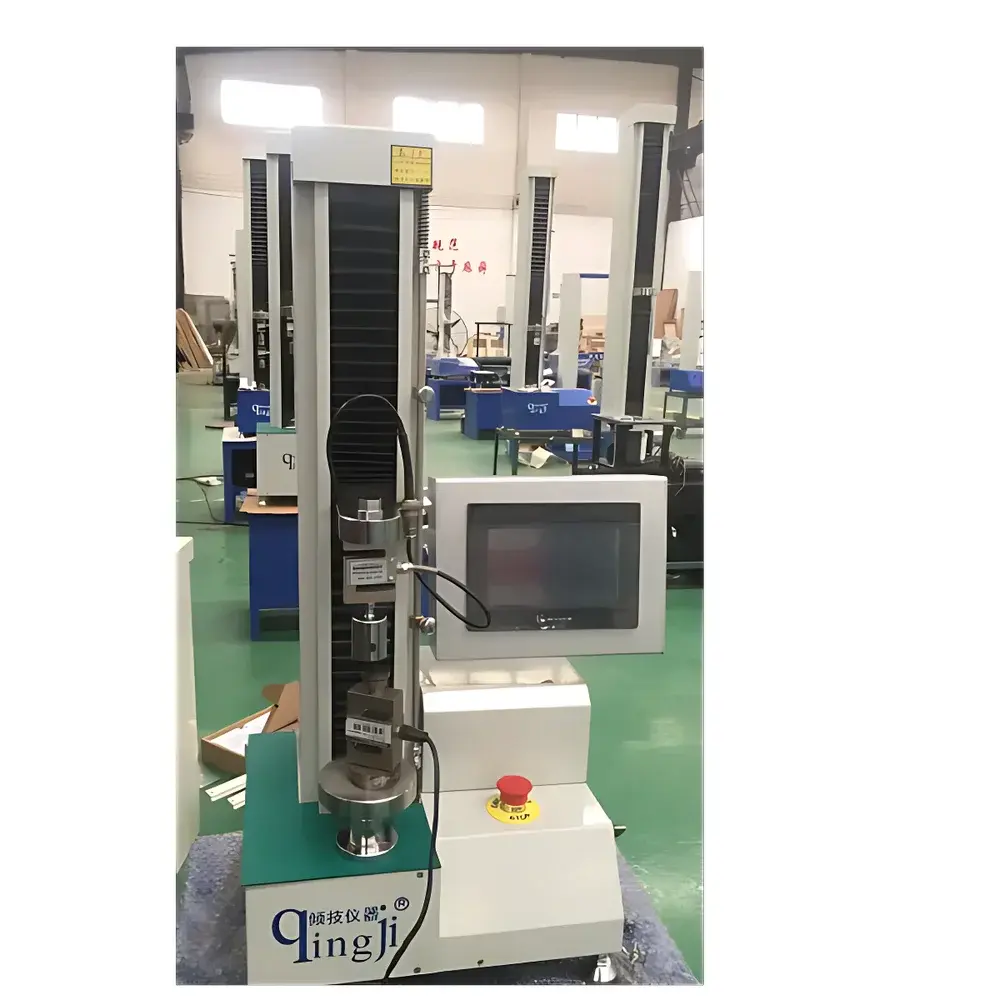
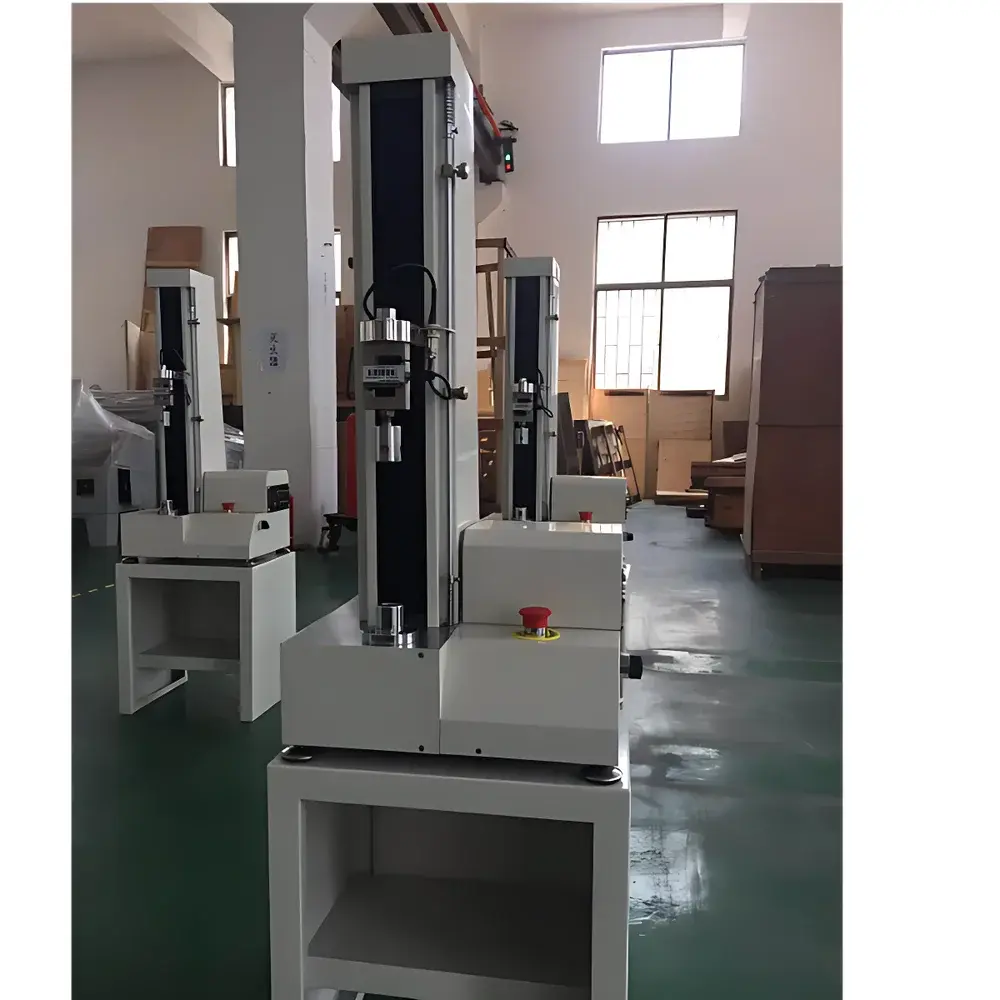
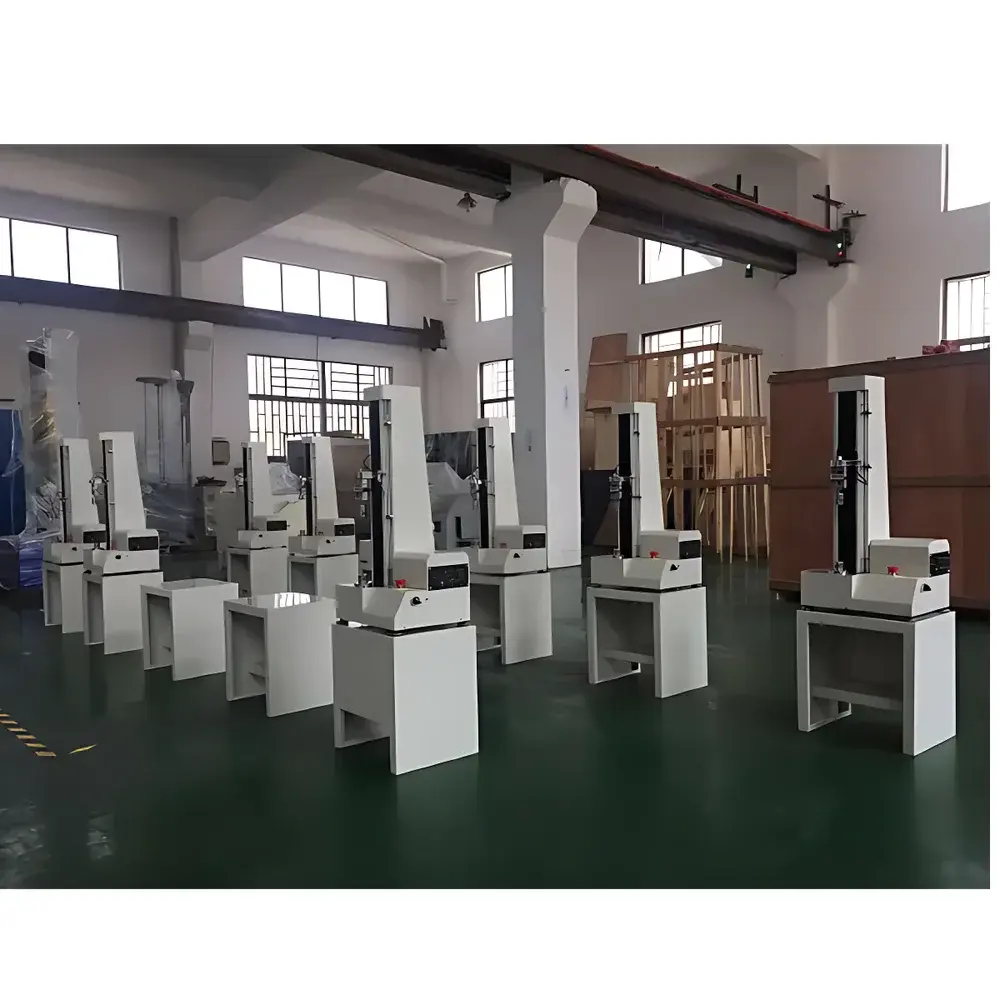
Qinsun QJ210-100N Digital Peel Strength Tester
| Brand | Qinsun |
|---|---|
| Origin | Shanghai, China |
| Model | QJ210-100N |
| Load Capacity | 100 N |
| Load Accuracy | ±0.5% FS |
| Effective Test Width | 150 mm |
| Effective Stroke | 300 mm |
| Speed Range | 0.01–1000 mm/min |
| Speed Accuracy | ±0.5% of reading |
| Displacement Accuracy | ±0.5% of reading |
| Motor Power | 200 W |
| Dimensions (L×W×H) | 430 × 315 × 855 mm |
| Weight | 40 kg |
Overview
The Qinsun QJ210-100N Digital Peel Strength Tester is a precision-engineered electromechanical testing system designed for quantitative peel adhesion evaluation of flexible packaging, laminated films, pressure-sensitive tapes, medical device pouches, and coated substrates. It operates on the fundamental principle of uniaxial tensile separation under controlled displacement rate, measuring the force required to progressively delaminate two bonded surfaces at a defined angle (typically 90° or 180°) and speed. Unlike legacy mechanical testers, this instrument integrates a high-resolution load cell, closed-loop servo control, and real-time digital signal acquisition — enabling full compliance with static and dynamic peel test protocols specified in ISO 8510-2, ASTM D903, ASTM D3330, GB/T 2790, GB/T 2791, JIS Z 0237, and other internationally recognized standards. Its compact footprint (430 × 315 × 855 mm) and lightweight aluminum-alloy frame (40 kg) reflect a deliberate design philosophy prioritizing laboratory space efficiency, operator ergonomics, and long-term mechanical stability without sacrificing metrological integrity.
Key Features
- High-fidelity load measurement with ±0.5% full-scale accuracy and 500,000-count internal resolution — ensuring consistent repeatability across low-force peel regimes (e.g., 0.1–5 N for thin-film lamination) and higher-load applications up to 100 N.
- Wide-speed capability (0.01–1000 mm/min), programmable in 0.01 mm/min increments; standard peel rates (e.g., 300 mm/min per ASTM D903) are pre-configurable with <±0.5% speed fidelity verified via encoder feedback.
- Dual-mode operation: standalone LCD interface for rapid setup and real-time curve monitoring (force vs. displacement), plus full PC integration via USB/RS232 for advanced parameter scripting, multi-step test sequences, and automated report generation.
- Integrated safety architecture including electronic travel limits, overload cutoff (>110% FS), emergency stop circuitry, and motorized return-to-start functionality — all compliant with IEC 61000-6-2 EMC and IEC 61000-6-4 emission standards.
- Modular crosshead assembly with quick-release grips optimized for standard peel fixtures (90° peel jig, 180° T-peel clamp, floating roller fixture); optional accessories include pneumatic clamping, environmental chamber interfaces, and video extensometry add-ons.
Sample Compatibility & Compliance
The QJ210-100N accommodates specimens up to 150 mm wide and 300 mm active stroke length — suitable for standard strip geometries defined in ISO 8510-2 (25 mm width × 150 mm length) and ASTM D903 (25.4 mm × 152.4 mm). Its rigid base plate and low-inertia drive train minimize parasitic deflection during high-speed peel events, preserving true force transmission. The system supports GLP/GMP-aligned workflows through audit-trail-enabled software (optional), with timestamped raw data export (CSV, XML), user-access-level controls, and calibration certificate traceability to national metrology institutes (e.g., CNAS-accredited labs in China). All mechanical components conform to ISO 26203-1 for tensile testing instrumentation and satisfy essential requirements of the EU Machinery Directive 2006/42/EC.
Software & Data Management
The proprietary Qinsun TestMaster™ software (Windows 10/11 compatible) provides ISO 17025-compliant data handling: automatic calculation of average peel force, peak force, standard deviation, and energy-to-peel (area under curve). Raw data files retain full 1 kHz sampling history, with no signal filtering or interpolation applied during acquisition. Reports comply with FDA 21 CFR Part 11 requirements when configured with electronic signatures, role-based permissions, and immutable audit logs. Export formats include PDF (print-ready), Excel (.xlsx), and universal .csv for third-party statistical analysis (e.g., JMP, Minitab). Calibration parameters are digitally embedded and password-protected; recalibration intervals align with ISO/IEC 17025:2017 Clause 6.5.2 recommendations.
Applications
- Quality control of pharmaceutical blister packaging seal integrity (per USP ).
- Adhesive bond strength validation for automotive interior trim laminates (PP/TPU/PET composites).
- Peel resistance assessment of medical-grade silicone-coated release liners and wound dressing backing films.
- R&D screening of water-based acrylic vs. solvent-based rubber adhesives under variable humidity conditions (when paired with environmental chamber).
- Regulatory submission support for FDA 510(k) dossiers requiring mechanical performance evidence of sterile barrier systems.
FAQ
What international standards does the QJ210-100N support out-of-the-box?
The system includes preloaded test methods for ASTM D903, ASTM D3330, ISO 8510-2, GB/T 2790, and JIS Z 0237 — with configurable parameters for peel angle, speed, sample dimensions, and pass/fail criteria.
Is calibration certification included with shipment?
Yes — each unit ships with a factory calibration certificate traceable to CNAS-accredited reference standards, valid for 12 months from date of issue.
Can the tester be integrated into an existing LIMS or MES environment?
Via TCP/IP or OPC UA protocol extension (optional module), enabling bidirectional data exchange with LabWare LIMS, Siemens Opcenter, or custom enterprise platforms.
What maintenance is required to sustain metrological performance?
Annual verification of load cell linearity and speed accuracy is recommended; routine cleaning of guide rails and periodic inspection of grip serrations ensure long-term repeatability — documented in the provided maintenance log template.
Does the system support multi-specimen batch testing?
Yes — the software permits queued test execution with auto-indexing of specimen IDs, sequential loading, and consolidated reporting across up to 99 samples per batch.



