
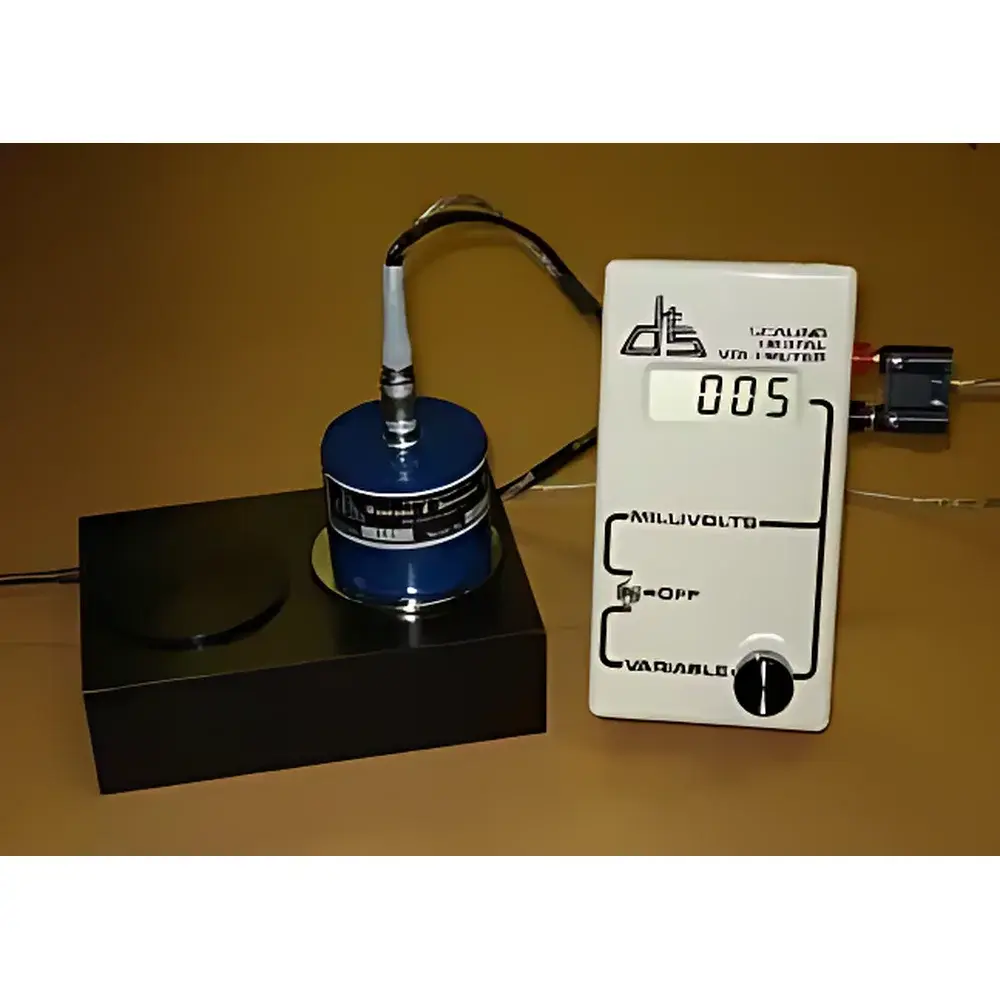
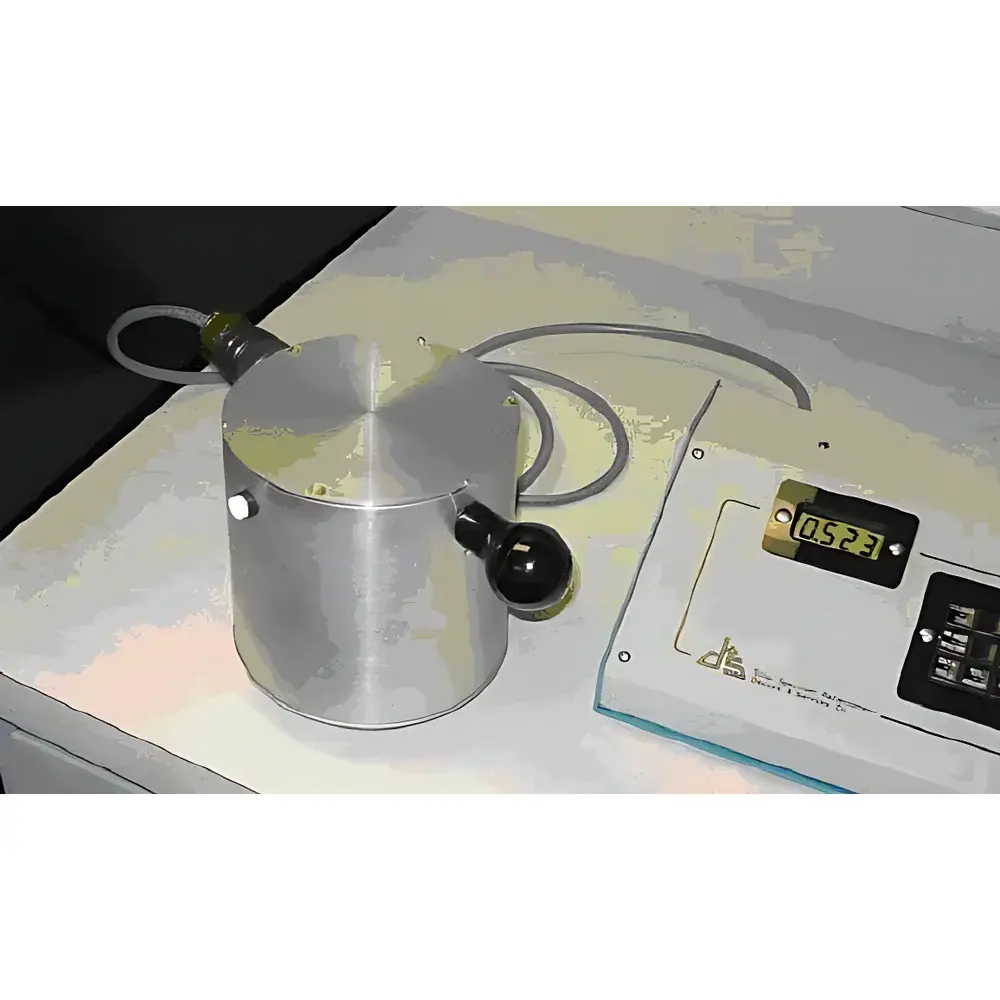
D&S AE1/RD1 Emissivity Meter & SSR-ER Solar Spectral Reflectance Meter
| Brand | D&S |
|---|---|
| Origin | USA |
| Model | AE1 SSRER |
| Instrument Type | Portable |
| Measurement Target | Solid Surfaces |
| Detector Type | Emissivity Sensor |
| Emissivity Linearity Error | ±0.01 units |
| Emissivity Repeatability | ±0.01 |
| Reflectance Resolution | 0.001 |
| Reflectance Repeatability (SSR-ER) | ±0.003 |
| Reflectance Accuracy (SSR-ER) | ±0.002 |
| Wavelength Range | 3–30 µm |
| Compliance Standard | ASTM C1549 |
| Power Supply | 100–240 VAC, 50–60 Hz, 12 VDC output |
Overview
The D&S AE1/RD1 Emissivity Meter and SSR-ER Solar Spectral Reflectance Meter constitute a dual-purpose, field-deployable instrumentation system engineered for precise, traceable measurement of thermal emissivity and solar-weighted spectral reflectance in industrial and research environments. The AE1 operates on the principle of comparative radiometric nulling—using a temperature-stabilized blackbody heat sink and calibrated reference standards to determine surface emissivity without requiring sample heating or independent temperature measurement. It leverages the fundamental relationship between emitted infrared radiation and surface emissivity under controlled thermal equilibrium (per ASTM E1933 and ISO 18434-1). The SSR-ER complements this capability by quantifying solar spectral reflectance across 16 standardized atmospheric conditions (including AM0, AM1, AM1.5, and AM2) using a tungsten-halogen lamp, integrating sphere illumination, and a fixed-angle (20° off-normal) detection geometry. Its optical design conforms to the spectral weighting functions defined in ASTM C1549 for solar absorptance and reflectance characterization of building materials, thermal control coatings, and photovoltaic surfaces.
Key Features
- AE1 module: Self-contained emissivity measurement with integrated blackbody heat sink, eliminating need for external thermometry or sample heating.
- RD1 digital microvoltmeter: Provides direct readout of emissivity values with nominal 2.4 mV output at ε = 0.9 and 25°C; 150 Ω output impedance ensures compatibility with standard data acquisition systems.
- SSR-ER reflectometer: Configurable for flat or curved surfaces via optional adapters (e.g., AE-AD1 for Ø < 3.8 cm; AE-AD3 for Ø < 2.54 cm); includes NIST-traceable diffuse and specular reflectance standards.
- Thermal stability: AE1 achieves thermal equilibrium within 30 minutes; measurement cycle time is 1.5 minutes post-equilibration; time constant ≤10 s (63% response).
- Dual-standard calibration protocol: Four certified reference plates (two high-ε, two low-ε) enable in-situ verification and drift monitoring per GLP-compliant procedures.
- Modular architecture: SSR-E electronics unit (1.8 kg), SSR-R reflectance head (0.9 kg), and optional SSR-T transmittance accessory (4.5 kg) support flexible deployment in lab or field settings.
Sample Compatibility & Compliance
The AE1/SSR-ER system is validated for use with opaque, homogeneous solid materials—including metals, glass, ceramics, anodized aluminum, painted substrates, and thermal control coatings—provided surface roughness remains below Ra < 0.8 µm and curvature radius exceeds 13 mm for standard adapters. It is not suitable for transparent, translucent, or highly textured surfaces (e.g., brushed metal, sandblasted finishes) due to scattering-induced measurement uncertainty. All configurations comply with ASTM C1549 for solar reflectance determination and support traceability to NIST Standard Reference Materials (SRMs), including SRM 2035 (white ceramic) and SRM 1922 (black ceramic). The system meets electromagnetic compatibility requirements per FCC Part 15 Class B and operates within environmental limits of 0–50°C (measurement head) and 0–60°C (electronics), with relative humidity ≤80% non-condensing.
Software & Data Management
While the base AE1/RD1 and SSR-ER operate in standalone analog mode, optional data output accessories enable digital acquisition of up to 16 simultaneous spectral reflectance values per measurement—corresponding to G173GH, AM1BN, AM1.5V5E, L1–L6, and other defined solar irradiance spectra. Output is delivered via RS-232 or USB interface with timestamped metadata (ambient temperature, instrument ID, calibration epoch). Software packages support FDA 21 CFR Part 11–compliant audit trails, user access controls, and electronic signature workflows. Calibration history, standard plate comparison logs, and drift correction coefficients are stored internally and exportable as CSV or XML for integration into LIMS or QA/QC databases.
Applications
- Aerospace thermal management: Characterization of spacecraft thermal control coatings (e.g., Z-93, YB-71), second-surface mirrors, and radiator surface emissivity under simulated orbital thermal cycling.
- Solar energy systems: Quantification of absorber coating performance (αsolar) on CSP receivers and spectral selectivity of PV reflectors per IEC 61215 and ASTM E903.
- Architectural materials testing: Validation of cool roof products (SRI rating), façade cladding, pavement markings, and engineered tiles per ASTM E1980 and CRRC-1.
- Thin-film R&D: In-process monitoring of sputtered, evaporated, or sol-gel deposited IR-reflective layers on architectural glass and semiconductor substrates.
- Quality assurance: Batch-to-batch consistency checks for high-emissivity paints used in industrial furnace linings and low-emissivity (low-e) coatings in glazing manufacturing.
FAQ
What is the minimum sample size required for accurate measurement?
For flat samples, the minimum diameter is 28 mm (1.1 in); for curved surfaces, custom adapters accommodate cylinders down to 13 mm diameter.
Can the AE1 measure emissivity at elevated temperatures?
No—the AE1 requires thermal equilibrium between sample and blackbody heat sink; maximum sample temperature is 54°C (130°F). For high-temperature emissivity, contact D&S for complementary high-temp probe options.
Is NIST traceability documented for each instrument shipment?
Yes—each system ships with a NIST-traceable calibration certificate covering both emissivity and reflectance modules, valid for 12 months from date of issue.
Does the SSR-ER support transmittance measurement?
Only when equipped with the optional SSR-T transmittance accessory, which enables collimated beam transmission measurements at angles from 0° to 60° off-normal.
How often must the reference standards be recalibrated?
D&S recommends annual recalibration against NIST SRMs; inter-comparison between primary and backup standard sets should be performed before each daily measurement session.
Related Products







