
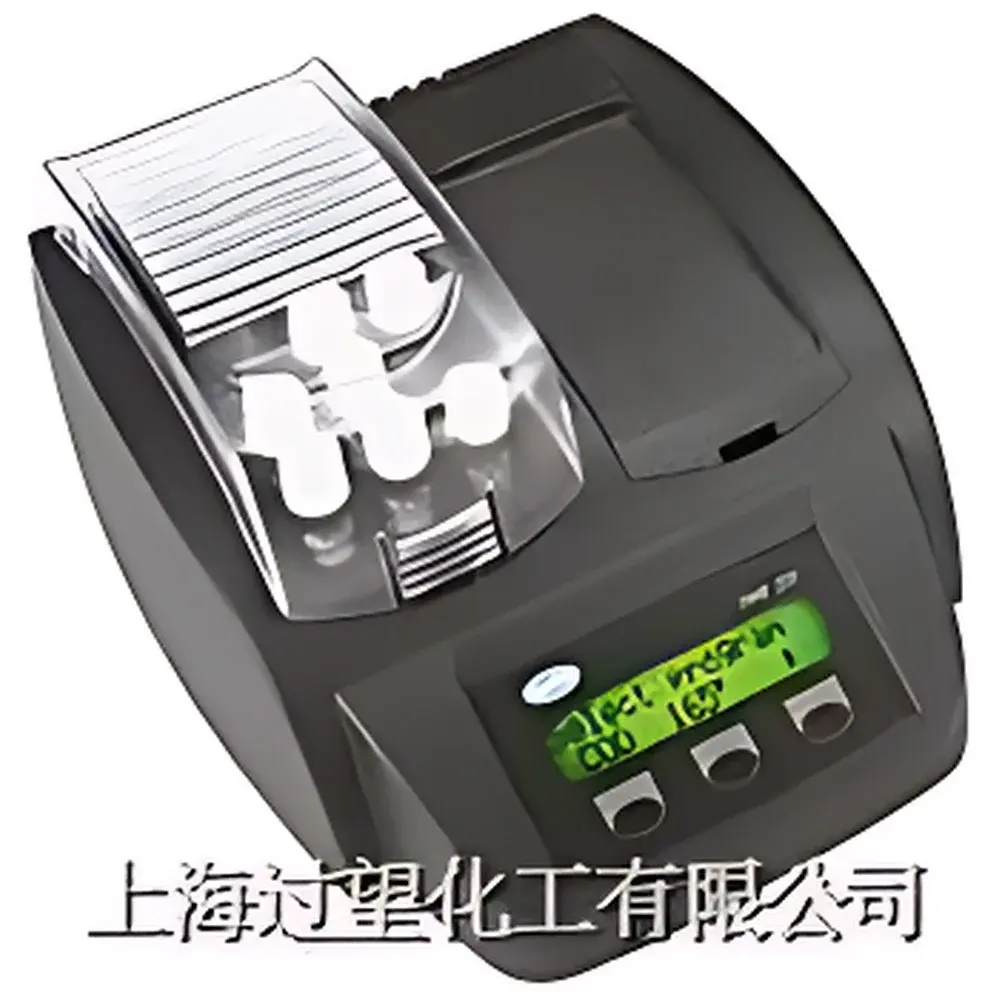
Hach DR/2800 COD Analyzer with DRB200 Digestion System
| Brand | Hach |
|---|---|
| Origin | USA |
| Model | DR/2800 + DRB200 |
| Detection Principle | Colorimetric Measurement after Micro- reflux Digestion (Cr⁶⁺ Reduction) |
| COD Range | 0–15,000 mg/L O₂ (via pre-filled vials) |
| Digestion Temperature | 150 °C ±2 °C |
| Digestion Time | 120 min |
| Vial Format | Sealed 3-mL预制试剂管 (0.2–2 mL sample volume) |
| Compliance | ASTM D1253, ISO 6060, EPA 410.4, USP <643>, GLP-ready data logging |
Overview
The Hach DR/2800 COD Analyzer with DRB200 Digestion System is a fully integrated, laboratory-grade solution for the quantitative determination of Chemical Oxygen Demand (COD) in wastewater, surface water, and industrial effluents. It implements the standardized micro-reflux colorimetric method—based on dichromate oxidation under strongly acidic, thermally controlled conditions—where Cr⁶⁺ is reduced to Cr³⁺ in proportion to organic load, and the resulting absorbance at 600 nm or 420 nm is measured photometrically. This method is validated against classical open-reflux titrimetric procedures (e.g., APHA 5220B) and complies with major international regulatory frameworks including ASTM D1253 (Standard Test Method for Chemical Oxygen Demand of Water), ISO 6060 (Water Quality — Determination of Chemical Oxygen Demand), and U.S. EPA Method 410.4. Unlike conventional reflux setups requiring condensers, glassware, and hazardous reagent handling, this system minimizes operator exposure, eliminates mercury-based catalysts, and reduces acid waste volume by >90% through sealed-vial chemistry.
Key Features
- Pre-filled, factory-calibrated COD reagent vials eliminate manual preparation—no weighing, dilution, or standardization required.
- DRB200 digital digestion block delivers precise thermal control (±2 °C) across programmable temperature ranges (37–165 °C) and time intervals (0–480 min), supporting not only COD but also TN, TP, and TOC digestion protocols.
- DR/2800 portable spectrophotometer features built-in COD methods, automatic wavelength selection, and direct concentration readout—no calibration curve setup needed for routine analysis.
- Sealed digestion vials prevent volatile organic loss and acid fume emission; integrated cooling step ensures safe post-digestion handling before photometric measurement.
- Full traceability: instrument-generated audit trails record user ID, timestamp, method version, digestion parameters, and raw absorbance values—supporting 21 CFR Part 11 compliance when paired with Hach’s LabStation software.
Sample Compatibility & Compliance
The system accommodates raw wastewater, treated effluent, river water, and process streams with suspended solids ≤1000 mg/L (centrifugation or filtration recommended for highly turbid samples). Matrix interferences from chloride ions are mitigated using mercury-free Ag₂SO₄–H₂SO₄ reagent formulations (per EPA 410.4 Appendix A), enabling reliable quantification up to 2000 mg/L Cl⁻. All hardware and consumables meet RoHS Directive 2011/65/EU requirements. The DR/2800 spectrophotometer carries CE marking and conforms to IEC 61010-1 safety standards. Method validation reports—including precision (RSD <5%), accuracy (recovery 92–105%), and detection limit (3 mg/L O₂ for low-range vials)—are available upon request for GLP/GMP audits.
Software & Data Management
Data export is supported via USB 2.0 to CSV or PDF formats. When connected to Hach’s LabStation software (v4.2+), the DR/2800 enables centralized method deployment, electronic signature workflows, and automated report generation compliant with ISO/IEC 17025 documentation requirements. Instrument logs include full metadata: digestion batch ID, vial lot number, operator credentials, environmental chamber temperature/humidity, and spectral scan history. Optional cloud synchronization allows secure multi-site data aggregation for regulatory submission (e.g., NPDES discharge reporting).
Applications
This analyzer is routinely deployed in municipal wastewater treatment plants for process control and regulatory compliance monitoring; in pharmaceutical manufacturing for bioburden assessment per USP ; in food & beverage facilities tracking BOD/COD ratios during anaerobic digestion optimization; and in environmental consulting labs performing Tier 2 site characterization per ASTM D5088. Its portability supports field-deployed screening at remote discharge points, while its reproducibility (inter-laboratory CV <4.2% per ISO 5815-1) ensures data acceptance by state environmental agencies.
FAQ
What is the shelf life of Hach COD reagent vials?
Unopened vials retain stability for 2 years when stored at 10–30 °C in original packaging.
Can the DRB200 digestor be used for other parameters besides COD?
Yes—it supports total nitrogen (TN), total phosphorus (TP), and total organic carbon (TOC) digestion per EPA 365.4, 365.2, and 415.3 protocols.
Is method validation documentation included with the system?
A comprehensive validation kit—including CRM traceability certificates, precision/accuracy test data, and interference study summaries—is provided with each DR/2800 + DRB200 configuration.
How does the micro-reflux method compare to open-reflux titration in terms of regulatory acceptance?
It is explicitly recognized in EPA Method 410.4 and accepted by over 42 U.S. state agencies as an equivalent alternative to APHA 5220B for routine compliance reporting.
Does the system support LIMS integration?
Yes—via ASTM E1384-compliant HL7 messaging or direct database push using LabStation’s ODBC driver.
Related Products







