
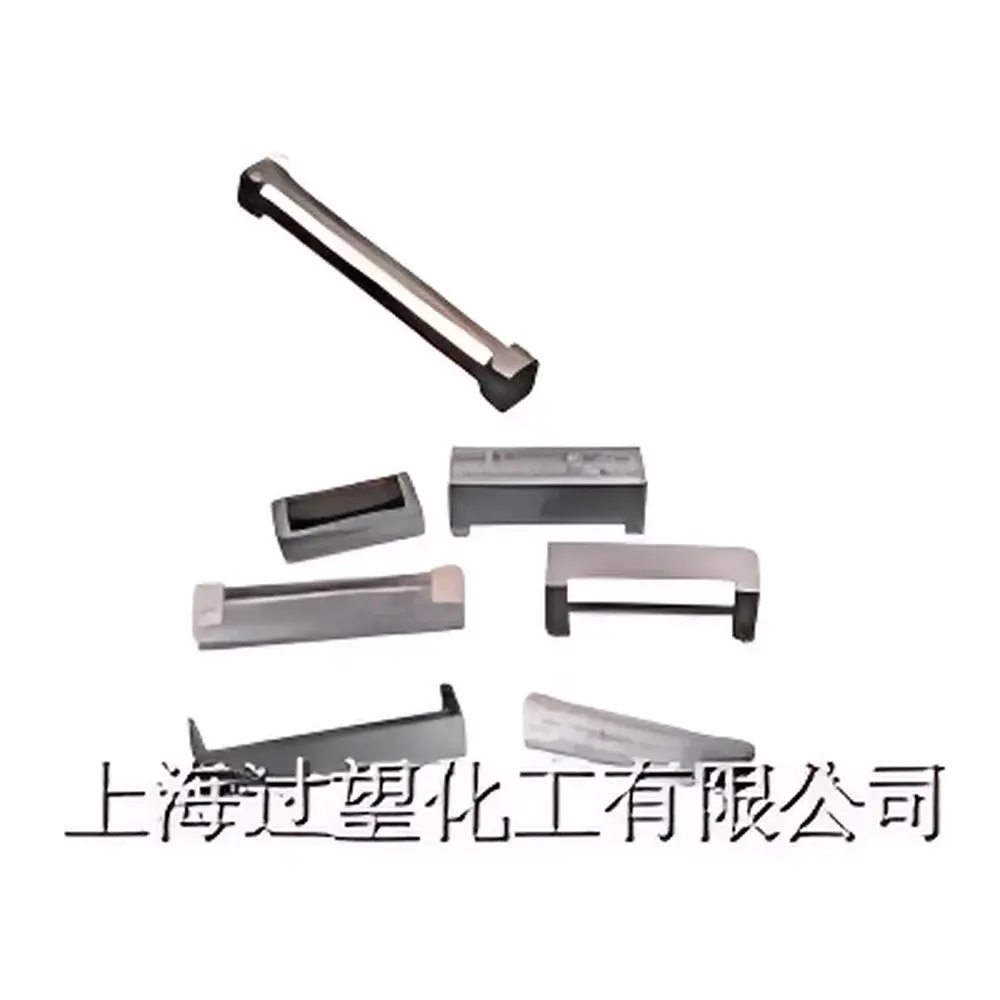
SZQ Series Wet Film Applicator
| Origin | Shanghai, China |
|---|---|
| Manufacturer Type | Authorized Distributor |
| Origin Category | Domestic (China) |
| Model | SZQ |
| Pricing | Available Upon Request |
| Wet Film Thickness Range | 25–500 µm |
| Thickness Accuracy | ±2 to ±10 µm (dependent on model) |
Overview
The SZQ Series Wet Film Applicator is a precision-engineered laboratory tool designed for the controlled deposition of uniform wet films onto flat, rigid substrates—primarily used in coatings, inks, adhesives, and functional fluid R&D and quality control laboratories. Based on the well-established draw-down principle, the device operates by dragging a calibrated stainless-steel blade with a precisely machined gap across a substrate coated with liquid sample. This mechanical shearing action produces a reproducible wet film whose nominal thickness corresponds directly to the blade’s gap height—expressed in micrometers (µm). Unlike spin coaters or spray applicators, the SZQ series offers deterministic, non-rotational, non-aerodynamic film formation, making it ideal for viscosity-sensitive formulations and applications requiring strict thickness traceability per ASTM D823, ISO 2808, and GB/T 1727. The instrument does not incorporate motorized actuation or electronic controls; its performance relies entirely on operator technique, substrate flatness, and blade calibration integrity.
Key Features
- Modular blade design: Interchangeable stainless-steel applicator blades available in 12 standardized nominal thicknesses—from 25 µm to 500 µm—in increments matching industry-standard wet film gauge intervals.
- High-precision machining: Each blade gap is CNC-machined and verified via coordinate measuring machine (CMM); tolerance bands range from ±2 µm (for 25–50 µm models) to ±10 µm (for 400–500 µm models), conforming to ISO 9001 calibration documentation requirements.
- Corrosion-resistant construction: All wetted surfaces are passivated 316 stainless steel; non-slip anodized aluminum handle ensures ergonomic manual operation without slippage during draw-down.
- Traceable metrology: Each blade is laser-engraved with model number (e.g., SZQ-150), nominal thickness, and unique serial identifier; optional NIST-traceable calibration certificate available upon request.
- Low-maintenance operation: No consumables beyond standard cleaning solvents (e.g., acetone, isopropanol); no moving parts, batteries, or firmware updates required.
Sample Compatibility & Compliance
The SZQ applicator is compatible with Newtonian and moderately shear-thinning liquids exhibiting viscosities between 10 mPa·s and 5,000 mPa·s (measured at 25°C, 100 s⁻¹). It accommodates aqueous, solvent-borne, and UV-curable systems on glass, metal, plastic, and coated paper substrates—provided surface roughness Ra ≤ 0.8 µm and planarity deviation < 25 µm over 100 mm. The device supports compliance workflows aligned with ISO/IEC 17025-accredited testing labs, particularly for methods referenced in ASTM D2805 (hiding power), ASTM D3359 (adhesion after film formation), and ISO 6272 (impact resistance of wet films). While the applicator itself is not FDA-regulated, its use in formulation development for medical device coatings or pharmaceutical film coatings may be incorporated into GLP-compliant protocols when paired with documented SOPs and operator training records.
Software & Data Management
The SZQ Series is a fully manual, analog instrument and does not include embedded software, connectivity interfaces (USB, Bluetooth, Ethernet), or digital data output. Film thickness values are determined solely by the selected blade specification—not measured in real time. However, integration into digital QA/QC workflows is achieved through complementary instrumentation: post-application, users typically employ non-contact profilometers (e.g., optical interferometry or confocal microscopy), gravimetric analysis, or spectrophotometric reflectance measurement to quantify dry/wet thickness ratios and optical properties. Laboratory Information Management Systems (LIMS) can log blade ID, substrate lot, ambient temperature/humidity (per ASTM D2247), and operator signature as part of structured test records—ensuring full auditability under 21 CFR Part 11 when paired with electronic signature-capable platforms.
Applications
- Determination of hiding power (opacity) per ASTM D2805 using TiO₂-pigmented paints on black-and-white contrast charts.
- Preparation of standardized wet films for colorimetric evaluation (CIELAB ΔE), gloss measurement (ASTM D523), or rheological quenching studies.
- Formulation screening of water-based architectural coatings, automotive basecoats, and printed electronics inks where batch-to-batch wet film consistency directly impacts drying behavior and final film morphology.
- Calibration verification of electronic wet film thickness gauges (e.g., Elcometer 456) using reference substrates prepared under controlled RH (50 ± 5%) and temperature (23 ± 2°C).
- Teaching laboratories for polymer science and surface engineering courses—demonstrating the relationship between wet film geometry, solvent evaporation kinetics, and defect formation (e.g., orange peel, mud-cracking).
FAQ
What standards does the SZQ Series comply with?
It is designed to support test methods specified in ASTM D823, ISO 2808, GB/T 1727, and ISO 6272—though compliance is method-dependent and requires proper operator training and environmental control.
Can the SZQ be used for high-viscosity pastes (>10,000 mPa·s)?
No. Viscosities above ~5,000 mPa·s risk incomplete draw-down, streaking, or blade lift-off; such materials require notch-bar or wire-wound applicators (e.g., Mayer bars) instead.
Is blade recalibration required after extended use?
Yes—annual CMM verification is recommended if used in accredited labs; visual inspection for nicks or burrs should precede each test session.
Does the device include substrate clamping fixtures?
No. Users must secure substrates independently (e.g., vacuum tables or double-sided tape) to prevent lateral movement during draw-down.
Are custom gap sizes available beyond the standard 12 options?
Yes—custom-machined blades (with minimum order quantities) can be supplied upon engineering review and dimensional feasibility assessment.



