
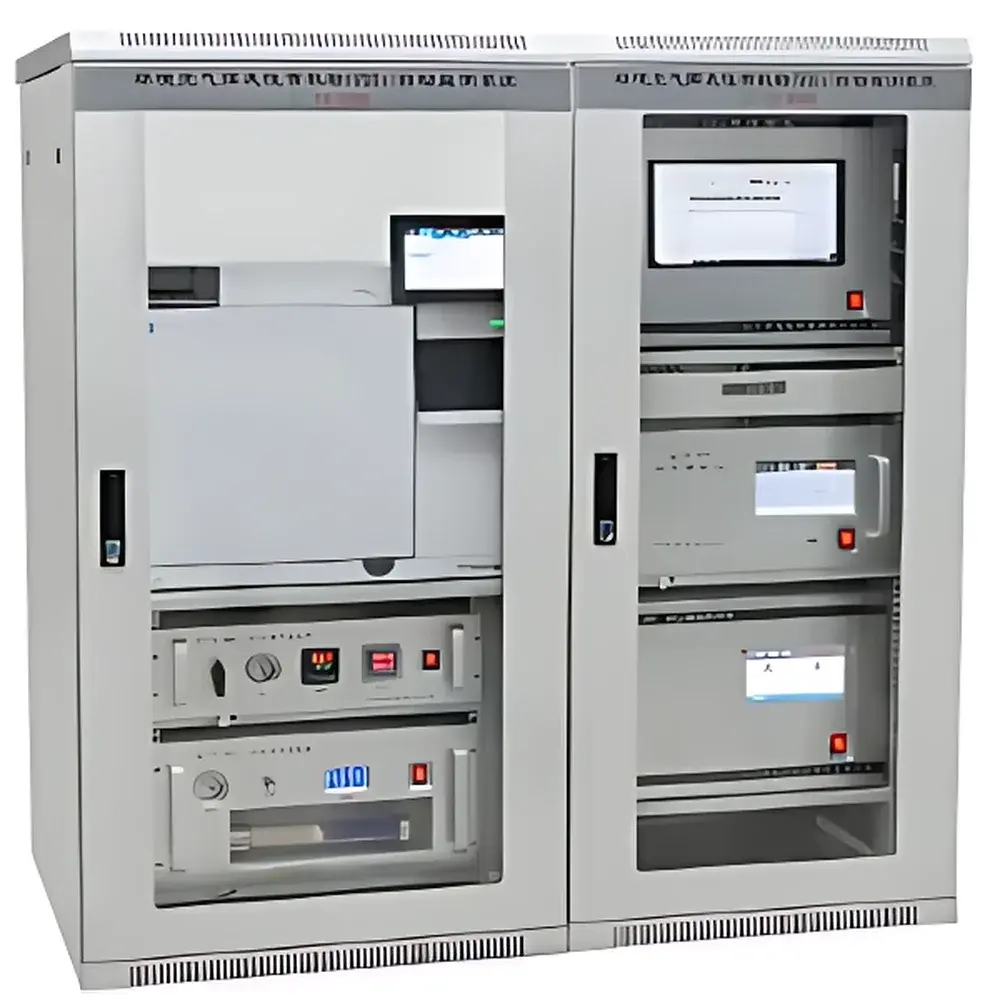
Tianhong TH-300B/H/L/G PAMS-Compliant Continuous Ambient Air VOC Monitoring System
| Brand | Tianhong |
|---|---|
| Model | TH-300B/H/L/G |
| Origin | Hubei, China |
| Detection Principle | Cryogenic Preconcentration + Dual-FID GC |
| Target Analytes | 57 PAMS Compounds |
| Sampling Interval | ≥30 min |
| Cryogenic Trapping Temperature | Adjustable down to −190 °C |
| Water Removal Temperature | Adjustable down to −60 °C |
| Compliance | HJ 1010–2018 |
| Detector Options | FID (standard), FPD (for sulfur compounds), ECD (for halocarbons) |
| Application Scope | Ambient air monitoring stations, residential zones, scenic areas, industrial parks |
Overview
The Tianhong TH-300B/H/L/G is a fully automated, continuous ambient air volatile organic compounds (VOCs) monitoring system designed specifically for compliance with the U.S. EPA’s Photochemical Assessment Monitoring Stations (PAMS) protocol and aligned with China’s national standard HJ 1010–2018. It employs a cryogenic preconcentration–gas chromatography–flame ionization detection (Cryo-GC-FID) architecture optimized for trace-level quantification of the 57 priority aromatic and aliphatic hydrocarbons defined in the PAMS compound list—including benzene, toluene, ethylbenzene, xylenes (BTEX), C2–C4 alkanes, and C3–C5 alkenes. The system integrates a patented ultra-low-temperature empty-tube trapping module capable of stable operation at −190 °C, enabling quantitative capture of highly volatile species (e.g., isoprene, propylene) without breakthrough or thermal degradation. A dual-FID configuration—supported by a heart-cutting (center-cut) GC column switching module—ensures chromatographic separation integrity and minimizes co-elution interference across complex ambient matrices.
Key Features
- Patented cryogenic trapping using an empty stainless-steel tube, adjustable from −190 °C to −100 °C for analyte-specific optimization
- Dual-FID detection with independent signal channels for enhanced precision and redundancy
- Integrated cryogenic water removal stage operating at −60 °C (adjustable), minimizing humidity-induced baseline drift and column contamination
- Minimum sampling interval of 30 minutes with zero blind time—ensuring uninterrupted temporal resolution for diurnal trend analysis
- Modular detector compatibility: optional flame photometric detector (FPD) for sulfur-containing VOCs (e.g., COS, CS2, mercaptans) and electron capture detector (ECD) for chlorinated/brominated compounds (e.g., chloroform, tetrachloroethylene)
- Robust architecture engineered for unattended operation in outdoor shelters (IP54-rated enclosure) with temperature- and pressure-compensated mass flow control
Sample Compatibility & Compliance
The TH-300B/H/L/G is validated for direct analysis of ambient air without sample dilution or derivatization. It meets the performance criteria specified in HJ 1010–2018 for method detection limits (MDLs), accuracy (±15% recovery), precision (RSD ≤10%), and long-term stability (drift <5% over 7 days). While not certified to ISO/IEC 17025 under third-party accreditation, its hardware design and calibration traceability support GLP-compliant data generation when operated within documented SOPs. The system’s data acquisition logic adheres to the temporal and reporting requirements of China’s National Ambient Air Quality Monitoring Network (NAAQMN), including automatic flagging of maintenance events, calibration failures, and pressure/flow excursions per HJ 655–2013.
Software & Data Management
The embedded Linux-based control software provides real-time chromatogram visualization, automated peak integration using retention time locking (RTL), and configurable reporting templates aligned with provincial environmental monitoring centers’ data submission formats. All raw chromatograms, calibration curves, system logs, and QA/QC records are stored locally with SHA-256 checksum integrity verification. Audit trails—including user login history, method edits, and calibration event timestamps—are retained for ≥180 days and exportable in CSV/XML for regulatory review. The system supports secure remote access via TLS 1.2 encrypted VPN and complies with basic cybersecurity requirements outlined in GB/T 22239–2019 (China’s Multi-Level Protection Scheme Level 2).
Applications
This system is deployed in fixed-site ambient air monitoring networks where high-fidelity speciated VOC data are required for ozone precursor attribution, source apportionment modeling (e.g., PMF, CMB), and regulatory compliance tracking. Typical deployment environments include urban background stations, roadside sites near traffic corridors, industrial fence-line monitoring points, and regional background observatories. Its ability to resolve light hydrocarbons enables evaluation of biogenic vs. anthropogenic VOC contributions—critical for developing targeted emission control strategies under China’s “Blue Sky Defense War” initiative. The FPD and ECD options extend utility to specialized applications such as refinery perimeter monitoring (H2S, mercaptans) and electronics manufacturing zone surveillance (halogenated solvents).
FAQ
What PAMS compounds does the TH-300B/H/L/G quantify?
It quantifies all 57 compounds listed in the U.S. EPA PAMS methodology, including BTEX, C2–C4 alkanes, C3–C5 alkenes, and selected oxygenates such as acetone and methanol—subject to method validation per HJ 1010–2018.
Is the system compliant with U.S. EPA TO-14/TO-15 protocols?
No. It is engineered for PAMS alignment and Chinese national standards (HJ 1010–2018); it does not implement SUMMA canister sampling or thermal desorption GC–MS workflows required for TO-14/TO-15.
Can it operate continuously for 30 days without intervention?
Yes—under standard ambient conditions (−10 °C to 40 °C), with scheduled bi-weekly calibration checks and quarterly trap cleaning, the system achieves >95% uptime over 30-day cycles.
Does the software support 21 CFR Part 11 compliance?
No. It includes audit trail functionality and electronic signature capability but lacks full electronic record authentication, role-based access control, and system validation documentation required for FDA-regulated environments.
What maintenance is required for the cryogenic trapping module?
Liquid nitrogen refills every 7–10 days (depending on duty cycle); annual replacement of O-rings and vacuum insulation integrity verification; biannual calibration of cold-junction thermocouples against NIST-traceable reference probes.
Related Products







