
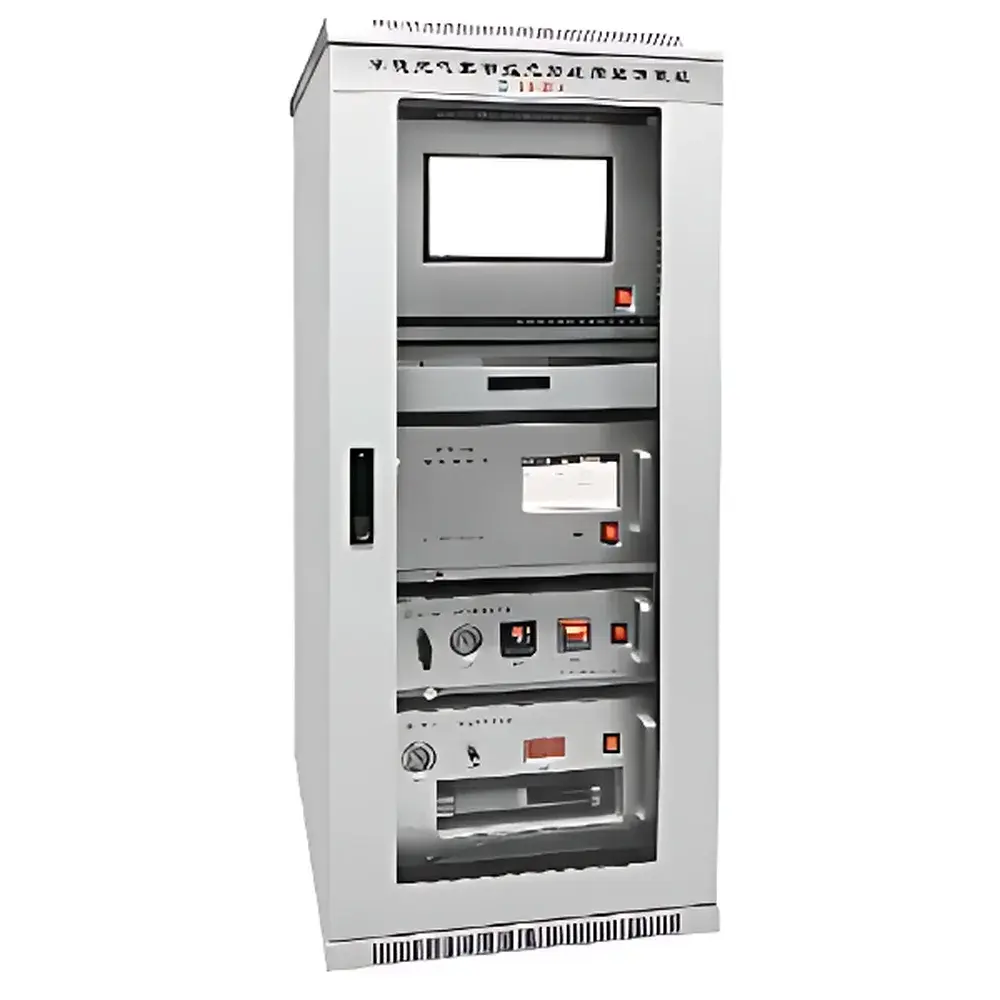
Tianhong TH-300C Continuous Ambient Air Non-Methane Hydrocarbons (NMHC) Monitoring System
| Brand | Tianhong |
|---|---|
| Origin | Hubei, China |
| Model | TH-300C Continuous Ambient Air Non-Methane Hydrocarbons (NMHC) Monitoring System |
| Detection Principle | Cryogenic Preconcentration + Thermal Desorption + Flame Ionization Detection (FID) |
| Compliance Standard | HJC-ZY84-2020 |
| Calibration | Automated Dynamic Dilution Calibrator |
| Sample Introduction | Direct Ambient Air Intake (No Adsorbent Trap) |
| Measurement Range | 0–10 ppmv (as Carbon, adjustable via dilution) |
| Detection Limit | <50 ppbv (as Carbon, 3σ) |
| Analysis Cycle | ≤5 min per measurement |
| Operating Temperature Range | 5–35 °C |
| Power Supply | 220 VAC ±10%, 50 Hz |
Overview
The Tianhong TH-300C Continuous Ambient Air Non-Methane Hydrocarbons (NMHC) Monitoring System is an engineered solution for real-time, unattended quantification of non-methane total hydrocarbons in ambient air. It operates on a direct measurement principle combining cryogenic preconcentration, rapid thermal desorption, and flame ionization detection (FID). Unlike conventional adsorbent-based systems, the TH-300C utilizes a patent-pending ultra-low-temperature empty-tube enrichment technique — where ambient air passes through a stainless-steel capillary cooled to –40 °C to –60 °C — enabling selective condensation of NMHC while permitting methane to pass through unaffected. This physical separation eliminates reliance on catalytic or chromatographic methanizers, thereby avoiding interference from oxygenates, halogenated VOCs, or humidity-induced signal drift. The system delivers high reproducibility (<3% RSD over 24 h), robust baseline stability, and trace-level sensitivity essential for regulatory-grade ambient monitoring.
Key Features
- Patented cryogenic empty-tube preconcentration: No sorbent media, eliminating carryover, carbon residue accumulation, and degradation of desorption efficiency over time.
- Adjustable cold trap temperature control (–40 °C to –60 °C) ensures optimal NMHC retention across variable ambient conditions and compound volatility profiles.
- Integrated FID detector with optimized air/hydrogen flow dynamics and low-noise electrometer design, delivering linear response from 50 ppbv to 10 ppmv (as carbon).
- Automated dynamic dilution calibrator enables NIST-traceable single-point or multi-point calibration without manual gas cylinder switching.
- Real-time methane bypass verification: Simultaneous monitoring of methane breakthrough validates cold trap integrity and separation fidelity during each analysis cycle.
- Industrial-grade enclosure (IP54 rated) with internal temperature and humidity stabilization for deployment in unsheltered air quality stations, industrial fence-line sites, and remote environmental monitoring networks.
Sample Compatibility & Compliance
The TH-300C is validated for continuous sampling of ambient air matrices containing complex VOC mixtures, including alkanes (C₂–C₁₀), alkenes, alkynes, aromatics (e.g., benzene, toluene), and oxygenated compounds (e.g., acetone, MEK). It excludes methane via physical volatility differentiation rather than chemical conversion, ensuring accurate NMHC reporting under high-humidity or high-methane background conditions (e.g., near landfills or biogas facilities). The system conforms to the technical requirements and verification protocols outlined in HJC-ZY84-2020 — China’s official guideline for NMHC CEMS applicability testing — and supports audit-ready data logging aligned with GLP principles. While not certified to EPA Method 25A or EN 12619, its measurement architecture is compatible with those standards’ performance criteria for precision, detection limit, and zero/span stability.
Software & Data Management
The embedded Linux-based controller runs Tianhong’s proprietary TMS-3000 acquisition and control software, providing ISO/IEC 17025-aligned instrument diagnostics, automated QC flagging (e.g., pressure drop anomalies, FID flame-out, cold trap temperature deviation), and configurable alarm thresholds. Raw analog FID signals, cold trap thermocouple readings, and dilution valve actuation logs are timestamped at 100 Hz and archived locally (≥30 days) with SHA-256 checksum integrity. Export formats include CSV (with UTC timestamps and metadata headers) and Modbus TCP for integration into SCADA or central EMS platforms. Audit trail functionality records all user actions (login/logout, method changes, calibration events) with immutable timestamps — supporting FDA 21 CFR Part 11 readiness when deployed in regulated environmental compliance programs.
Applications
- Ambient air quality monitoring networks (national, provincial, and municipal stations)
- Fence-line monitoring at petrochemical plants, refineries, paint manufacturing, and pharmaceutical production facilities
- Urban background and traffic-influenced site characterization for ozone precursor studies
- Residential and tourist area air quality assessment where low-concentration NMHC trends require high signal-to-noise resolution
- Research applications requiring artifact-free NMHC speciation input for photochemical modeling (e.g., SAPRC, MCM)
- Validation and intercomparison campaigns with GC-FID or PTR-MS reference instruments
FAQ
Does the TH-300C require consumable adsorbent traps or catalysts?
No. The system uses a sorbent-free, stainless-steel cryogenic enrichment tube, eliminating routine replacement of traps or methanization catalysts.
Can it operate reliably in high-humidity environments?
Yes. The ultra-low-temperature condensation mechanism inherently rejects water vapor, and the system includes heated sample lines and Nafion dryers as optional accessories to maintain dew point < –20 °C at the detector inlet.
How is calibration traceability ensured?
Calibration gases are certified to ISO 6141 and traceable to NIM (China National Institute of Metrology); the dynamic dilution module maintains volumetric accuracy within ±1.5% across its 1:10 to 1:1000 dilution range.
What maintenance intervals are recommended?
FID nozzle cleaning every 90 days; cold trap de-icing cycle initiated automatically after 100 analyses or manually via software; annual verification of thermocouple calibration and FID response linearity.
Is remote diagnostics supported?
Yes. Secure SSH and HTTPS interfaces allow firmware updates, log retrieval, and real-time parameter monitoring via TLS 1.2–encrypted connections; optional 4G LTE module enables cellular telemetry in off-grid locations.
Related Products







