
English Product Name
| Brand | Other Brands |
|---|---|
| Origin | Imported |
| Manufacturer Type | General Distributor |
| Price | USD 14,000 (approx.) |
Overview
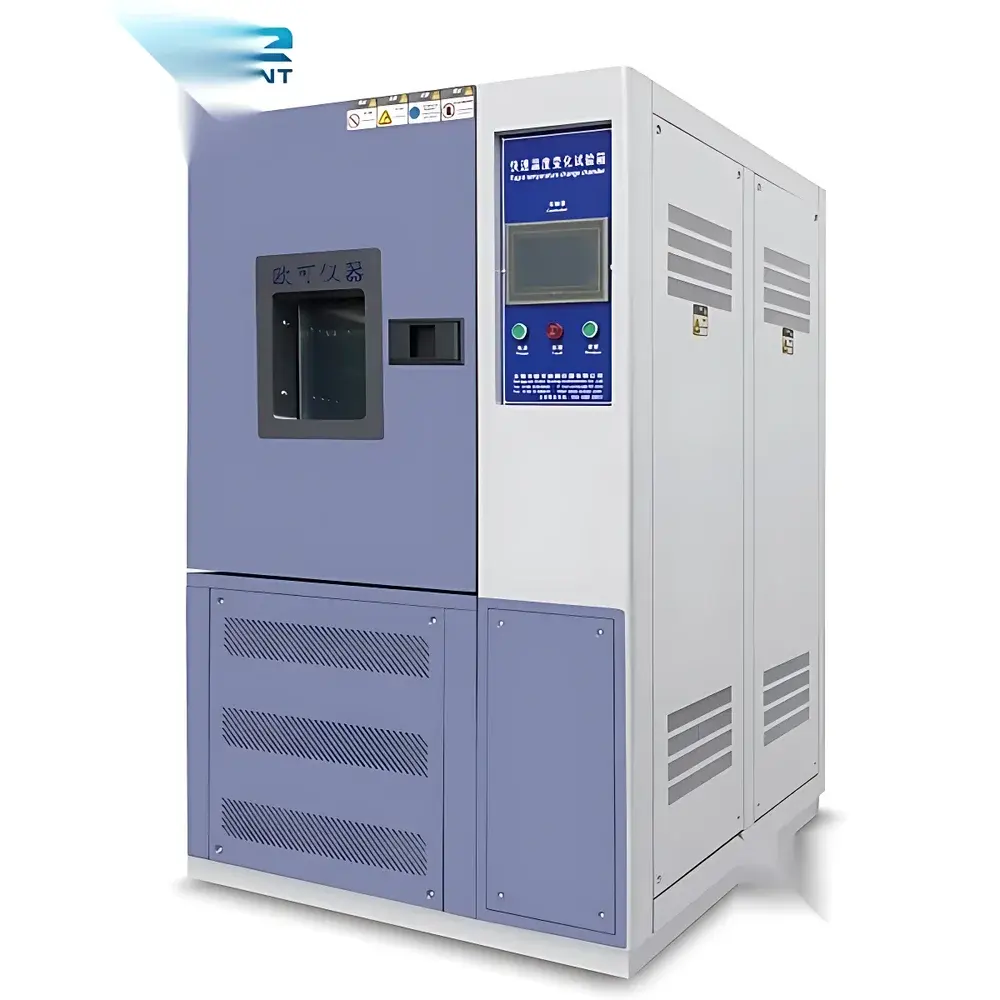
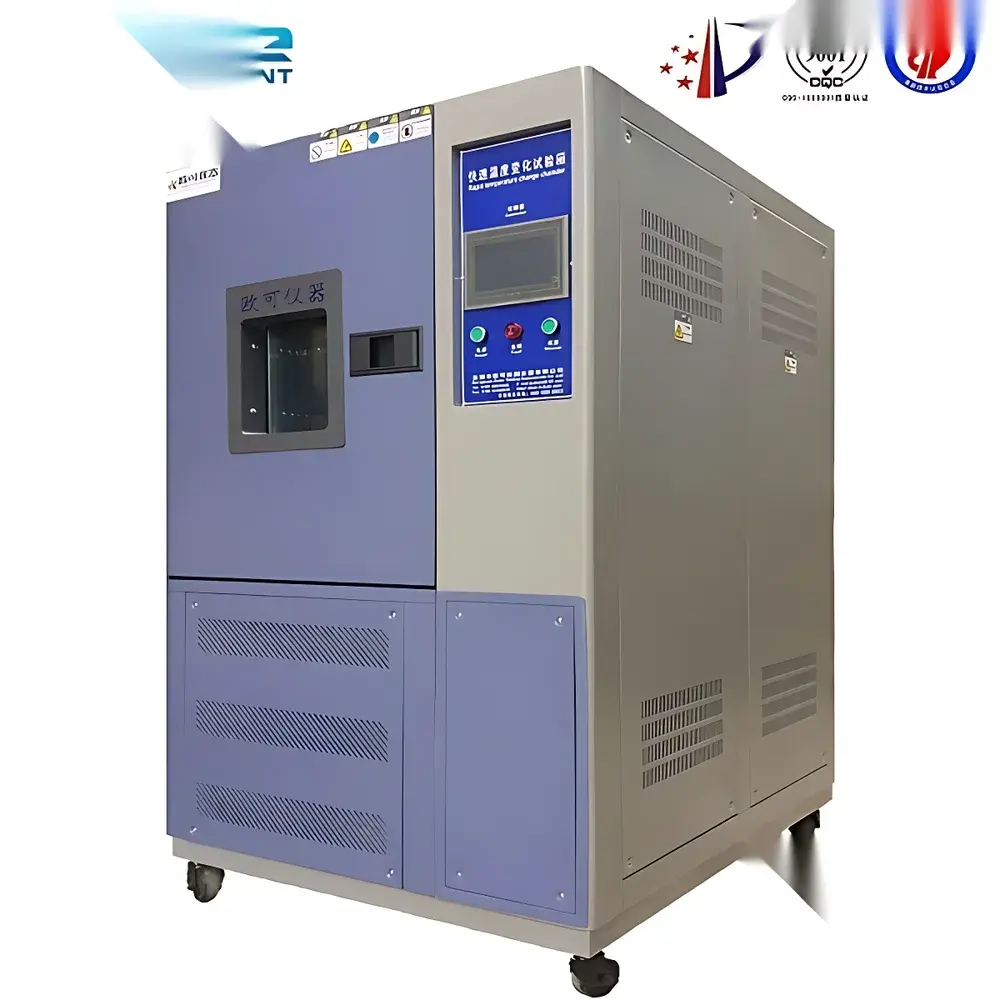
The Xiamen Rapid Temperature Change Environmental Test Chamber is a precision-engineered thermal stress screening system designed for accelerated reliability validation of electronic components, automotive modules, aerospace assemblies, and industrial electronics. It operates on the principle of controlled, high-rate temperature transitions between defined upper and lower thermal limits—typically ranging from –70 °C to +180 °C—with programmable ramp rates up to 15 °C/min (subject to chamber configuration and load). By inducing repeated thermal expansion and contraction in test specimens, the chamber generates internal thermo-mechanical stress, thereby exposing latent defects such as solder joint microcracks, interfacial delamination, material coefficient-of-thermal-expansion (CTE) mismatch failures, and process-related weaknesses—including those arising from PCB lamination, encapsulation, or adhesive bonding. This capability supports early-life failure detection in accordance with industry-standard temperature change testing protocols, significantly reducing field return risk and supporting robust design for manufacturability (DFM) and design for reliability (DFR) workflows.
Key Features
- Large-format, full-color LCD touch interface with bilingual (English/Chinese) menu navigation and real-time graphical display of setpoints, actual chamber profiles, and active test sequences.
- 96 preloaded test profiles compliant with MIL-STD-810, IEC 60068-2, and GB/T 2423 series standards; user-definable cycle count (1–999), dwell time, ramp rate, and total test duration (up to 999 h 59 min).
- Integrated 50 mm diameter access port on left chamber wall, fitted with silicone gasket and brass collar—designed for external power supply feedthrough, sensor cabling, or real-time monitoring of DUT electrical performance under thermal stress.
- PLC-based control architecture with PID auto-tuning algorithm for stable, high-fidelity temperature regulation; typical control accuracy ±0.5 °C, uniformity ±2.0 °C across working volume (per GB/T 2423.22).
- Cryogenic dual-stage refrigeration system utilizing environmentally compliant HFC refrigerants R507 and R23 (ODP = 0); hermetically sealed compressors, copper-aluminum finned evaporators, and optimized air circulation ducting ensure rapid thermal response and minimal thermal overshoot.
- Comprehensive safety suite including over-temperature cut-off, compressor high-pressure/low-pressure protection, phase failure detection, ground fault interruption, short-circuit and overload protection on all control circuits, and audible/visual alarm indicators.
Sample Compatibility & Compliance
The chamber accommodates samples up to standard industrial rack dimensions (customizable per client specifications) and supports both powered and unpowered device-under-test (DUT) configurations. Its mechanical and thermal design complies with key international environmental testing standards, including: IEC 60068-2-1 (cold), IEC 60068-2-2 (dry heat), IEC 60068-2-14 (change of temperature), GB/T 2423.22 (temperature change), GJB 150.3/4/9 (military environmental test methods), and ISO 16750-4 (road vehicles—environmental conditions). All operational parameters—including ramp rate verification, temperature uniformity mapping, and stability validation—are traceable to NIST-traceable reference sensors and documented per GLP-aligned calibration procedures.
Software & Data Management
The embedded controller logs timestamped temperature data at configurable intervals (1–60 s) and stores up to 1,000 hours of continuous history internally. Export options include USB flash drive (CSV format) and optional RS485/Ethernet interface for integration into centralized test management systems. Audit trail functionality records operator login, parameter modifications, alarm events, and manual interventions—supporting compliance with FDA 21 CFR Part 11 requirements when paired with validated third-party software platforms. Remote monitoring and alarm notification via email/SMS are available through optional IoT gateway modules.
Applications
This chamber serves critical roles in product qualification, incoming inspection, and failure analysis laboratories. Typical use cases include: thermal cycling qualification of BGA packages and MEMS sensors; burn-in stress screening of power modules prior to automotive AEC-Q100 certification; validation of conformal coating integrity under extreme thermal gradients; evaluation of battery module thermal runaway propagation thresholds; and accelerated life testing of optical enclosures exposed to diurnal desert or arctic climate cycles.
FAQ
What is the maximum achievable temperature transition rate?
Standard configurations support ramp rates of 5–15 °C/min depending on chamber volume, thermal mass load, and selected temperature range. Custom high-speed variants can be engineered upon request.
Does the system support humidity control?
This model is configured for dry thermal cycling only. A separate combined temperature/humidity chamber (IEC 60068-2-30 compliant) is available for damp heat and cyclic humidity testing.
Can the chamber be integrated into an automated test cell?
Yes—equipped with Modbus RTU and TCP/IP communication protocols, it supports seamless integration with SCADA, MES, and test automation frameworks via digital I/O and Ethernet.
Is calibration documentation provided with shipment?
Each unit ships with a factory calibration certificate referencing traceable standards; on-site IQ/OQ/PQ validation support and annual recalibration services are offered under extended service agreements.
What refrigerant is used, and is it compliant with current environmental regulations?
R507 and R23 are zero-ozone-depletion-potential (ODP = 0) hydrofluorocarbon blends approved under the Kigali Amendment and EU F-Gas Regulation (No. 517/2014), with global warming potential (GWP) values documented per ISO 14067.



