
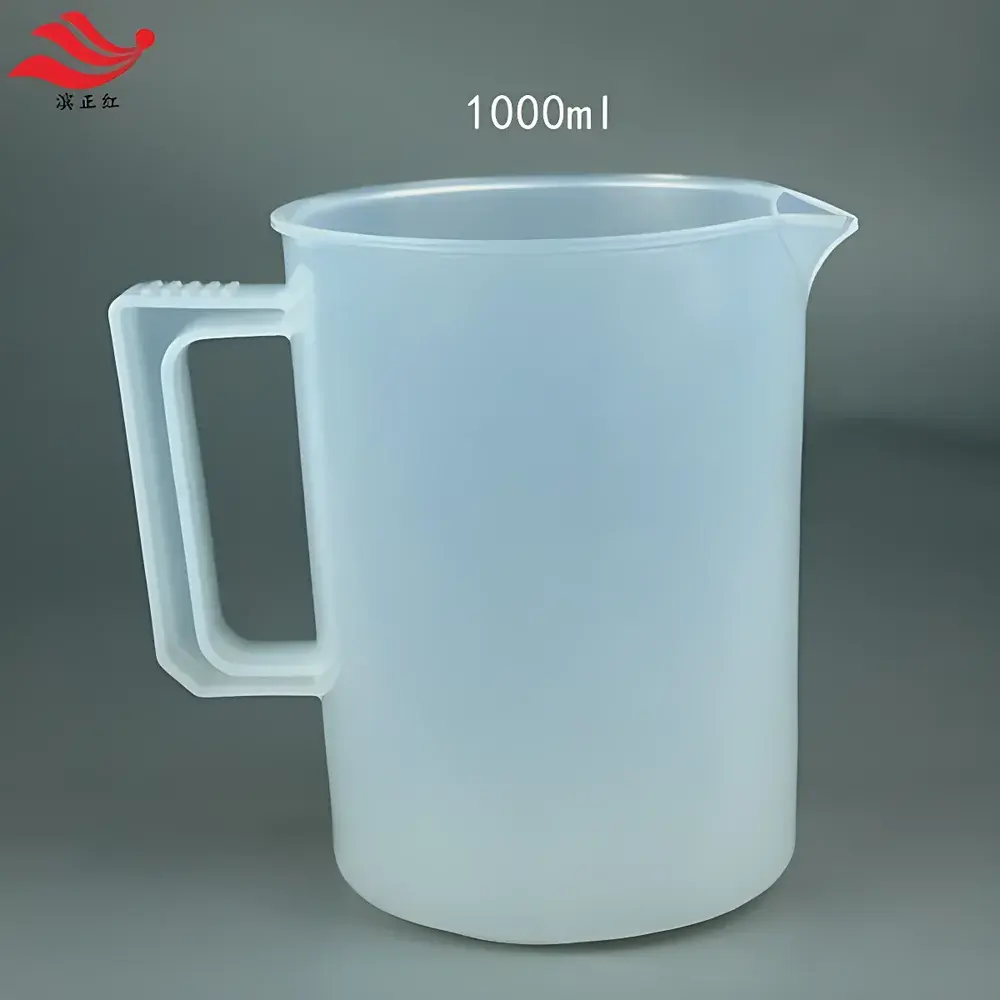
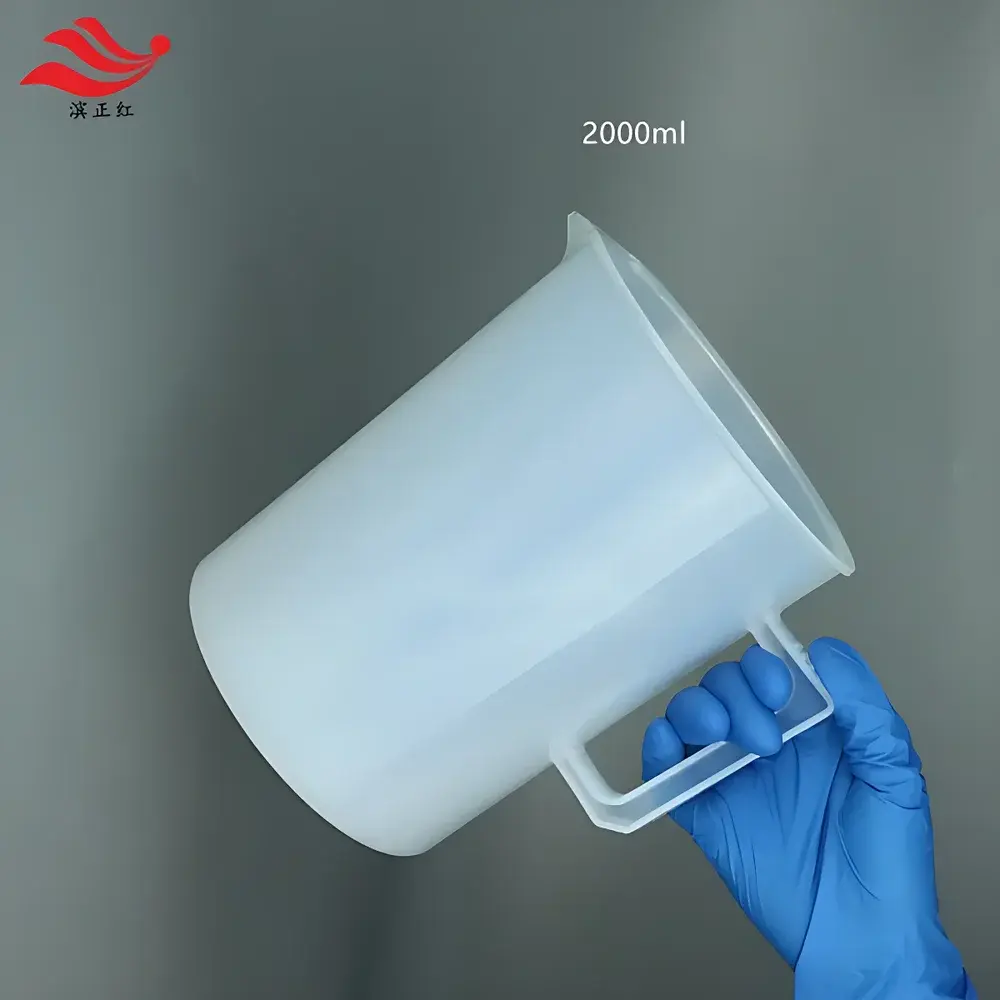
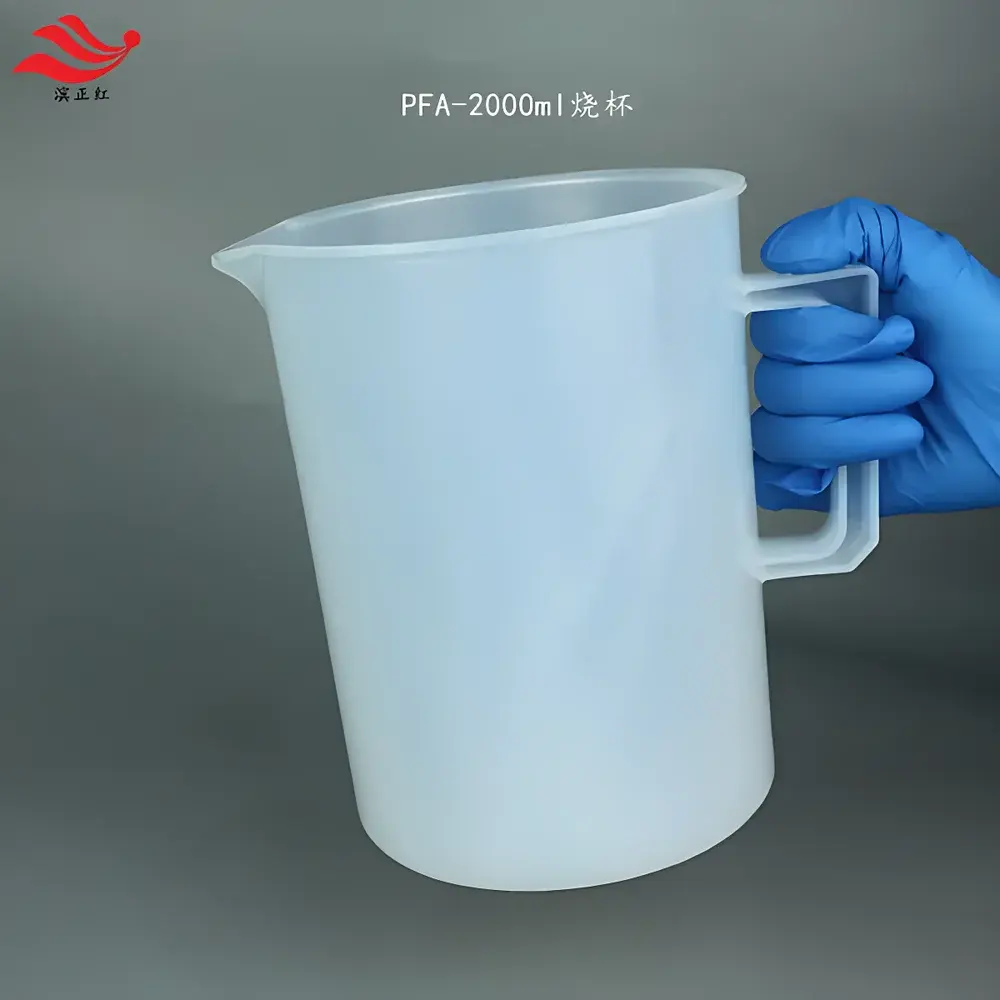
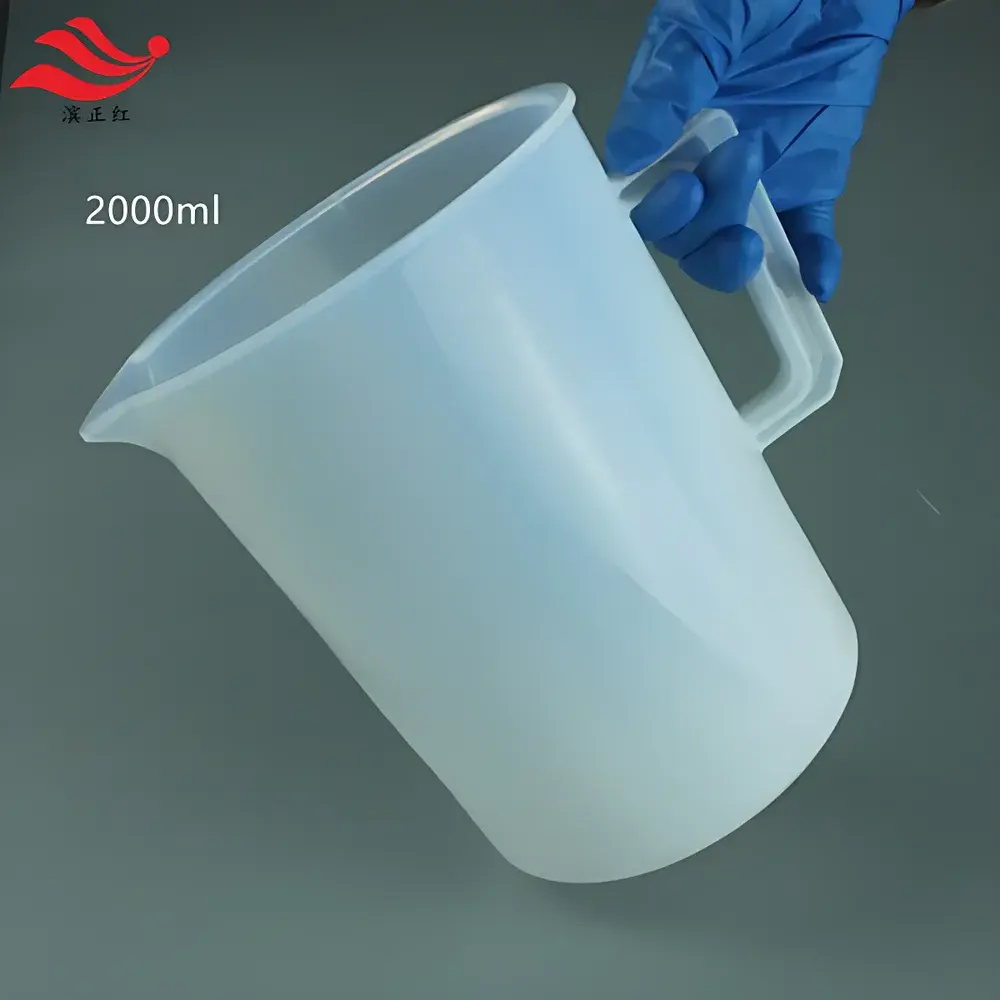
PFA Beaker 1000 mL & 2000 mL – High-Purity Fluoropolymer Volumetric Lab Container for ICP-MS and Trace Analysis
| Brand | Binzhenghong |
|---|---|
| Origin | Jiangsu, China |
| Manufacturer Type | Direct Producer |
| Capacity Range | 1–2000 mL |
| Material | Perfluoroalkoxy (PFA) |
| Max. Operating Temperature | +260 °C |
| Min. Operating Temperature | −200 °C |
| Design | Graduated, Pouring Spout, Handle (for 1000 mL & 2000 mL models) |
Overview
The Binzhenghong PFA Beaker series is engineered for ultra-trace elemental analysis workflows requiring exceptional chemical inertness, thermal stability, and low extractables. Constructed entirely from high-purity perfluoroalkoxy alkane (PFA) resin—certified to ASTM D4894 and compliant with ISO 10993-1 biocompatibility testing guidelines—these beakers eliminate metal ion leaching, organic contamination, and surface adsorption commonly observed with glass, PP, or FEP containers. Designed specifically for demanding applications including inductively coupled plasma mass spectrometry (ICP-MS), multi-collector ICP-MS (MC-ICP-MS), and isotopic ratio analysis, the beakers feature precision-molded volumetric graduations traceable to NIST standards, enabling reliable semi-quantitative volume estimation without compromising sample integrity.
Key Features
- Ultra-High Chemical Resistance: Resists concentrated hydrofluoric acid (HF), aqua regia, hot nitric acid (HNO₃), and boiling sulfuric acid (H₂SO₄)—making it suitable for digestion vessel rinsing, standard dilution, and post-digestion storage in EPA Method 200.8 and ISO/IEC 17025-accredited labs.
- Thermal Stability: Maintains structural integrity and dimensional stability across a continuous operating range of −200 °C to +260 °C; fully autoclavable at 121 °C (250 °F) for 30 minutes without deformation or haze formation.
- Optimized Ergonomics: 1000 mL and 2000 mL models incorporate an integrated, chemically fused ergonomic handle and a finely tapered pouring spout—reducing drip, minimizing aerosol generation during transfer, and supporting GLP-compliant manual handling protocols.
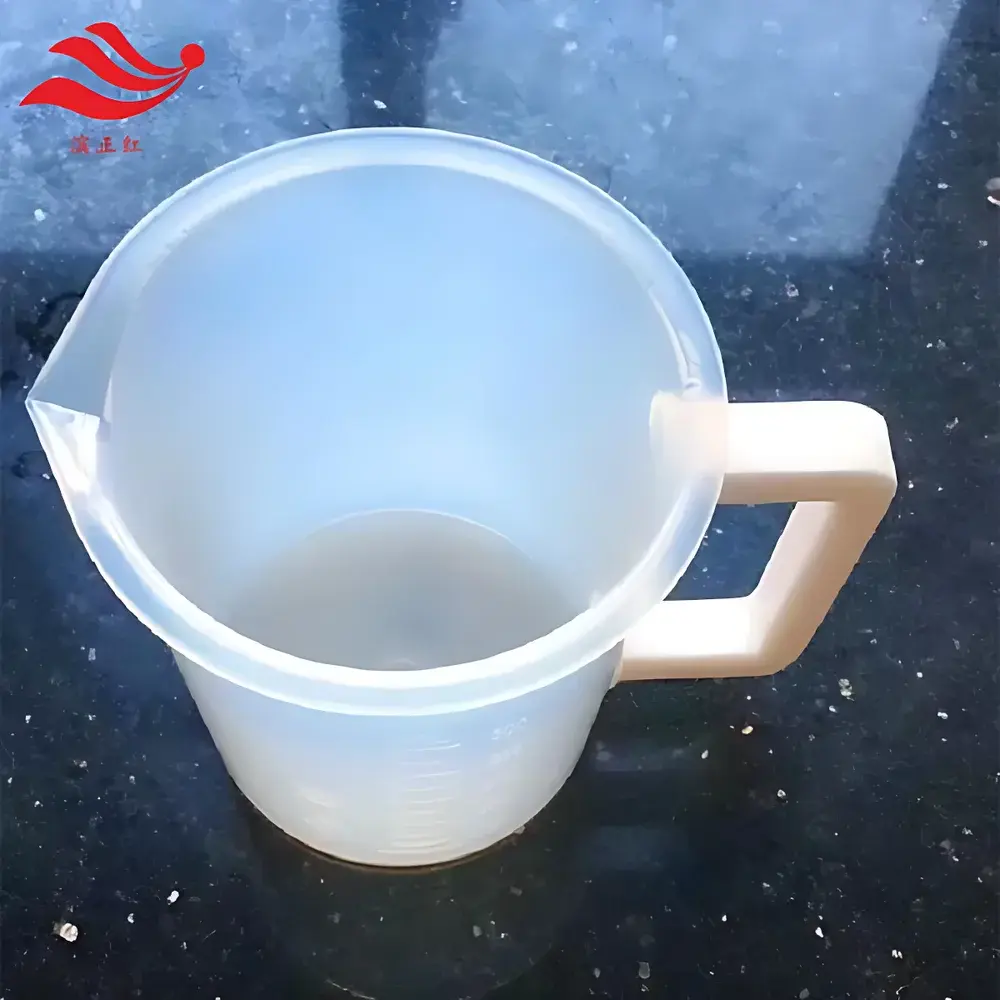
- Volumetric Accuracy: Graduations are laser-etched (not printed) directly onto the PFA wall using non-contact UV marking—ensuring permanent readability, resistance to solvent wiping, and absence of ink-based contaminants.
- Low Blank Performance: Pre-cleaned and packaged under Class 100 cleanroom conditions; certified for ≤0.1 pg/mL background levels of Al, Cr, Fe, Ni, and Zn when tested per USP extractables protocol.
Sample Compatibility & Compliance
These PFA beakers are routinely validated for use with aqueous matrices, organic solvents (e.g., methanol, acetone, acetonitrile), and aggressive mineral acids used in microwave-assisted digestion. They meet the material compatibility requirements specified in ASTM D5191 (for volatile organic analysis), ISO 14851 (biodegradability testing), and EPA SW-846 Method 3050B. The PFA polymer complies with FDA 21 CFR §177.1550 for repeated food-contact use and is acceptable for GMP-regulated pharmaceutical residual solvent testing per ICH Q3C. All units are supplied with individual CoA (Certificate of Analysis) documenting lot-specific blank data, thermal history, and conformance to internal QC specifications aligned with ISO 9001:2015 manufacturing controls.
Software & Data Management
As a passive labware item, the PFA beaker requires no embedded electronics or software integration. However, its design supports full traceability within LIMS environments: each unit carries a unique alphanumeric lot code laser-marked on the base, enabling direct linkage to raw material batch records, cleaning validation reports, and sterility test logs. When used in conjunction with electronic lab notebooks (ELNs) such as LabArchives or Benchling, users may assign custom metadata—including digestion run ID, acid type/concentration, hold time, and final dilution factor—to ensure audit-ready documentation per FDA 21 CFR Part 11 requirements.
Applications
- Preparation and storage of calibration standards and certified reference materials (CRMs) for ICP-OES and ICP-MS
- Rinsing and conditioning of quartz/ceramic crucibles and PTFE digestion vessels
- Intermediate dilution steps in EPA 6020B multi-element method workflows
- Handling of high-purity reagents (e.g., Ultrapure HNO₃, TraceSELECT® HF) in cleanroom Class 1000 environments
- Long-term storage of isotopically enriched samples prior to TIMS or MC-ICP-MS analysis
- Reagent preparation for semiconductor-grade wet etch processes (SEMI F57)
FAQ
Can these PFA beakers be used for hotplate heating of concentrated HF solutions?
Yes—PFA exhibits superior resistance to HF compared to quartz or borosilicate glass. However, prolonged exposure above 180 °C with >49% HF requires validation of weight loss and dimensional stability per ASTM D570 for your specific process.
Are graduations calibrated to Class A volumetric tolerance?
No—they are semi-quantitative reference marks conforming to ISO 4787 Annex B tolerances (±2–5% depending on nominal volume), intended for visual estimation—not primary volumetric measurement.
Is there lot-to-lot variability in extractable metals?
Each production lot undergoes mandatory ICP-MS blank screening against a 1% sub-boiling HNO₃ extract; CoA reports include measured concentrations for ≥25 elements.
Can the beakers be reused after acid washing?
Yes—provided cleaning follows ASTM E1527 protocols: triple rinse with 18.2 MΩ·cm water, followed by soak in 20% v/v HNO₃ at 60 °C for 2 hours, then final ultrasonic rinse in Class 1 water.
Do you offer custom labeling or OEM packaging?
Yes—laser-marked custom identifiers, sterile double-bagging, and ISO 11140-compliant sterilization indicators are available under NRE agreement.



