
KEM KR2/KR6/KM1/K500B/K500B-20/K750 Heat Flow Sensors
| Brand | Kyoto Electronics Manufacturing (KEM) |
|---|---|
| Origin | Japan |
| Manufacturer Type | Original Equipment Manufacturer (OEM) |
| Import Status | Imported |
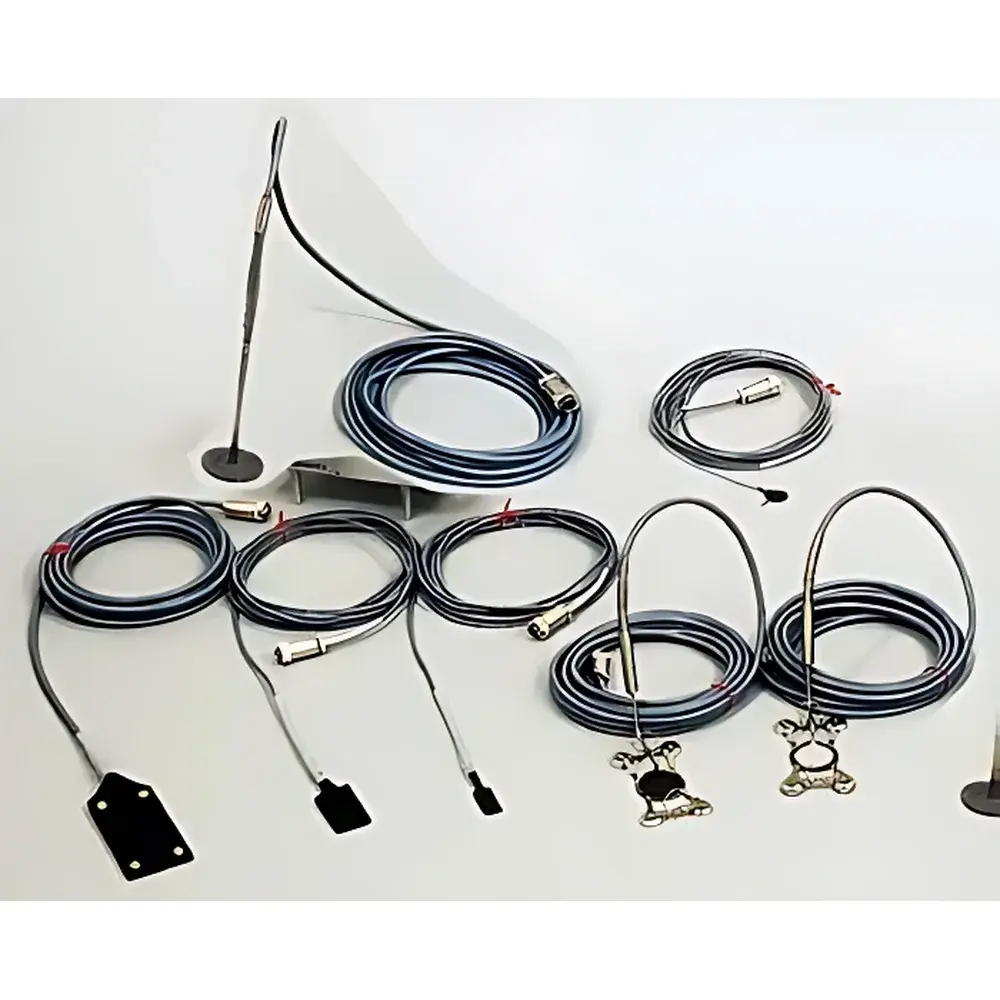
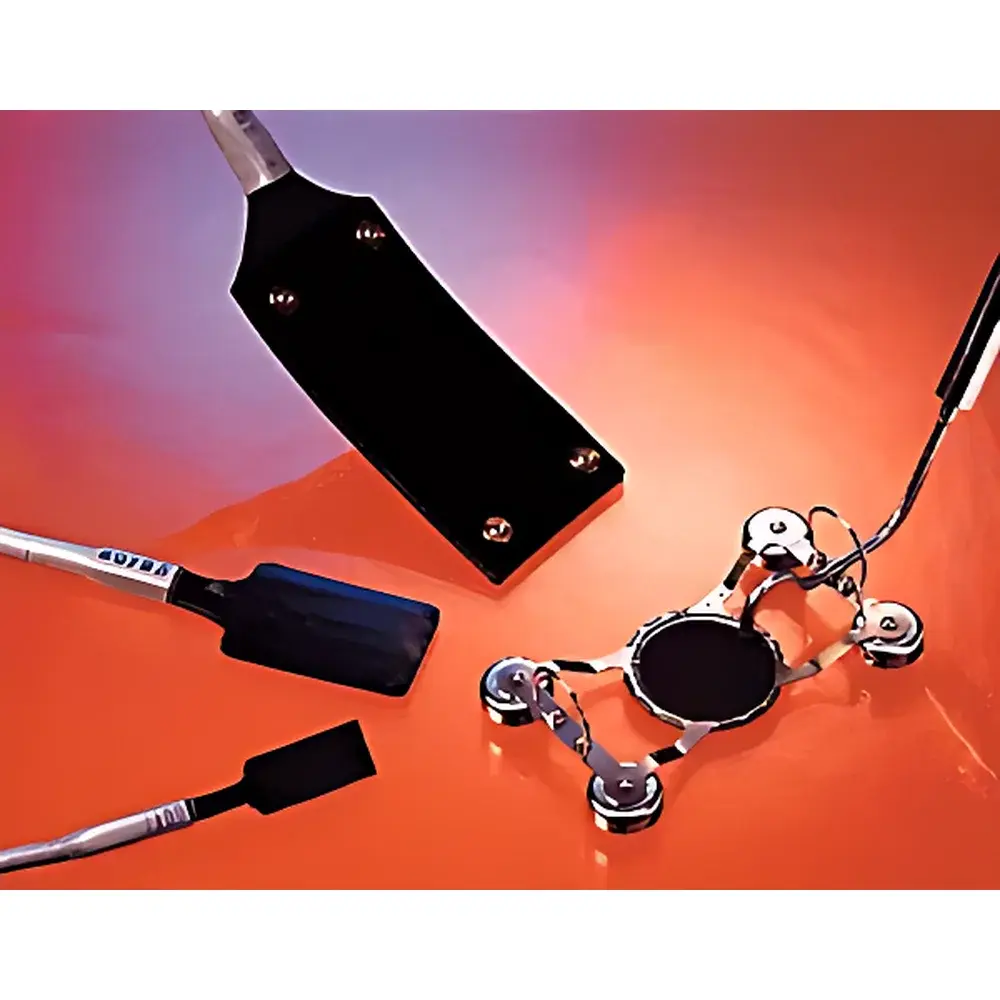
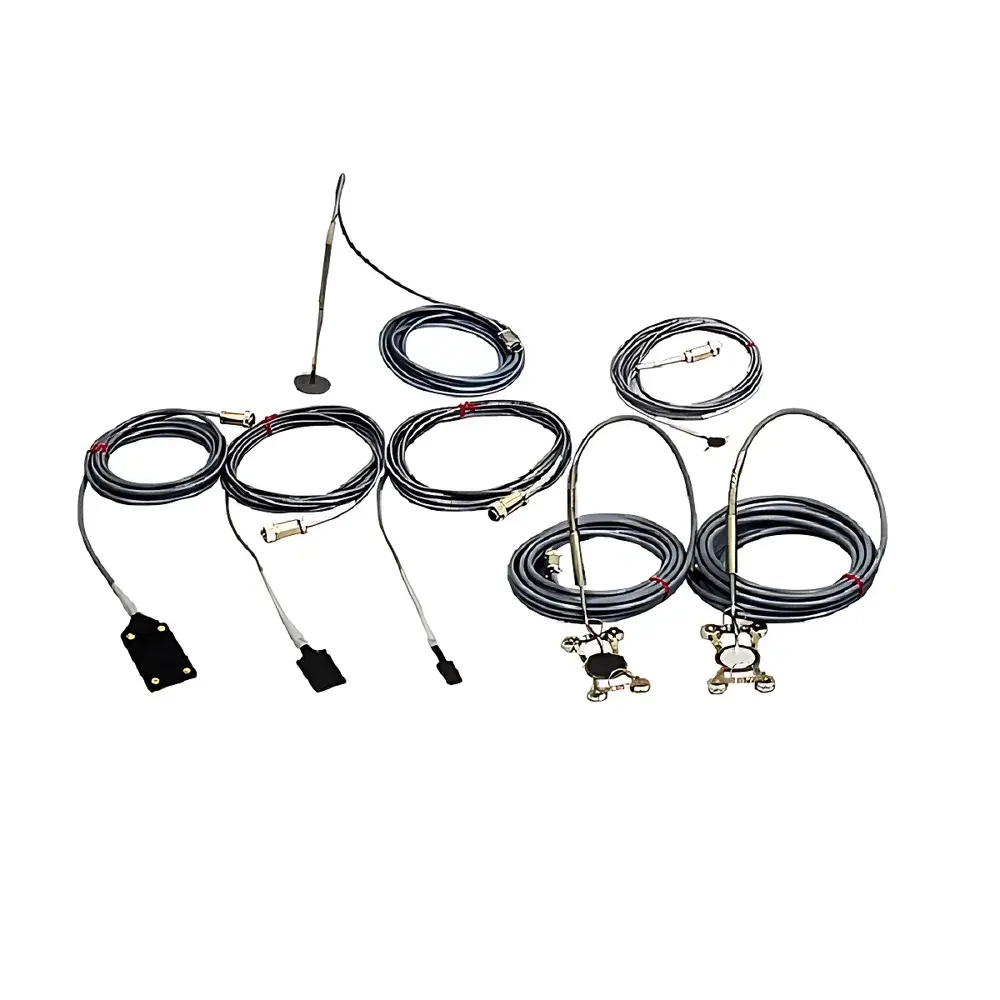
| Models | KR2 (100×50 mm), KR6 (50×30 mm), KM1 (30×15 mm), K500B / K500B-20 (black, high-heat-flux surface-mount), K500S / K500S-20 (silver), K750 / K750S (embedded high-heat-flux), KW (water-cooled surface), TF-B/TF-C (robust embedded), TT-B/TT-C (robust surface), TC-B/TC-C (robust low-flux embedded), TV-B/TV-C (robust water-cooled) |
| Thermal Flux Ranges | 12–3,500 W/m² (low-flux) |
| Operating Temperature Ranges | −40–150°C (low-flux) |
| Accuracy | ±2% (low-flux), ±5% (surface high-flux), ±7% (embedded high-flux) |
Overview
Kyoto Electronics Manufacturing (KEM) KR-series heat flow sensors are precision-calibrated thermopile-based transducers engineered for quantitative, non-intrusive measurement of steady-state and quasi-steady thermal flux across solid boundaries. Operating on the principle of Fourier’s law, each sensor integrates a known thermal resistance (guarded or unguarded) with a high-stability thermopile that generates a millivolt-level output proportional to the temperature gradient across its sensing element. This linear voltage–heat flux relationship (q = S·V, where S is the sensor’s calibration constant in W/m²·V) enables traceable, SI-unit–referenced thermal flux quantification without requiring active cooling or external power. Designed for integration into industrial thermal management systems, building envelope diagnostics, furnace energy audits, and materials science laboratories, the KR-series provides metrologically sound data under demanding environmental conditions — from cryogenic insulation surfaces to refractory-lined metallurgical furnaces.
Key Features
- Multi-configurable form factors: Surface-mount (KR2, KR6, KM1), embedded (K750, K500B variants), water-cooled (KW, TV-series), and robust industrial-grade variants (TF, TT, TC, TV) optimized for mechanical durability and long-term stability in harsh environments.
- Traceable calibration: Each sensor is individually calibrated against NIST-traceable reference standards per ISO 8301 and ASTM C1041, with documented uncertainty budgets and serial-numbered calibration certificates supplied.
- Thermal range segmentation: Low-flux models (KR2/KR6/KM1) cover −40°C to +150°C and 12–3,500 W/m² (±2% accuracy); high-flux surface models (K500B/K500S) operate up to 500°C at 350–17,000 W/m² (±5%); embedded variants (K750) sustain 200–750°C and 580–58,000 W/m² (±7%).
- Material compatibility: Stainless steel housings (316L for water-cooled models), ceramic-insulated thermopiles, and optional high-temperature adhesives (HA2-H/HA2-L) ensure chemical and thermal resilience across cementitious, metallic, and composite substrates.
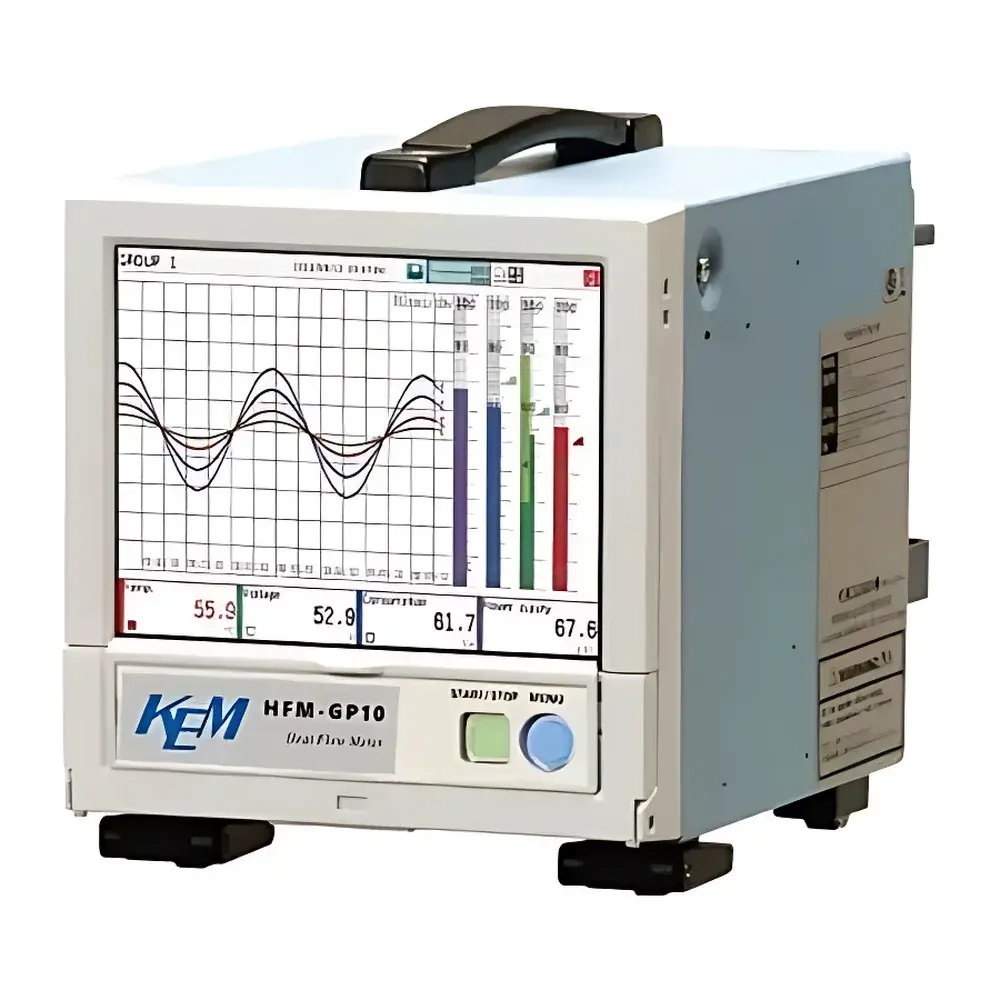
- Signal conditioning agnosticism: Analog mV output compatible with standard data acquisition systems (e.g., National Instruments DAQ, Campbell Scientific CR series) and dedicated KEM HFM-series meters (HFM-G10, HFM-201, HFM-215N).
Sample Compatibility & Compliance
KEM heat flow sensors are validated for use on flat, homogeneous, thermally conductive surfaces including refractory brick, stainless steel cladding, mineral wool insulation, concrete linings, and aluminum heat sinks. Surface-mount variants require minimal thermal disturbance (<0.5 mm effective thermal resistance increase) when affixed with certified thermal interface materials. Embedded models are rated for permanent installation in castables, firebrick, and fiber insulation matrices per ASTM C1841 guidelines. All sensors comply with IEC 60584-2 for thermocouple-grade cold-junction compensation and meet electromagnetic compatibility requirements per EN 61326-1 for industrial environments. Calibration documentation supports GLP/GMP audit readiness and aligns with ISO/IEC 17025:2017 clause 6.5.2 for measurement traceability.
Software & Data Management
While KEM sensors deliver analog outputs, they integrate seamlessly with third-party software platforms supporting IEEE 1451.2 TEDS (Transducer Electronic Data Sheet) configuration, including LabVIEW™, MATLAB® Data Acquisition Toolbox, and custom Python-based acquisition scripts using PyVISA. When paired with KEM’s HFM-215N meter, real-time data logging includes automatic unit conversion (W/m² ↔ kcal/m²·h), time-stamped thermal flux profiles, and statistical reporting (min/max/mean/std dev). Audit trails, user authentication, and export to CSV/PDF formats satisfy FDA 21 CFR Part 11 requirements for electronic records in regulated thermal validation workflows.
Applications
- Industrial furnace efficiency mapping and refractory wear monitoring via embedded K750 sensors in blast furnace linings and electric arc furnace walls.
- Building science field studies: In-situ U-value determination using KR2 sensors on exterior wall assemblies per ISO 9869-1 and ASTM C1046.
- R&D thermal interface material (TIM) characterization, where KM1 micro-sensors quantify localized flux at chip-package interfaces.
- Energy auditing of district heating pipelines using water-cooled KW sensors mounted on insulated pipe jackets.
- Geothermal and soil thermal conductivity profiling via TC-series robust embedded sensors installed in borehole backfill.
- Validation of CFD thermal models in aerospace thermal protection systems using TT-series surface-mounted high-flux probes on turbine shroud segments.
FAQ
What is the difference between surface-mount and embedded heat flow sensors?
Surface-mount sensors (e.g., KR2, K500B) measure flux across an external boundary and require secure thermal contact; embedded sensors (e.g., K750, TC-B) are cast or mortared directly into construction materials to capture through-thickness conduction.
Can these sensors be used in vacuum or inert gas environments?
Yes — all models feature hermetically sealed thermopiles and passive operation; however, convective heat loss corrections must be applied in low-pressure environments per ISO 8302 Annex D.
Is calibration required before each use?
No — factory calibration is stable over time; however, periodic verification (annually or after mechanical shock) against a reference heat flux source is recommended per ISO/IEC 17025.
Do KEM sensors support digital output or only analog?
Standard output is analog mV; digital interface requires external signal conditioning. KEM does not supply integrated digital transmitters for this product line.
How are units converted between W/m² and kcal/m²·h?
Conversion uses the fixed factor 1 W/m² = 0.860421 kcal/m²·h; all KEM meters and compatible software apply this conversion automatically with user-selectable units.



