
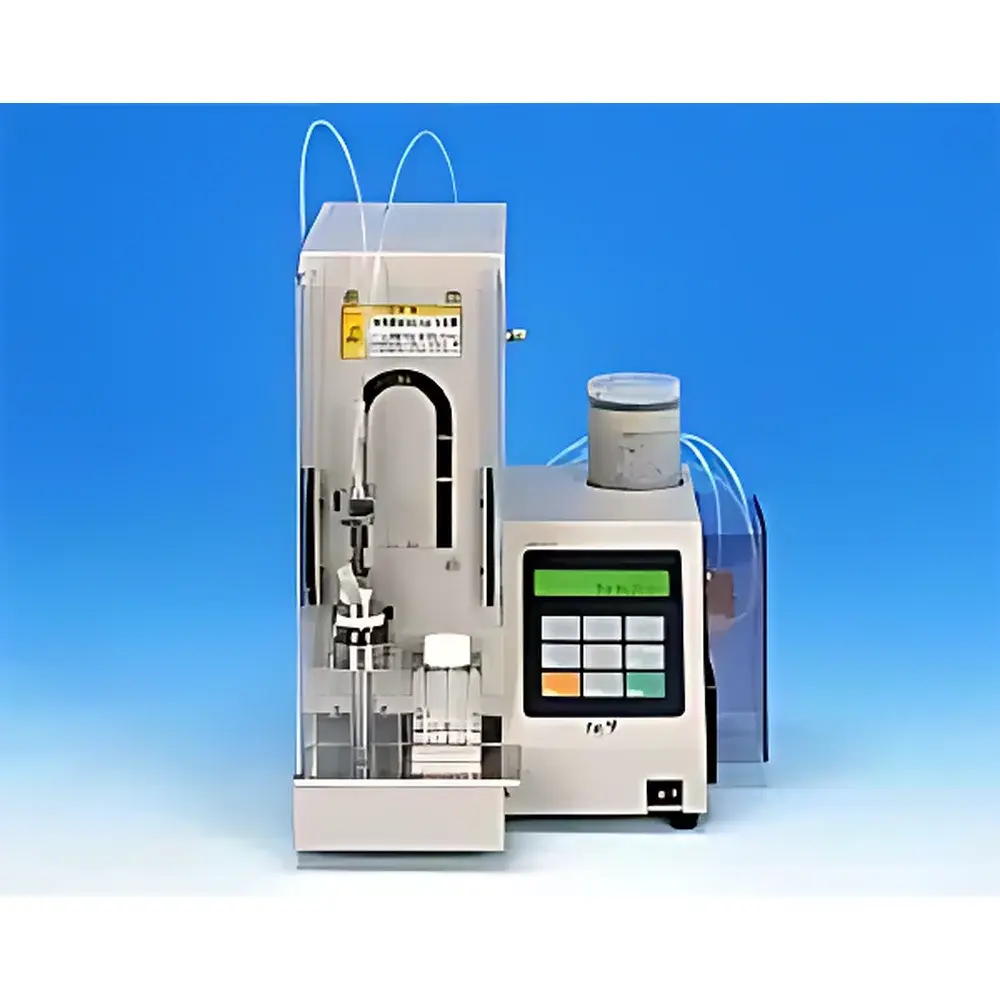
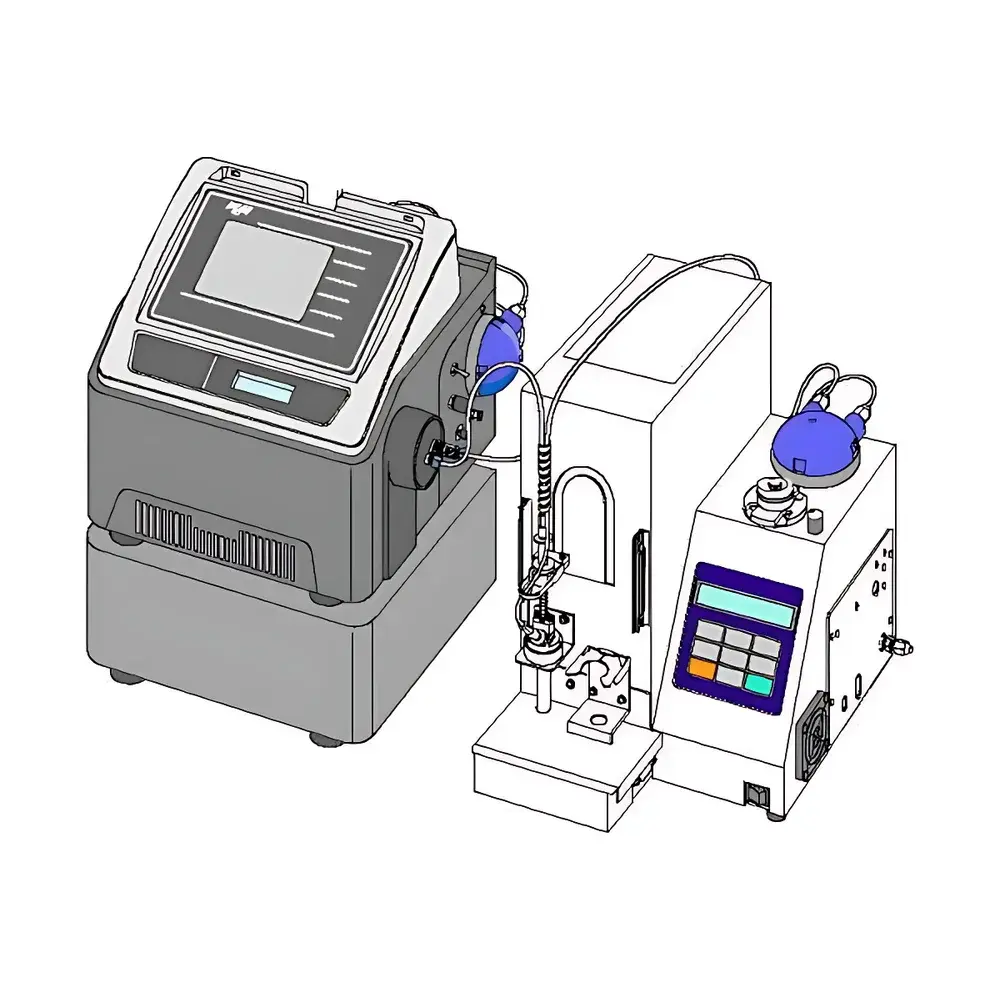
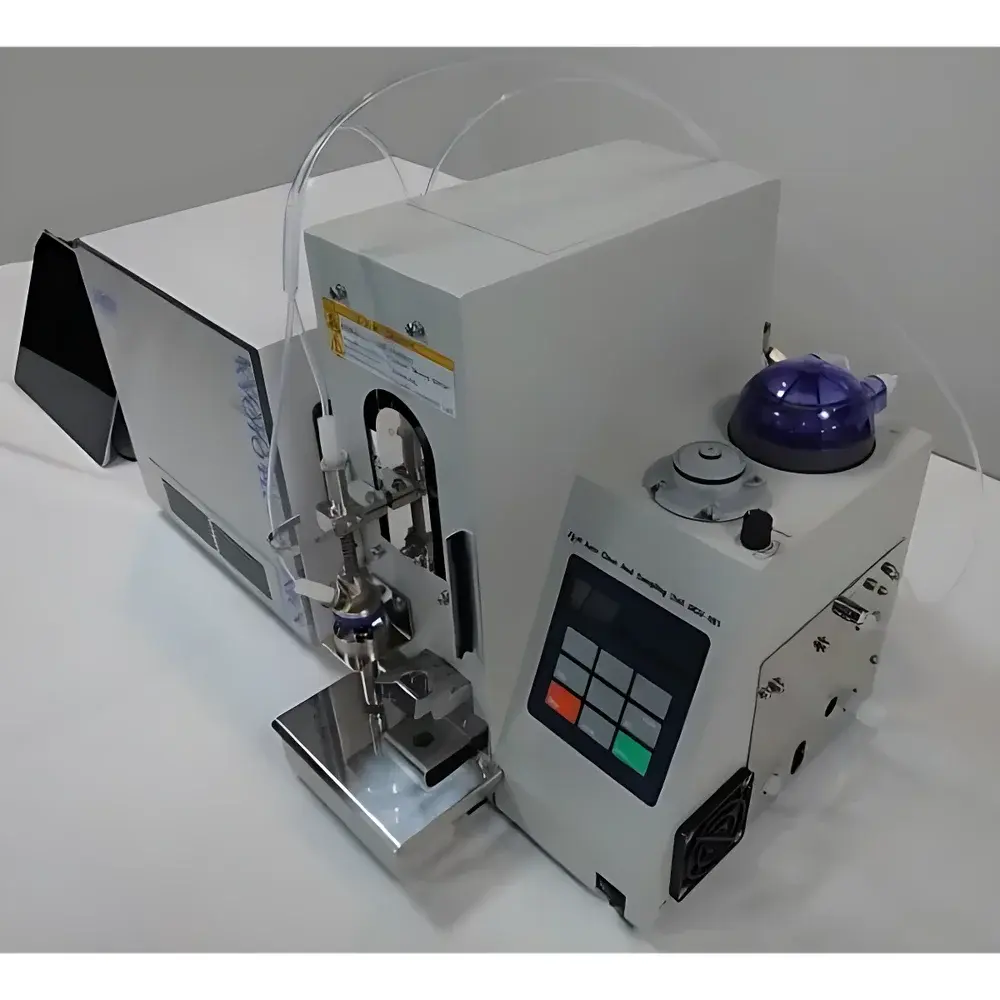
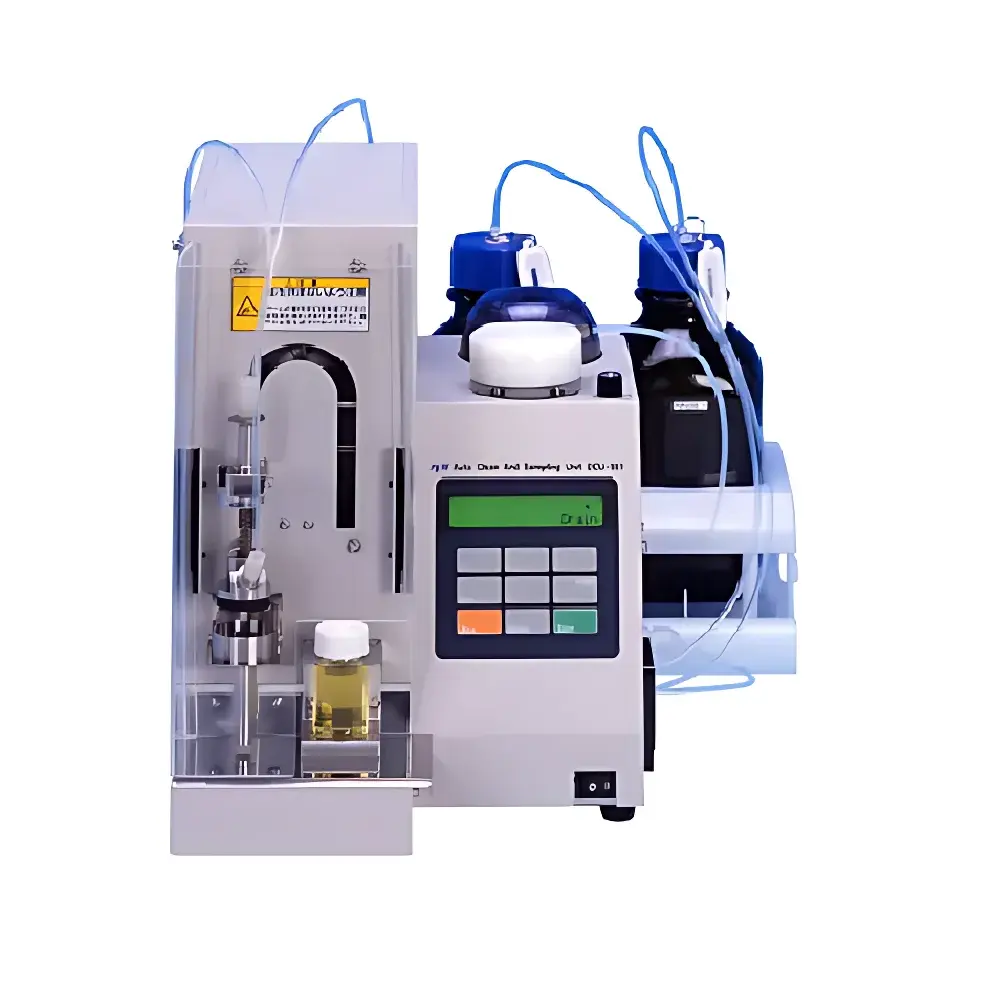
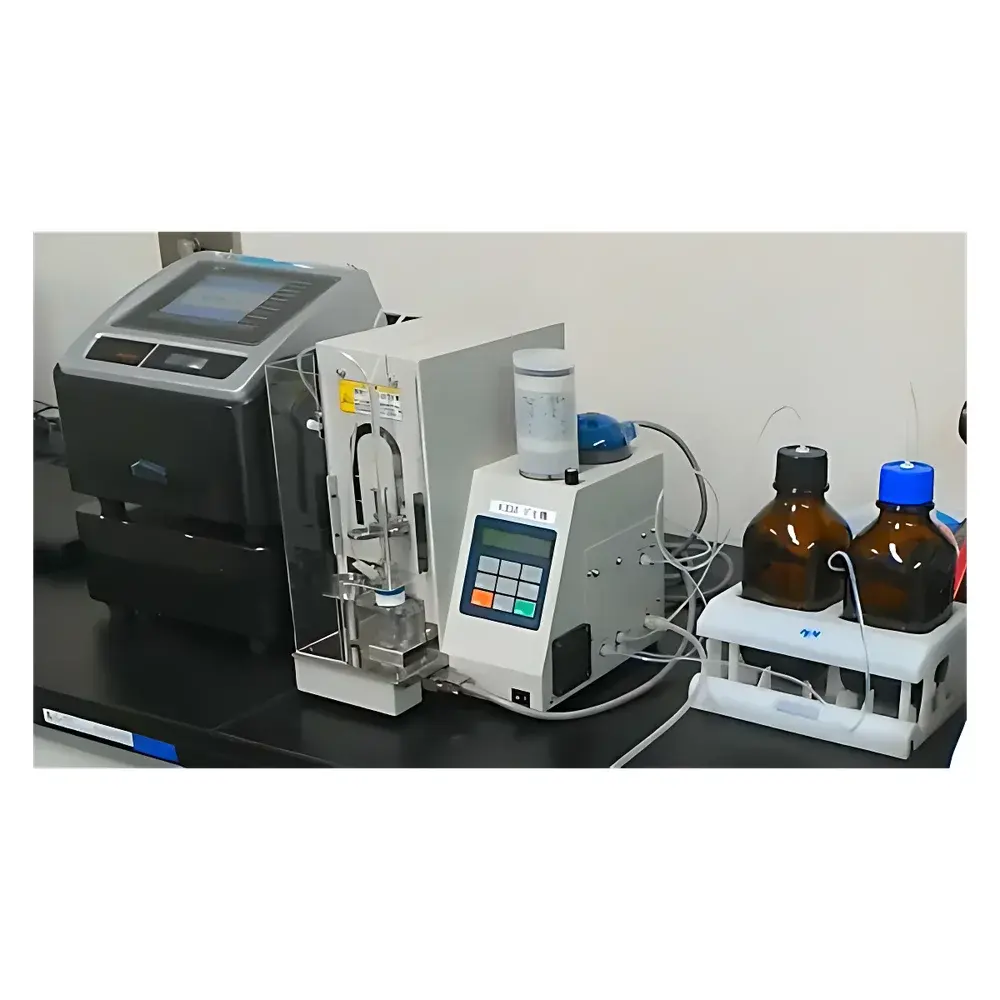
KEM DCU-551N Auto Clean and Sampling Unit for Oscillating U-Tube Density Meters
| Brand | KEM (Kyoto Electronics Manufacturing) |
|---|---|
| Origin | Japan |
| Manufacturer Type | Original Equipment Manufacturer (OEM) |
| Product Category | Imported Instrument |
| Model | DCU-551N |
| Instrument Type | Oscillating U-Tube Densimeter |
| Form Factor | Benchtop Laboratory Instrument |
| Sample Phase | Liquid Only |
| Density Range | 0–3 g/cm³ |
| Temperature Control Range | 0–96 °C |
| Repeatability | ±1 × 10⁻⁶ g/cm³ |
| Resolution | 0.000001 g/cm³ |
| Minimum Sample Volume | 1–2 mL |
| Viscosity Compatibility | Up to 50,000 mPa·s (via integrated vacuum-pressure pump) |
| Sample Vessel | 20 mL glass vial |
| Power Supply | AC 100–120 V / 200–240 V, 50/60 Hz, ~40 W |
| Dimensions (W×D×H) | 291 × 310 × 342 mm |
| Weight | 10 kg |
Overview
The KEM DCU-551N Auto Clean and Sampling Unit is an engineered automation module designed exclusively for integration with KEM’s series of oscillating U-tube digital density meters—including the DA-6XX platform (e.g., DA-650, DA-645, DA-640). It operates under full host instrument control, eliminating manual intervention during routine density analysis of liquid samples. The unit implements a closed-loop fluidic sequence based on precise vacuum-assisted aspiration and pressure-driven dispensing—enabling fully automated sample introduction, measurement cell evacuation, multi-stage solvent rinsing, and nitrogen-assisted drying. Its core mechanical architecture incorporates a dual-mode vacuum-pressure pump system, specifically calibrated to handle high-viscosity liquids up to 50,000 mPa·s without clogging or flow instability. This ensures consistent filling of the oscillating tube—even for viscous oils, polymer solutions, or pharmaceutical suspensions—while preserving the metrological integrity required for trace-level density determination (±1 × 10⁻⁶ g/cm³ repeatability).
Key Features
- Fully synchronized operation with KEM DA-series density meters via proprietary RS-232 or USB interface; no standalone controller required
- Vacuum-pressure dual-mode pumping system enabling reliable handling of low- to ultra-high-viscosity liquids (1–50,000 mPa·s)
- Automated 4-step cleaning cycle: sample aspiration → cell discharge → dual-solvent rinse (two independently programmable solvents) → inert gas purge/drying
- Sample recovery capability: discharged liquid is returned to the original 20 mL glass vial, supporting traceability and regulatory compliance
- Benchtop footprint (291 × 310 × 342 mm) optimized for integration into ISO 17025-accredited QC laboratories and GLP-compliant R&D environments
- Low power consumption (~40 W) and passive thermal design ensure stable long-term operation without active cooling
Sample Compatibility & Compliance
The DCU-551N supports a broad spectrum of liquid matrices commonly encountered in petrochemical, pharmaceutical, food & beverage, and academic research applications—including hydrocarbons, aqueous electrolytes, glycols, biodiesel blends, syrups, and surfactant solutions. Its sealed fluid path and chemically resistant wetted materials (PTFE, borosilicate glass, PEEK) conform to ASTM D4052 (Standard Test Method for Density of Petroleum Products), ISO 12185 (Crude Oil and Liquid Petroleum Products — Determination of Density), and USP (Density and Specific Gravity). When paired with a KEM DA-650 density meter, the combined system meets the data integrity requirements of FDA 21 CFR Part 11 when used with compliant LIMS or KEM’s dedicated WinCT-Density software featuring electronic signatures, audit trails, and user-access controls.
Software & Data Management
The DCU-551N does not operate autonomously but functions as a peripheral actuator governed by the host density meter’s firmware. All method parameters—including rinse solvent selection, purge duration, vacuum hold time, and pressure discharge profile—are configured within the WinCT-Density application suite. Each analytical run generates a timestamped, instrument-logged record containing raw oscillation frequency, calculated density, temperature, viscosity estimate (derived from damping coefficient), and complete cleaning event log. Data export supports CSV, PDF, and XML formats compatible with ELN systems and enterprise QA databases. Optional integration with laboratory information management systems (LIMS) enables automatic result transfer and batch-level traceability per ICH Q7 and GMP Annex 11 guidelines.
Applications
- High-throughput quality control of bulk solvents and reagents in chemical manufacturing
- Density verification of fuel blends (e.g., ethanol-gasoline, FAME-diesel) per EN 16943 and ASTM D7462
- Concentration monitoring of API solutions and excipient mixtures in pharmaceutical formulation development
- Stability assessment of emulsions and colloidal dispersions via density drift analysis over time
- Calibration verification using certified reference materials (CRMs) traceable to NIST SRM 1828 or BAM CRM 102a
- Regulatory submission support for dossier packages requiring full analytical method validation (ICH Q2(R2))
FAQ
Is the DCU-551N compatible with non-KEM density meters?
No. The unit relies on proprietary command protocols and electrical handshaking specific to KEM DA-series instruments. Interfacing with third-party densimeters is not supported.
Can the DCU-551N perform sequential analysis of multiple samples without operator input?
No. It processes one sample per cycle. For unattended multi-sample operation, integration with a KEM AS-551 auto-sampler (sold separately) is required.
What maintenance is required for the vacuum-pressure pump system?
The diaphragm pump requires annual inspection and replacement of the PTFE membrane and check valves per KEM PM-DCU-551N maintenance schedule. No oil changes or lubrication are needed.
Does the unit support heated sample lines or temperature-controlled vial storage?
No. Sample conditioning must be performed externally. The DCU-551N assumes incoming samples are pre-equilibrated to the target measurement temperature set on the host density meter.
How is cleaning solvent waste managed?
The system discharges rinse solvents into a dedicated waste container (not included); users must select chemically compatible collection vessels rated for the solvents employed (e.g., acetone, isopropanol, chloroform).



