
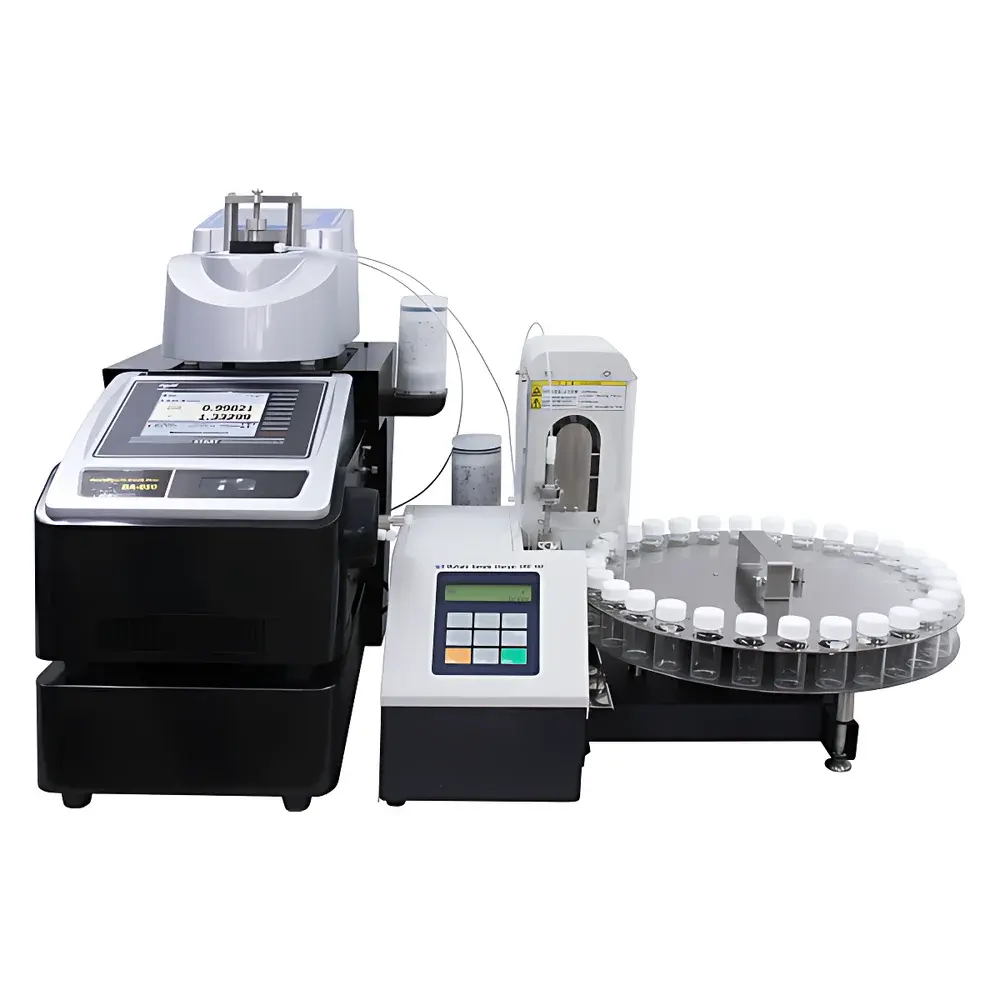
KEM DA-6XX + RA-6XX Integrated Automated Density and Refractometry System
| Brand | Kyoto Electronics Manufacturing (KEM) |
|---|---|
| Origin | Japan |
| Manufacturer Type | Original Equipment Manufacturer (OEM) |
| Instrument Type | Benchtop Density Meter & Refractometer |
| Temperature Control | Peltier-regulated (0–96°C for density, 5–75°C or optional 5–100°C for refractometry) |
| Display | Full-color touchscreen LCD |
| Sample Volume | ~1 mL per measurement |
| Measurement Principle | U-tube oscillation (density), Critical-angle light refraction at Na-D line (589.3 nm) |
| Density Range | 0–3 g/cm³ (model-dependent resolution: 1×10⁻⁶ g/cm³ for DA-650, 1×10⁻⁵ g/cm³ for DA-645, 1×10⁻⁴ g/cm³ for DA-640) |
| Refractive Index Range | nD = 1.32000–1.58000 (RA-620) or 1.3200–1.7000 (RA-600) |
| Refractive Index Accuracy | ±0.00002 nD (RA-620) / ±0.0001 nD (RA-600) |
| Brix Range | 0.00–100.00% (RA-620), 0.0–100.0% (RA-600) |
| Brix Accuracy | ±0.014% (RA-620), ±0.1% (RA-600) |
| Viscosity Compensation | Built-in dynamic correction algorithm for high-viscosity liquids |
| Auto-sampling | Integrated peristaltic pump with automated rinse, purge, and dry-cycle detection |
| Data Storage | 300 measurement records, 100 user-defined methods |
| Connectivity | LAN, USB, RS-232C |
| Compliance | Designed to support GLP/GMP workflows |
Overview
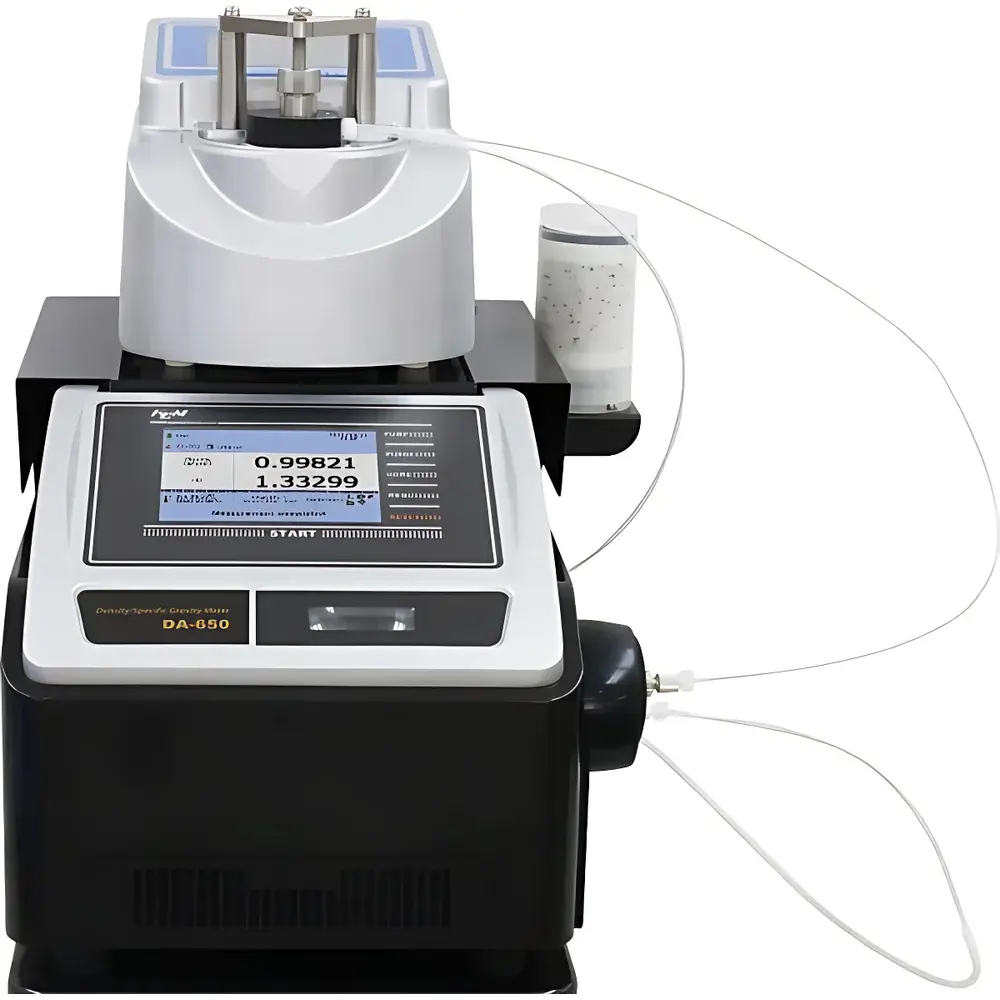
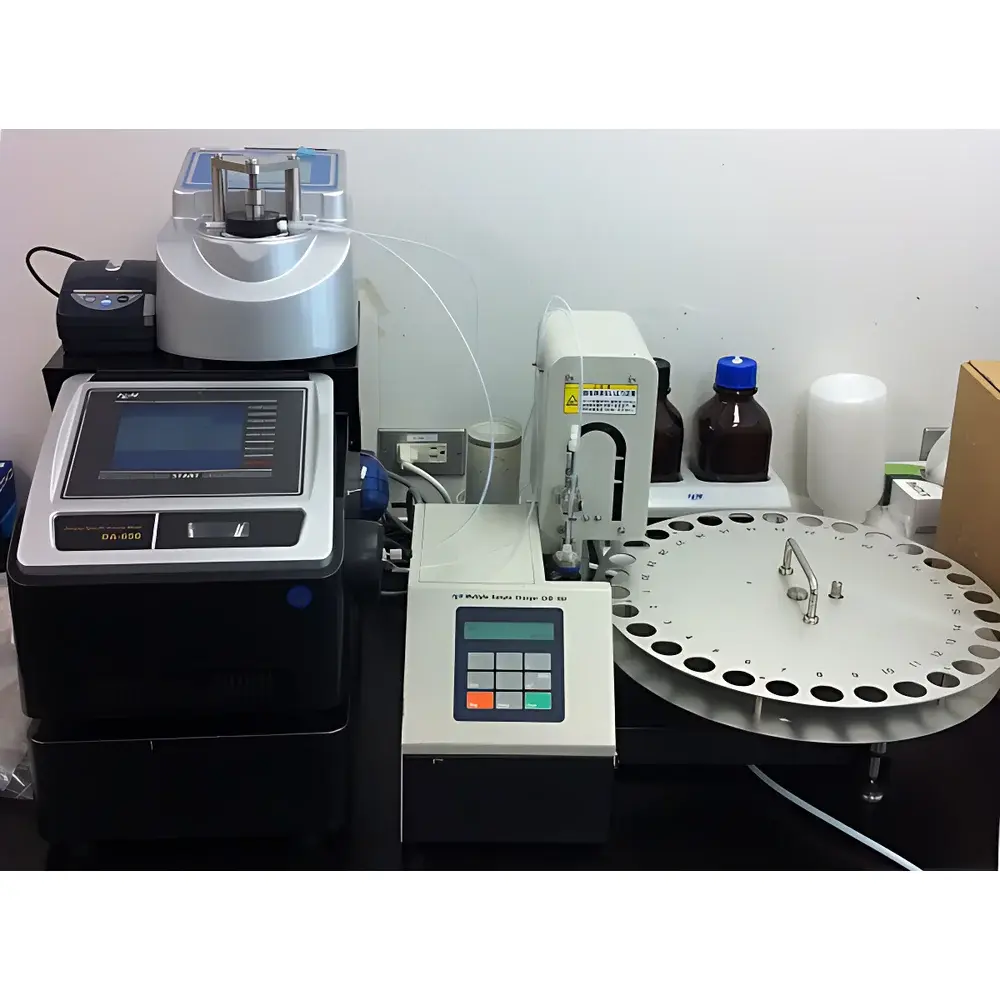
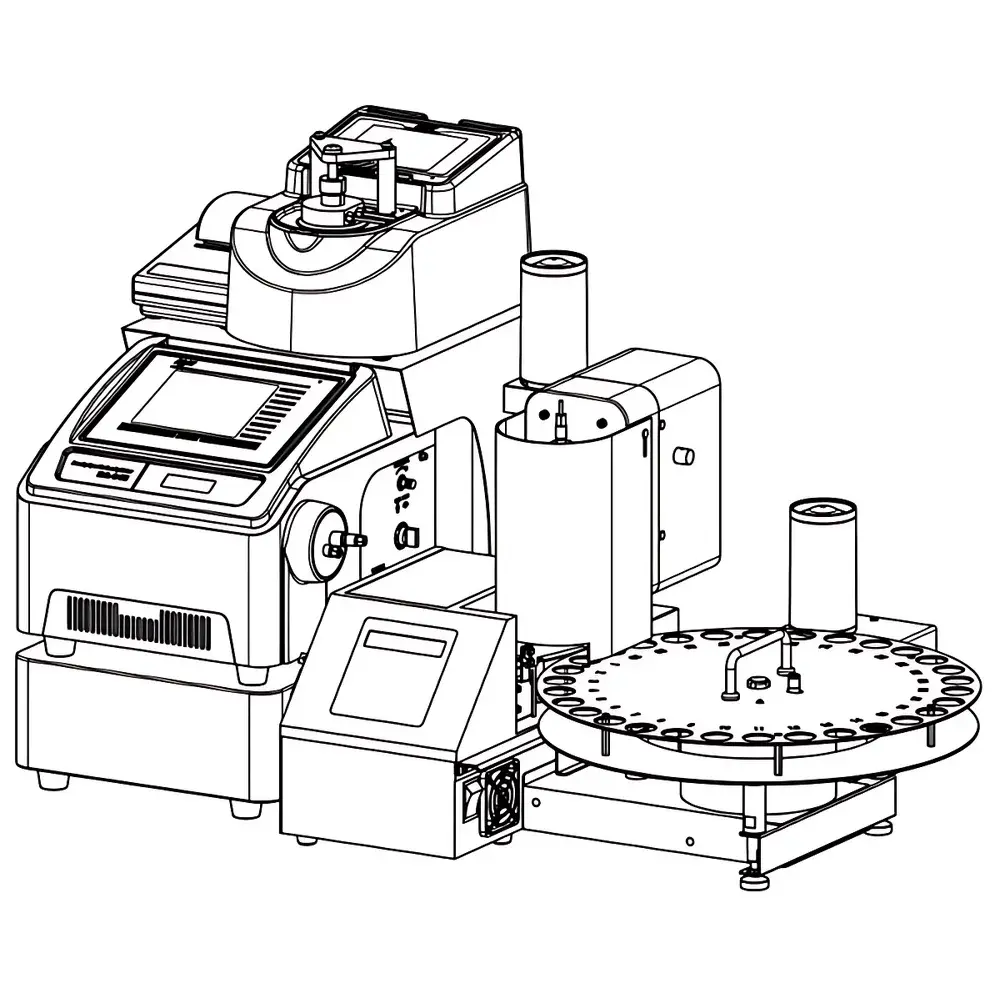
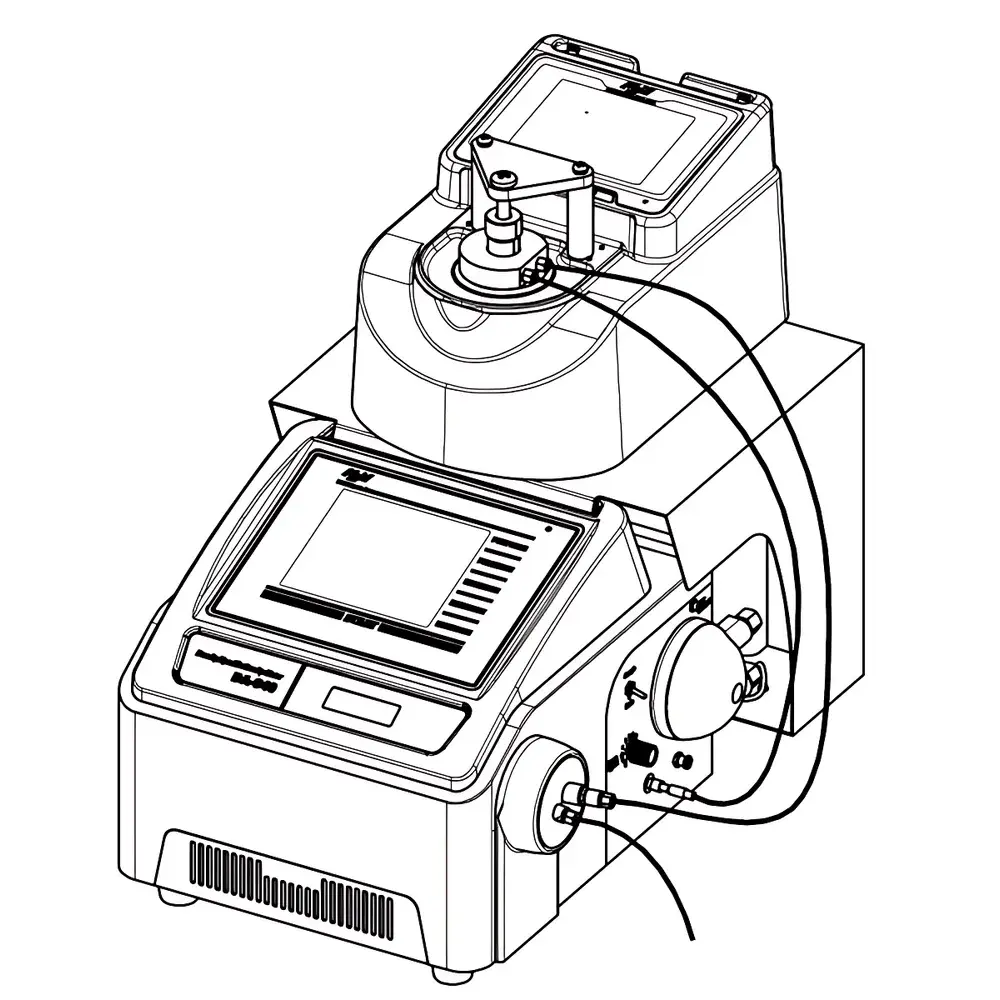
The KEM DA-6XX + RA-6XX Integrated Automated Density and Refractometry System is a modular, benchtop analytical platform engineered for simultaneous, high-precision determination of liquid density and refractive index (nD). It combines two independently validated instruments—U-tube oscillation-based density meters (DA-650, DA-645, or DA-640) and critical-angle digital refractometers (RA-620 or RA-600)—into a vertically stacked, space-efficient architecture. The system operates on fundamental physical principles: density is derived from the resonant frequency shift of a precisely machined U-shaped glass tube filled with sample, while refractive index is calculated from the angular threshold of total internal reflection at the prism–sample interface under monochromatic sodium D-line illumination (589.3 nm). This dual-parameter acquisition enables rigorous correlation analysis essential in quality control, formulation verification, and regulatory documentation across industries where compositional consistency is quantitatively defined by both density and optical properties.
Key Features
- Vertical integration architecture: RA-series refractometer mounted directly above DA-series density meter, minimizing footprint without compromising accessibility or thermal isolation.
- Simultaneous dual-parameter measurement: Single 1 mL sample injection yields synchronized density (g/cm³), relative density (d20/20, d20/4), refractive index (nD), and Brix values within 1–4 minutes.
- Peltier-based thermostatic control: Independent temperature regulation for each module—0–96°C ±0.02°C (DA-650) and 5–75°C ±0.01°C (RA-620); optional extended range up to 100°C for RA-600.
- Viscosity-adaptive density correction: Real-time compensation using built-in kinematic viscosity algorithms, ensuring metrological validity for samples up to 25,000 mPa·s without manual intervention.
- Automated fluid handling: Integrated peristaltic pump supports programmable sequences—including sample aspiration, cell rinsing with solvent, nitrogen-assisted drying, and automatic endpoint detection via conductivity or optical feedback.
- Multi-level data integrity: Onboard storage for 300 results and 100 customizable methods; timestamped records with operator ID, ambient conditions, and instrument status flags.
- Regulatory-ready interface: RS-232C, USB, and Ethernet ports support bidirectional communication with LIMS and electronic lab notebooks; optional 21 CFR Part 11-compliant software available.
Sample Compatibility & Compliance
The system accommodates a broad spectrum of homogeneous liquids—from low-viscosity solvents (e.g., ethanol, acetone) to viscous formulations (e.g., glycerol, essential oil blends, polymer solutions). Its non-destructive, closed-cell design prevents evaporation, oxidation, or contamination during measurement. Applications span ASTM D1250 (petroleum), ISO 2859 (statistical sampling), USP (refractometry), and AOAC 932.12 (food Brix), with traceability to NIST-traceable density standards and certified sucrose solutions. The DA-6XX’s oscillation cell meets ISO 12084 mechanical stability requirements, while RA-6XX optics comply with ISO 21147 for critical-angle refractometers. All models are CE-marked and conform to IEC 61010-1 safety standards for laboratory electrical equipment.
Software & Data Management
The embedded operating system features an intuitive touchscreen GUI supporting multilingual operation (including English and Chinese), customizable report templates (PDF/CSV export), and real-time statistical evaluation (mean, SD, RSD, re-calculation). Optional KEM WinCT-Density/Refracto software provides advanced functions: method validation per ICH Q2(R2), calibration curve generation with polynomial fitting, trend analysis across batches, and electronic signature-enabled audit trails compliant with FDA 21 CFR Part 11 Annex 11. Data encryption, role-based access control, and automatic backup to network drives ensure ALCOA+ (Attributable, Legible, Contemporaneous, Original, Accurate, Complete, Consistent, Enduring, Available) compliance.
Applications
- Chemical manufacturing: Verification of batch-to-batch consistency in organic solvents, catalysts, and intermediates via density–refractivity correlations.
- Flavor & fragrance: Quantitative assessment of essential oils, isolates, and synthetic aroma chemicals per ISO 855–1 and IFRA standards.
- Fine chemicals & pharmaceuticals: Excipient qualification, API purity screening, and solvent recovery monitoring in GMP environments.
- Foods & beverages: Brix–density mapping for juice concentration, syrup standardization, and dairy product authentication.
- Petroleum & biofuels: Determination of API gravity, biodiesel blend ratios (B5–B20), and hydrocarbon fraction characterization.
- Tobacco science: Quantification of casing agents, humectants, and top-note volatiles in cigarette and e-liquid formulations.
FAQ
What is the minimum required sample volume for simultaneous measurement?
Approximately 1 mL is sufficient for both density and refractive index determination—no splitting or sequential handling required.
Can the system measure opaque or turbid samples?
No. Both modules require optically clear, particle-free liquids; suspended solids or air bubbles will compromise refractive index accuracy and may damage the oscillation cell.
Is temperature calibration traceable to national standards?
Yes. Internal Peltier sensors are factory-calibrated against NIST-traceable reference thermometers; users may perform verification using certified calibration fluids (e.g., water, ethylene glycol standards).
How does viscosity correction work in the DA-6XX series?
The system applies a proprietary algorithm that correlates measured oscillation damping with kinematic viscosity, dynamically adjusting the raw frequency-to-density conversion without requiring user input or external viscometry.
Are third-party LIMS integrations supported?
Yes. Standard protocols (HL7, ASTM E1384, ASTM E2500) are implemented via Ethernet or RS-232C; custom API development kits are available upon request.




