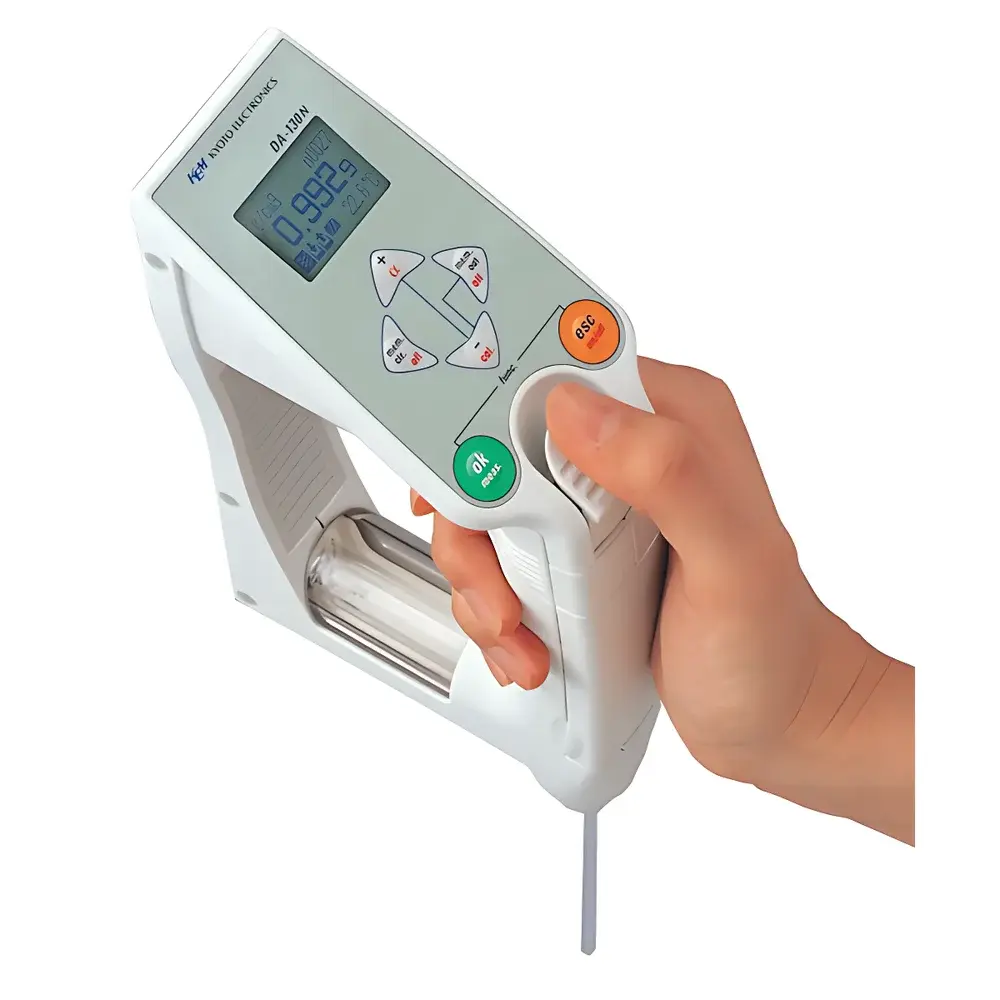
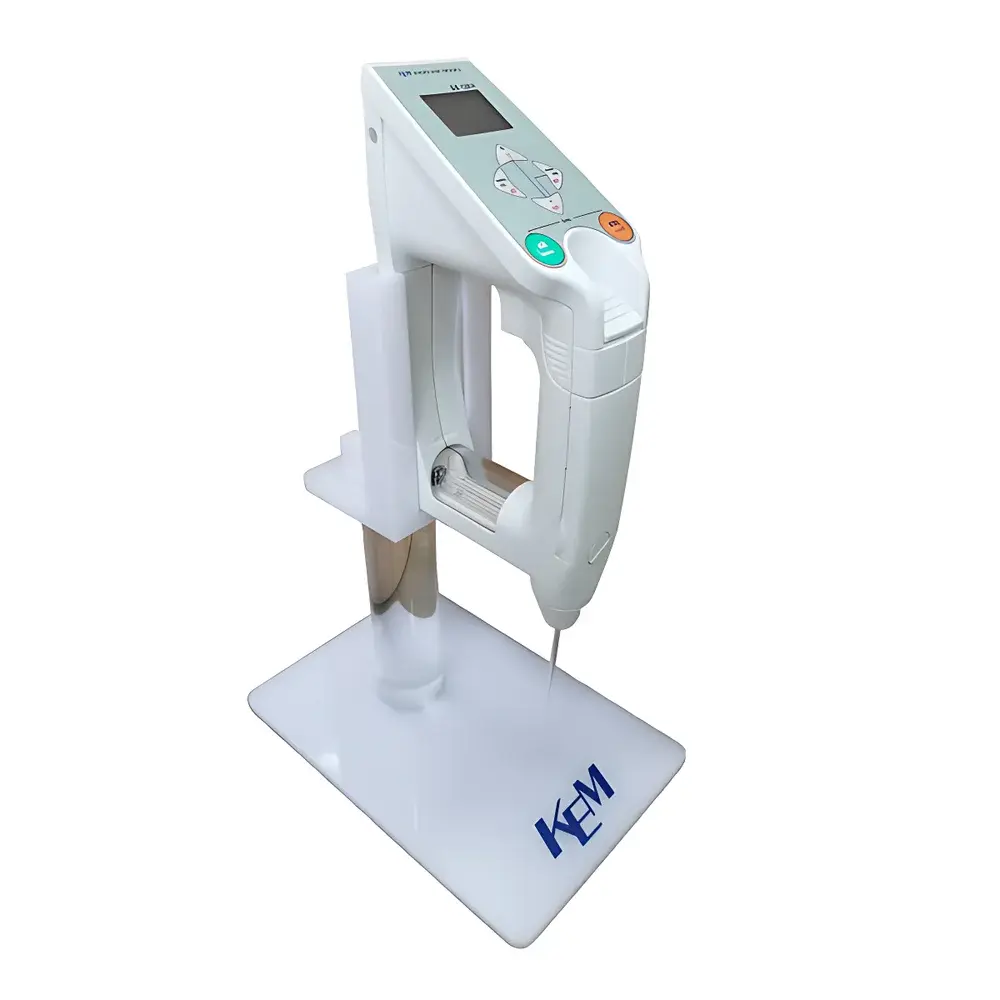
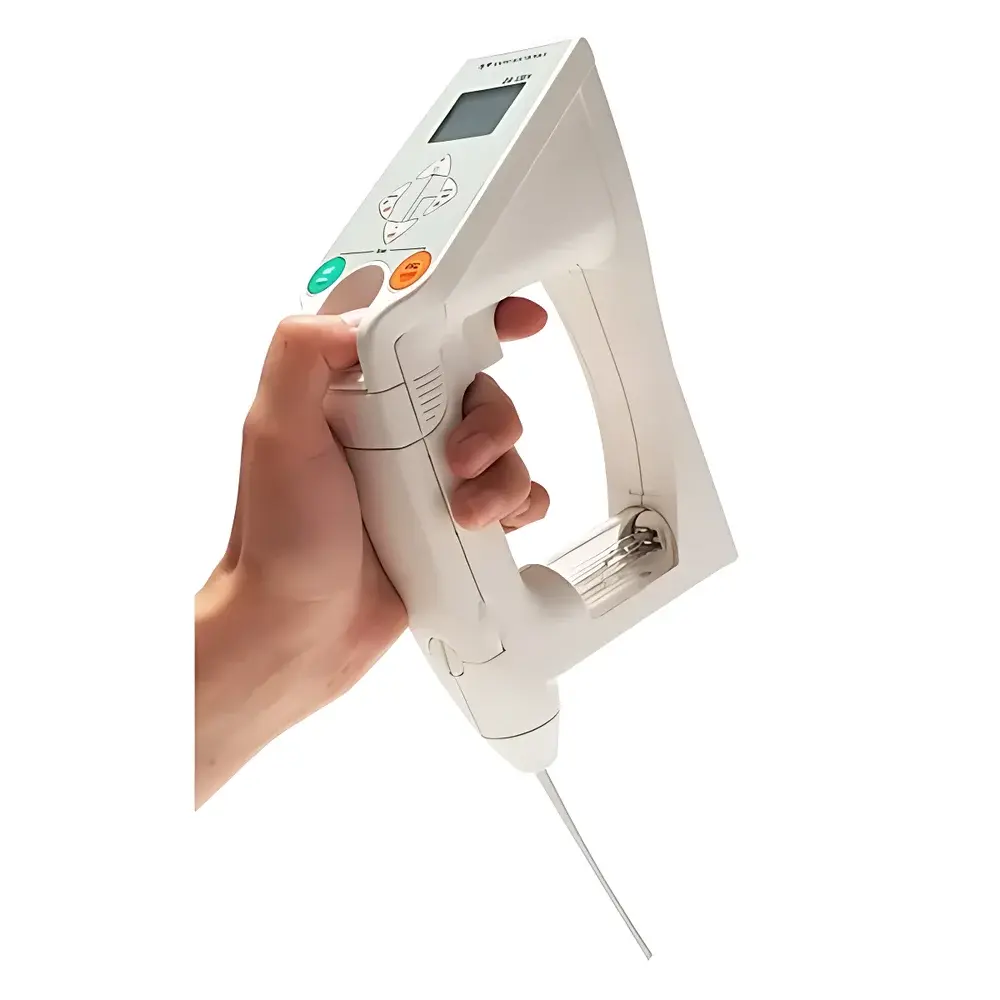
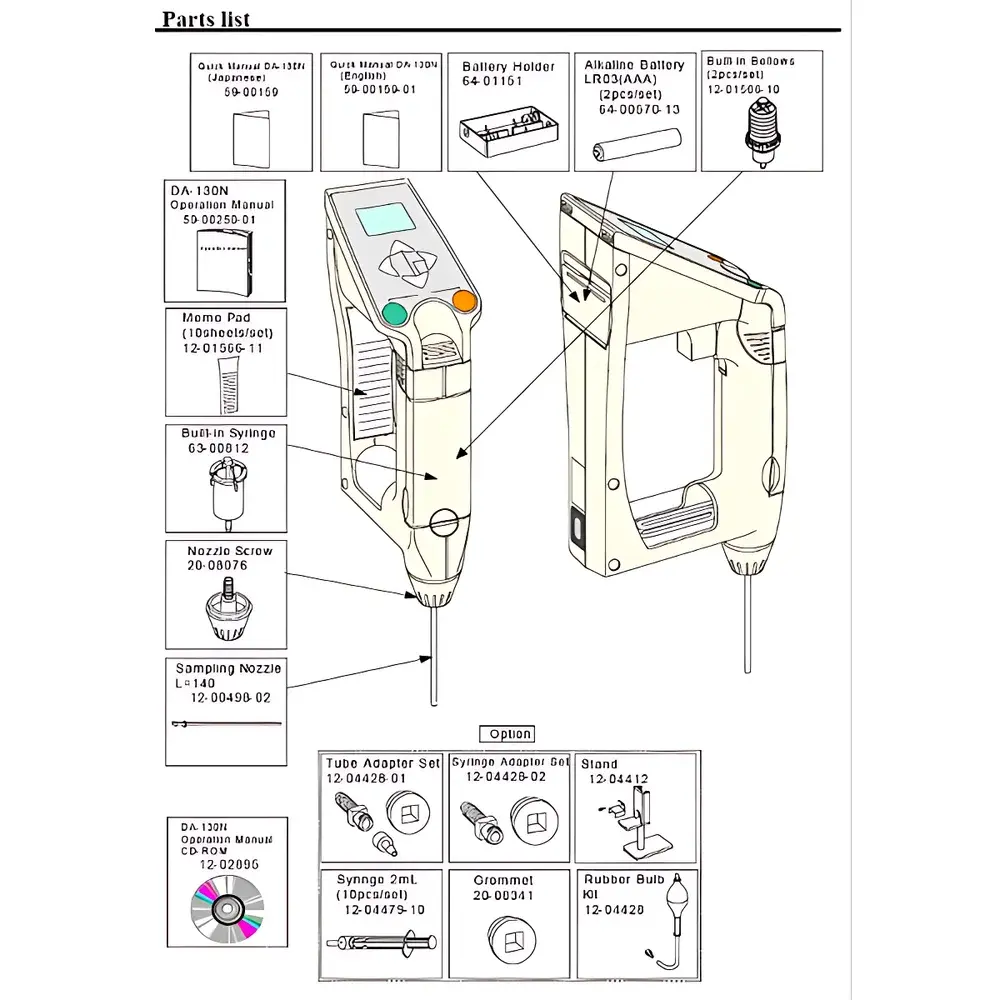
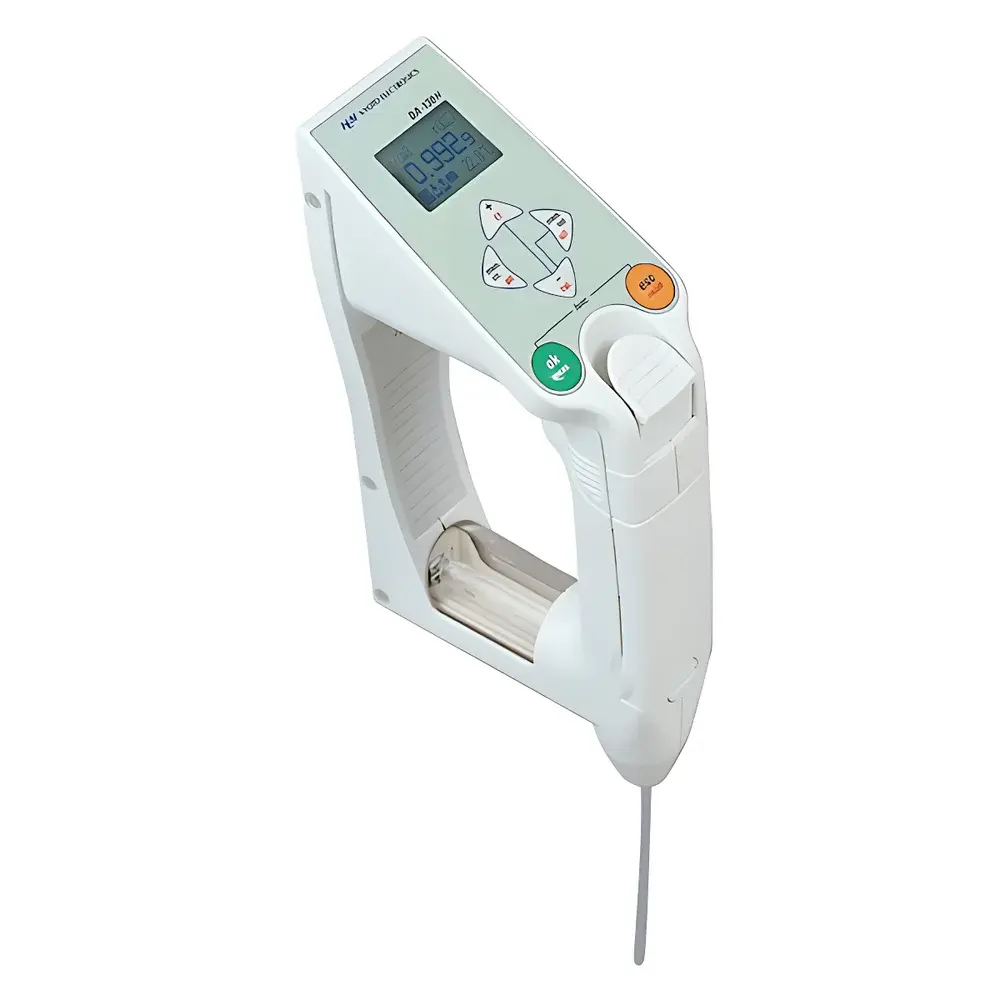
KEM DA-130N Portable Digital Density Meter for Petroleum Products (ASTM D7777 Compliant)
| Brand | KEM (Kyoto Electronics Manufacturing) |
|---|---|
| Origin | Japan |
| Manufacturer | Yes |
| Import Status | Imported |
| Model | DA-130N |
| Price | Upon Request |
Overview
The KEM DA-130N Portable Digital Density Meter is an engineered field-deployable instrument designed for rapid, high-reproducibility density measurement of liquid petroleum products using the oscillating U-tube principle. It operates in accordance with ASTM D7777–24, “Standard Test Method for Density, Relative Density, or API Gravity of Liquid Petroleum by Portable Digital Density Meter,” and is also validated against IP 559–2012 for middle distillate fuels. The device determines density at sample temperature (0–40 °C) and automatically applies temperature correction to standard reference conditions—15 °C (60 °F) for density, relative density (15 °C/15 °C or 60 °F/60 °F), and API gravity—using calculation algorithms defined in ASTM D1250. Its core transduction method relies on precise measurement of the resonant frequency shift of a U-shaped glass tube filled with sample, where density is inversely proportional to the square of the oscillation period. This physical principle ensures robustness against operator variability and eliminates risks associated with fragile glass hydrometers used in traditional field testing.
Key Features
- U-tube oscillation technology with ±0.001 g/cm³ accuracy and 0.0001 g/cm³ resolution across a 0.0000–2.0000 g/cm³ density range
- Integrated manual syringe pump capable of drawing liquids up to 2000 mPa·s viscosity without external accessories
- Onboard temperature-controlled measurement cell with real-time thermal stabilization for consistent 0–40 °C operation
- Preloaded API gravity conversion tables (API Tables A, B, and D) compliant with API MPMS Chapter 11.1
- 10-user-definable temperature compensation coefficients for custom calibration across non-standard fluid classes
- 1100-result internal memory with timestamp, sample ID, raw density, corrected density, temperature, and stability flag
- Infrared data transmission interface (IRDA) included; optional RS-232C module available for GLP-compliant audit trail export
- Dual-unit display: g/cm³, lb/US gal, lb/Imp gal, °API, °Baumé, °Brix, % alcohol (w/w and v/v), % H₂SO₄, °Plato, Proof, and °F/°C
- Self-calibration using built-in pure water density lookup table across the full operating temperature range
Sample Compatibility & Compliance
The DA-130N is validated for use with crude oil, gasoline, diesel, jet fuel, lubricating oils, biodiesel blends, and intermediate distillates. It meets the scope limitations of ASTM D7777–24 for liquids with kinematic viscosity ≤ 2000 cSt at test temperature and vapor pressure < 100 kPa. The instrument complies with ISO/IEC 17025 requirements for field instrumentation when operated under documented calibration procedures. Its design supports traceability to NIST-traceable standards via aqueous or hydrocarbon reference fluids (e.g., certified n-decane, iso-octane). For regulated environments, the IRDA and optional RS-232C interfaces support 21 CFR Part 11–compliant data capture when paired with KEM’s certified data collection software (version ≥ 3.2), including electronic signatures, audit trails, and user access controls.
Software & Data Management
KEM’s proprietary DA-Link software (Windows-compatible, USB or IRDA connection) enables full configuration, firmware updates, and batch export of measurement records in CSV or PDF formats. Each stored result includes metadata: date/time stamp, operator ID (configurable), sample ID, raw oscillation period, measured temperature, uncorrected density, corrected density, API gravity, stability assessment status, and calibration history reference. The software supports automated report generation aligned with ASTM D7777 reporting requirements—including uncertainty estimation per GUM (Guide to the Expression of Uncertainty in Measurement) principles. When deployed in QA/QC laboratories or refinery field labs, the system supports integration into LIMS platforms via delimited text import protocols.
Applications
- Field verification of crude oil custody transfer density prior to pipeline injection or tanker loading
- Rapid screening of distillate fuel compliance (e.g., ASTM D975 diesel, ASTM D1655 Jet A) at terminal racks or truck loading bays
- On-site monitoring of lubricant blending consistency and base stock dilution detection
- Quality assurance of biofuel blends (e.g., B5–B20) where density deviation indicates phase separation or adulteration
- Supporting ASTM D4052 laboratory reference measurements by identifying outliers requiring confirmatory analysis
- Cross-industry extension to edible oils, essential oils, and fragrance compounds where density correlates with composition or purity
FAQ
Does the DA-130N require periodic recalibration against certified standards?
Yes. While the instrument features automatic water-based self-calibration, ASTM D7777–24 mandates verification with traceable reference materials at least daily in routine use or before each analytical session in critical applications.
Can the DA-130N measure samples above 40 °C?
No. Operation beyond 40 °C violates the thermal specification of the U-tube sensor and voids ASTM D7777 compliance. Samples must be cooled to ≤40 °C prior to analysis.
Is the infrared interface compatible with modern Windows OS versions?
Yes. DA-Link v4.1+ supports Windows 10 and 11 with signed drivers; legacy IRDA hardware requires a USB-to-IR adapter for laptops lacking built-in ports.
How is measurement stability assessed during analysis?
The instrument calculates standard deviation of five consecutive oscillation periods; results are flagged as “Stable” only if σ ≤ 0.0002 g/cm³ over the final 10-second acquisition window.
What battery type and life expectancy does the DA-130N specify?
Two AA alkaline cells (1.5 V each); typical continuous operation life is ≥90 hours under ambient conditions, with low-power sleep mode extending standby time to 30 days.