
KEM Thermal Manikin System Model TM-17
| Key | Brand: Kyoto Electronics Manufacturing (KEM) |
|---|---|
| Origin | Japan |
| Manufacturer | Yes |
| Import Status | Imported |
| Model | TM-17 |
| Heating Control Modes | Constant Temperature & Constant Power |
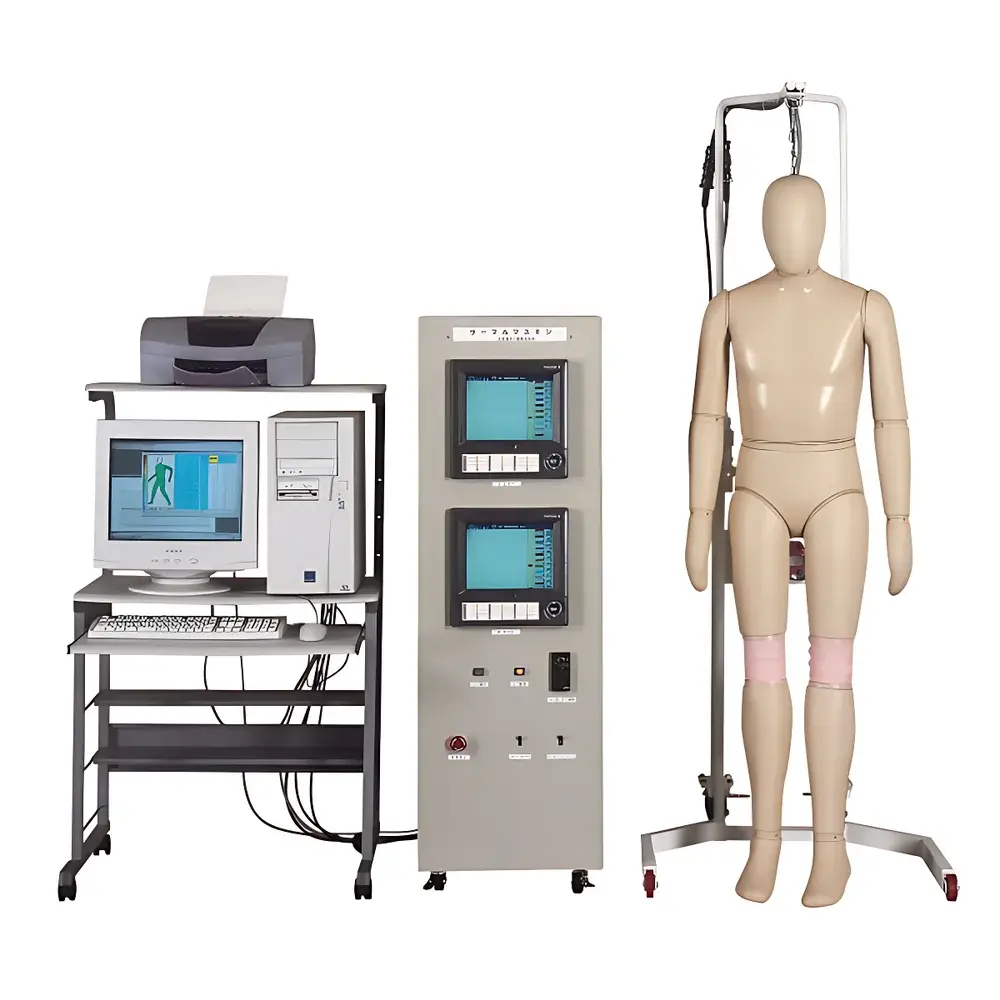
| Segment Count | 17 anatomical segments (head, torso, arms, legs) |
| Surface Emissivity | 0.9 (matte baked finish) |
| Segmental Heat Output Range | 0–5 met (0–290 W/m²) |
| Operating Ambient Temperature Range | −20 °C to +60 °C |
| Segmental Temperature Sensors | Precision nickel-wire RTDs |
| Structural Material | Fiberglass-reinforced thermoset resin |
| Joint Articulation | Shoulder, hip, and knee joints with full flexion capability |
| System Weight | ~25 kg |
| Controller Input Voltage | DC 48 V |
| Safety Features | Overheat cutoff (>60 °C), emergency stop button, thermal fusing |
Overview
The KEM Thermal Manikin System Model TM-17 is a high-fidelity, segmented anthropomorphic thermal test platform engineered for quantitative human heat exchange simulation under controlled environmental conditions. Based on the principles of steady-state and transient thermal resistance measurement—aligned with ISO 15831, ISO 7730, ASTM F1291, and EN 342—the system replicates physiological segmental heat dissipation using calibrated resistive heating elements and distributed precision temperature sensing. Unlike simplified thermal surrogates, the TM-17’s 17 independently controlled anatomical zones enable spatially resolved thermal mapping of clothing ensembles, HVAC microclimates, or vehicle cabin air distribution. Its low-thermal-mass fiberglass-resin construction ensures rapid thermal response times (<60 s for 90% step response), critical for dynamic comfort assessment in moving vehicles or transient exposure scenarios such as firefighting gear evaluation or cold-weather occupational testing.
Key Features
- 17-segment anatomical configuration with independent thermal control per zone—head, upper/lower torso, upper/lower arms, hands, thighs, shins, and feet—enabling localized heat flux analysis and ISO-defined local thermal resistance (Rct,local) computation.
- Dual-mode controller supporting both constant-surface-temperature (CST) and constant-power (CP) operation, allowing method flexibility per test standard: CST for steady-state clothing insulation (ISO 15831), CP for metabolic equivalence modeling (1 met = 58.2 W/m²).
- High-stability nickel-wire resistance temperature detectors (RTDs) embedded in each segment surface, calibrated traceably to NIST standards, delivering ±0.15 °C accuracy across −20 °C to +60 °C ambient range.
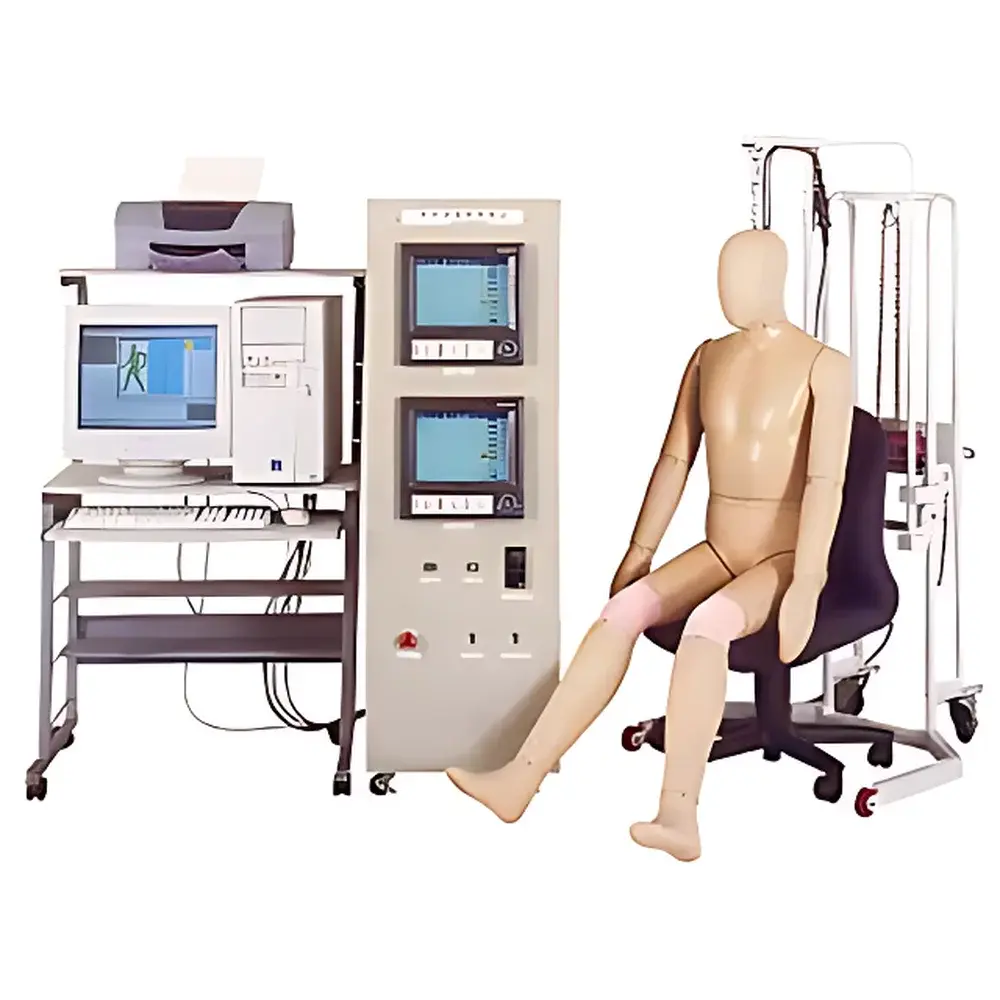
- Articulated joint design (shoulder, hip, knee) enabling reproducible seated, standing, and semi-recumbent postures—critical for automotive seat comfort validation and aircraft cabin thermal zoning studies.
- Matte-finish fiberglass-resin skin with emissivity ε = 0.9 ± 0.02, minimizing radiative error in infrared thermography integration and ensuring compliance with ASTM E1933 spectral reflectance requirements for thermal manikin surfaces.
- Integrated safety architecture: hardware-level overtemperature cutoff at 60.0 °C, redundant thermal fusing, and front-panel emergency stop—fully compliant with IEC 61000-6-2 EMC and UL 61010-1 safety directives.
Sample Compatibility & Compliance
The TM-17 accommodates full-body garments—including layered PPE, moisture-wicking sportswear, flame-resistant workwear, and multi-layered cold-weather systems—without requiring garment modification. Its modular segment design permits rapid reconfiguration for infant, child, or adult anthropometries (optional add-on kits available). All operational protocols align with GLP-compliant data acquisition workflows. The system meets ISO/IEC 17025 calibration traceability requirements when used with KEM-certified reference thermometers and environmental chamber synchronization. It supports audit-ready documentation for FDA-regulated thermal protective equipment validation (21 CFR Part 11 compliant software optional) and satisfies EN 13758-2 UV transmission testing prerequisites when paired with spectroradiometric accessories.
Software & Data Management
KEM’s proprietary TMSuite v4.2 software provides real-time visualization of segmental surface temperatures, cumulative heat loss (W), local thermal resistance (m²·K/W), and metabolic equivalent (met) conversion. Data logging occurs at 1 Hz default resolution (configurable up to 10 Hz), with time-stamped CSV export compatible with MATLAB, Python (pandas), and JMP for statistical process control. The software includes built-in calculation modules for clo value derivation per ASTM D1518, dynamic dry heat loss modeling per ISO 11079, and radiant asymmetry index (RAI) per ASHRAE 55. Audit trails record user actions, parameter changes, and calibration events—meeting ALCOA+ data integrity criteria for regulated laboratories.
Applications
- Building science: quantifying thermal bridging effects, evaluating radiant ceiling panel efficiency, and validating CFD boundary conditions in naturally ventilated spaces.
- Transportation ergonomics: mapping thermal discomfort indices in automotive cabins under solar load, assessing seat heater uniformity, and benchmarking aircraft cabin air distribution against ISO 7730 PMV-PPD thresholds.
- Textile R&D: measuring moisture vapor transmission rate (MVTR)-coupled thermal resistance of next-gen sportswear, validating ISO 11092 wet-bulb globe temperature (WBGT) correlation models.
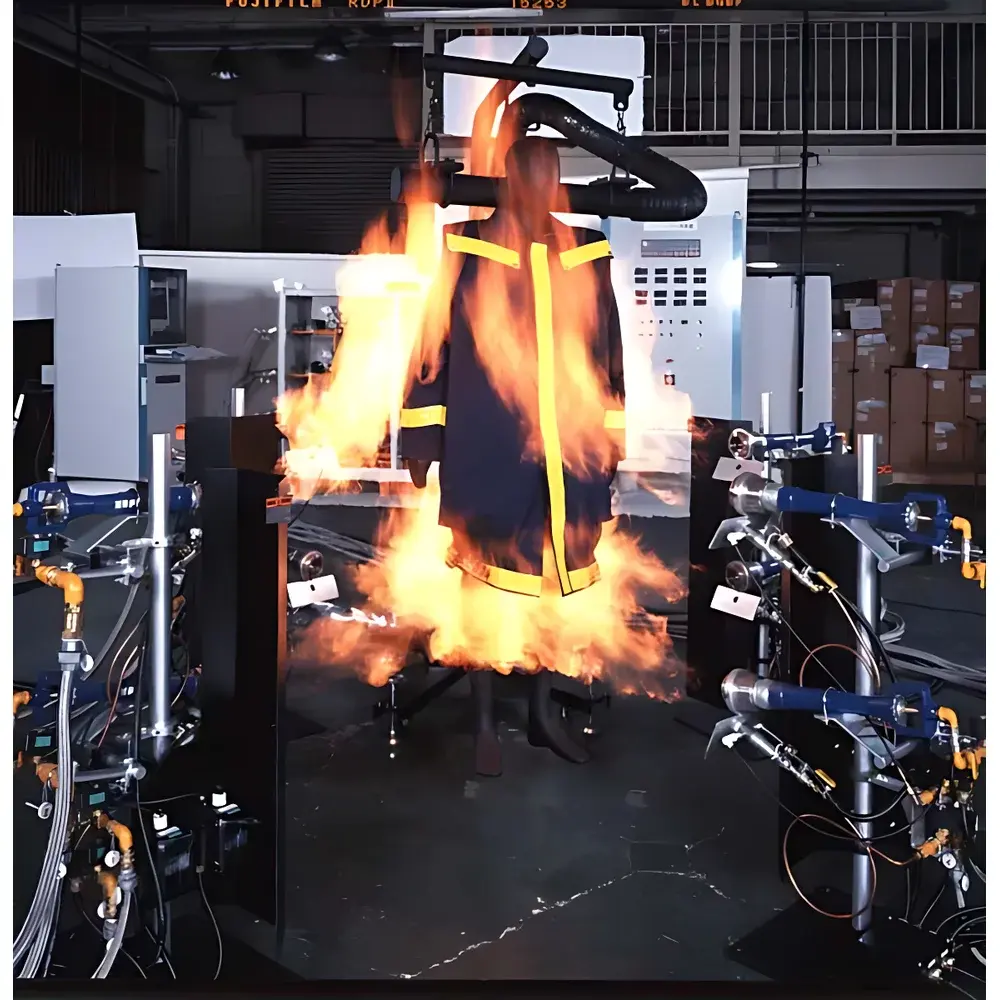
- Occupational health: simulating firefighter turnout gear performance in flashover environments (−10 °C to +120 °C transient ramping with optional chamber interface), evaluating cold-induced manual dexterity loss in arctic PPE.
- Medical device testing: characterizing thermal management of wearable sensors, smart bandages, and active cooling vests under simulated ambulatory motion profiles.
FAQ
What standards does the TM-17 comply with for clothing insulation testing?
The system fully supports ISO 15831 (clothing insulation measurement), ASTM F1291 (thermal manikin test methods), and ISO 9920 (ergonomic assessment of thermal environments). Calibration certificates are issued per ISO/IEC 17025.
Can the manikin be used inside climatic chambers with humidity control?
Yes—the TM-17 operates reliably at RH 10–95% within its −20 °C to +60 °C ambient envelope. All electronics are conformally coated; cable entries use IP65-rated gland fittings.
Is segmental data export compatible with third-party CFD platforms?
Raw segment temperature and power data are exported as time-series CSV files with SI units and metadata headers, directly ingestible by ANSYS Fluent, STAR-CCM+, and OpenFOAM for boundary condition mapping.
What maintenance is required for long-term calibration stability?
Annual verification using KEM’s NIST-traceable reference RTD kit is recommended. No field recalibration is needed—segment sensors are factory-laser-trimmed and sealed.
Does the system support custom anthropometry beyond standard adult male (1.74 m, 70 kg)?
Yes—KEM offers optional pediatric (6–12 yr) and female morphology kits with reconfigured segment mass ratios and surface area distributions, all validated per ISO 8559 anthropometric databases.



