
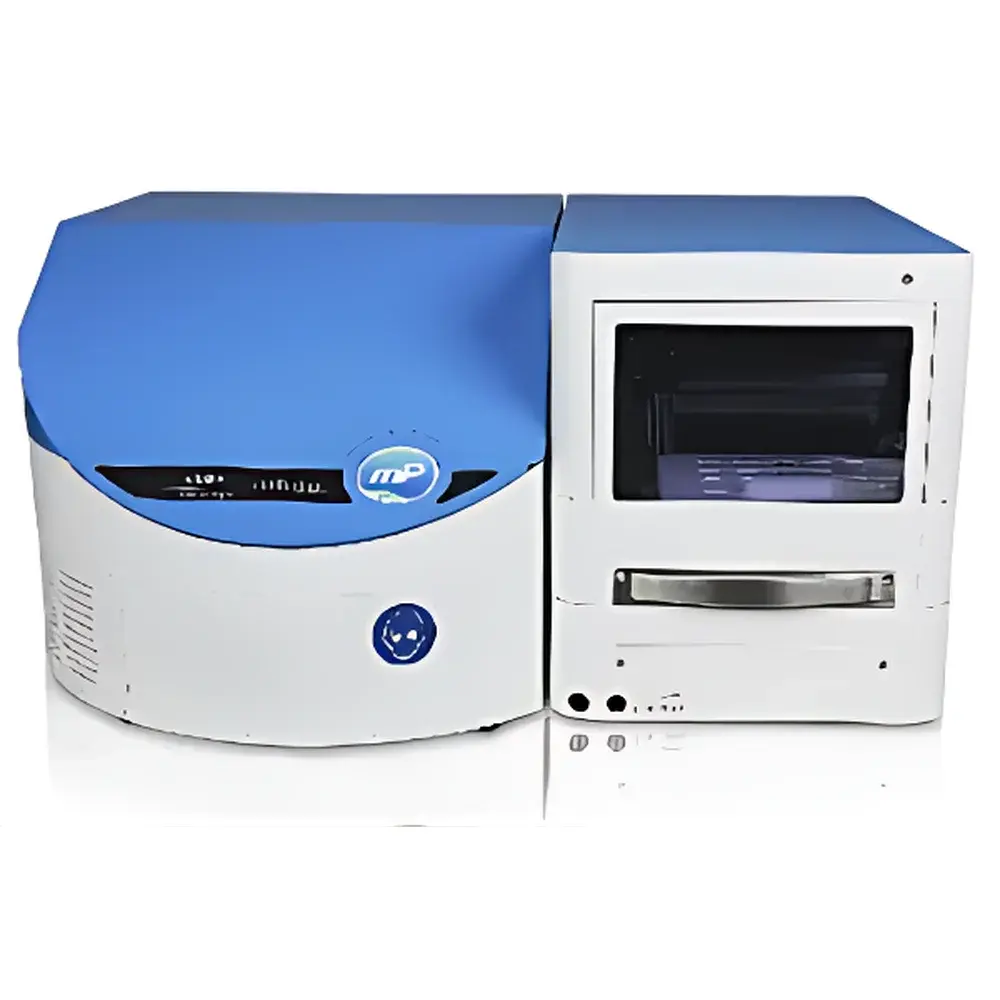
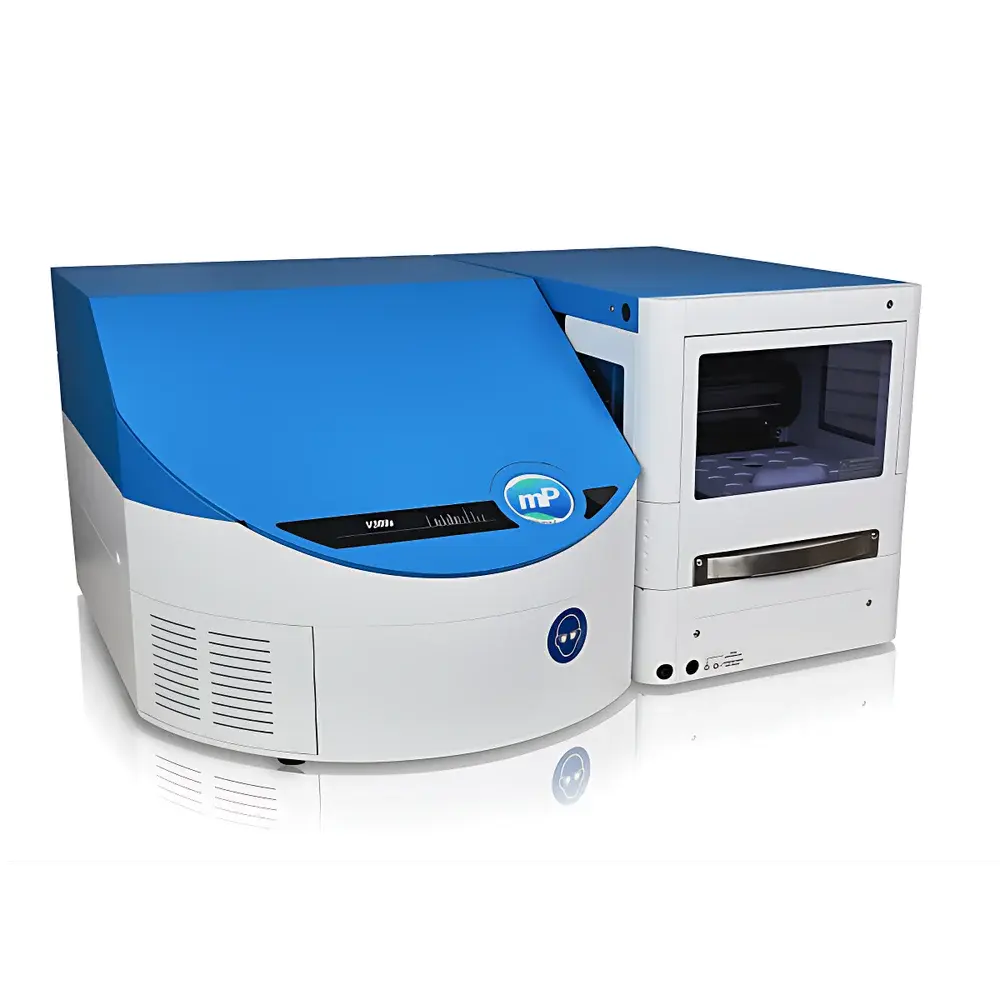
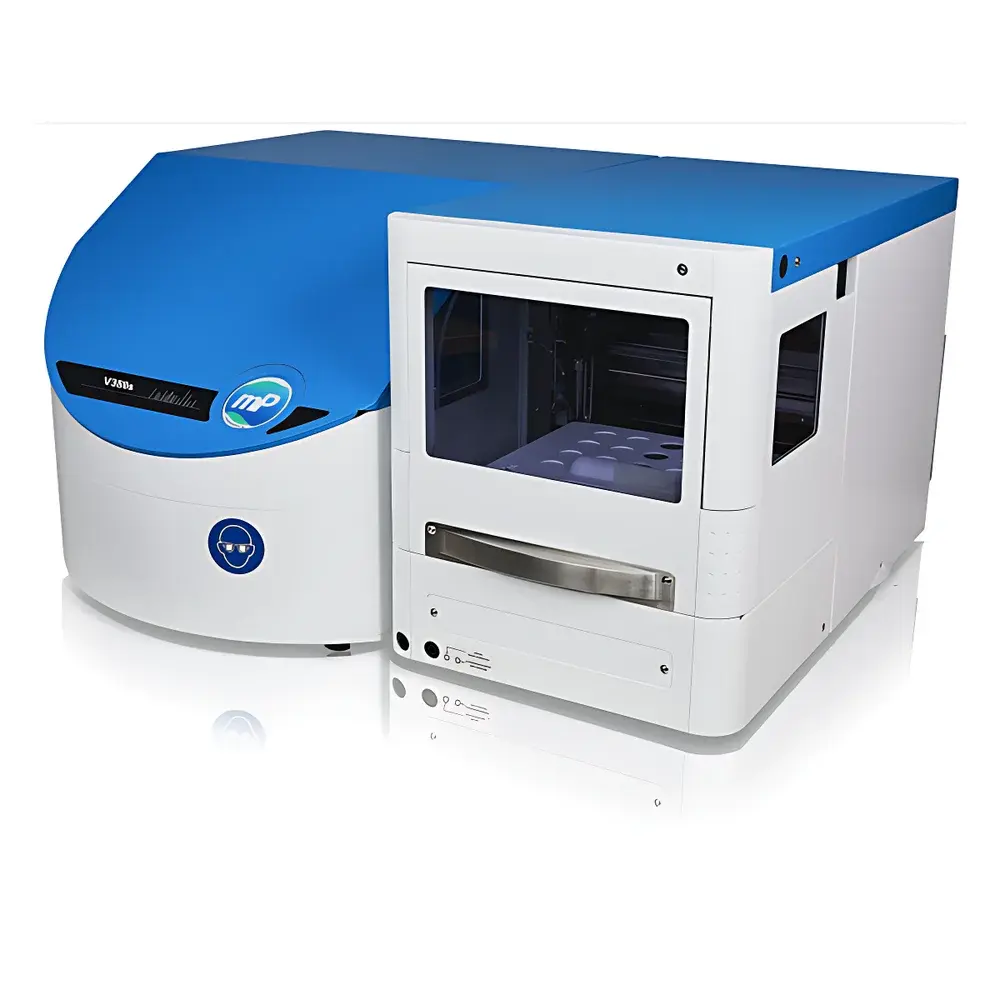
MembraPure V388s Series Fully Automated Amino Acid Analyzer
| Brand | MembraPure |
|---|---|
| Origin | Germany |
| Manufacturer Type | Original Equipment Manufacturer (OEM) |
| Product Category | Imported Instrument |
| Model | V388s Series |
| Instrument Type | Post-Column Derivatization System |
| Pump Flow Rate | 0.000–9.999 mL/min |
| Maximum Pump Pressure | ≥40 MPa |
| Autosampler Injection Modes | Direct Injection / Full-Loop Injection / Partial-Loop Injection |
| Autosampler Temperature Control | ≤10 °C (default operating temperature) |
| Post-Column Reactor Temperature Range | Ambient to 150 °C |
| Detection Wavelengths | 570 nm and 440 nm |
| Flow Cell Volume | 8 µL |
Overview
The MembraPure V388s Series Fully Automated Amino Acid Analyzer is a high-precision, column-based ion-exchange chromatographic system engineered for quantitative and qualitative analysis of amino acids in complex biological matrices. It operates on the classical post-column derivatization principle—employing cation-exchange separation followed by on-line reaction with ninhydrin reagent and dual-wavelength photometric detection at 570 nm (primary absorbance for α-amino acids) and 440 nm (secondary absorbance for proline and hydroxyproline). Designed and manufactured in Germany, the V388s represents the third-generation evolution of MembraPure’s A300 platform, incorporating UHT (Ultra-High Thermal) unidirectional heat transfer technology for enhanced thermal efficiency in the post-column reactor and next-generation high-stability LED-based optical detection. These innovations yield improved derivatization kinetics, reduced reagent consumption (≥66% reduction vs. legacy systems), and significantly enhanced signal-to-noise ratio—enabling reliable quantification down to sub-picomolar levels under optimized conditions.
Key Features
- UHT unidirectional thermal conduction architecture ensures precise, stable, and rapid heating of the post-column reaction coil—minimizing thermal lag and improving reproducibility across extended run times.
- Third-generation LED photometric detection system with dual-wavelength capability (440 nm and 570 nm) and thermally stabilized optics delivers long-term baseline stability and low drift (<0.5% RSD over 24 h).
- Modular, integrated lightweight mechanical design with miniaturized fluidic components reduces footprint and enhances serviceability while maintaining full compliance with ISO 9001-certified manufacturing standards.
- High-pressure binary gradient pump capable of delivering flow rates from 0.000 to 9.999 mL/min at pressures up to ≥40 MPa—supporting both standard and high-resolution separation columns.
- Autosampler with three injection modes (direct, full-loop, partial-loop), programmable sample cooling (≤10 °C), and low carryover (<0.005%) ensures flexibility for diverse sample types—from hydrolysates to physiological fluids.
- Inert gas (N₂ or He) purging throughout the reagent and reaction pathways prevents oxidation and degradation of ninhydrin and amino acid derivatives.
Sample Compatibility & Compliance
The V388s supports comprehensive amino acid profiling across multiple sample classes—including protein hydrolysates (21 standard amino acids via lithium buffer method), human plasma/serum/urine (43–56 free amino acids, depending on method configuration), and cell culture supernatants. Its validated lithium-salt and sodium-salt methodologies eliminate the need for column or mobile-phase switching during routine analysis, reducing downtime and method transfer complexity. The system complies with key international analytical standards including ASTM D4128 (amino acid determination in proteins), ISO 13903 (food and feed analysis), and USP (chromatography). Data integrity features—including electronic signatures, audit trails, and user-access controls—align with FDA 21 CFR Part 11 requirements when operated within a validated laboratory information management system (LIMS) environment.
Software & Data Management
The V388s is controlled by MembraPure’s proprietary AminoSoft™ v4.x software suite, available in fully localized English and Chinese interfaces. The software performs real-time acquisition of >10 instrument parameters per second—including pump pressure, column temperature, reactor temperature, detector absorbance, flow rate, and reagent status—with timestamped logging for full traceability. Peak integration uses adaptive baseline algorithms compliant with ICH Q2(R2) guidelines; calibration curves support linear, quadratic, and weighted least-squares fitting. All raw data files are stored in vendor-neutral .csv and .axd formats, enabling seamless export to third-party statistical packages (e.g., R, Python pandas) or enterprise LIMS platforms. Software validation documentation (IQ/OQ/PQ protocols) and GxP-compliant installation qualification templates are provided as standard.
Applications
- Quantitative amino acid profiling in pharmaceutical excipients and biologics formulation development.
- Quality control of nutritional supplements, infant formulas, and clinical enteral feeds per Codex Alimentarius standards.
- Metabolomics studies requiring high-fidelity free amino acid quantitation in serum, CSF, and tissue extracts.
- Validation of enzymatic or acid hydrolysis efficiency in protein characterization workflows.
- Regulatory submissions supporting amino acid content claims in functional foods and dietary supplements (EFSA, FDA, NMPA).
- Academic research in plant physiology, microbial metabolism, and neurochemistry where absolute amino acid concentrations inform mechanistic hypotheses.
FAQ
What separation chemistry does the V388s employ?
It utilizes high-efficiency cation-exchange chromatography with sulfonated polystyrene-divinylbenzene resin columns—optimized for resolution of all 20 proteinogenic amino acids plus non-standard variants (e.g., hydroxyproline, ornithine) under either lithium- or sodium-based elution gradients.
Is method transfer from older A300-series instruments supported?
Yes—backward-compatible method libraries, column dimensions, and buffer recipes enable direct migration of validated A300 methods to the V388s with minimal re-optimization.
Can the system be integrated into an automated lab workflow?
The V388s provides full RS-232, Ethernet, and optional OPC UA connectivity for integration with robotic sample handlers, central LIMS, and enterprise scheduling systems.
What maintenance intervals are recommended for routine operation?
Pump seals and reaction coils require inspection every 6 months; UV-Vis optical components are rated for ≥5 years of continuous use; autosampler syringe and needle replacement is advised every 10,000 injections.
Does the system support GLP/GMP-compliant environments?
When deployed with AminoSoft™ in audit-trail-enabled mode and paired with documented SOPs, the V388s meets core GLP (OECD 1998) and GMP (ICH Q7) requirements for instrument qualification and data governance.
Related Products





