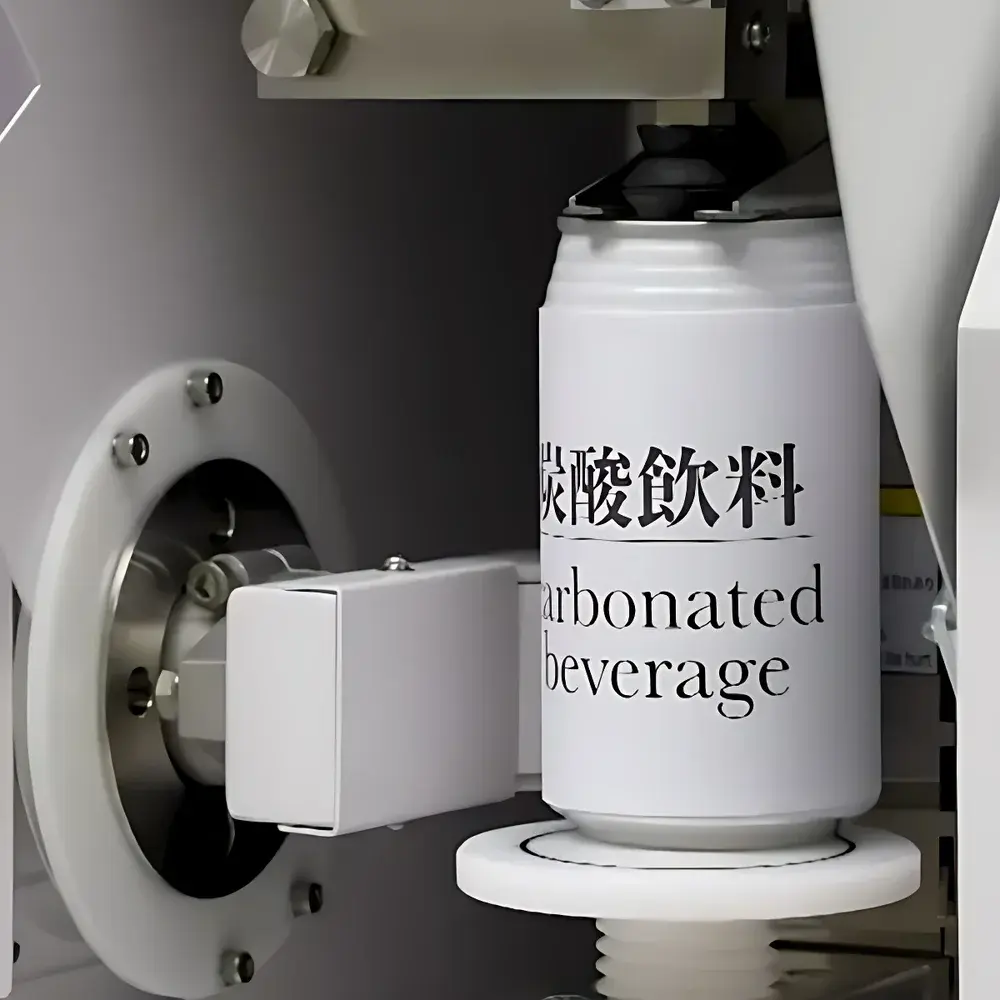
KEM GVA-700 Automated Carbon Dioxide Gas Volume Analyzer for Carbonated Beverages
| Brand | KEM (Kyoto Electronics Manufacturing) |
|---|---|
| Origin | Japan |
| Manufacturer Type | Original Equipment Manufacturer (OEM) |
| Product Category | Imported Instrument |
| Model | GVA-700 |
| Measurement Time | 90 sec (CO₂ volume only) / 6–16 min (CO₂ + air + O₂) |
| Pressure Range | 9.8 kPa to 0.490 MPa (0.1–5.0 kgf/cm²G) |
| Temperature Range | 0–50 °C |
| Residual Gas Volume | 0–30 mL |
| Oxygen Concentration | 0–21% (detection limit: >8 mL residual gas) |
| Accuracy | ±0.001 MPa (pressure), ±0.05 °C (temperature), ±2% rel. (residual gas ≥5 mL), ±0.1 mL (residual gas <5 mL), ±0.2% (O₂) |
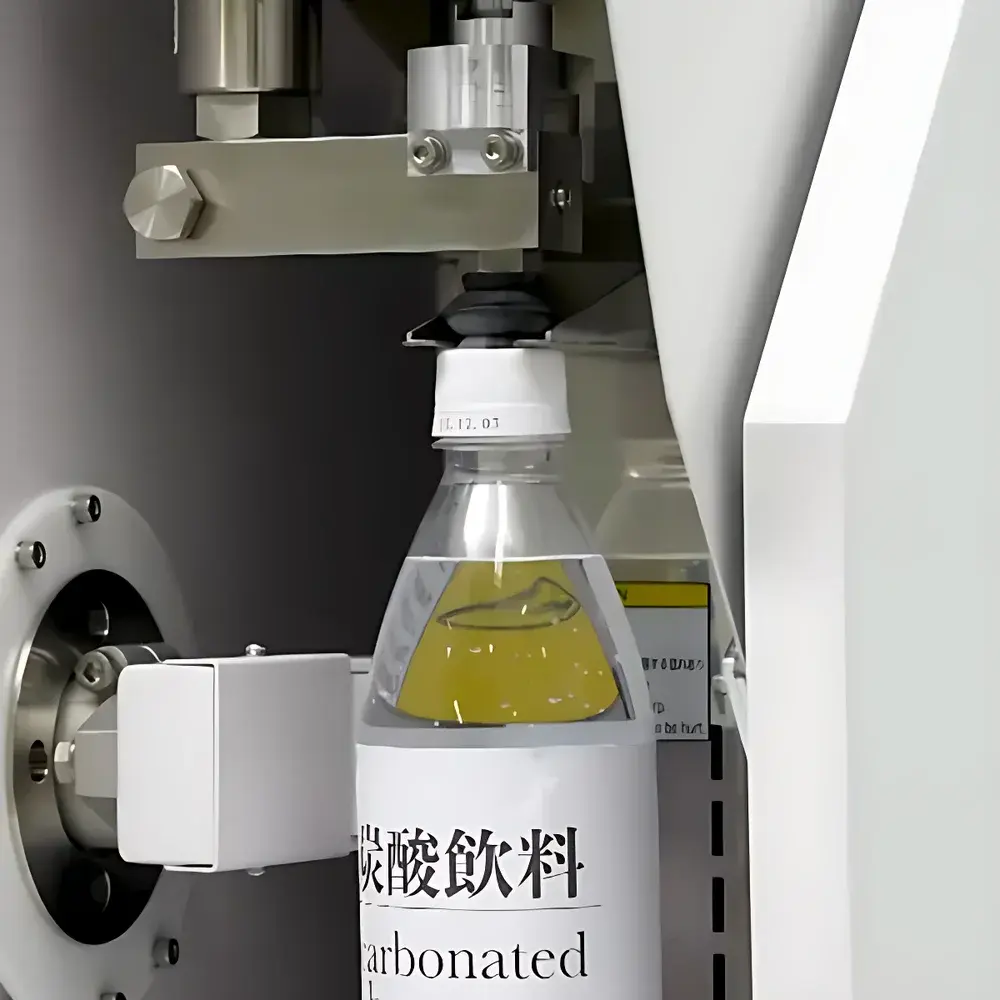
| Sample Compatibility | PET bottles ≤2.0 L, cans (e.g., 190 mL), max. Ø110 × H320 mm |
| Dimensions | 495(W) × 555(D) × 570(H) mm |
| Weight | 38 kg |
| Power Supply | AC 100–240 V ±10%, 50/60 Hz ±1 Hz |
| Power Consumption | 20 W |
| Air Supply Requirement | 0.490–0.686 MPa (5–7 kgf/cm²G) |
| Data Interface | RS-232C, USB |
| Display | 16-character × 1-line backlit LCD |
| Method Storage | 20 user-defined methods |
| Result Storage | 100 measurements internally + export via USB |
Overview
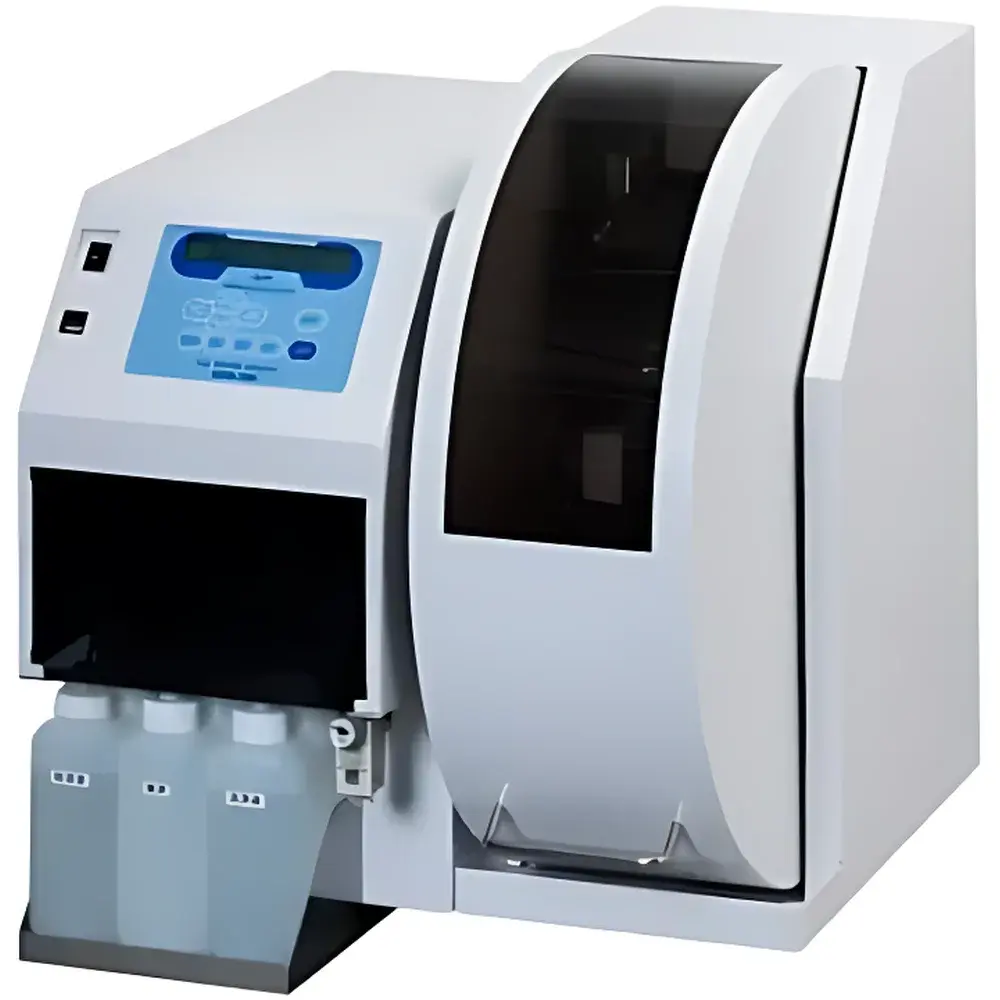
The KEM GVA-700 Automated Carbon Dioxide Gas Volume Analyzer is a precision-engineered instrument designed for the quantitative determination of CO₂ gas volume (expressed as volume of CO₂ per volume of beverage at standard conditions — i.e., “gas capacity”) in carbonated soft drinks, sparkling waters, and beer. It operates on the thermodynamic principles of Henry’s Law and ideal gas behavior, measuring equilibrium headspace pressure and sample temperature within sealed containers, then calculating CO₂ solubility using empirically validated absorption coefficients. Unlike manual decarbonation or gravimetric methods, the GVA-700 performs fully automated puncturing, controlled agitation, pressure equilibration, and post-absorption gas analysis—eliminating operator variability and ensuring traceable, repeatable results compliant with GB/T 10792–2008 (carbonated beverages) and GB/T 4928–2008 (beer). The system integrates real-time pressure transduction, high-stability temperature sensing, and electrochemical oxygen detection to deliver comprehensive headspace characterization beyond CO₂ alone.
Key Features
- Fully automated measurement cycle: container puncture, regulated reciprocating agitation (simulating standardized shaking per GB/T 10792), pressure stabilization, and dual-phase gas analysis (pre- and post-CO₂ absorption).
- Integrated alkaline absorption module (NaOH solution) for selective CO₂ removal, enabling accurate quantification of residual air volume and O₂ concentration in the headspace.
- Dual-sensor pressure architecture: separate high-range (0–0.490 MPa) and low-range (0–0.098 MPa) calibrated transducers ensure optimal resolution across beverage types—from low-carbonation flavored waters to high-pressure energy drinks.
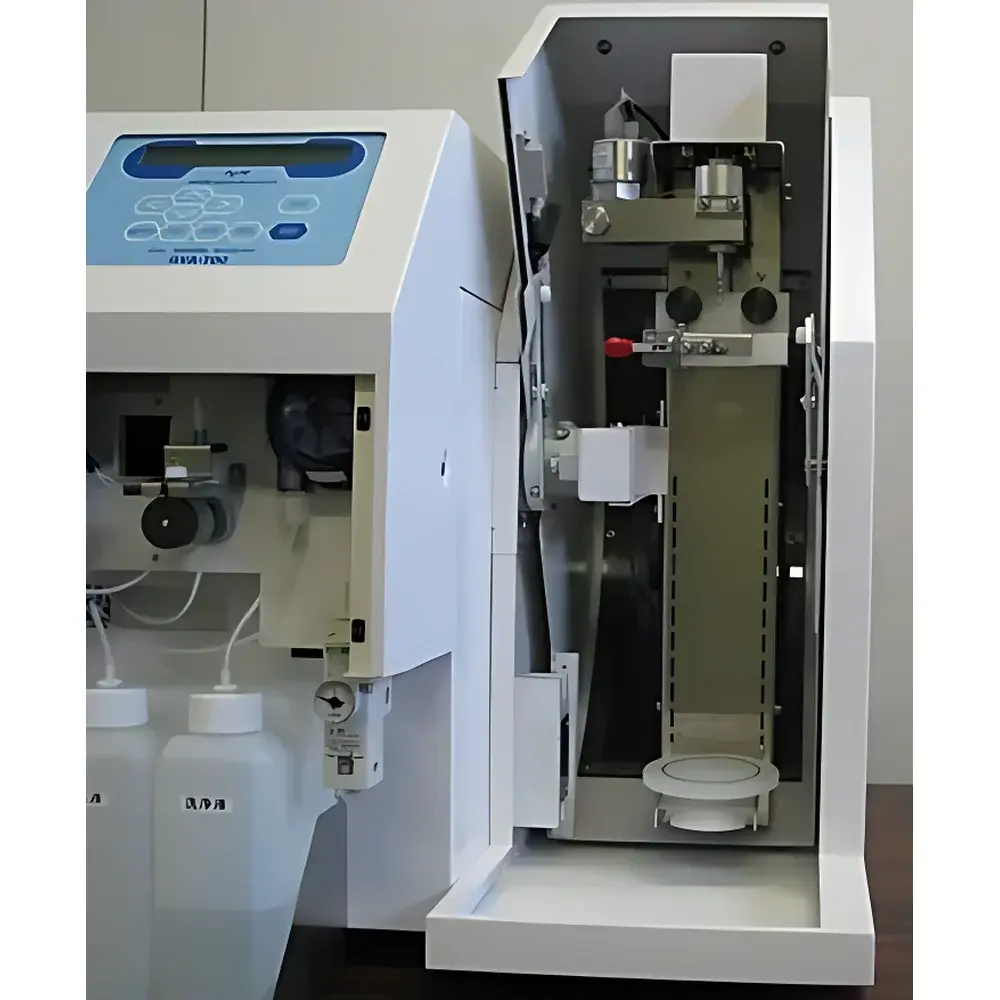
- Front-accessible maintenance design: all service points—including absorption vessel, O₂ sensor, and pressure calibration ports—are located on the instrument’s frontal panel, minimizing downtime and simplifying routine verification.
- Onboard method programming: up to 20 customizable measurement protocols stored internally, supporting multi-product QA/QC workflows without external software dependency.
- Data integrity support: USB export of raw measurements (pressure, temperature, residual gas volume, O₂ %) and calculated CO₂ gas capacity (vol/vol), compatible with LIMS integration and 21 CFR Part 11–compliant audit trails when paired with validated laboratory software.
Sample Compatibility & Compliance
The GVA-700 accommodates common commercial beverage packaging: aluminum cans (e.g., 190 mL), PET bottles up to 2.0 L, and glass bottles with standard crown caps or screw closures. Sample chamber dimensions (Ø110 × 320 mm H) permit upright insertion without orientation constraints. All measurements adhere to national and international reference standards: GB/T 10792–2008 (equivalent to ISO 10585:1992 for carbonated soft drinks) and GB/T 4928–2008 (aligned with EBC Method 9.22 and ASBC Beer-3 for beer). The instrument’s pressure and temperature accuracy meet the metrological requirements specified in these methods—±0.001 MPa pressure tolerance and ±0.05 °C thermal resolution are essential for uncertainty budgets under ISO/IEC 17025 accreditation. Calibration procedures follow NIST-traceable protocols: zero and span verification using certified dead-weight testers and reference thermometers.
Software & Data Management
The GVA-700 operates autonomously via its embedded microprocessor and 16-character LCD interface, requiring no PC for basic operation. However, it supports bidirectional data exchange via RS-232C serial and USB interfaces. Measurement results—including timestamp, method ID, pressure (MPa), temperature (°C), CO₂ gas capacity (mL CO₂/100 mL beverage), residual gas volume (mL), and O₂ concentration (%v/v)—are exportable as plain-text CSV files. USB storage enables secure offline archiving and transfer to laboratory information management systems (LIMS) or statistical process control (SPC) platforms. Internal memory retains the last 100 test records with full parameter logging. For regulated environments (e.g., GMP-compliant beverage production facilities), the instrument’s deterministic firmware architecture and immutable result timestamps support ALCOA+ data integrity principles when deployed with validated electronic record systems.
Applications
- Quality assurance of finished carbonated beverages: validation of CO₂ overfill/underfill against formulation targets and shelf-life stability specifications.
- Process optimization in filling lines: correlation of headspace pressure, temperature, and CO₂ loss during capping to identify sealing inefficiencies or thermal equilibration delays.
- Stability testing: monitoring CO₂ migration and O₂ ingress in PET bottles over accelerated aging cycles to assess barrier performance.
- R&D formulation development: comparative analysis of CO₂ retention across different sweeteners, acids, or preservatives under controlled thermal profiles.
- Regulatory compliance reporting: generation of auditable CO₂ content certificates required by food safety authorities (e.g., China’s SAMR, EU FIC Regulation No. 1169/2011).
FAQ
What standards does the GVA-700 comply with?
The instrument implements measurement algorithms and tolerances aligned with GB/T 10792–2008 (carbonated beverages) and GB/T 4928–2008 (beer), both referencing fundamental gas solubility physics consistent with ISO 10585 and ASBC methodologies.
Can the GVA-700 measure CO₂ in non-carbonated beverages?
Yes—it quantifies headspace pressure in still beverages (e.g., juice, tea), detecting dissolved gases such as residual O₂ or N₂ used in inert blanketing, though CO₂ gas capacity calculation is not applicable.
Is external gas supply required?
Yes: compressed dry air or nitrogen at 0.490–0.686 MPa is needed to actuate the puncture mechanism and purge internal pathways between measurements.
How often must the O₂ sensor be calibrated?
The electrochemical O₂ sensor undergoes automatic zero-point adjustment during each startup pre-conditioning; manual span calibration with certified 21% O₂ gas is recommended every 3 months or after 200 tests.
Does the instrument support GLP-compliant data handling?
While the GVA-700 itself does not include user authentication or electronic signatures, its timestamped, immutable result logs and USB-exportable raw data enable full traceability when integrated into a validated GLP/GMP data management ecosystem.