
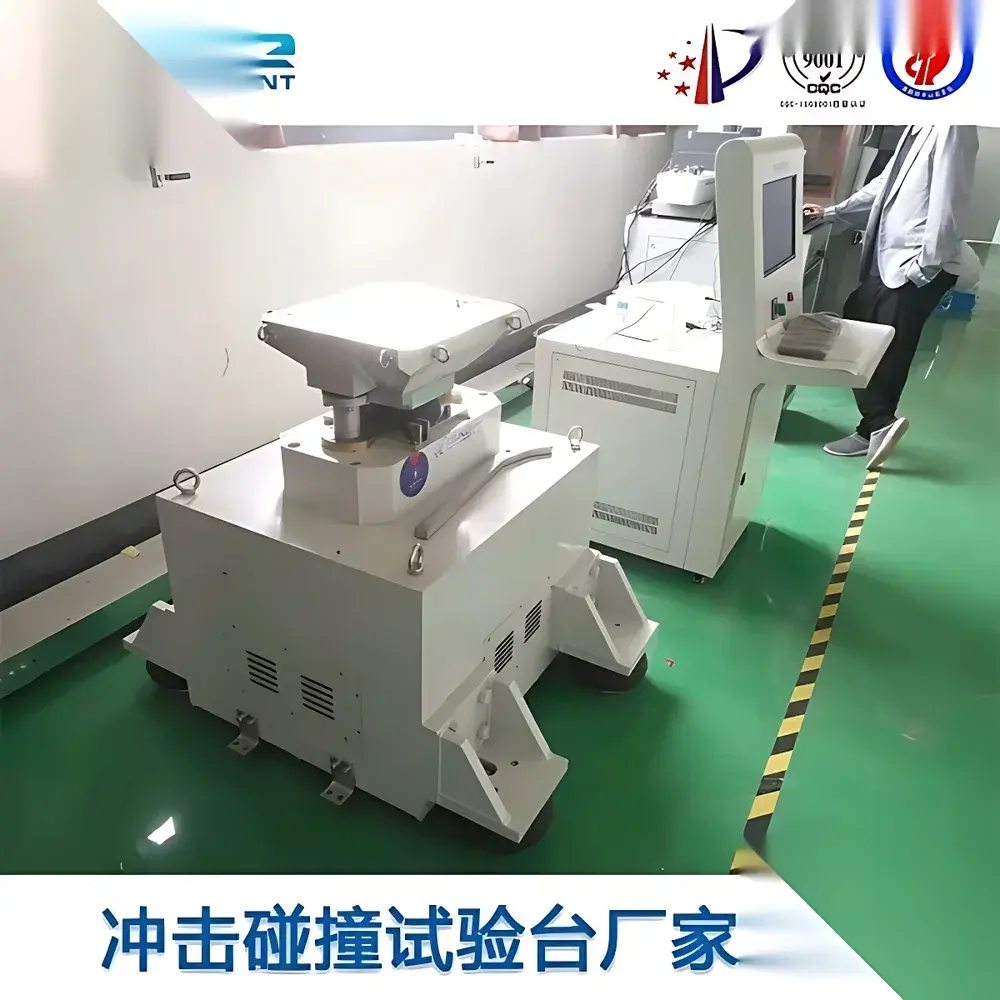
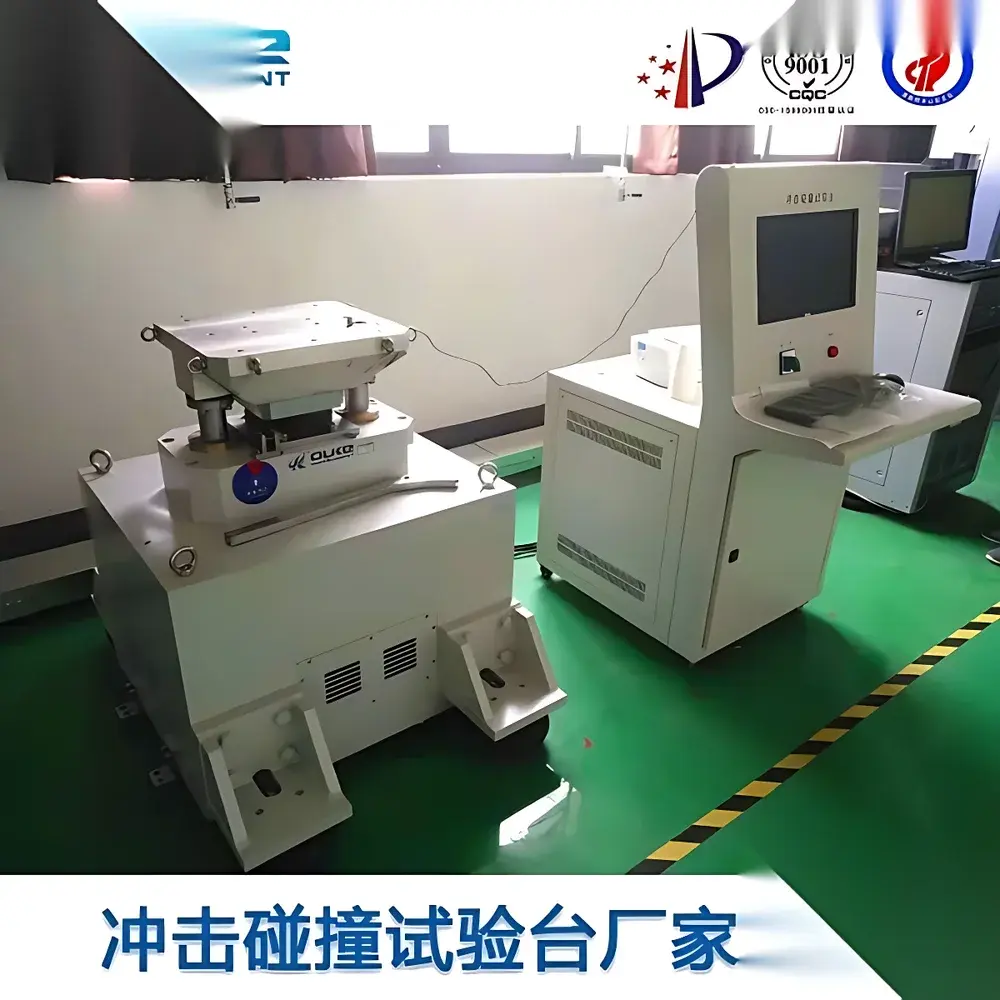
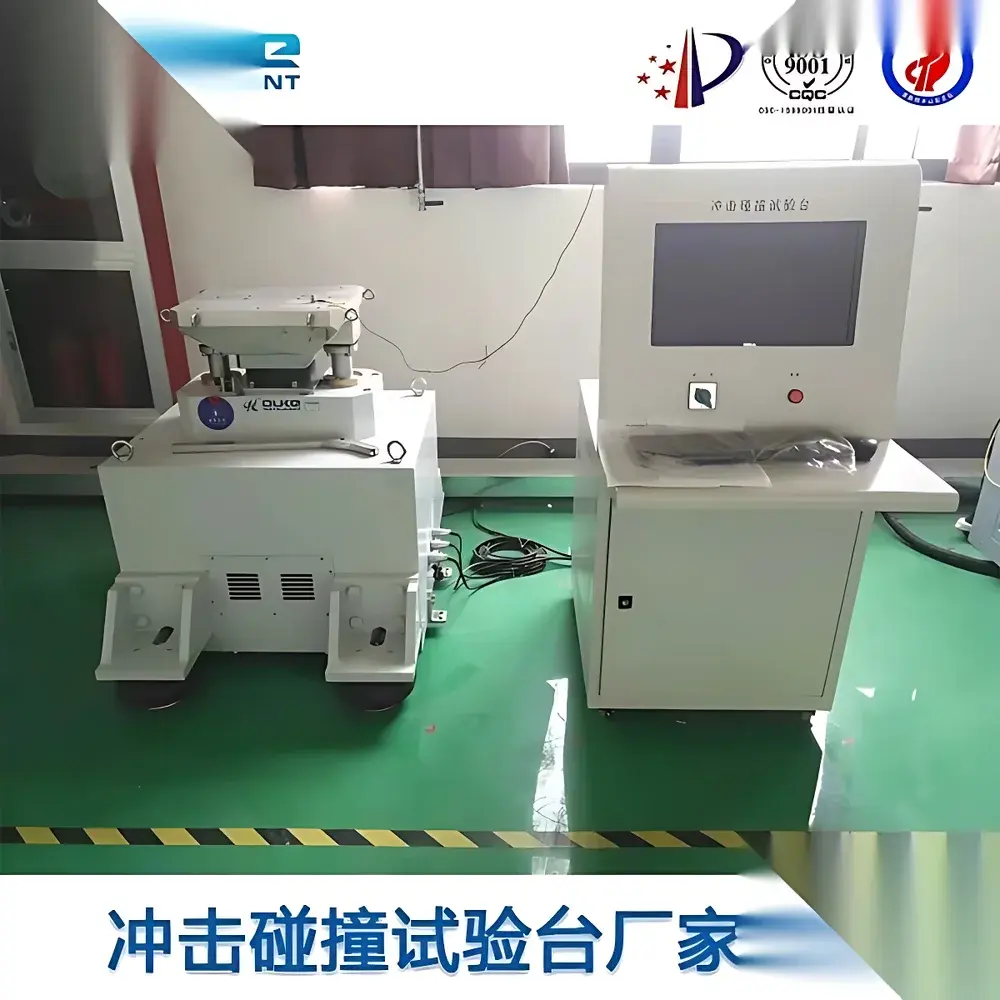
Pneumatic Impact and Shock Test Table
| Brand | Generic |
|---|---|
| Origin | Imported |
| Manufacturer Type | Authorized Distributor |
| Price | USD 16,500 (FOB) |
| Compliance | MIL-STD-810, IEC 60068-2-29, GB/T 2423.5–2022, GJB 150.18A–2012, GJB 360B–2009 |
Overview
The Pneumatic Impact and Shock Test Table is a precision-engineered electro-pneumatic system designed to replicate controlled mechanical shock and repetitive impact environments encountered during transportation, handling, and operational deployment of electronic components, avionics modules, automotive ECUs, and industrial control systems. Unlike purely electromagnetic or servo-hydraulic shock tables, this platform utilizes a pneumatically assisted, DC-motor-driven lift-and-drop mechanism to generate repeatable, traceable half-sine acceleration pulses—fully compliant with standardized shock pulse definitions in MIL-STD-810 Method 516.7, IEC 60068-2-29, and GB/T 2423.5. The core principle relies on deterministic energy transfer: a rigid test platform is elevated to a preset height via a geared reduction assembly, then released under gravity to impact a calibrated elastomeric cushion, producing a defined acceleration-time waveform. Pulse amplitude (peak acceleration), duration, and repetition rate are independently adjustable through mechanical, pneumatic, and electrical parameters—enabling rigorous validation against qualification and acceptance test requirements in aerospace, defense, and high-reliability electronics manufacturing.
Key Features
- High-rigidity welded steel frame with precision-machined aluminum alloy tabletop ensuring uniform acceleration distribution across the entire surface (±5% spatial deviation at rated load)
- Dual-mode operation: programmable drop-height control for collision testing (0–200 mm) and spring-compression adjustment for variable-impact energy shock testing
- Real-time closed-loop acceleration control during collision mode, achieving ±3% peak acceleration accuracy per pulse (verified via integrated piezoelectric accelerometer and feedback loop)
- Configurable pulse shaping: standard half-sine output; optional mechanical waveform generators available for trapezoidal and rear-peak sawtooth pulses (per IEC 60068-2-27 Annex A)
- Adjustable impact frequency from 1 to 120 impacts per minute, synchronized with programmable dwell time and pulse count limits
- Integrated safety interlocks including emergency stop, over-pressure cutoff (7–8 kg/cm² operating range), overload detection, and position-limit sensing
- Modular design supporting future integration with environmental chambers (temperature/humidity) and data acquisition systems via IEEE-488 or Ethernet/IP interfaces
Sample Compatibility & Compliance
The test table accommodates specimens ranging from small PCB assemblies (<5 kg) to full-size rack-mounted enclosures (up to 500 kg), with tabletop dimensions scalable from 500 × 700 mm to 1000 × 1000 mm. Mounting is facilitated by T-slots (M6/M8) and configurable fixture plates. All models meet structural integrity and vibration isolation requirements per ISO 10816-3 for auxiliary machinery. Certification documentation includes factory calibration reports traceable to NIST standards, waveform verification certificates per ISO 18431-4, and compliance declarations for MIL-STD-810H (Method 516.7), IEC 60068-2-29 (Ed. 3.0), GB/T 2423.5–2022, GJB 150.18A–2012, and GJB 360B–2009. Optional GLP/GMP audit-ready configuration includes electronic signature support, 21 CFR Part 11–compliant audit trails, and password-protected parameter locking.
Software & Data Management
Control is executed via a dedicated Windows-based application supporting both manual setup and automated test sequencing. The software enables full waveform definition—including amplitude, duration, rise/fall time, and pulse count—with preloaded templates aligned to common military and commercial standards. Real-time oscilloscope-style display shows acceleration vs. time for each impact event. Raw analog output (±10 V) and digital TTL sync signals allow synchronization with external DAQ systems (e.g., National Instruments PXI). All test logs—including timestamped pulse parameters, measured peak g-values, duration, and system status—are exported in CSV and XML formats. Audit trail functionality records user actions, parameter changes, and calibration events with immutable timestamps—essential for ISO/IEC 17025 accredited laboratories.
Applications
- Qualification testing of printed circuit boards, connectors, and solder joints per IPC-J-STD-001 and IPC-A-610
- Shock survivability assessment of inertial sensors, MEMS devices, and optical payloads in satellite subsystems
- Transport simulation for medical diagnostic equipment (IEC 60601-1 Clause 10.2.2)
- Design verification of automotive infotainment units and ADAS controllers per ISO 16750-3
- Reliability screening of consumer electronics packaging and internal mounting structures
- Failure mode analysis (FMA) of mechanical latches, switches, and display assemblies subjected to field-handling stresses
FAQ
What shock waveforms can this system generate natively?
The base configuration delivers half-sine pulses per IEC 60068-2-27. Trapezoidal and rear-peak sawtooth waveforms require optional mechanical waveform shapers—installed as field-upgradable kits.
Is third-party calibration included with delivery?
Yes—each unit ships with a NIST-traceable calibration certificate covering acceleration amplitude (±2% uncertainty), pulse duration (±0.2 ms), and timing repeatability (±0.5 ms). Annual recalibration services are available under contract.
Can the system operate unattended for extended test cycles?
Yes—programmable test sequences support up to 999,999 impacts with automatic shutdown upon completion or fault detection. Continuous operation is validated for 72-hour thermal stability at ambient 25°C.
Does it support integration into an existing test lab network?
All models include Ethernet (TCP/IP) and RS-232 ports. OPC UA and Modbus TCP drivers are provided for SCADA and MES integration.
What safety certifications does the system hold?
CE marking per Machinery Directive 2006/42/EC and EMC Directive 2014/30/EU; UL 61010-1 listed for laboratory equipment; meets IP20 enclosure rating per IEC 60529.



