
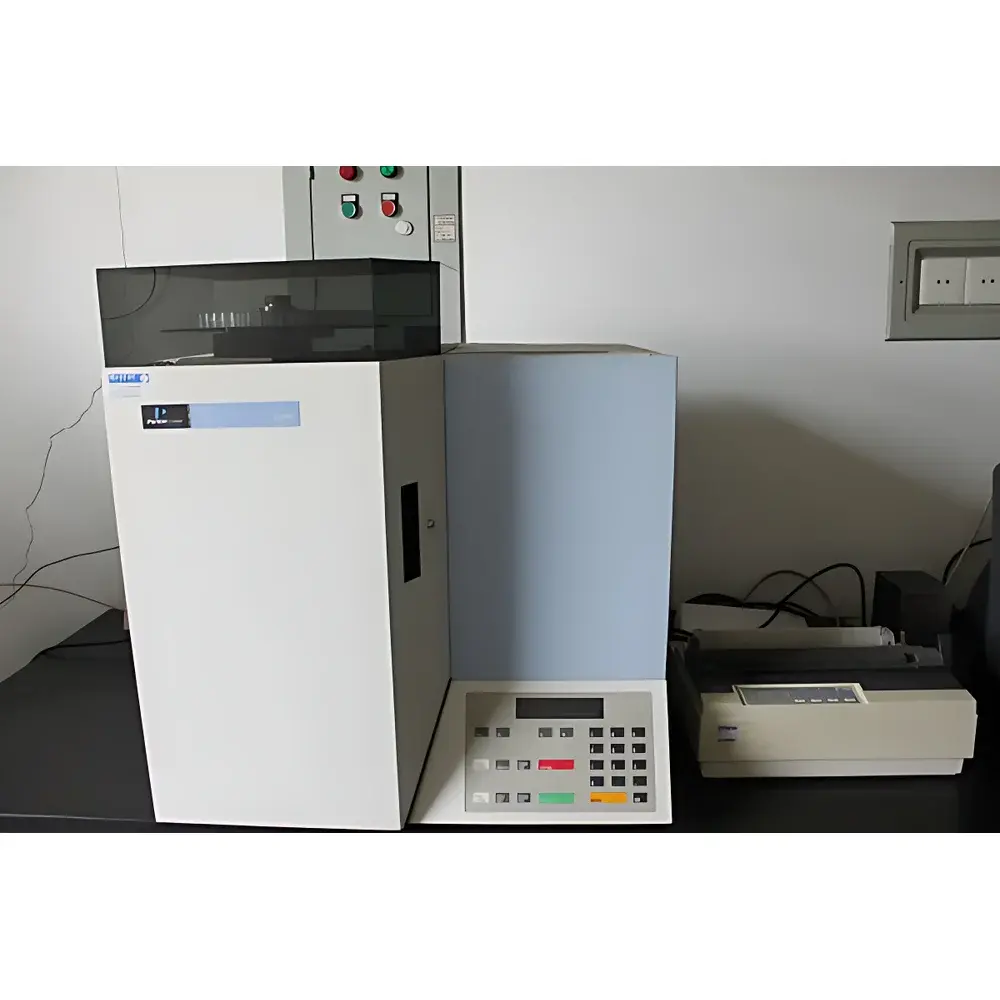
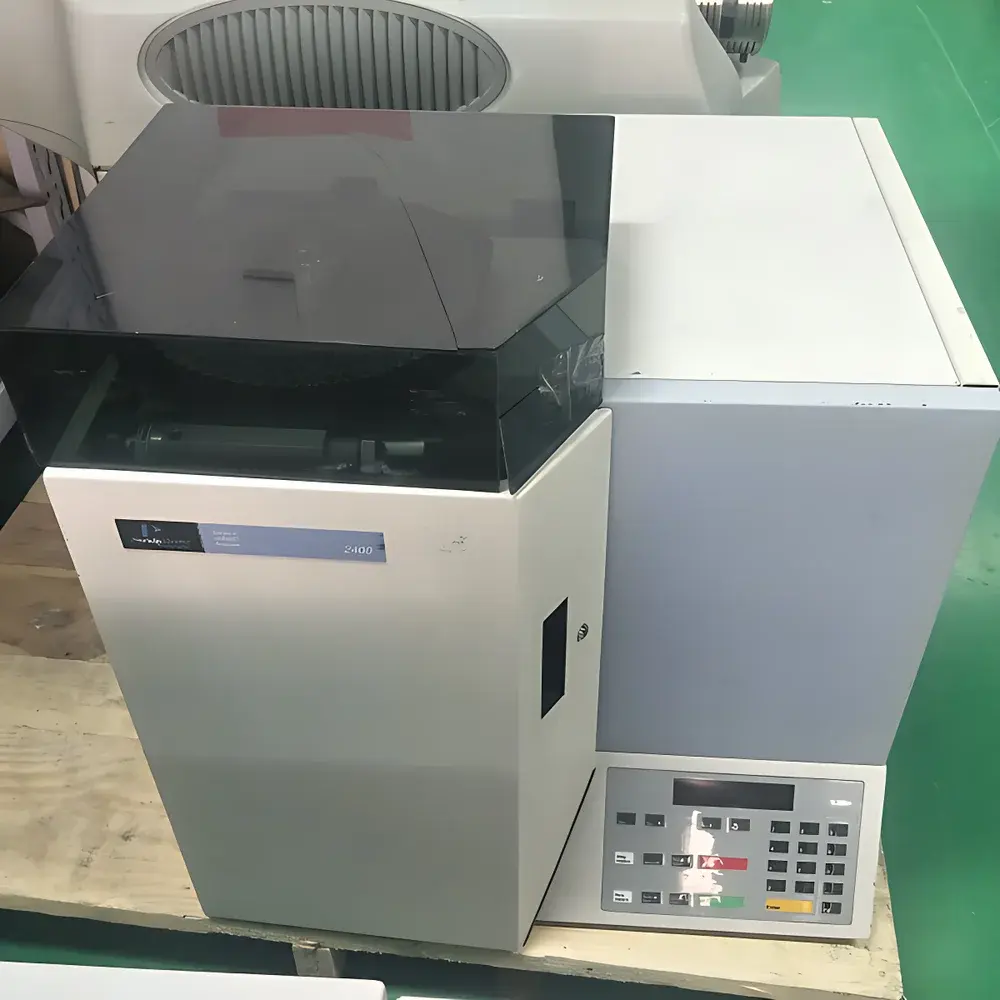
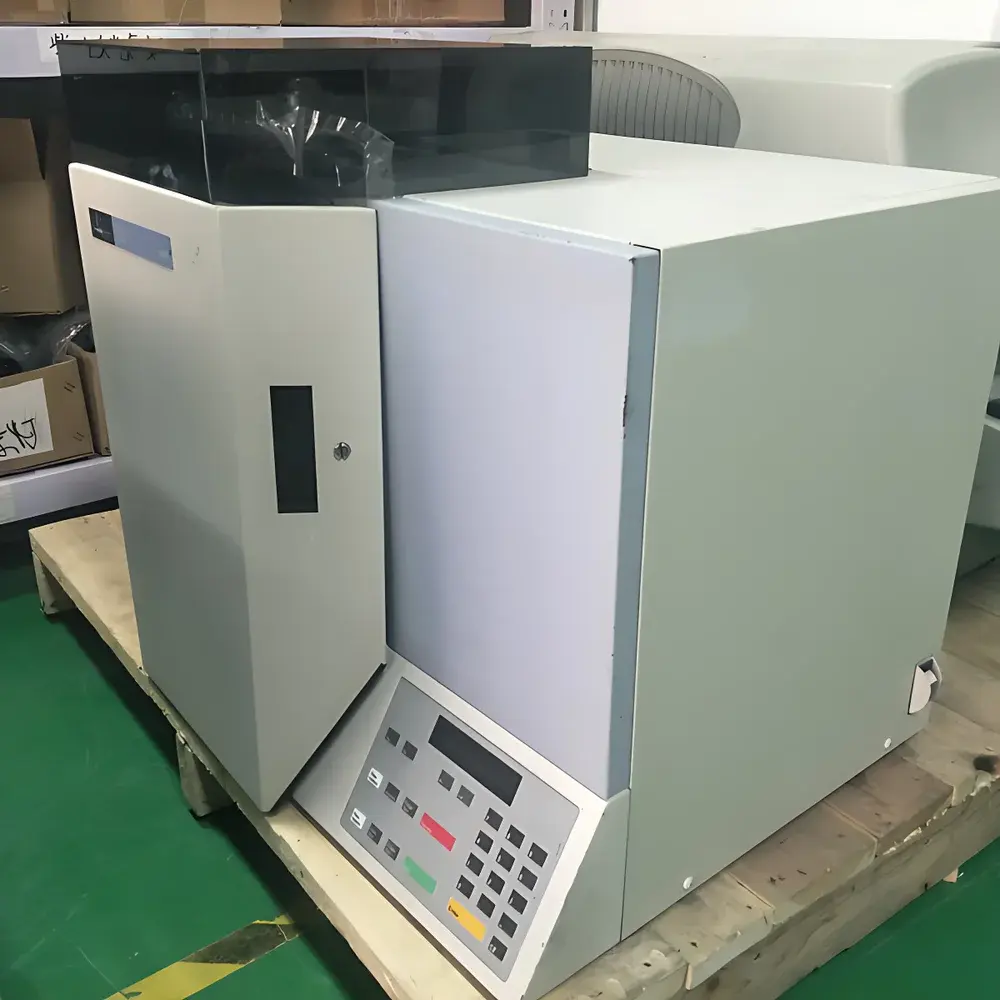
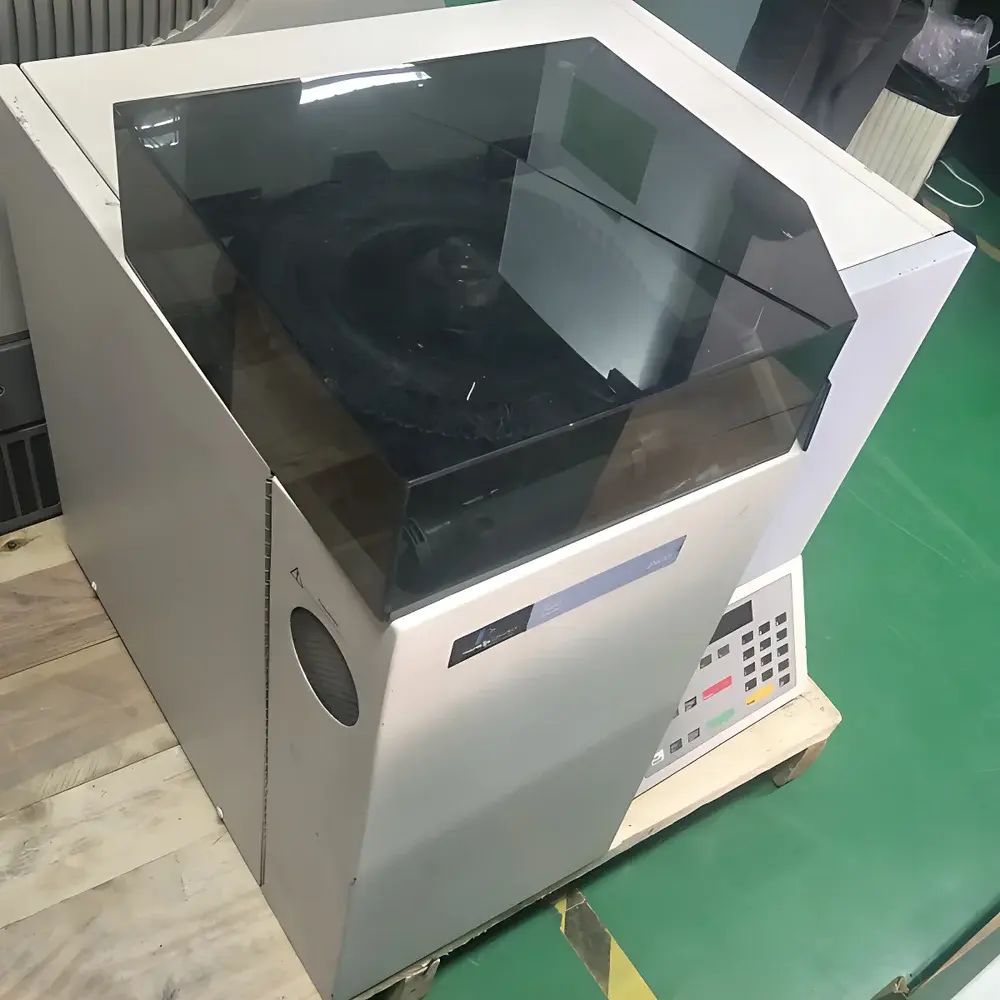
PerkinElmer 2400 Series Organic Elemental Analyzer
| Brand | PerkinElmer |
|---|---|
| Origin | USA |
| Model | 2400 |
| Operating Modes | CHN, CHNS, O |
| Analysis Time | 4–8 min |
| Accuracy (CHN/CHNS/O) | ≤0.3% |
| Precision (CHN/CHNS/O) | ≤0.2% |
| Detection Range (C/H/N/S/O) | 0.001–6.0 mg |
| Combustion/Reduction/Pyrolysis Furnace Temp | 100–1800 °C |
| Carrier Gases | He, Ar |
Overview
The PerkinElmer 2400 Series Organic Elemental Analyzer is a benchtop combustion-based instrument engineered for the quantitative determination of carbon (C), hydrogen (H), nitrogen (N), sulfur (S), and oxygen (O) in organic and organometallic samples. It operates on high-temperature catalytic combustion (for C, H, N, S) and pyrolytic reduction (for O), followed by gas chromatographic separation and thermal conductivity detection (TCD). The system integrates a microprocessor-controlled furnace assembly, automated sample introduction via ceramic boat or tin/copper capsule loading, and real-time gas flow management to ensure stoichiometric oxidation and complete conversion of analytes into measurable gaseous species (CO2, H2O, N2, SO2, CO). Designed for routine laboratory environments—including academic research labs, pharmaceutical QC facilities, and polymer R&D centers—the 2400 delivers reproducible results across diverse matrices without requiring operator intervention during analysis.
Key Features
- Triple-mode operation: dedicated CHN, CHNS, and O analysis configurations—each optimized for distinct thermal profiles, catalyst beds, and gas handling pathways
- Programmable high-temperature furnace with independent zone control: combustion zone (up to 1100 °C), reduction zone (up to 1000 °C), and pyrolysis zone (up to 1800 °C) for complete sample decomposition
- Integrated TCD detection with dual reference cells for baseline stability and low-drift signal acquisition
- Automated calibration using certified reference materials (e.g., sulfanilamide, benzoic acid, acetanilide) traceable to NIST SRMs
- Robust architecture featuring quartz-lined combustion tubes, Ni/Cr alloy heating elements, and corrosion-resistant gas lines compatible with aggressive sulfur oxides
- Self-diagnostic routines for carrier gas pressure, furnace thermocouple integrity, detector response, and valve sequencing
Sample Compatibility & Compliance
The 2400 accommodates solid and liquid samples weighing 0.1–100 mg, encapsulated in tin, silver, or nickel capsules—or introduced directly onto quartz boats for volatile or high-sulfur specimens. It supports heterogeneous matrices including pharmaceuticals, polymers, soils, biofuels, and geological sediments. All operational parameters adhere to ASTM D5291 (standard test method for instrumental determination of carbon, hydrogen, and nitrogen in petroleum products and lubricants), ISO 14852 (determination of oxygen content in plastics), and USP Chapter 467 (elemental impurities in drug substances and products). Data integrity meets FDA 21 CFR Part 11 requirements when paired with compliant LIMS or validated instrument control software, supporting audit trails, electronic signatures, and secure user access levels.
Software & Data Management
Control and data acquisition are managed through PerkinElmer’s proprietary Elemental Analysis Software (EAS), version 3.x or later. EAS provides method setup wizards, real-time chromatogram visualization, peak integration with manual override, and automatic calculation of elemental mass percentages based on stoichiometric calibration curves. Raw data files (.raw) and processed reports (.pdf, .xls) are timestamped and stored with full metadata—including operator ID, calibration history, instrument configuration, and environmental conditions (ambient temperature, barometric pressure). Export options support CSV and XML formats for integration into enterprise QA/QC systems. Audit trail functionality logs all user actions—including method edits, result deletions, and calibration updates—with immutable timestamps and user attribution.
Applications
- Pharmaceutical development: verification of elemental composition in active pharmaceutical ingredients (APIs) per ICH Q5C guidelines
- Materials science: quantification of heteroatom content in conductive polymers, carbon blacks, and catalyst supports
- Environmental testing: determination of total organic carbon (TOC) equivalents and sulfur content in coal, fly ash, and contaminated soils
- Academic research: validation of synthetic reaction yields, characterization of coordination complexes, and stoichiometric confirmation of novel organic frameworks
- Fuel and lubricant certification: compliance testing against ASTM D3246 (sulfur in gaseous fuels) and D4294 (sulfur in petroleum products)
FAQ
What carrier gases are required for each analysis mode?
Helium is standard for CHN and CHNS modes; argon is required for oxygen analysis to prevent interference from atmospheric nitrogen during pyrolysis.
Can the 2400 analyze halogens or metals?
No—the 2400 is designed exclusively for C, H, N, S, and O. Halogen and metal analysis require complementary techniques such as ion chromatography or ICP-MS.
Is routine maintenance limited to consumables?
Yes—primary consumables include quartz combustion tubes, Ni/Cr catalysts, Mg(ClO4)2 desiccant, and CuO/Ag wire traps; no optical alignment or detector recalibration is needed under normal operating conditions.
How is system performance verified between calibrations?
Daily system suitability is confirmed using a mid-range check standard (e.g., glycine for CHN, thiourea for S); %RSD must remain ≤2.0% across three consecutive injections.
Does the 2400 support GLP/GMP-compliant workflows?
Yes—when operated with validated EAS software, secure network authentication, and documented SOPs, it fulfills core GLP (OECD 1998) and GMP (ICH Q7) requirements for instrument qualification and data governance.




