
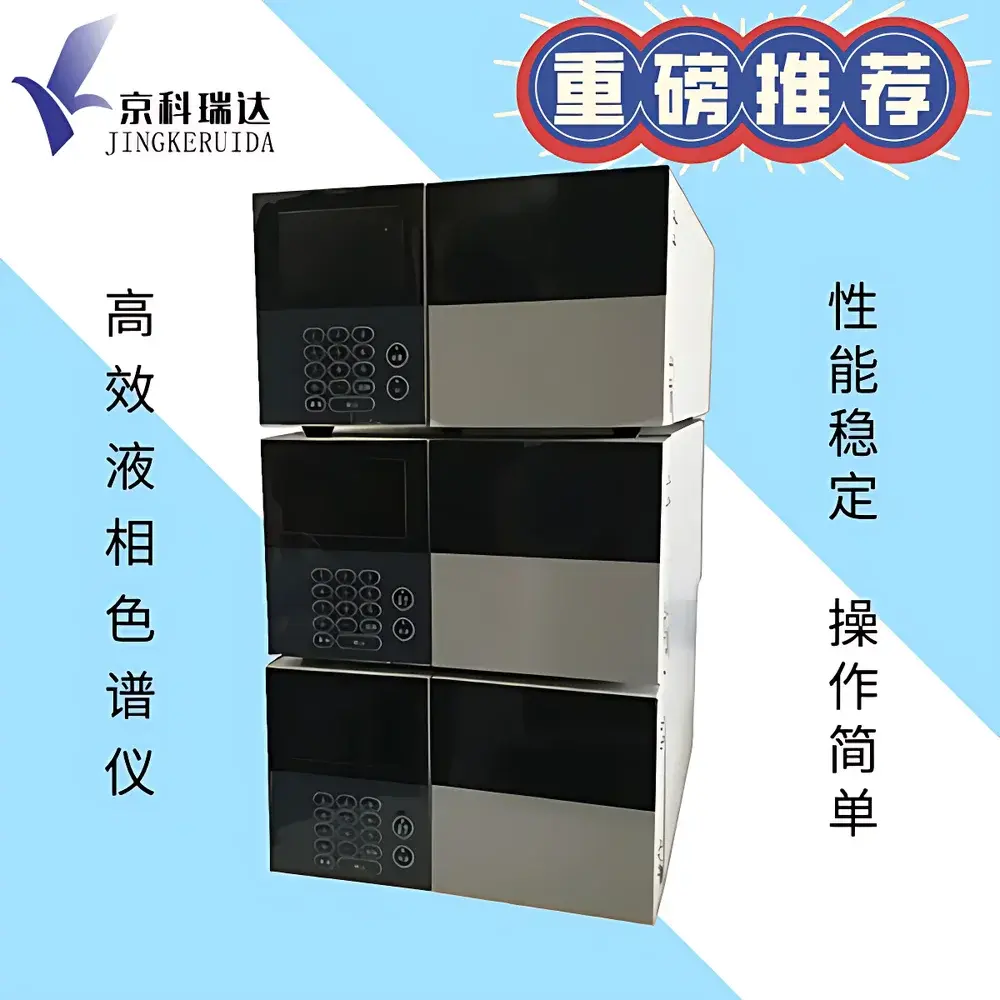
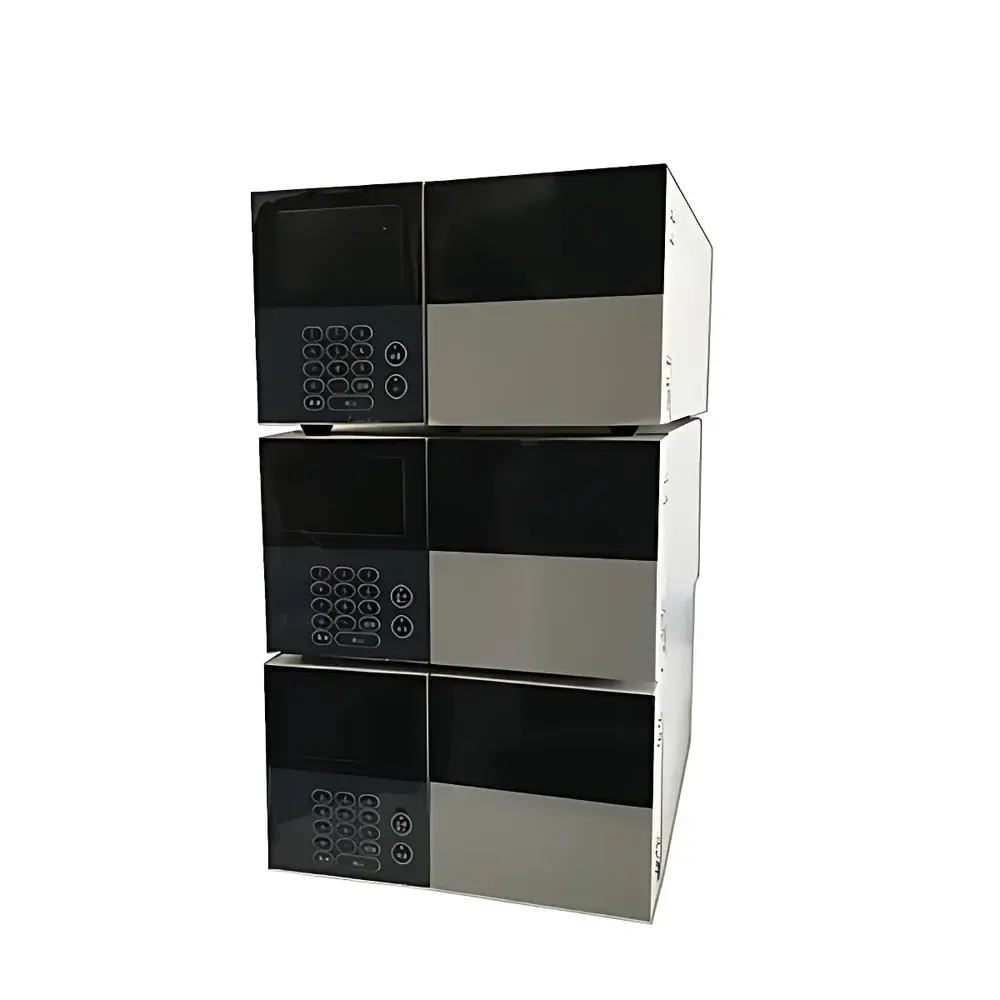
Kyocera LC-2100 High-Performance Liquid Chromatograph
| Brand | Kyocera |
|---|---|
| Origin | Beijing, China |
| Manufacturer Type | Authorized Distributor |
| Country of Origin | China |
| Model | LC-2100 |
| Instrument Type | Fast Liquid Chromatograph |
| Flow Rate Range | 0.001–10.000 mL/min |
| Maximum Pressure | 42 MPa |
| Wavelength Range | 190–740 nm |
| Baseline Noise | ≤5×10⁻⁶ AU |
| Baseline Drift | ≤±1×10⁻⁴ AU/h |
| Detection Limit | ≤4×10⁻⁹ g/mL (naphthalene in methanol) |
| Flow Accuracy | ≤±1% @ 1.0 mL/min, 8.5 MPa, methanol, 25°C |
| Flow Precision | RSD ≤0.25% |
| Pressure Pulsation | <0.1 MPa |
| Spectral Bandwidth | 8 nm |
| Flow Resolution | 0.001 mL/min |
| UV Lamp | Deuterium lamp (2000 h lifetime), optional tungsten lamp |
| Cell Volume | 10 µL |
| Optical Path Length | 10 mm |
Overview
The Kyocera LC-2100 High-Performance Liquid Chromatograph is a robust, entry-to-mid-tier HPLC system engineered for precision, operational stability, and regulatory-compliant routine analysis. Built upon classical reversed-phase and normal-phase liquid chromatography principles, the LC-2100 employs high-pressure gradient or isocratic elution to separate thermally labile, non-volatile, and polar analytes across diverse matrices. Its modular architecture integrates a dual-plunger reciprocating pump with active solvent compressibility compensation, a fixed-wavelength UV-Vis detector featuring cross-beam optical design, and full PC-based control via RS-232 interface. Designed for method transferability and long-term reproducibility, the system adheres to fundamental chromatographic performance criteria defined in USP , ISO 17025, and ICH Q2(R2) guidelines—making it suitable for QC laboratories operating under GLP or GMP-aligned workflows where auditability and data integrity are essential.
Key Features
- High-stability dual-piston constant-flow pump with floating plunger design, auto-flushing pump head, and real-time pressure monitoring with programmable overpressure/underpressure shutdown
- Three-point flow calibration curves and multi-point parameter correction ensure volumetric accuracy ≤±1% and precision (RSD) ≤0.25% across the full 0.001–10.000 mL/min range
- UV-2100 detector with imported deuterium lamp (2000 h rated life), wavelength accuracy ±1 nm, repeatability ±0.1 nm, and 8 nm spectral bandwidth optimized for sensitivity and selectivity
- Low baseline noise (≤5×10⁻⁶ AU) and drift (≤±1×10⁻⁴ AU/h) measured in methanol at 254 nm, enabling reliable quantitation down to 4×10⁻⁹ g/mL (naphthalene standard)
- Full software control for gradient programming, peak integration, retention time locking, and method validation reporting—compatible with Windows-based acquisition platforms
- Compact footprint (360 × 260 × 170 mm), low power consumption (100 W), and CE-marked electrical safety compliance for global laboratory deployment
Sample Compatibility & Compliance
The LC-2100 supports analytical-scale separations using standard 3.9–4.6 mm ID columns packed with C18, C8, phenyl-hexyl, or HILIC phases. It accommodates mobile phases including aqueous buffers (e.g., phosphate, acetate), organic modifiers (acetonitrile, methanol), and ion-pairing reagents. The system meets mechanical and electronic requirements for ISO/IEC 17025-accredited testing laboratories and supports basic 21 CFR Part 11 readiness through secure user authentication, electronic signature logging, and audit-trail-enabled method storage. While not pre-certified for regulated pharmaceutical release testing, its documented performance parameters—including pressure stability, flow linearity, and photometric consistency—align with preliminary qualification protocols per ASTM E2628 and USP .
Software & Data Management
Control and data acquisition are performed via Kyocera’s proprietary ChromoView™ software (v3.2+), compatible with Windows 10/11 (64-bit). The platform provides real-time chromatogram display, customizable report templates (PDF/CSV export), peak purity assessment via spectral overlay, and batch processing for up to 99 samples. Raw data files include embedded metadata (date/time stamp, instrument ID, method name, operator ID), supporting traceability in QA/QC environments. Audit trails record all method edits, integration changes, and user logins—configurable for retention periods exceeding 12 months. Export formats comply with LIMS interoperability standards (ASTM E1467, HL7) and support post-acquisition reprocessing without raw signal degradation.
Applications
- Pharmaceutical quality control: assay of active pharmaceutical ingredients (APIs), related substances, and residual solvents per USP monographs
- Food and feed analysis: quantification of vitamins (B12, D3), mycotoxins (aflatoxin B1), antioxidants (BHA/BHT), and amino acids
- Chemical manufacturing: reaction monitoring, purity profiling of intermediates, and polymer additive screening
- Academic and teaching labs: method development training, column efficiency evaluation (N, HETP), and solvent strength optimization
- Environmental testing: detection of phenolic compounds, PAHs, and herbicides in water extracts following EPA Method 8330B principles
FAQ
What is the maximum operating pressure and how is pressure safety managed?
The LC-2100 pump is rated to 42 MPa (6090 psi) with hardware-enforced overpressure cutoff and configurable low-pressure alarm to prevent dry-run damage.
Can the UV-2100 detector operate in both deuterium and tungsten lamp modes simultaneously?
No—the detector uses lamp selection via software; however, automatic lamp switching between D₂ (190–400 nm) and W (350–740 nm) is supported within a single method sequence.
Is method validation documentation included with the system?
Yes—a complete IQ/OQ protocol package is provided, including flow accuracy verification, wavelength calibration certificates, and baseline stability test reports.
Does the system support GLP-compliant electronic signatures?
ChromoView™ supports role-based access control and digital signature capture aligned with Annex 11 and 21 CFR Part 11 Subpart B requirements, though full validation must be completed by the end-user site.
What column dimensions and particle sizes are recommended for optimal performance?
Standard 150 mm × 4.6 mm, 5 µm C18 columns deliver balanced resolution and backpressure; sub-2 µm particles are not supported due to system dwell volume and pressure limitations.




