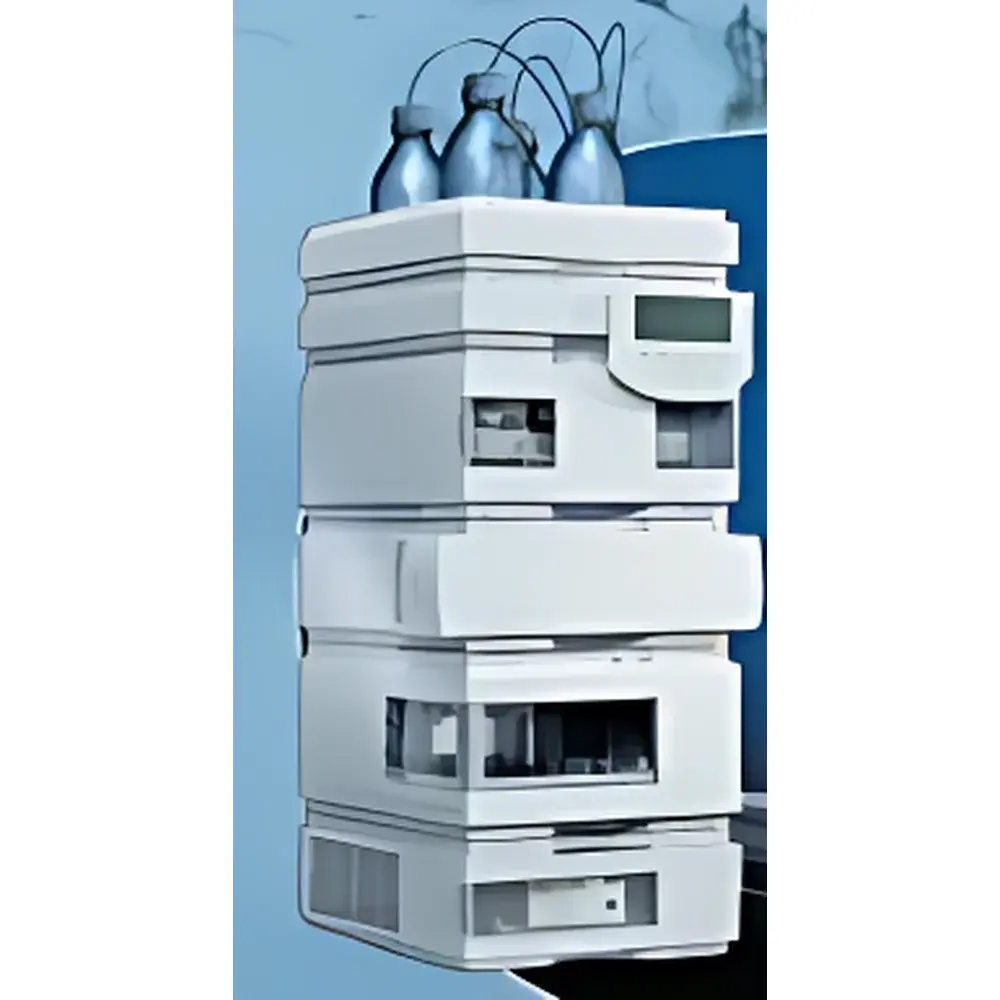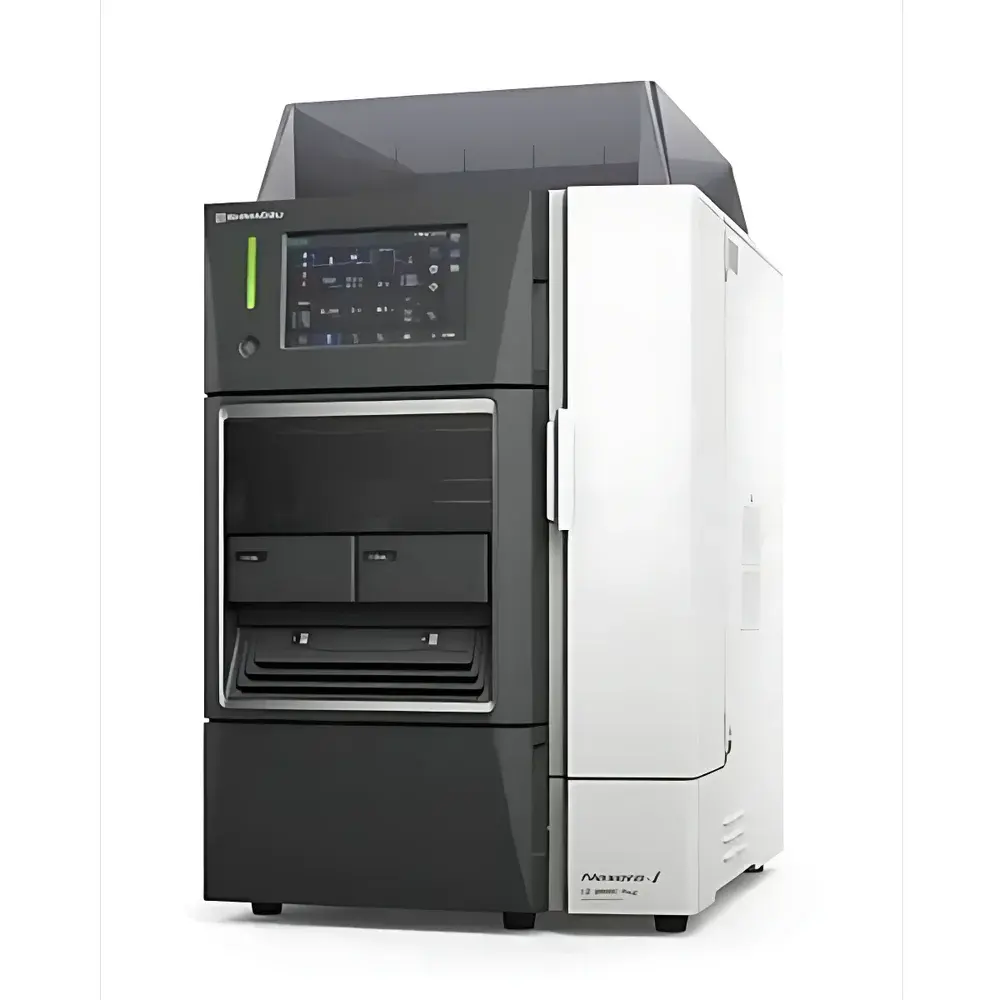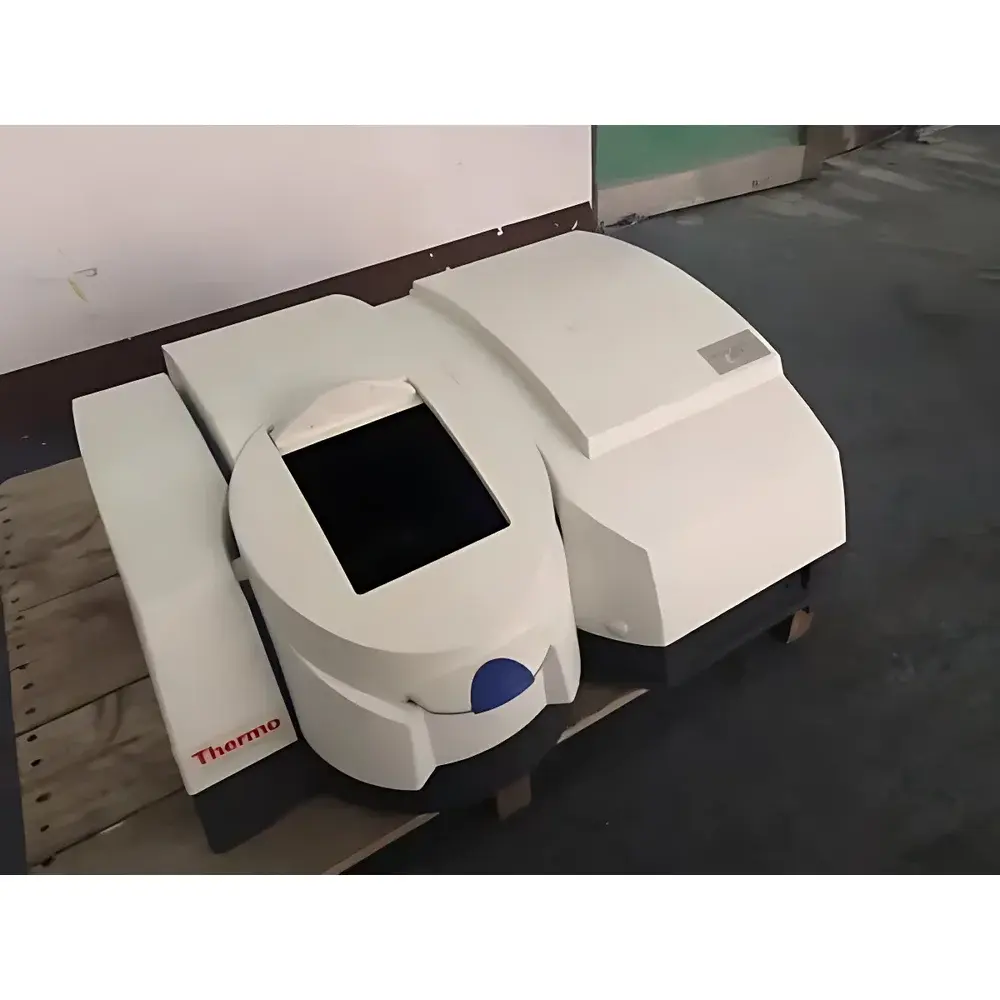
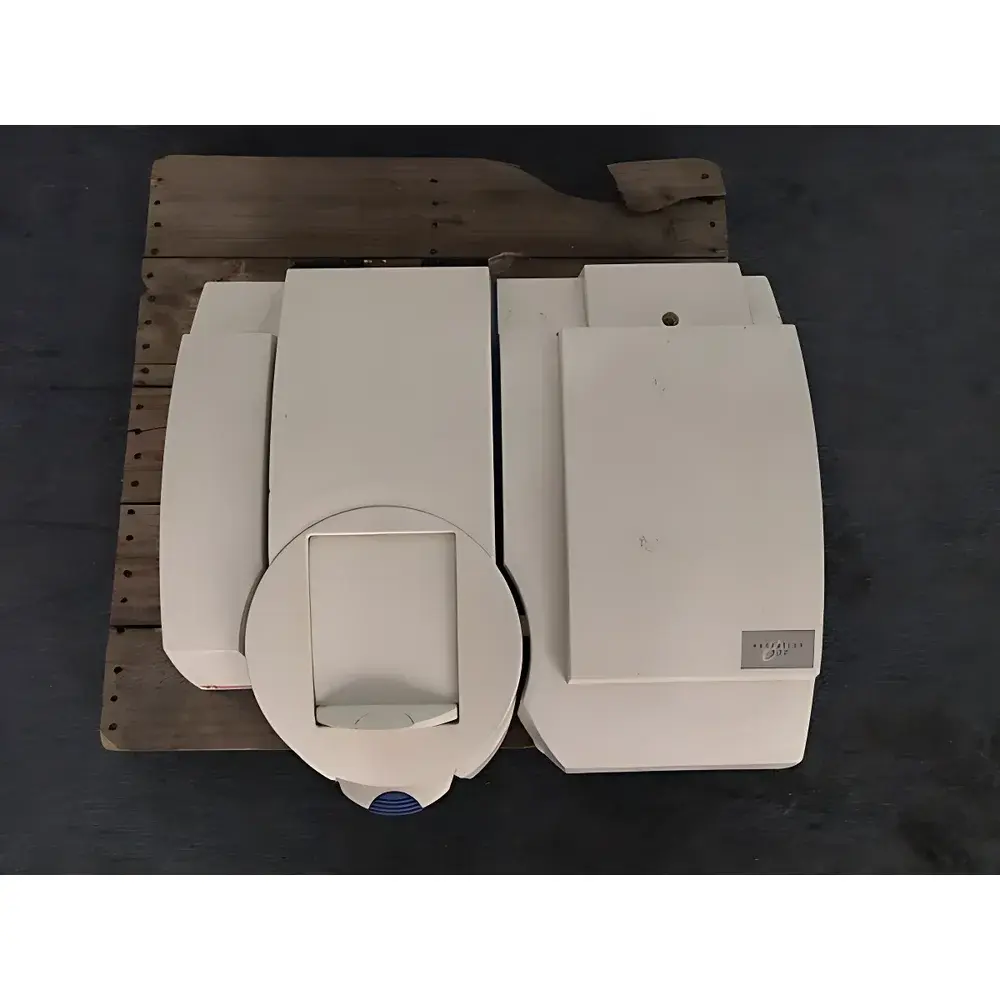
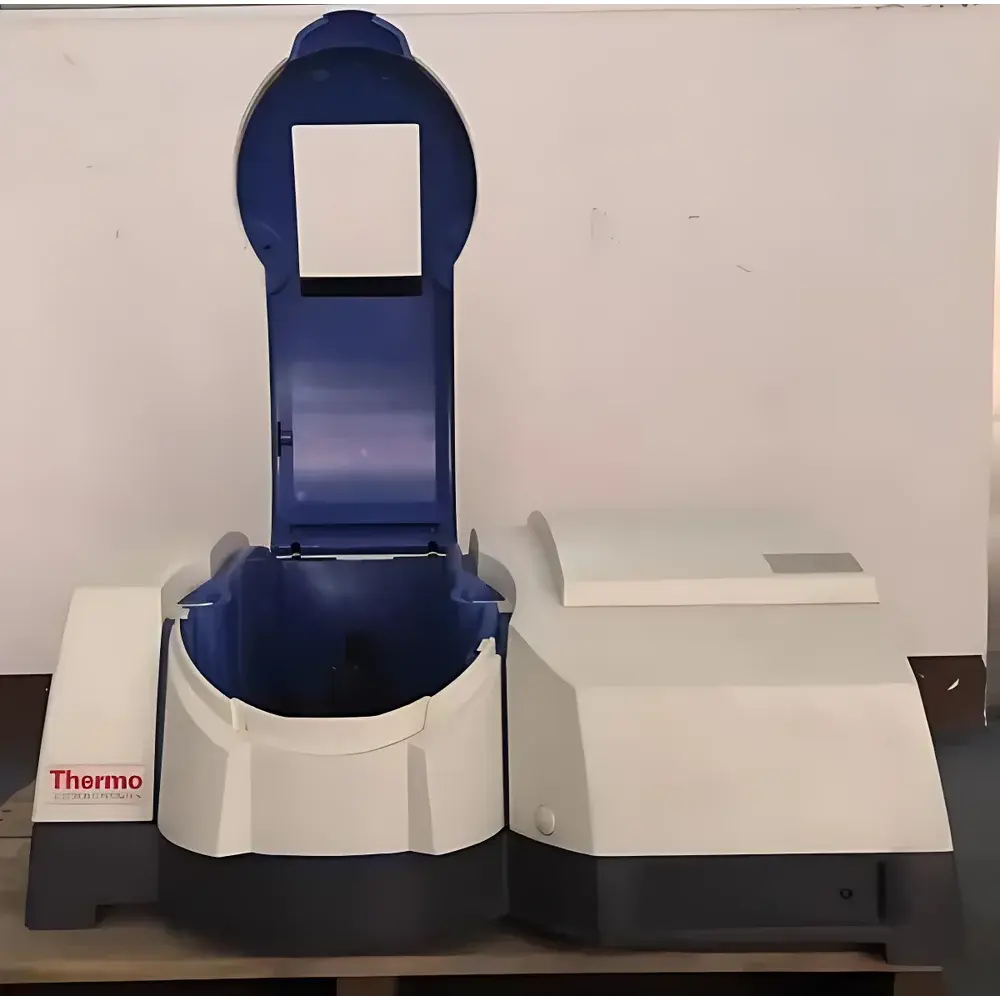
Thermo Fisher Nicolet Evolution 300 UV-Vis Spectrophotometer
| Brand | Thermo Fisher |
|---|---|
| Origin | USA |
| Model | Evolution 300 |
| Optical Design | Double-beam with Ebert monochromator |
| Light Source | Xenon lamp |
| Detector | Dual photodiode array |
| Spectral Range | 190–1100 nm |
| Spectral Bandwidth | 0.5, 1.0, 1.5, 2.0, 4.0 nm |
| Wavelength Accuracy | ±0.3 nm (typical ±0.1 nm) |
| Wavelength Repeatability | ±0.1 nm (typical ±0.03 nm) |
| Photometric Range | –3 to +6 A |
| Stray Light | <0.0001% T at 220 nm (using NaI) |
| Absorbance Linearity | ±0.002 A (0–2 A), ±0.005 A (2–4 A), ±0.01 A (4–6 A) |
| Baseline Flatness | ±0.0008 A (200–800 nm) |
| Sample Compartment | Motorized 6-position cuvette holder with auto-sensing |
| Compliance | ASTM E275, ISO 6425, USP <857>, FDA 21 CFR Part 11 (with VISIONsecurity), GLP/GMP-ready |
Overview
The Thermo Fisher Nicolet Evolution 300 UV-Vis Spectrophotometer is a high-performance, double-beam instrument engineered for precision absorbance, transmittance, and reflectance measurements across the ultraviolet, visible, and near-infrared spectral regions (190–1100 nm). Its optical architecture centers on a robust, cast-aluminum optical base with permanently mounted quartz-coated optics and a sealed optical path—designed to maintain long-term wavelength fidelity and photometric stability under variable environmental conditions. The system employs an Ebert-type monochromator with a holographic grating and high-reflectivity (90%) mirrors to maximize radiant throughput while minimizing stray light (<0.0001% T at 220 nm, per NaI test). Step-driven grating positioning, coupled with micro-stepping detector control, ensures exceptional wavelength accuracy (±0.3 nm, typical ±0.1 nm) and repeatability (±0.1 nm, typical ±0.03 nm), critical for regulatory-compliant quantitative analysis in pharmaceutical, clinical, and materials laboratories.
Key Features
- Double-beam optical design with real-time reference beam correction, delivering low baseline drift (<±0.0008 A over 200–800 nm) and high photometric reproducibility.
- Variable slit-based spectral bandwidth selection (0.5, 1.0, 1.5, 2.0, 4.0 nm) implemented via a single integrated slit module—ensuring consistent bandpass calibration and wavelength accuracy across all settings.
- Xenon flash lamp source providing pulsed, stable illumination without warm-up delay or thermal drift; eliminates lamp aging artifacts common in deuterium/tungsten systems.
- Dual photodiode detector array enabling simultaneous reference and sample signal acquisition—reducing noise and improving signal-to-noise ratio, especially at low transmittance.
- Integrated diagnostic and verification suite including Certified Verification Components (CVCs): NIST-traceable wavelength and absorbance filters (certified per ISO/IEC 17025), enabling automated performance qualification (PQ) and routine compliance checks.
- Smart accessory interface supporting plug-and-play recognition of motorized holders, temperature-controlled cells, integrating spheres, and fiber-optic probes—eliminating manual configuration and reducing operator error.
Sample Compatibility & Compliance
The Evolution 300 accommodates standard 10-mm square cuvettes, micro-volume cells (down to 50 µL), and solid-sample accessories including integrating spheres for diffuse reflectance and specular reflectance modules. Its optical path supports both transmission and reflectance geometries compliant with ASTM E275 (spectrophotometer performance), ISO 6425 (photometric accuracy), and USP (UV-Vis spectrophotometers for pharmaceutical analysis). The instrument’s hardware and software architecture are fully compatible with Good Laboratory Practice (GLP) and Good Manufacturing Practice (GMP) workflows. When equipped with VISIONsecurity software, it satisfies FDA 21 CFR Part 11 requirements—including role-based access control, electronic signatures, full audit trail generation, and immutable record retention—making it suitable for regulated QC environments in pharma, biotech, and contract research organizations.
Software & Data Management
Control is available via standalone touchscreen interface (VGA-resolution color LCD with tactile keypad) or PC-based platforms. VISIONpro serves as the standard software package, offering advanced scanning, multi-wavelength quantitation, kinetic profiling, and multi-component analysis using classical least-squares or derivative algorithms. VISIONsecurity extends this functionality with full 21 CFR Part 11 compliance, including user authentication tiers, session locking, and time-stamped, tamper-evident audit logs. Optional modules include VISIONlife (for enzyme kinetics, DNA melting, and custom equation modeling), VISION Chroma (CIE color space calculations), DSolve (USP dissolution testing), and application-specific toolkits for food enzymology and oenological analysis. All data export conforms to ASTM E1382 and LIMS-compatible formats (CSV, XML, PDF); RS-232, USB, and Ethernet interfaces support integration into enterprise laboratory networks.
Applications
The Evolution 300 is routinely deployed in quality control laboratories for raw material identification, assay validation, and stability-indicating methods per ICH Q2(R2). Its high dynamic range (–3 to +6 A) enables direct measurement of highly concentrated biological samples—such as undiluted protein solutions or nanoparticle suspensions—without manual dilution or pathlength adjustment. In academic and industrial research, it supports nucleic acid quantification (A260/A280 ratios), enzyme activity assays (e.g., LDH, ALP), ligand-binding studies, and thin-film thickness characterization via interference fringe analysis. Its traceable calibration infrastructure and documented uncertainty budgets make it appropriate for ISO/IEC 17025-accredited testing laboratories performing method validation, equipment qualification (IQ/OQ/PQ), and inter-laboratory comparison studies.
FAQ
Is the Evolution 300 compliant with FDA 21 CFR Part 11?
Yes—when configured with VISIONsecurity software and operated under defined administrative controls, the system meets all technical and procedural requirements for electronic records and signatures.
What calibration standards are supported?
The instrument accepts NIST-traceable CRMs including holmium oxide (wavelength), potassium dichromate (absorbance), and neutral density filters; Thermo’s UKAS-accredited recalibration lab provides certificate-of-calibration with measurement uncertainty statements.
Can the system perform kinetic measurements?
Yes—VISIONpro and VISIONlife support time-resolved absorbance monitoring with configurable sampling intervals from 10 ms to 60 s, including rate calculation, curve fitting, and initial velocity determination.
What is the expected lifetime of the xenon lamp?
The flash lamp is rated for ≥1 × 10⁹ flashes; typical operational life exceeds 5 years under standard usage (≤100 scans/day), with no warm-up or cooldown delays.
Does the instrument support remote diagnostics or service connectivity?
Yes—via optional Ethernet-enabled service port and Thermo Connect remote support protocol, certified field engineers can perform firmware updates, diagnostic sweeps, and alignment verification without onsite visitation.