
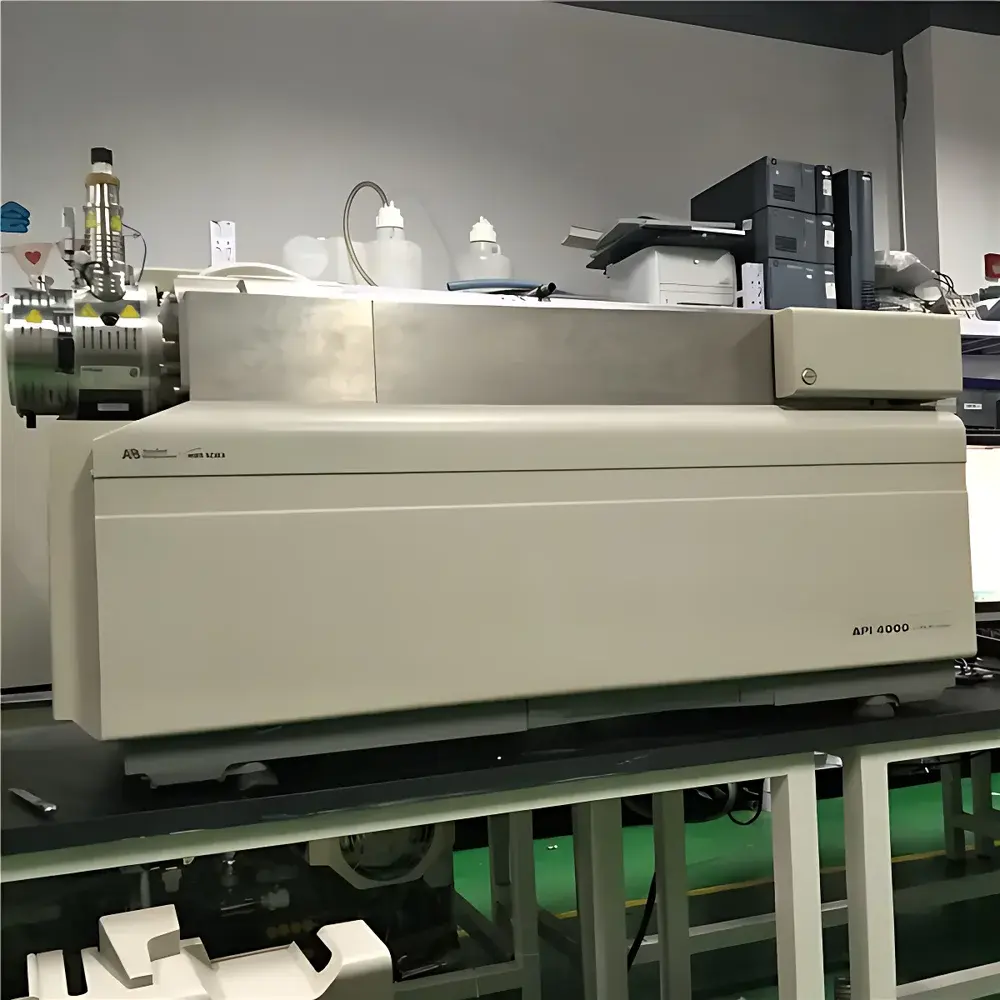
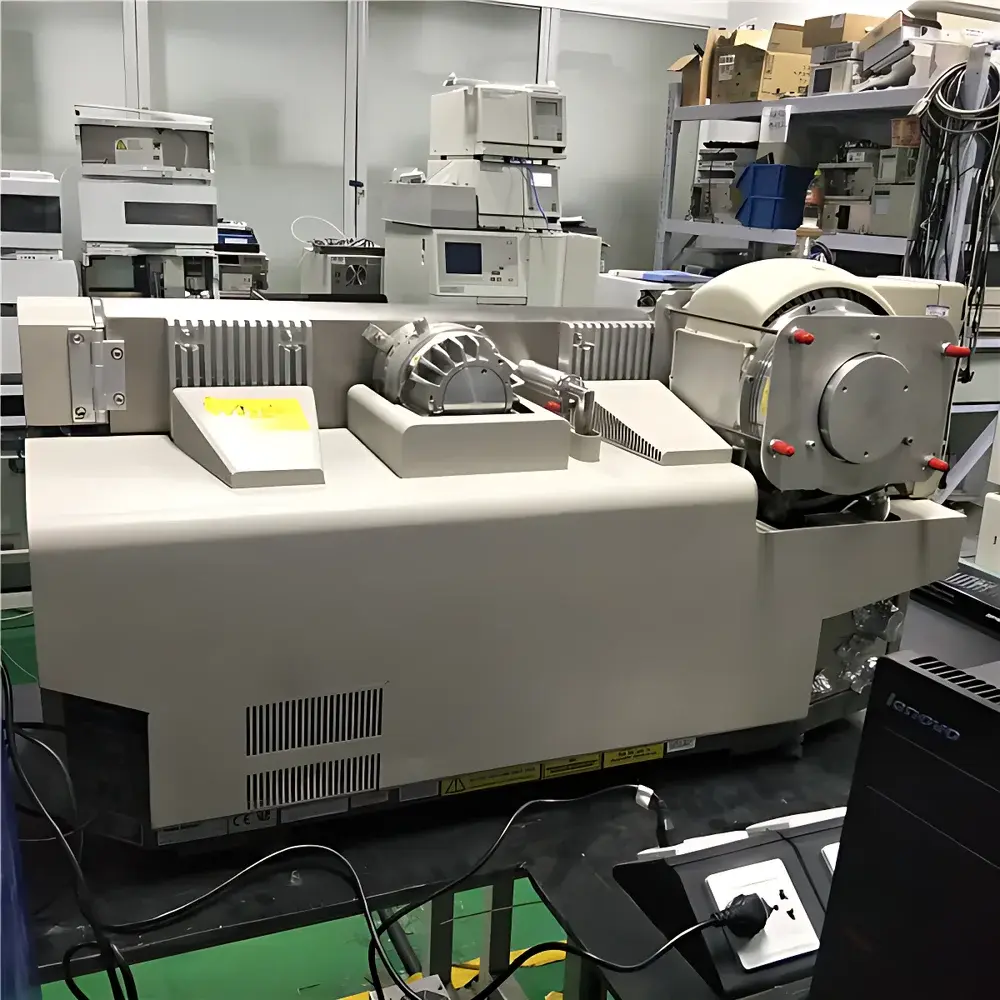
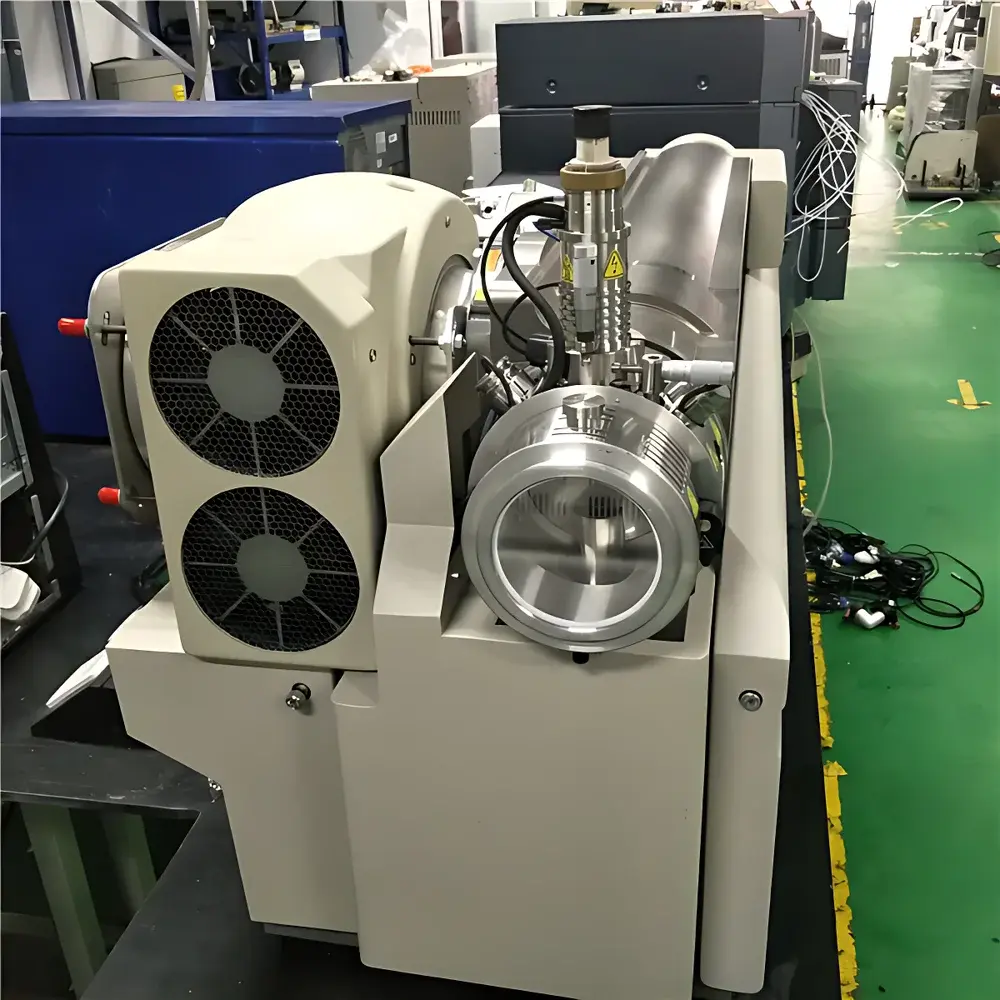
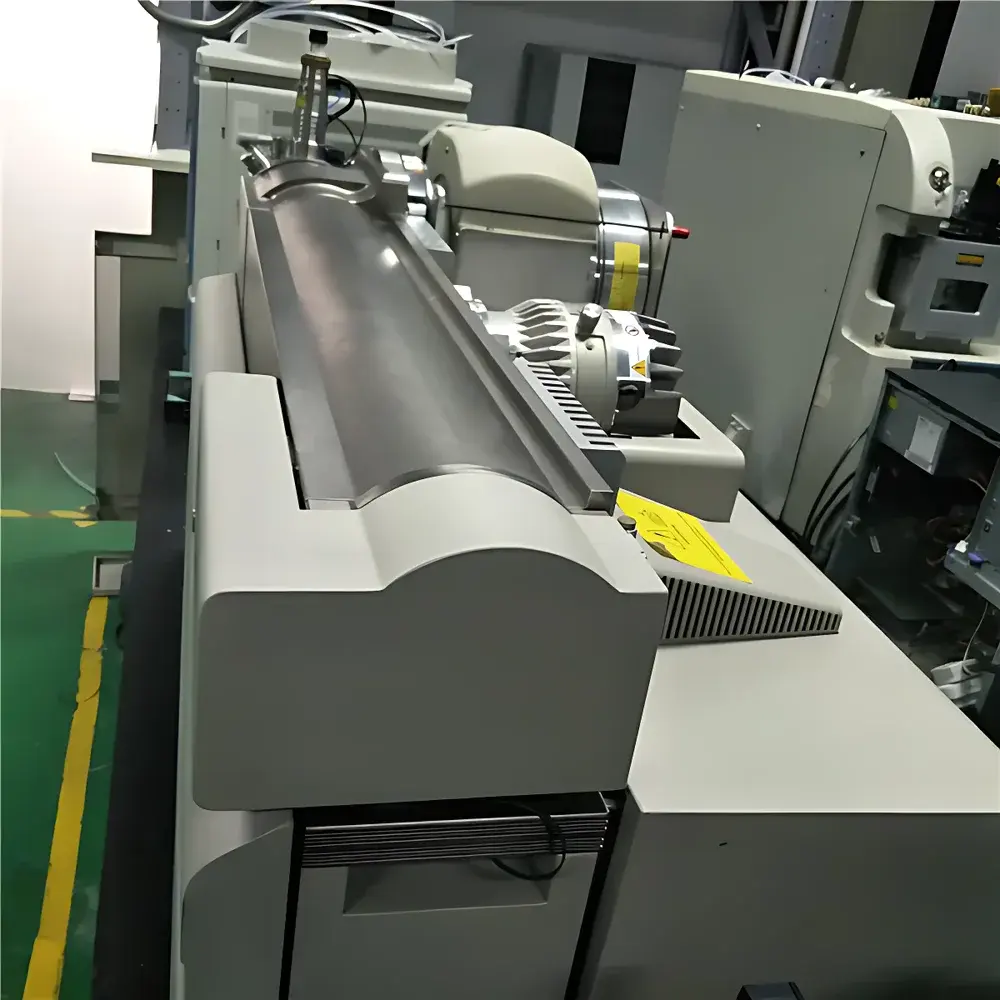
SCIEX AB API 4000 Triple Quadrupole Liquid Chromatography Mass Spectrometer
| Brand | SCIEX |
|---|---|
| Origin | USA |
| Instrument Type | Triple Quadrupole LC-MS/MS |
| Mass Range | 10–3000 m/z |
| Sensitivity | S/N ≥ 100:1 (for reserpine, ESI+) |
| Resolution | Full Width at Half Maximum (FWHM) 0.5–0.7 m/z |
| Mass Accuracy | ±0.1 Da (internal calibration) |
| Configuration | Used / Refurbished System with HPLC Integration Capability |
Overview
The SCIEX AB API 4000 Triple Quadrupole Liquid Chromatography Mass Spectrometer is a robust, high-performance tandem mass spectrometry platform engineered for quantitative and qualitative analysis of trace-level analytes in complex matrices. Operating on electrospray ionization (ESI) and atmospheric pressure chemical ionization (APCI) sources, the system integrates a triple quadrupole mass analyzer—Q1 (mass filter), Q2 (collision cell), and Q3 (mass analyzer)—to enable highly selective multiple reaction monitoring (MRM) and enhanced product ion scanning. Its design prioritizes reproducibility, low detection limits, and compatibility with reversed-phase and normal-phase liquid chromatography workflows. For pesticide residue analysis in edible oils and lipid-rich matrices, the AB API 4000 delivers reliable signal-to-noise performance even after rigorous sample cleanup (e.g., QuEChERS extraction, dispersive SPE, or gel permeation chromatography), making it a technically validated solution for laboratories implementing GB 23200.121–2021 and analogous international protocols such as EN 15662:2018 and AOAC Official Method 2007.01.
Key Features
- Triple quadrupole architecture optimized for MRM transitions with <10 ms dwell time per transition, supporting high-throughput multi-analyte screening (e.g., 331 pesticides + metabolites)
- Dual ionization sources (ESI and APCI) mounted on a single interface, enabling rapid method switching without hardware reconfiguration
- Dynamic range exceeding 4 orders of magnitude for quantitation, validated across 0.01–0.5 mg/kg spiking levels in refined vegetable oil matrices
- Collision-induced dissociation (CID) with nitrogen gas in Q2 ensures consistent fragmentation efficiency across diverse pesticide classes (organophosphates, neonicotinoids, triazoles, etc.)
- Robust vacuum system with dual-stage turbomolecular pumps maintains stable operating pressure (<5 × 10⁻⁶ Torr in Q0 region) during extended acquisition runs
- Refurbished configuration includes full source cleaning, detector gain calibration, mass axis verification, and system suitability testing per manufacturer specifications
Sample Compatibility & Compliance
The AB API 4000 is routinely deployed for regulatory-compliant analysis of pesticide residues in high-fat samples including soybean oil, palm oil, sunflower oil, and blended cooking oils. Its tolerance to matrix effects—particularly ion suppression from triglycerides and free fatty acids—is mitigated through post-column infusion correction, matrix-matched calibration, and scheduled MRM retention time windows. The system supports full audit trail functionality when operated under Analyst software v1.6.3 or later, meeting documentation requirements for GLP environments and FDA 21 CFR Part 11 compliance (with appropriate IT infrastructure and user access controls). Method validation data referenced in GB 23200.121–2021—including linearity (R2 > 0.99), recovery (62.4–118.7%), and precision (RSD ≤ 12.3%)—were generated using this instrument platform and are transferable to ISO/IEC 17025-accredited laboratories.
Software & Data Management
Data acquisition, processing, and reporting are managed via SCIEX Analyst software—a validated, Windows-based application supporting quantitative batch processing, peak integration with baseline correction algorithms, and customizable report templates. Analyst enables automated calibration curve fitting (linear or quadratic, with 1/x weighting), internal standard normalization, and flagged outlier detection. Raw data files (.wiff) are stored in a structured binary format compliant with ASTM E2524–19 metadata standards. Integration with LIMS systems is supported through ODBC drivers and configurable export modules (CSV, PDF, XML). All processing steps—including integration parameters, calibration settings, and review annotations—are recorded in an immutable audit trail with timestamped user identification.
Applications
- Quantitative determination of multi-class pesticide residues in edible oils per GB 23200.121–2021, EU Regulation (EC) No 396/2005, and US EPA Method 1694
- Metabolite profiling of photolytic and hydrolytic degradation products in fortified oil extracts
- Residue monitoring in feedstock oils intended for biodiesel production
- Screening of adulterants and processing contaminants (e.g., mineral oil saturated hydrocarbons, MOAH) using neutral loss scanning
- Supporting method development for LC-MS/MS confirmation in ISO 17025 accredited food testing laboratories
FAQ
Is this a factory-refurbished unit or a field-used system with third-party certification?
This AB API 4000 system undergoes comprehensive refurbishment by an authorized SCIEX service partner, including replacement of critical consumables (ion source components, detector dynodes, vacuum seals), full electrical diagnostics, and performance verification against factory acceptance test (FAT) criteria.
Does the system include HPLC integration and autosampler compatibility?
Yes—the instrument is supplied with SCIEX Turbo V™ source interface and is fully compatible with Shimadzu, Waters, and Thermo HPLC systems; optional CTC PAL or LEAP autosamplers can be integrated upon request.
What level of technical support and warranty is provided?
A 12-month parts-and-labor warranty is included, backed by remote diagnostics and on-site service dispatch within 5 business days in major EU/US metropolitan areas; extended service agreements are available.
Can the system meet current FDA or EU Commission requirements for pesticide testing?
When operated under validated SOPs and with documented system suitability checks (e.g., tuning sensitivity, carryover, retention time stability), the AB API 4000 satisfies data integrity and method performance criteria outlined in EU SANTE/11312/2021 and FDA Guidance for Industry: Analytical Procedures and Methods Validation for Drugs and Biologics.
Are software licenses and original calibration certificates included?
Analyst software v1.6.3 license (perpetual, node-locked) and NIST-traceable calibration certificate (covering mass accuracy, resolution, and sensitivity) are delivered with the system.





