
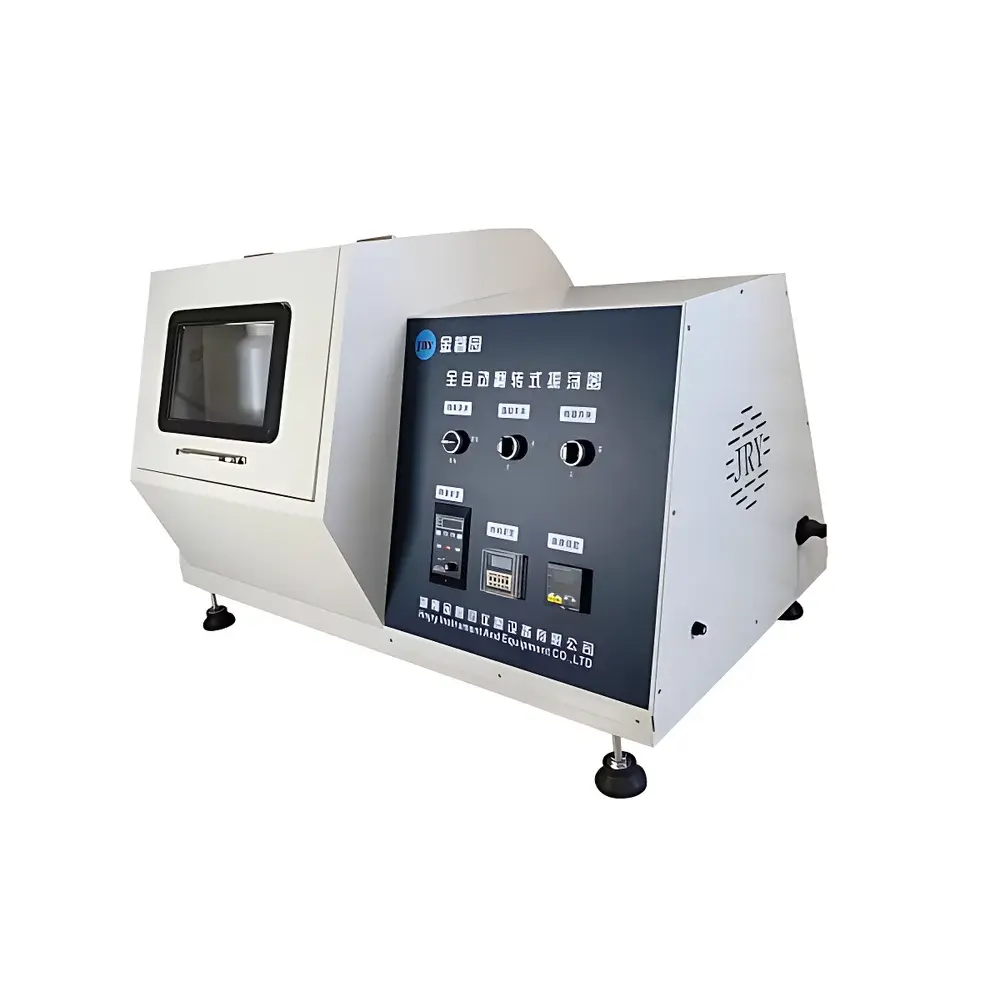
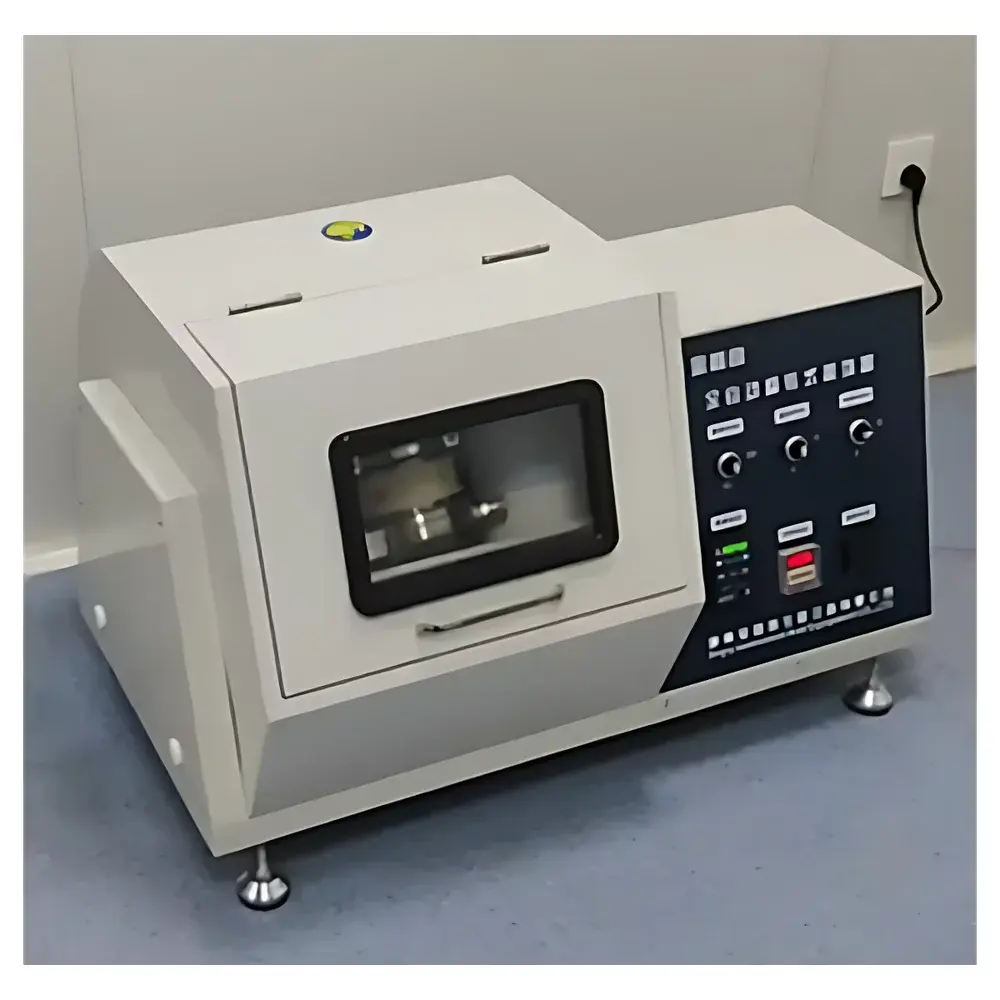
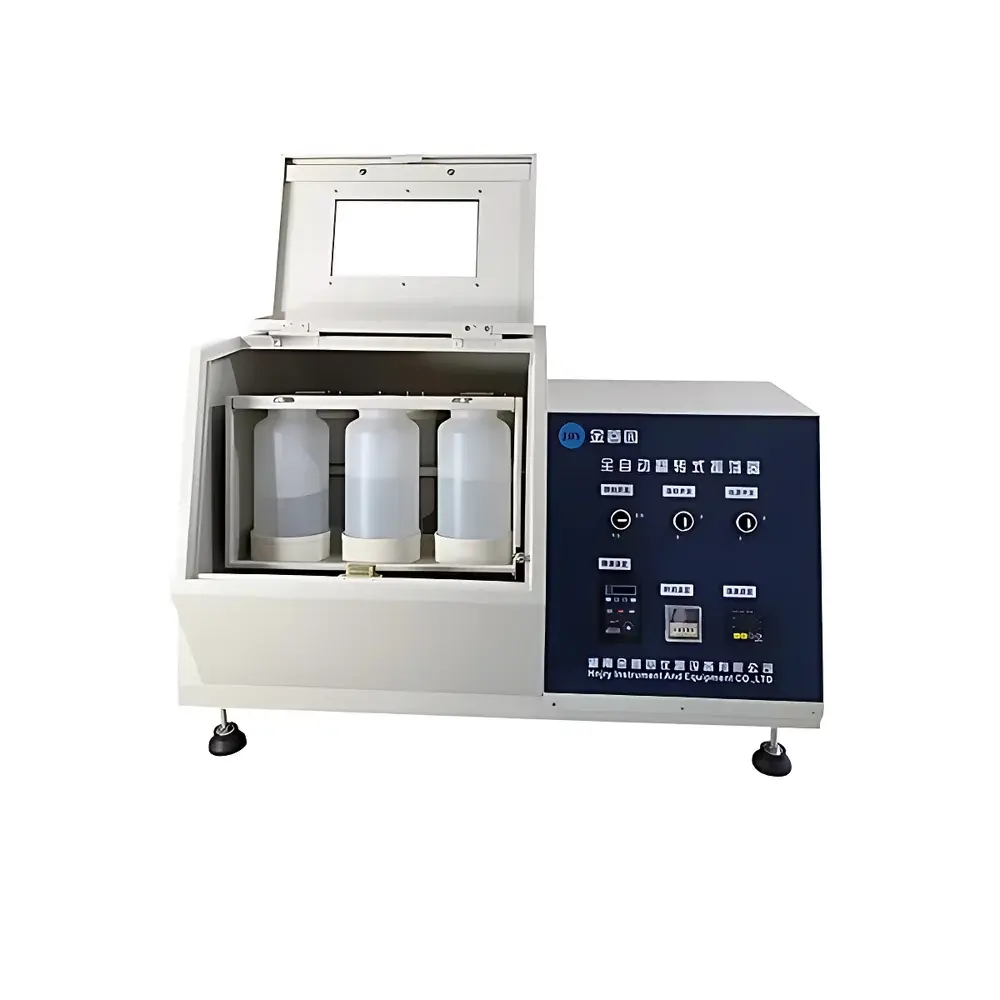
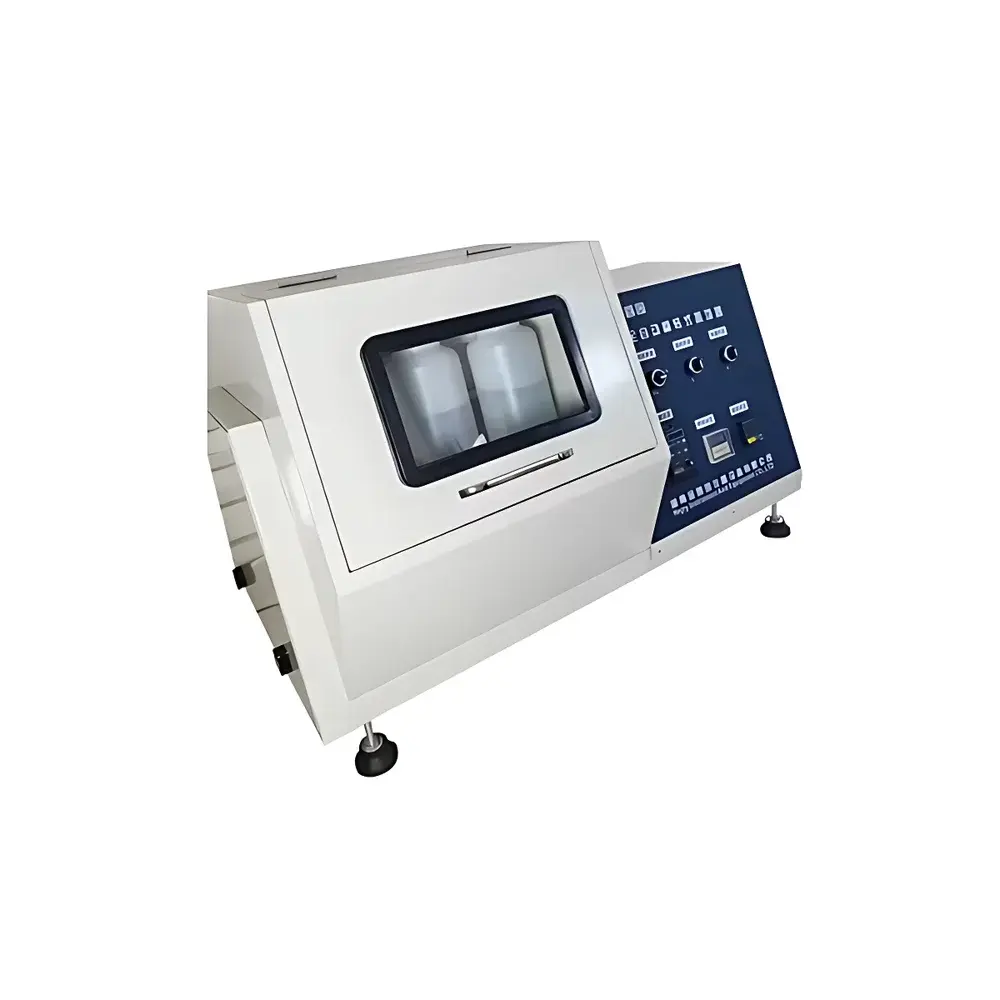
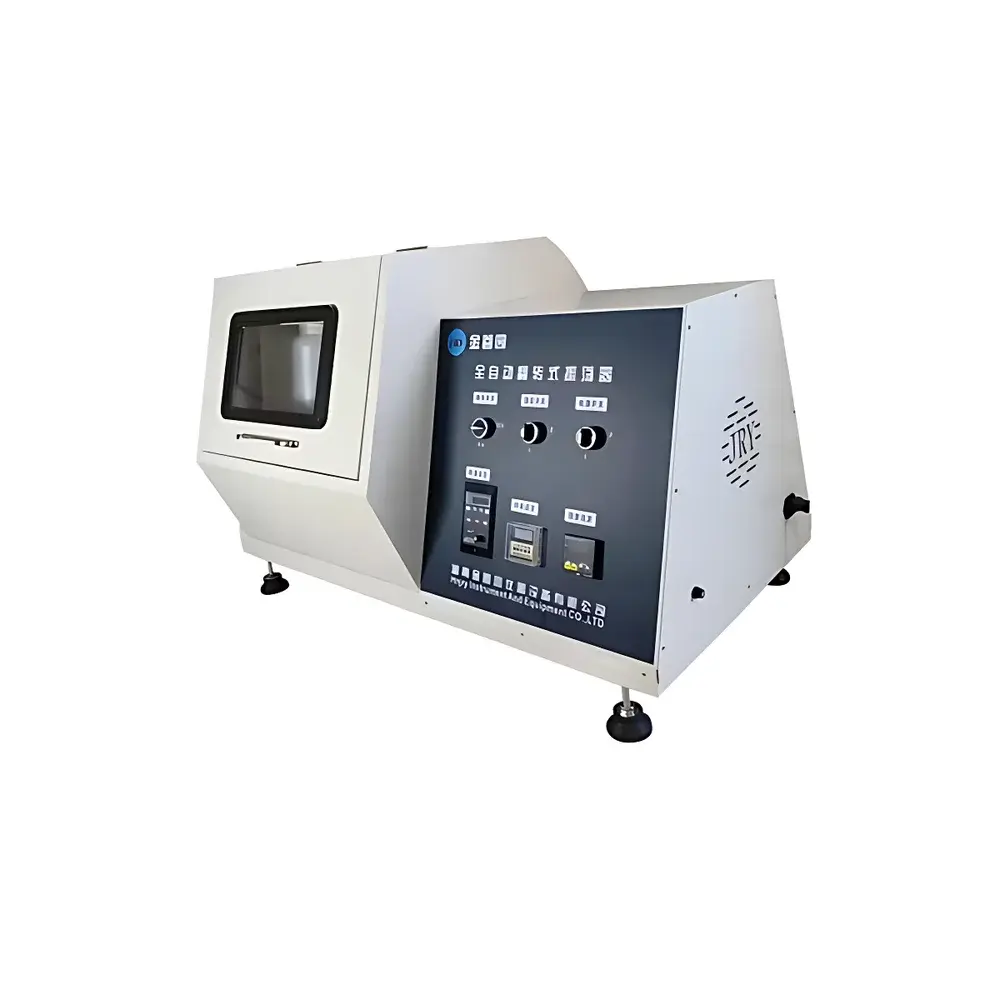
JRY JRY-JZ06 Tumbling Oscillator for Solid Waste Toxicity Leaching
| Brand | JRY |
|---|---|
| Origin | Hunan, China |
| Manufacturer Type | Direct Manufacturer |
| Product Origin | Domestic |
| Model Series | JRY-JZ06 / JRY-JZ08 / JRY-JZ10 / JRY-JZ12 |
| Oscillation Frequency | 0–60 rpm (adjustable) |
| Timer Range | 0–99 h |
| Sample Bottle Capacity | 6 / 8 / 10 / 12 units |
| Temperature Range | Ambient to 65 °C |
| Temperature Control Accuracy | ±1 °C |
Overview
The JRY JRY-JZ06 Tumbling Oscillator is a precision-engineered laboratory instrument designed specifically for standardized toxicity characteristic leaching procedure (TCLP), synthetic precipitation leaching procedure (SPLP), and other regulatory-compliant solid waste extraction protocols. It operates on the tumbling (end-over-end rotation) principle—where sample containers are rotated horizontally at controlled angular velocity and dwell intervals—to simulate leachate generation under defined mechanical agitation conditions. This method ensures uniform contact between solid matrix and leaching solution while minimizing particle segregation or preferential channeling, thereby enhancing reproducibility of metal, organic, and semi-volatile analyte release. The device meets core operational requirements outlined in U.S. EPA Method 1311, ASTM D5233, ISO 14669, and China’s HJ/T 299–2007 and HJ 557–2010 standards for hazardous waste leaching tests. Its robust architecture supports long-duration, unattended operation essential for multi-hour or multi-day leaching cycles in environmental testing laboratories.
Key Features
- Full stainless-steel enclosure engineered for corrosion resistance, chemical compatibility, and compliance with ISO 9001-certified manufacturing and after-sales service processes.
- Dual-mode rotational control: selectable unidirectional, bidirectional (forward/reverse), or programmable alternating sequences—including customizable dwell periods (e.g., 1 min rotation + 5 s pause per cycle).
- Digitally adjustable speed range from 0 to 60 rpm with fine resolution, enabling precise alignment with method-specified agitation intensities (e.g., 30 ± 2 rpm per EPA 1311).
- Extended timer functionality supporting up to 99 hours of continuous or interval-based operation; minimum time increment: 0.5 hour; zero-setting enables indefinite runtime.
- Secure clamp-based bottle fixation system compatible with standard 2 L containers—including borosilicate glass, HDPE, PTFE-lined, and zero-headspace extraction (ZHE) vessels—ensuring leak-free, vibration-dampened rotation.
- Integrated thermal regulation module maintaining chamber temperature within ±1 °C across ambient-to-65 °C range, critical for temperature-sensitive leaching studies (e.g., pH-dependent metal mobilization).
- Comprehensive safety architecture including motor overload protection, ground-fault circuit interruption (GFCI), and automatic shutdown upon abnormal current draw or thermal excursion.
Sample Compatibility & Compliance
The JRY-JZ series accommodates standardized 2 L leaching vessels per configuration (6/8/10/12 positions), conforming to dimensional and weight specifications required by TCLP and related protocols. Vessel compatibility extends to chemically inert materials—glass, polyethylene, fluoropolymer-coated, and ZHE configurations—ensuring minimal analyte adsorption or container-derived contamination. All models support GLP-aligned documentation workflows through traceable parameter logging (speed, time, direction, temperature). Instrument design and operational validation align with QA/QC expectations under ISO/IEC 17025-accredited environmental testing labs and satisfy documentation prerequisites for U.S. EPA, EU EN 12457, and China’s Ministry of Ecology and Environment (MEE) reporting frameworks.
Software & Data Management
While the JRY-JZ06 operates via intuitive front-panel digital interface without embedded PC software, it supports full manual audit trail generation. All set parameters—including rpm, duration, rotation mode, and temperature—are retained in non-volatile memory and displayed during operation. For laboratories requiring electronic records, optional RS-232 or USB data export modules (available upon request) enable integration with LIMS platforms. Timestamped parameter logs meet minimum ALCOA+ principles (Attributable, Legible, Contemporaneous, Original, Accurate) and facilitate compliance with FDA 21 CFR Part 11 when paired with validated third-party data acquisition systems.
Applications
- Toxicity Characteristic Leaching Procedure (TCLP) for RCRA-regulated waste classification.
- Synthetic Precipitation Leaching Procedure (SPLP) and Multiple Extraction Procedure (MEP) for landfill leachate modeling.
- Leachability assessment of contaminated soils, sediments, construction debris, and incineration ash under varying pH and redox conditions.
- Method development and validation for emerging contaminants (e.g., PFAS, microplastics, nanomaterials) in solid matrices.
- Research-grade extraction optimization in academic, governmental, and industrial environmental laboratories performing fate-and-transport studies.
FAQ
What regulatory methods does the JRY-JZ06 support?
It is configured to meet U.S. EPA Method 1311 (TCLP), ASTM D5233, ISO 14669, and Chinese standard HJ/T 299–2007.
Can the instrument maintain consistent temperature during extended runs?
Yes—the integrated heating system sustains temperature within ±1 °C across ambient-to-65 °C range, verified via independent calibration.
Is the device suitable for use with zero-headspace extraction (ZHE) vessels?
Yes—its clamping mechanism and low-vibration rotation profile are optimized for ZHE compatibility and pressure-stable operation.
How is safety ensured during unattended overnight operation?
Dual-layer protection includes motor thermal cutoff, GFCI-enabled power supply, and automatic stop on parameter deviation or mechanical stall.
Are custom configurations available for non-standard bottle sizes or higher capacity?
Yes—OEM engineering support enables tailored dimensions, voltage variants (e.g., 110 V/60 Hz), and specialized mounting interfaces upon consultation.
Related Products







