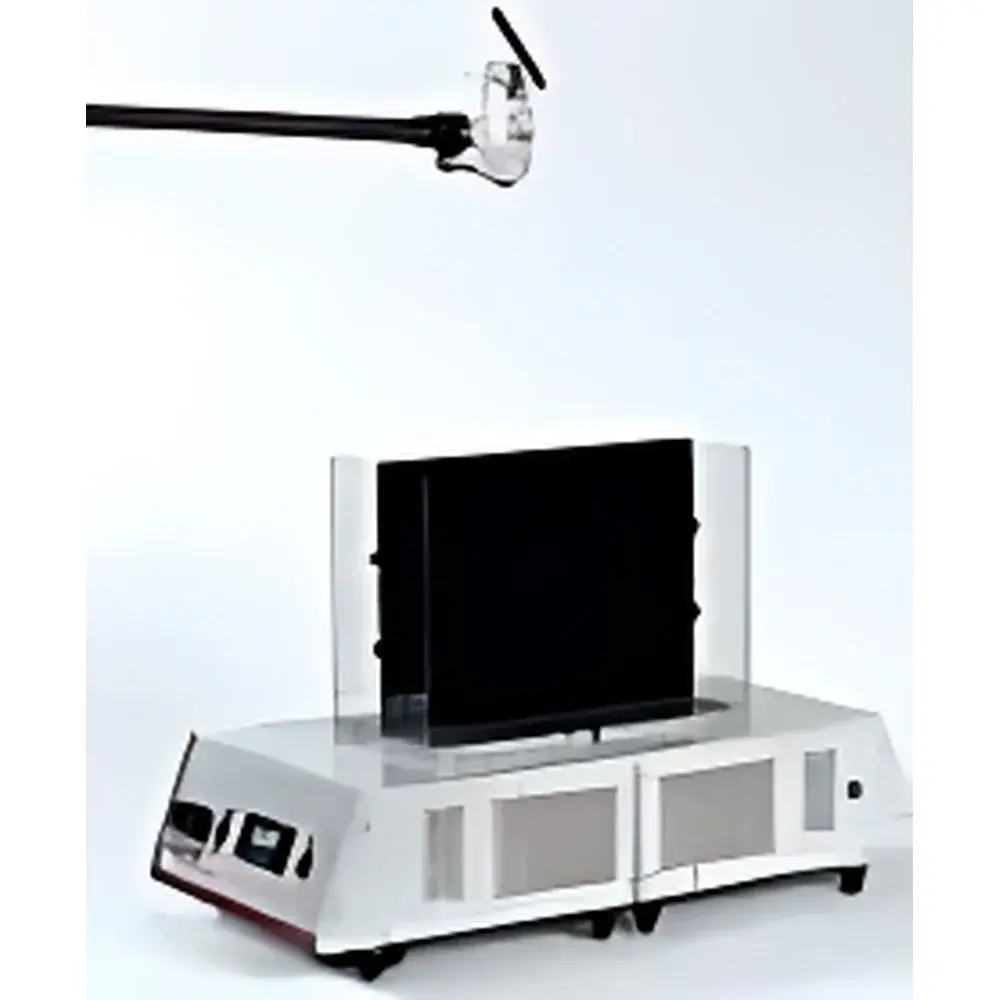
Bioseb BIO-T2CT Dual-Temperature Preference Testing System
| Brand | Harvard Apparatus |
|---|---|
| Origin | USA |
| Manufacturer Type | Authorized Distributor |
| Product Origin | Imported |
| Model | BIO-T2CT |
| Temperature Range | –3 °C to 65 °C (ambient 20–25 °C) |
| Temperature Accuracy | ±0.5 °C |
| Power Consumption | 150 W |
| Dimensions (L×W×H) | 32 cm × 57 cm × 45.5 cm |
| Cage Dimensions | 330 mm × 165 mm × 300 mm |
| Cage Material | Optical-grade acrylic |
| Monitoring Metrics | Dwell time per zone, entry latency, real-time position, zone-specific temperature, timestamp |
| Software Option | Optional automated video-tracking and thermal-zone logging module |
Overview
The Bioseb BIO-T2CT Dual-Temperature Preference Testing System is a purpose-built behavioral phenotyping platform engineered for quantitative assessment of thermosensory preference in rodents. Grounded in the seminal two-temperature choice paradigm first described by Moqrich et al. in Science (2005, 307:1468–1472), the system implements a precisely controlled, spatially bipartite thermal environment to evaluate innate or pharmacologically modulated thermal aversion/attraction. Unlike conventional hot/cold plate assays that impose unilateral thermal stress, the BIO-T2CT establishes two adjacent, independently regulated thermal zones—each programmable within a continuous range of –3 °C to 65 °C—enabling ethologically relevant decision-making behavior under non-noxious, gradient-free conditions. The system integrates high-fidelity thermal regulation with synchronized top-down video acquisition, allowing objective quantification of spatial occupancy dynamics as a functional readout of peripheral and central thermosensory processing.
Key Features
- Independent dual-zone thermal control with ±0.5 °C accuracy across the full operating range (–3 °C to 65 °C), calibrated against NIST-traceable reference standards
- Optically transparent acrylic test cage (330 × 165 × 300 mm) designed for unobstructed video tracking and ease of cleaning between subjects
- Integrated HD camera mount and adjustable lighting configuration optimized for contrast-based motion segmentation under standardized illumination
- Modular hardware architecture supporting simultaneous testing of two subjects in parallel, with independent thermal profiles per chamber
- Low-power thermal regulation (150 W max) enabling stable operation over extended sessions without significant ambient heat buildup
- Front-panel interface for manual temperature setpoint adjustment; full parameter control available via optional software suite
Sample Compatibility & Compliance
The BIO-T2CT is validated for use with adult mice (C57BL/6, BALB/c, CD-1) and rats (Sprague-Dawley, Wistar), accommodating standard weight ranges and locomotor profiles. Cage dimensions and wall height comply with NIH Guide for the Care and Use of Laboratory Animals recommendations for unrestricted exploratory behavior. All thermal control electronics meet UL 61010-1 and IEC 61000-6-3 electromagnetic compatibility standards. The system supports GLP-compliant experimental workflows: when used with the optional automated software, it generates audit-ready logs containing timestamps, zone assignments, thermal setpoints, and raw coordinate data—fully traceable to individual test sessions and operator IDs. Data export formats (CSV, HDF5) are compatible with downstream statistical platforms including MATLAB, R, and Python-based analysis pipelines.
Software & Data Management
The optional Bioseb ThermalTrack™ software provides full experimental control and automated behavioral analytics. Users define thermal protocols—including static setpoints, linear ramps, or stepwise transitions—for each zone independently. Real-time video processing employs background subtraction and centroid tracking to compute dwell time, entry/exit latency, path length, and zone transition frequency. All thermal metadata (actual measured surface temperature per zone, logged at 1 Hz) is time-synchronized with positional data. The software enforces ALCOA+ principles: attributable, legible, contemporaneous, original, accurate, complete, consistent, enduring, and available. Audit trails record all parameter changes, user logins, and data exports, satisfying FDA 21 CFR Part 11 requirements for electronic records in regulated preclinical studies.
Applications
- Phenotypic screening of TRP channel mutants (e.g., TRPV1, TRPM8, TRPA1 KO models) in thermosensation and nociception studies
- Evaluation of analgesic efficacy in chronic pain models (e.g., CCI, SNI, diabetic neuropathy), distinguishing thermal hypersensitivity from affective components of discomfort
- Neuropharmacology: dose-response characterization of centrally acting thermoregulatory agents (e.g., cannabinoids, orexin antagonists)
- Developmental neurobiology: longitudinal assessment of thermal preference maturation in adolescent rodent cohorts
- Toxicology: detection of subtle thermosensory deficits following low-dose neurotoxicant exposure
- Validation of human-relevant thermal thresholds using cross-species translational paradigms aligned with ISO 13732-3 and ASTM E1956 standards
FAQ
Is the BIO-T2CT compliant with Good Laboratory Practice (GLP) documentation requirements?
Yes—when operated with the ThermalTrack™ software, the system maintains full audit trails, electronic signatures, and immutable session logs required for GLP audits.
Can the system be integrated into existing behavioral core facility infrastructure?
The BIO-T2CT features Ethernet and USB 3.0 connectivity, supports DICOM-compatible video export, and offers API access for integration with LIMS or centralized data warehouses.
What is the minimum recommended ambient room temperature for stable thermal performance?
Operation is validated at 20–25 °C ambient; deviations beyond this range require recalibration of thermal offset compensation algorithms.
Does the system support custom arena geometries or multi-zone configurations?
The standard configuration uses two symmetric zones; custom partitioning or three-zone variants are available under Bioseb’s OEM engineering services program.
How frequently must the thermal sensors be recalibrated?
Annual calibration is recommended; on-site verification using certified PT100 probes can be performed quarterly per internal SOPs.