
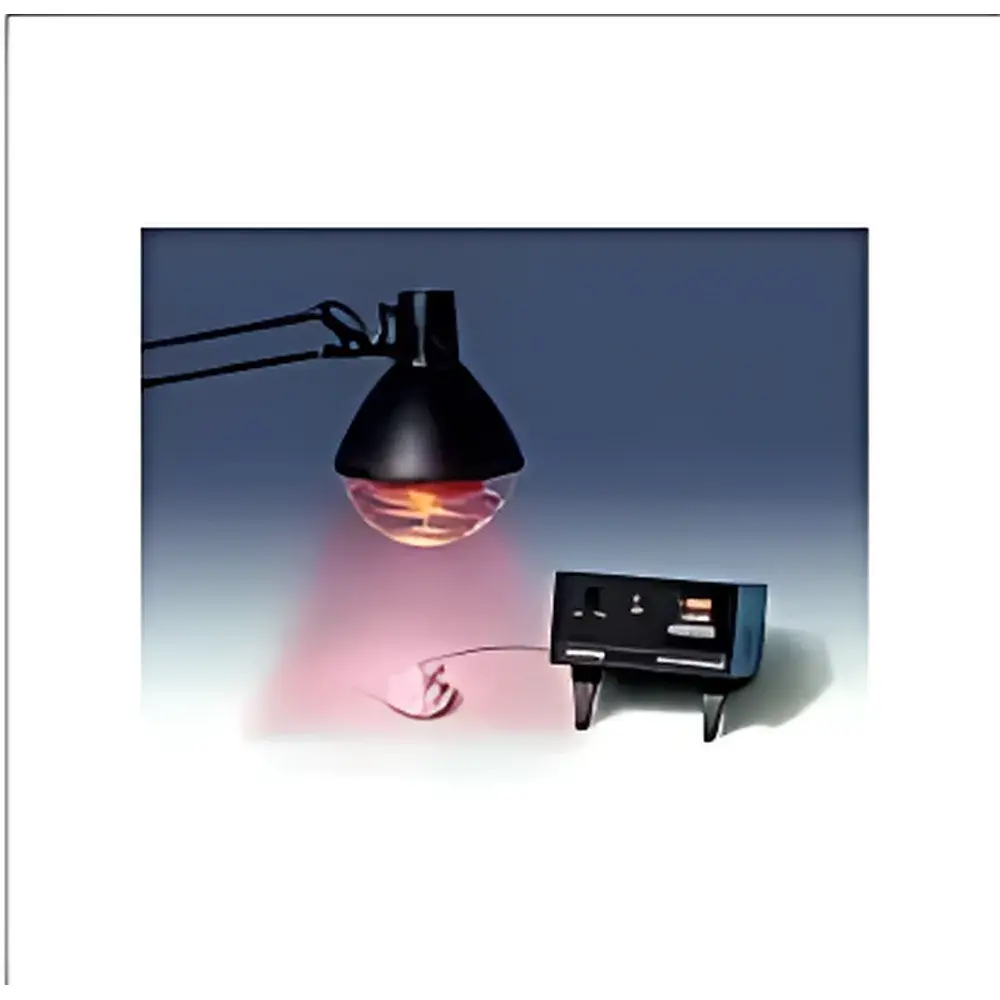
TACT-2 Temperature Controller
| Origin | USA |
|---|---|
| Manufacturer Type | Authorized Distributor |
| Origin Category | Imported |
| Model | TACT-2 |
| Price | Upon Request |
| Control Range | −100 to +400 °C |
| Accuracy | ±0.5 °C |
| Resolution | ±0.1 °C |
| AC Input | 110–230 V AC |
| Max AC Output (Resistive Load) | 700 W |
| DC Output | 12 V DC, 2 A max (TACT-2LV & TACT-2DF only) |
| Dual Setpoint Safety Limit | 40 °C (TACT-2LV & TACT-2DF only) |
| Dimensions (W × H × D) | 18.4 × 11.1 × 25.4 cm |
| Weight | <2.27 kg |
| Ground Leakage Current | <1 mA at 110 V AC |
Overview
The TACT-2 Temperature Controller is a precision-engineered thermal regulation system designed for demanding biomedical and preclinical laboratory environments. Unlike generic thermostats, the TACT-2 implements closed-loop proportional-integral (PI) temperature control using real-time feedback from industry-standard thermocouple sensors—enabling stable, repeatable thermal management across a broad operational range of −100 °C to +400 °C. Its architecture supports both heating and active cooling applications, making it suitable for intraoperative animal temperature maintenance, stereotactic surgery support, perfusion system thermal regulation, and controlled environmental conditioning of small-animal enclosures. The controller operates on universal 110–230 V AC input and features dual-display readout (green setpoint / red process temperature), facilitating rapid visual verification during time-critical procedures. All variants comply with IEC 61010-1 safety standards for laboratory electrical equipment and are engineered for continuous duty in GLP-compliant research settings.
Key Features
- Three configurable variants: TACT-2AC (AC-only resistive load control), TACT-2LV (low-noise 12 V DC output with dual-setpoint safety), and TACT-2DF (hybrid AC/DC output for mixed-load environments)
- Dual-setpoint protection circuitry (TACT-2LV and TACT-2DF only): an independent secondary sensor limits surface temperature to ≤40 °C—mitigating thermal injury risk from sensor failure or overshoot due to thermal lag
- High-resolution temperature readout with ±0.1 °C resolution and ±0.5 °C accuracy across full range, traceable to NIST-calibrated reference standards
- Low electromagnetic interference (EMI) design: TACT-2LV’s regulated DC output eliminates 50/60 Hz AC coupling that could disrupt electrophysiological monitoring (e.g., EEG, EMG, LFP) or optical recording systems
- Front-panel adjustable leveling feet for ergonomic viewing angle; status LED indicates active power delivery
- Thermal reversal mode enables seamless transition between heating and cooling operation—compatible with Peltier stages, recirculating chillers, and compressor-based cold plates
- Non-volatile memory retains user-defined setpoints after power cycling, supporting uninterrupted multi-hour experiments
Sample Compatibility & Compliance
The TACT-2 interfaces with a wide range of temperature-transducing accessories, including rectal probes (D22), implantable flexible thermocouples (D23), and stainless-steel needle probes (D25)—all meeting ASTM E230/E230M specifications for thermocouple classification and calibration. When paired with HP-1M heated platforms or standard AC heating blankets and radiant lamps, the system maintains thermal stability within ±0.3 °C under dynamic physiological loads (e.g., murine anesthesia models). Device firmware and hardware design adhere to FDA 21 CFR Part 11 requirements for audit-trail-capable instrumentation where electronic records are used in regulated studies. Electrical safety certification includes UL 61010-1 and CE marking per EN 61010-1:2010+A1:2019. No internal batteries or hazardous substances are present; RoHS 3 compliance is verified.
Software & Data Management
The TACT-2 operates as a standalone analog control unit without proprietary software dependencies—ensuring compatibility with existing lab infrastructure and minimizing cybersecurity exposure vectors. All configuration is performed via front-panel rotary encoder and tactile buttons; no USB, Bluetooth, or network interface is included, eliminating firmware update complexities and reducing validation burden in GxP environments. Analog output signals (0–5 V or 4–20 mA optional) can be routed to external data acquisition systems (e.g., National Instruments DAQ, Spike2, or LabChart) for synchronized thermal logging alongside physiological parameters. For laboratories requiring electronic record integrity, manual entry of setpoint values and timestamps into validated ELN systems satisfies ALCOA+ principles when combined with printed calibration certificates and maintenance logs.
Applications
- Intraoperative thermoregulation during rodent survival surgery, including craniotomy, spinal cord injury models, and intracranial injection protocols
- Temperature-stabilized stereotactic frame operation for high-resolution in vivo imaging (two-photon microscopy, fMRI-compatible setups)
- Control of recirculating perfusion systems in isolated organ preparations (Langendorff heart, brain slice chambers)
- Environmental conditioning of ventilated caging systems during post-surgical recovery phases
- Calibration support for thermocouple-based metrology workflows in ISO/IEC 17025-accredited labs
- Thermal stress testing of biomaterials and drug delivery vehicles under controlled ramp-and-hold profiles
FAQ
Can the TACT-2 control both heating and cooling devices simultaneously?
Yes—when configured in thermal reversal mode, the TACT-2DF and TACT-2LV models switch output polarity based on error signal sign, enabling single-channel bidirectional control of Peltier elements or compressor-driven cold plates.
Is the TACT-2 compatible with third-party thermocouples?
Yes—it accepts standard J, K, T, and E-type thermocouples with miniature connectors (MJ series); no adapter or signal conditioning is required.
Does the device support remote programming or digital communication protocols?
No—the TACT-2 is intentionally designed as an analog, microprocessor-free controller to ensure deterministic response timing and eliminate software-related validation overhead in regulated research.
What safety mechanisms prevent overheating in case of sensor disconnection?
TACT-2LV and TACT-2DF incorporate hardware-enforced dual-setpoint logic: if the primary sensor fails or disconnects, the secondary surface-limiting sensor caps output at 40 °C, independent of firmware or user input.
Can the TACT-2 be used in explosion-proof or high-humidity environments?
It is rated for indoor laboratory use only (IP20 enclosure); for hazardous locations, consult the manufacturer for custom-rated enclosures or intrinsically safe barrier integration options.
Related Products



