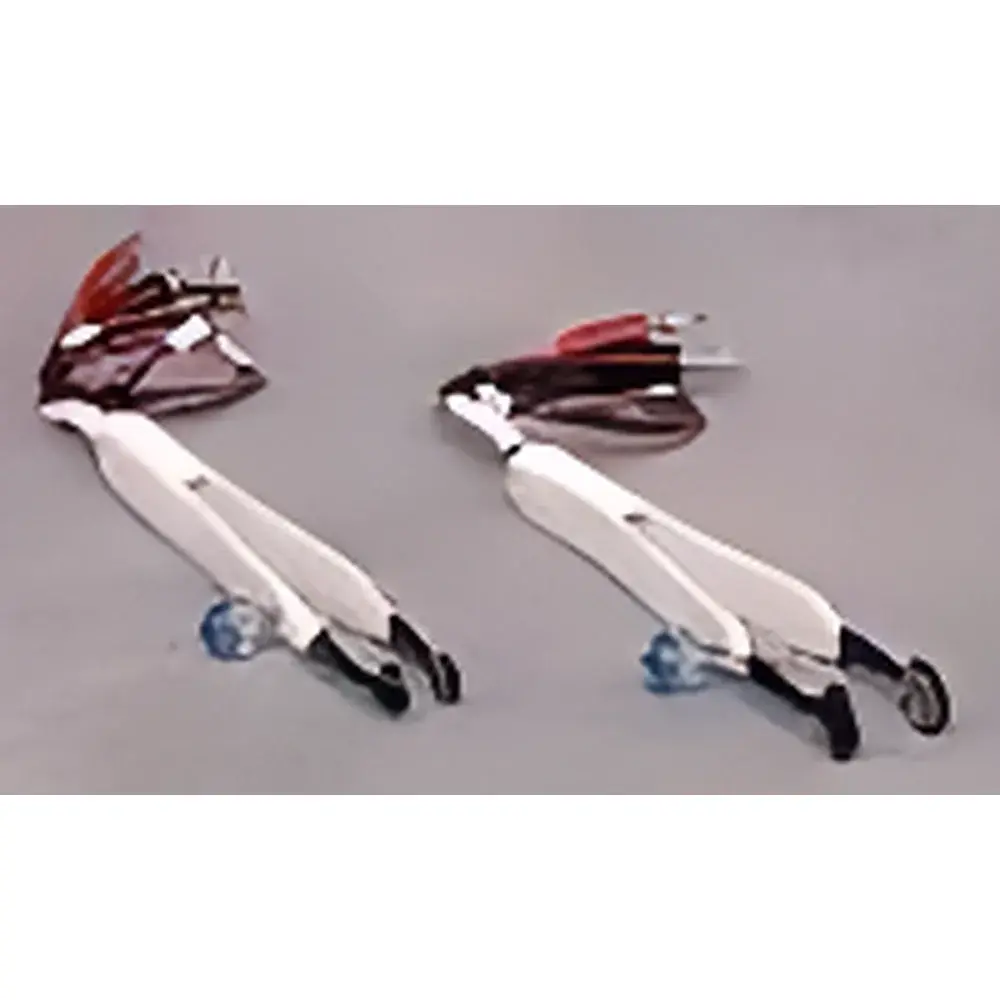
Harvard Apparatus BTX Model 524 Tweezertrodes In Vivo Electroporation Electrodes
| Brand | Harvard Apparatus |
|---|---|
| Origin | USA |
| Manufacturer Type | Authorized Distributor |
| Origin Category | Imported |
| Model | BTX Model 524 |
| Pricing | Upon Request |
| Electrode Type | Reusable bipolar tweezer-style electroporation electrode |
| Length | 11.5 cm |
| Adjustable Inter-electrode Gap | Up to 20 mm |
| Electrode Disk Diameter Options | 7 mm (Part #45-0118) or 10 mm (Part #45-0119) |
| Electrode Material | Stainless steel disk electrodes with integrated anode indicator |
Overview
The Harvard Apparatus BTX Model 524 Tweezertrodes are precision-engineered, reusable bipolar electroporation electrodes designed specifically for targeted in vivo delivery of nucleic acids, proteins, and therapeutic compounds into intact tissues and organs. Unlike conventional cuvette-based electroporation systems, the Tweezertrodes operate on the principle of localized, contact-based electric field application—leveraging controlled transient membrane permeabilization via high-voltage, short-duration pulses applied directly across a defined tissue volume. This enables spatially confined transfection or electrofusion without systemic exposure or off-target effects. The device is compatible with standard BTX electroporators (e.g., ECM 830, ECM 2001), supporting programmable pulse parameters including voltage amplitude (typically 10–300 V), pulse duration (1–100 ms), number of pulses (1–10), and inter-pulse intervals (0.1–10 s). Its mechanical design—featuring a rigid 11.5 cm stainless-steel tweezer body with adjustable jaw spacing up to 20 mm—ensures consistent electrode-tissue contact geometry critical for reproducible field distribution and dosage control in preclinical models.
Key Features
- Reusable, sterilizable stainless-steel construction with corrosion-resistant disk electrodes for long-term reliability in repeated surgical or percutaneous procedures.
- Two interchangeable electrode disk diameters: 7 mm (Part #45-0118) and 10 mm (Part #45-0119), enabling optimization for tissue depth, target cell density, and required electric field homogeneity.
- Integrated anode indicator for unambiguous polarity identification during setup—essential for directional delivery (e.g., plasmid DNA migration toward cathode).
- Manually adjustable inter-electrode gap (0–20 mm) with tactile locking mechanism, facilitating precise adaptation to anatomical variations across murine, rat, rabbit, and porcine models.
- Minimal thermal load due to low capacitance design and optimized pulse timing, reducing risk of coagulative necrosis at the treatment site.
- Compatible with GLP-compliant electroporation protocols when used with BTX systems featuring audit-trail-capable software (e.g., BTXpress v3.0).
Sample Compatibility & Compliance
The BTX Model 524 Tweezertrodes support direct electroporation in excised tissues, orthotopic tumors, skeletal muscle, skin, liver lobes, and neural structures—including intracranial and intraocular applications under stereotactic guidance. Electrode performance has been validated in accordance with ASTM F2696-21 (Standard Practice for Electroporation-Mediated Nucleic Acid Delivery in Living Cells) and ISO 10993-5 (biocompatibility assessment of medical devices). When deployed in regulated preclinical studies, the system supports traceable parameter logging and operator authentication per FDA 21 CFR Part 11 requirements when paired with compliant BTX electroporator firmware and electronic lab notebook integration.
Software & Data Management
While the Tweezertrodes themselves are passive hardware components, their operational integrity depends on synchronization with BTX electroporator platforms running BTXpress software (v2.5+). This software provides full pulse parameter definition, real-time impedance monitoring, automated protocol recall, and export of timestamped pulse logs in CSV or XML format. All data files include metadata such as electrode part number, gap setting, tissue type annotation, and operator ID—enabling alignment with ALA (Animal Laboratory Accreditation) reporting frameworks and facilitating retrospective analysis in longitudinal gene therapy efficacy studies.
Applications
- In vivo plasmid DNA or siRNA delivery for functional genomics and target validation in rodent disease models (e.g., tumor xenografts, muscular dystrophy, neurodegenerative phenotypes).
- Localized CRISPR-Cas9 ribonucleoprotein (RNP) delivery for somatic genome editing with reduced off-target indel frequency compared to viral vectors.
- Electro-mediated protein transduction (e.g., Cre recombinase, fluorescent reporters) into post-mitotic cells where viral transduction efficiency is limited.
- Preclinical evaluation of mRNA vaccine biodistribution and immunogenicity in muscle or dermal compartments.
- Cell fusion studies in regenerative contexts, including myoblast–myotube hybridization and hybridoma generation in situ.
FAQ
Can the Tweezertrodes be autoclaved?
Yes—both electrode variants (45-0118 and 45-0119) are rated for repeated autoclaving at 121°C, 15 psi for 20 minutes. Sterilization must be performed with jaws fully closed and without cable attachments.
What is the maximum recommended pulse voltage for in vivo use?
For most soft tissues (e.g., muscle, tumor), voltages between 80–150 V are empirically established; however, optimal settings must be determined per tissue conductivity and electrode gap via pilot calibration using trypan blue or propidium iodide uptake assays.
Is there documentation supporting IACUC protocol submission?
Harvard Apparatus provides a technical white paper (Ref: BTX-WP-524-2023) detailing electrical safety margins, thermal modeling, and published animal model citations—commonly accepted by institutional animal care committees for protocol review.
How does electrode disk size affect field uniformity?
Larger disks (10 mm) yield lower current density at the tissue interface but broader field penetration; smaller disks (7 mm) concentrate the field, enhancing transfection efficiency in superficial or dense tissues while requiring tighter gap control.
Are replacement parts available for worn electrode surfaces?
Stainless steel disks are not user-replaceable; however, Harvard Apparatus offers certified refurbishment services including surface passivation, dimensional verification, and electrical continuity testing—fully documented per ISO/IEC 17025 standards.