
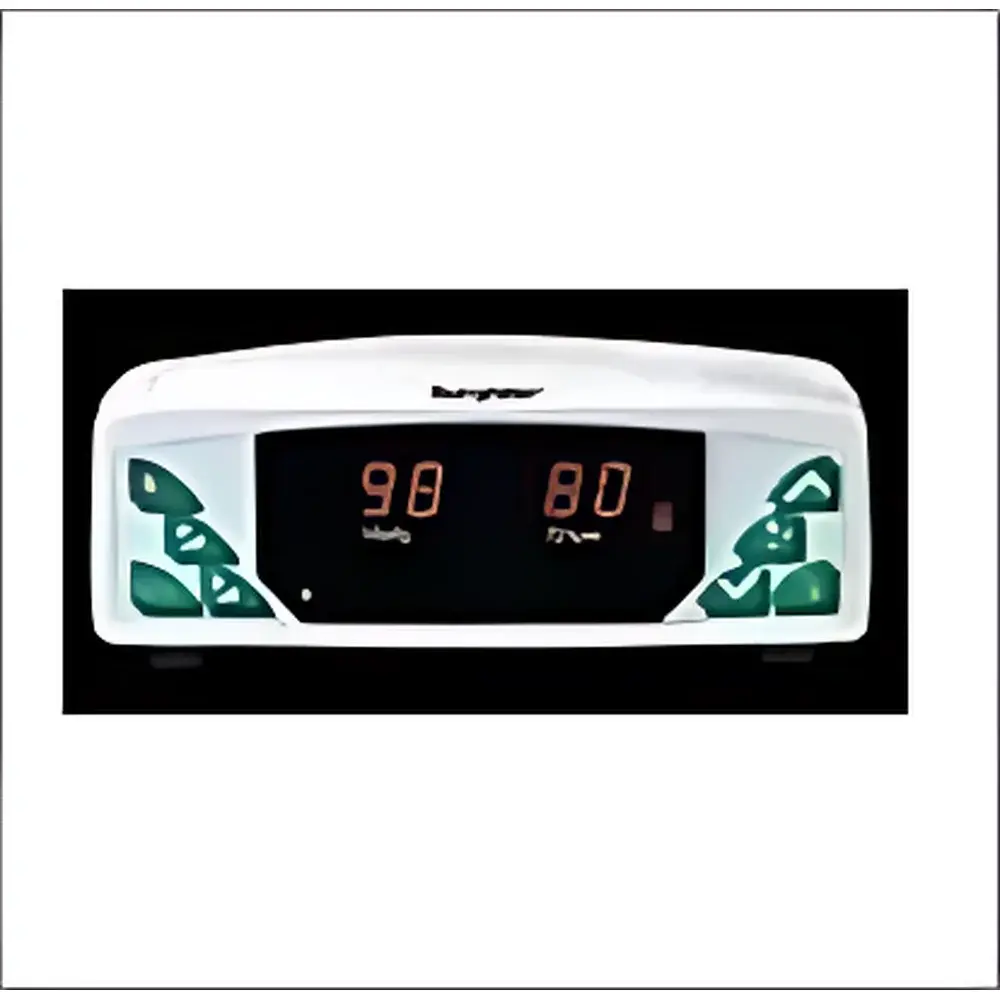
V3304 Desktop Pulse Oximeter
| Origin | USA |
|---|---|
| Manufacturer Type | Distributor |
| Origin Category | Imported |
| Model | V3304 |
| Pricing | Upon Request |
Overview
The V3304 Desktop Pulse Oximeter is a clinical-grade, CE- and FDA-cleared medical device engineered for continuous, non-invasive monitoring of arterial oxygen saturation (SpO₂) and pulse rate in conscious or lightly sedated laboratory animals during acute or chronic physiological studies. Designed specifically for preclinical research environments, it employs dual-wavelength photoplethysmography (660 nm red and 940 nm infrared LED illumination) to quantify light absorption differentials between oxygenated and deoxygenated hemoglobin in peripheral capillary beds—typically at the ear, paw, or tail site. Its robust analog front-end and adaptive signal processing algorithm mitigate motion artifact and low-perfusion interference, ensuring high reproducibility under dynamic experimental conditions such as treadmill exercise, pharmacological challenge, or hypoxia-reoxygenation protocols.
Key Features
- Real-time digital display of SpO₂ (%) and pulse rate (bpm) with adjustable high/low alarm thresholds for both parameters—configurable via intuitive front-panel controls
- Integrated audible alarm system with distinct tone patterns for SpO₂ desaturation and tachybradycardia events, enabling immediate operator response without visual monitoring
- Onboard memory storage for up to 99 time-stamped patient sessions, each containing continuous waveform snapshots and summary statistics (mean, min, max, SD)
- RS-232 serial interface compliant with ANSI/TIA/EIA-232-F standards for bidirectional communication with host PCs; supports real-time streaming at 125 Hz sampling rate
- Dedicated Windows-compatible software suite (v3.2+) for data visualization, export to CSV/Excel, waveform replay, and automated report generation—including compliance-ready audit trails
- Modular sensor architecture accommodating reusable clip-style and adhesive reflectance probes across species (mouse, rat, rabbit, guinea pig, ferret, and juvenile non-human primates)
Sample Compatibility & Compliance
The V3304 is validated for use with small-to-medium-sized laboratory mammals under controlled environmental conditions (18–28°C, ≤75% RH). Probe selection must align with anatomical site geometry and perfusion status: clip sensors are recommended for ear or tail applications in rodents, while reflective probes provide optimal stability during unrestrained behavioral assays. Device firmware and software comply with ISO 80601-2-61:2017 (medical electrical equipment – particular requirements for basic safety and essential performance of pulse oximeter equipment) and support GLP-compliant study documentation per OECD Principles of Good Laboratory Practice. Data export functionality meets FDA 21 CFR Part 11 requirements for electronic records and signatures when used with enabled audit trail and user authentication settings.
Software & Data Management
The proprietary V3304 Control Suite provides full configuration, acquisition, and post-processing capabilities. It features synchronized multi-channel plotting (SpO₂, pulse waveform, derived respiration rate), customizable annotation tools, and batch analysis functions for longitudinal cohort comparisons. All data files include embedded metadata (operator ID, animal ID, protocol timestamp, calibration status), and the software maintains immutable audit logs tracking every parameter change, file export, or user login event. Export options include ASCII-delimited formats compatible with MATLAB, Python (Pandas), GraphPad Prism, and SAS for statistical modeling and publication-grade figure generation.
Applications
- Cardiovascular pharmacology: evaluation of vasodilator/vasoconstrictor agents on systemic oxygen delivery
- Respiratory disease models: longitudinal tracking of SpO₂ decline in COPD, asthma, or pulmonary fibrosis murine models
- Anesthesia monitoring: titration of isoflurane/sevoflurane depth via peripheral perfusion stability indices
- Hypoxia research: real-time quantification of desaturation kinetics during normobaric or hypobaric chamber exposures
- Toxicology screening: detection of early respiratory depression following CNS-active compound administration
- Behavioral neuroscience: correlation of oxygenation dynamics with locomotor activity or seizure onset in EEG-synchronized paradigms
FAQ
Is the V3304 suitable for use in GMP-regulated toxicology studies?
Yes—when deployed with configured audit trail, electronic signatures, and validated software versioning, the system supports ALCOA+ data integrity principles required for regulatory submissions.
Can the device store data without a connected PC?
Yes—internal flash memory retains up to 99 complete session records independently; no external power or host connection is required for logging.
Does the V3304 require recalibration between animal subjects?
No—factory calibration is stable over time and across species; however, probe placement verification and baseline perfusion assessment are recommended prior to each recording.
What is the minimum detectable perfusion index (PI) for reliable SpO₂ measurement?
The device maintains accuracy down to PI ≥ 0.1% under controlled motion conditions; sensitivity improves significantly with optimized probe contact pressure and thermal stabilization.
Is technical support available for integration with third-party DAQ systems?
Yes—application notes and API documentation (including Modbus RTU and custom serial command sets) are provided to facilitate integration with National Instruments LabVIEW, Spike2, or custom Python-based acquisition platforms.




