
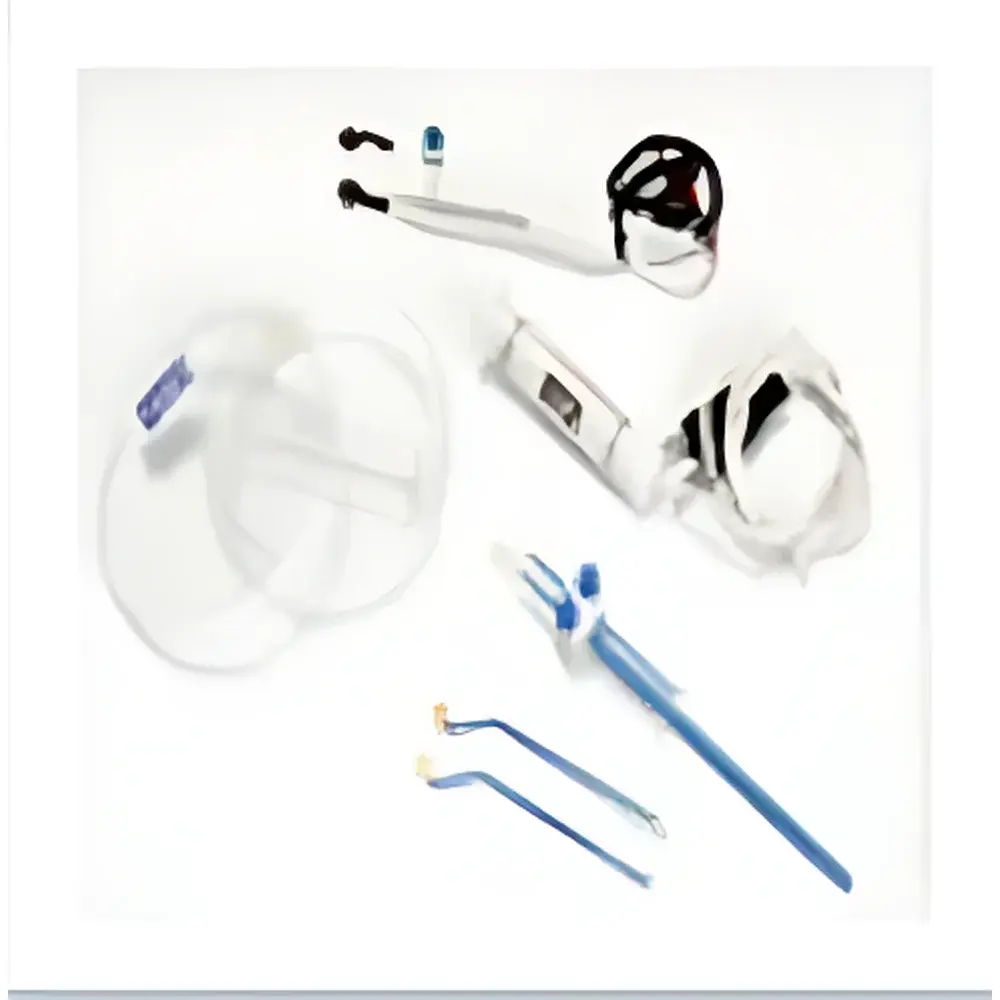
Harvard Apparatus BTX Electrofusion Electrodes
| Brand | Harvard Apparatus |
|---|---|
| Origin | USA |
| Model | BTX Electrofusion Electrodes |
| Voltage Range | 0–500 V DC (Microslides), 0–480 V DC / 0–16 V AC (Meander & Flat Chambers) |
| Pulse Duration | 1 µs – 99 ms |
| Pulse Count | 1–99 |
| Electrode Gaps | 0.2 mm (Meander), 0.5 / 1.0 / 3.2 / 10.0 mm (Microslides), 1.0 mm (Flat Chamber) |
| Field Uniformity | Non-uniform (Microslides, Meander, Flat in fusion mode), Uniform (Flat in electroporation mode) |
| Sample Volume Capacity | 20–2200 µL (Microslides), 5–20 µL (Meander), 500 µL (Flat Chamber) |
| Compatible Systems | ECM830, ECM2001 |
| Reusability | Yes (with mild cleaning) |
Overview
The Harvard Apparatus BTX Electrofusion Electrodes are precision-engineered accessories designed for controlled, high-efficiency electrofusion and electroporation of mammalian cells, plant protoplasts, oocytes, and embryonic cells. These electrodes operate on the principle of pulsed electric field (PEF)-induced membrane destabilization—leveraging transient, reversible permeabilization to enable cytoplasmic exchange, nuclear transfer, or gene delivery. Unlike generic electroporation cuvettes, BTX electrofusion electrodes are purpose-built to generate spatially defined electric field topographies (uniform or non-uniform) essential for synchronized membrane fusion events. Each electrode type—Microslides, Meander Fusion Chamber, and Flat Electrode Chamber—offers distinct field geometry, gap dimension, and volumetric constraints optimized for specific experimental workflows in developmental biology, monoclonal antibody development, somatic cell nuclear transfer (SCNT), and hybridoma generation.
Key Features
- Three modular electrode architectures: Microslides (glass slide–mounted stainless steel electrodes), Meander Fusion Chamber (silver-alloy finger-array electrodes embedded in fiberglass substrate), and Flat Electrode Chamber (dual-slot stainless steel electrodes in polysulfone housing).
- Configurable electric field profiles: Non-uniform fields (optimized for localized membrane poration and fusogenic lipid rearrangement) and uniform fields (for standardized electroporation across larger cell populations).
- Precision electrode gaps ranging from 0.2 mm (Meander) to 10 mm (Microslides), enabling fine-tuned field strength (V/cm) control across diverse cell sizes and suspension viscosities.
- Full compatibility with Harvard Apparatus ECM830 and ECM2001 electroporators—supporting programmable DC pulses (0–500 V), AC pre-fusion alignment (0–16 V), and precise timing resolution down to 1 µs.
- Optical accessibility: All electrode formats permit real-time microscopic observation during pulse delivery and post-pulse fusion progression—critical for embryo manipulation, oocyte transfection, and single-cell hybridoma screening.
- Robust reusability: Electrodes withstand repeated sterilization via 70% ethanol, mild detergent washes, or UV exposure; no degradation in conductivity or geometric fidelity after ≥50 cycles under standard lab handling protocols.
Sample Compatibility & Compliance
The BTX Electrofusion Electrodes support a broad spectrum of biological samples, including murine and human lymphocytes, CHO and HEK293 suspension cultures, tobacco and Arabidopsis protoplasts, bovine and porcine oocytes, and zygotes. Their design conforms to established biophysical requirements for electrofusion efficiency: low capacitance (<10 pF), minimal electrode polarization, and stable inter-electrode resistance across physiological buffers (e.g., mannitol-based fusion media, HEPES-buffered saline). While not certified as medical devices, these electrodes are routinely employed in GLP-compliant preclinical research environments where traceable instrument qualification (IQ/OQ/PQ) and documented maintenance logs are maintained per institutional biosafety and quality assurance policies.
Software & Data Management
Electrode operation is fully integrated with the native ECM830 and ECM2001 control software, which supports protocol storage, parameter locking, audit-trail logging (user ID, timestamp, voltage/pulse settings), and export of raw pulse metadata (voltage decay curves, current waveforms) in CSV format. When deployed within regulated laboratories, the system can be configured to comply with FDA 21 CFR Part 11 requirements—including electronic signature enforcement, role-based access control, and immutable event logs—provided the host computer environment meets platform validation criteria.
Applications
- Somatic cell nuclear transfer (SCNT) and enucleation-assisted cloning workflows using Microslides under inverted microscopy.
- Hybridoma production via myeloma–B-cell fusion with simultaneous AC alignment and DC fusion pulses in the Meander chamber.
- High-yield protoplast fusion in plant biotechnology, leveraging 0.2 mm gap-induced field intensities (>200 kV/m) to overcome rigid cell walls.
- Oocyte microinjection adjunct: pre-fusion electroporation to enhance exogenous mRNA or CRISPR RNP uptake prior to ICSI.
- Functional genomics studies requiring co-transfection of two plasmids into primary T cells—enabled by dual-pulse sequencing in Flat Chamber’s uniform-field mode.
FAQ
Which electrode type is optimal for single-cell fusion under microscopy?
Microslides with 0.5 mm or 1.0 mm gaps are recommended for high-magnification, real-time observation of individual cell pairs during AC alignment and DC fusion pulses.
Can the Meander Fusion Chamber be used for electroporation?
No—it is engineered exclusively for fusion applications; its non-uniform field geometry does not support homogeneous transfection efficiency required for standard electroporation.
What cleaning protocol preserves electrode longevity without compromising performance?
Rinse thoroughly with deionized water, soak for 5 minutes in 70% ethanol, air-dry in laminar flow hood; avoid abrasive scrubbing or autoclaving.
Is calibration required before each use?
No—electrode geometry is factory-verified and mechanically stable; however, users should verify system impedance and pulse waveform integrity using the ECM830’s built-in diagnostic mode prior to critical experiments.
Are these electrodes compatible with non-Harvard electroporators?
Mechanical and electrical interfaces are proprietary to Harvard Apparatus systems; direct integration with third-party generators is not supported due to pulse timing synchronization and safety interlock dependencies.





