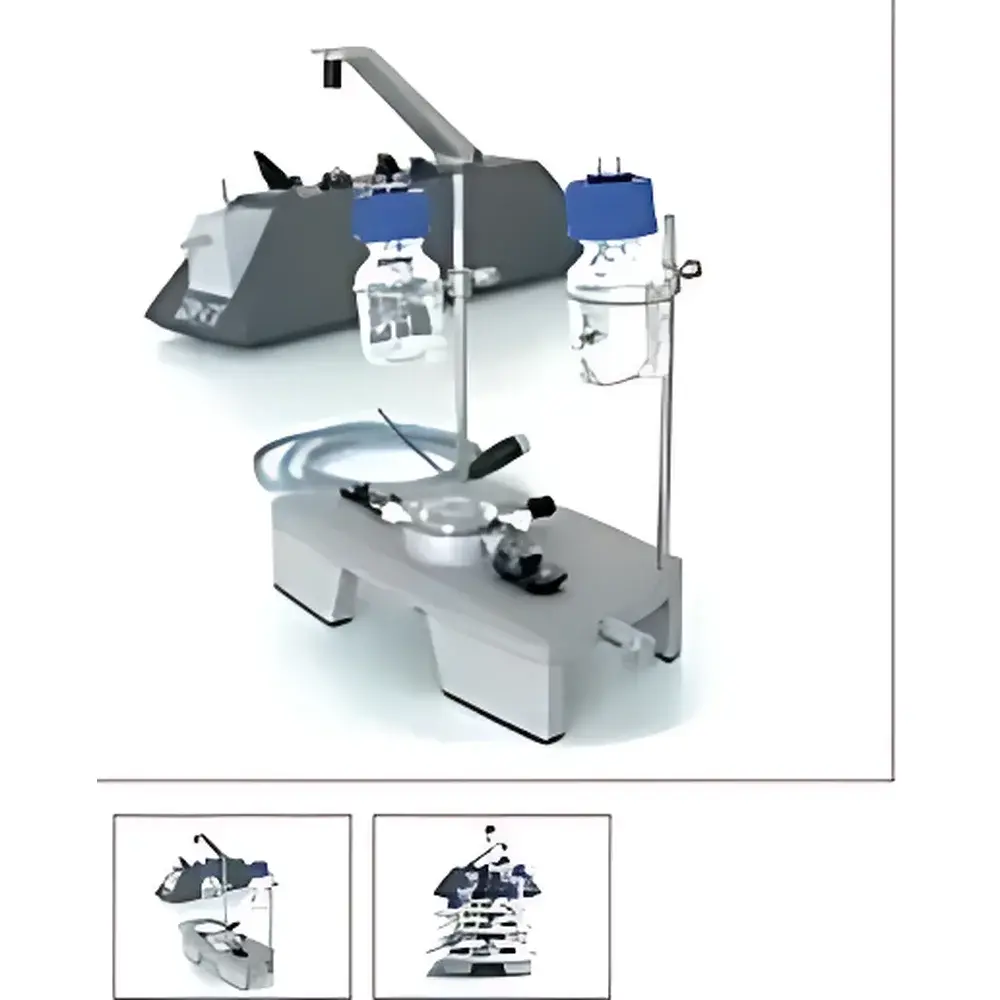
Vascular Perfusion Culture System 202CM/204CM
| Origin | USA |
|---|---|
| Manufacturer Type | Authorized Distributor |
| Import Status | Imported |
| Model | 202CM (Single-Channel) / 204CM (Four-Channel) |
| Pricing | Available Upon Request |
Overview
The Vascular Perfusion Culture System 202CM/204CM is an engineered platform for ex vivo microvascular perfusion and functional maintenance under physiologically relevant hemodynamic conditions. Designed for rigorous vascular biology research, the system enables precise control of intraluminal pressure (typically 10–120 mmHg), flow rate (0.1–50 µL/min), and pulsatile waveform parameters to replicate arterial or venous microcirculatory environments. Based on the principle of controlled hydrostatic and shear stress application, it supports long-term culture of isolated resistance arterioles, capillaries, or venules—up to 7 days—while preserving endothelial integrity, smooth muscle tone, and vasoreactivity. The system operates within a fully enclosed, sterile, temperature- and CO2-regulated incubator-compatible housing, minimizing contamination risk and experimental variability.
Key Features
- Two configurations: 202CM (single-channel) for high-fidelity mechanistic studies; 204CM (four-channel) for parallel comparative experiments with internal controls or dose-response profiling.
- Integrated pressure transducers and peristaltic or syringe-based flow actuators calibrated for microfluidic precision, enabling stable, low-noise pressure/flow delivery across extended durations.
- Modular, autoclavable fluidic pathways constructed from medical-grade silicone tubing and stainless-steel fittings—compatible with standard cell culture media, vasoactive agents (e.g., acetylcholine, phenylephrine), and pharmacological inhibitors.
- Real-time analog output ports for integration with external data acquisition systems (e.g., PowerLab, ADInstruments) to synchronize pressure/flow traces with concurrent physiological recordings (e.g., Ca2+ imaging, electrophysiology).
- Incubator-ready design: compact footprint (202CM: 18 × 12 × 10 cm; 204CM: 28 × 15 × 12 cm), low heat dissipation, and sealed electronics rated for continuous operation at 37 °C and 5% CO2.
Sample Compatibility & Compliance
The system accommodates microvessels isolated from human, murine, porcine, or rat tissues—including mesenteric, cerebral, coronary, and renal arterioles (diameter range: 40–200 µm). Vessel mounting utilizes custom-fit glass micropipettes and vacuum-assisted cannulation fixtures to ensure leak-free sealing and minimal mechanical trauma. All wetted materials comply with USP Class VI biocompatibility standards and ISO 10993-5 cytotoxicity requirements. The operational workflow aligns with GLP principles for preclinical vascular pharmacology studies and supports documentation traceability required for regulatory submissions (e.g., FDA IND-enabling data packages).
Software & Data Management
No proprietary software is embedded; instead, the system interfaces via standard analog voltage outputs (0–5 V or 0–10 V) and TTL synchronization pulses, ensuring compatibility with LabChart, MATLAB, Python-based acquisition scripts (e.g., using National Instruments DAQmx), or custom-built LabVIEW applications. Users retain full control over sampling rate (up to 1 kHz), filtering, and metadata tagging. Audit trails—including calibration logs, vessel ID, perfusion duration, and environmental setpoints—are maintained externally in accordance with 21 CFR Part 11-compliant laboratory information management systems (LIMS) when integrated into validated workflows.
Applications
- Investigation of endothelial-dependent and -independent vasodilation mechanisms under normotensive vs. hypertensive pressure profiles.
- Evaluation of microvascular dysfunction in metabolic disease models (e.g., diabetes-induced impairment of NO-mediated relaxation).
- Pharmacokinetic–pharmacodynamic (PK-PD) correlation of vasoactive drug candidates across concentration gradients and exposure durations.
- Assessment of ischemia-reperfusion injury, leukocyte adhesion dynamics, and barrier permeability using co-perfused fluorescent tracers (e.g., FITC-dextran 40 kDa).
- Validation of tissue-engineered microvessels or organ-on-chip platforms prior to in vivo translation.
FAQ
What vessel types and sizes are compatible with the 202CM/204CM system?
Microvessels ranging from 40 to 200 µm in diameter—including resistance arterioles, small arteries, and post-capillary venules—can be successfully cannulated and perfused. Optimal results are achieved with vessels exhibiting intact adventitial connective tissue and viable smooth muscle layers.
Is the system suitable for hypoxic or hyperoxic gas modulation?
Yes. The closed-loop perfusion circuit allows integration with gas-mixing modules (e.g., ProOx C21) upstream of the reservoir to deliver defined O2/CO2/N2 blends directly to the perfusate, enabling studies of oxygen-sensitive signaling pathways.
Can I perform simultaneous calcium imaging during perfusion?
Absolutely. The transparent chamber design and side-port optical access support upright or inverted fluorescence microscopy. Synchronization pulses enable frame-locked acquisition of intracellular Ca2+ transients relative to pressure waveforms.
What maintenance is required between experiments?
After each run, the fluidic path must be flushed with 70% ethanol followed by sterile PBS. Tubing and micropipettes are single-use per vessel; pressure sensors undergo quarterly recalibration using NIST-traceable dead-weight testers.
Does the system meet ISO 13485 or CE marking requirements?
As a research-use-only (RUO) instrument distributed under U.S. FDA 21 CFR §809.10, it carries no CE mark or ISO 13485 certification. However, its design adheres to IEC 61010-1 safety standards for laboratory equipment, and documentation packages support institutional biosafety and ethics committee reviews.