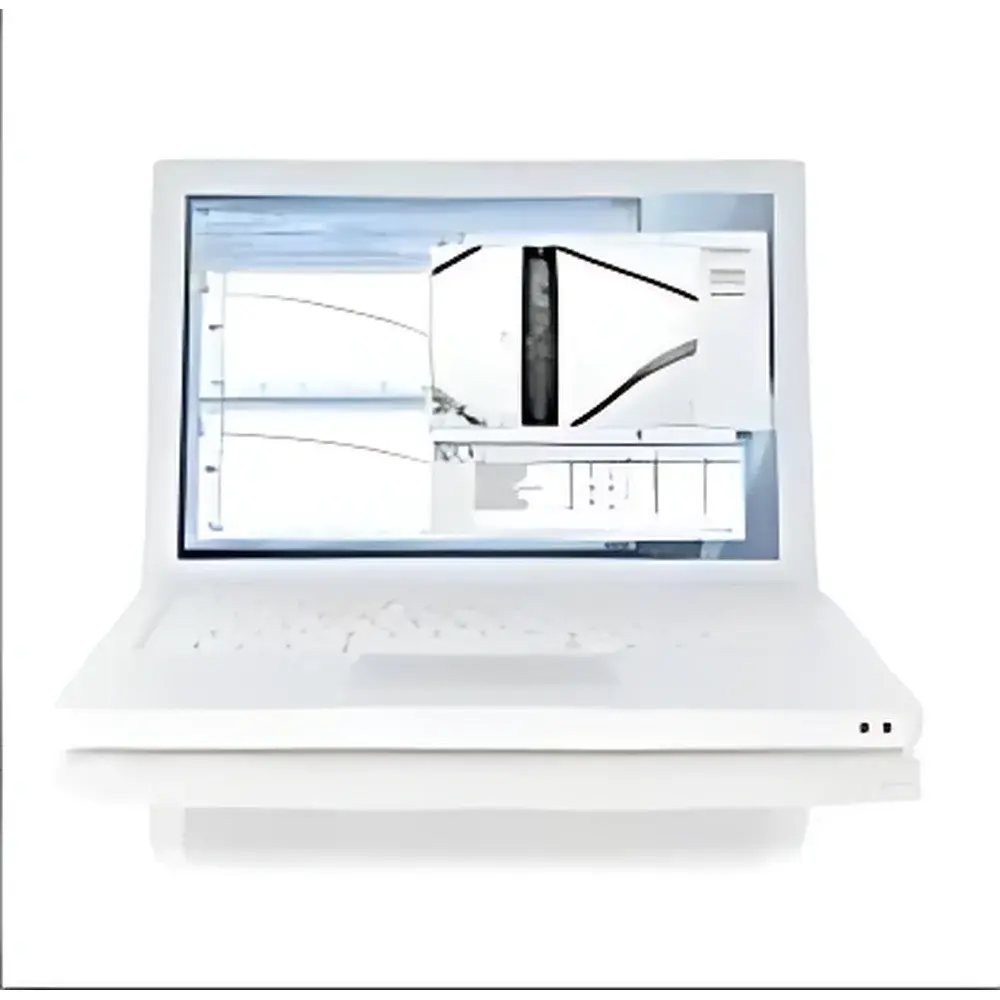
MyoVIEW II Ex Vivo Microvascular Pressure-Diameter Analysis Software
| Origin | USA |
|---|---|
| Manufacturer Type | Authorized Distributor |
| Origin Category | Imported |
| Model | MyoVIEW II |
| Pricing | Available Upon Request |
Overview
MyoVIEW II is a specialized, Windows-based software platform engineered for quantitative ex vivo analysis of microvascular pressure-diameter relationships in isolated resistance arteries and arterioles. It operates as the central control and data acquisition interface for pressurized myograph systems—specifically designed to maintain physiological intraluminal pressure while enabling real-time diameter measurement under controlled flow or no-flow conditions. The software implements high-resolution edge-detection algorithms calibrated for transmitted light microscopy (e.g., inverted or upright microscopes equipped with 10×–40× objectives), supporting both video-based diameter tracking and manual frame-by-frame calibration. Its architecture adheres to principles of vascular biomechanics, integrating Laplace-derived wall stress computation and Poiseuille-based shear stress estimation directly from acquired pressure, diameter, and flow parameters—enabling rigorous assessment of myogenic tone, passive mechanical properties, and endothelial-dependent vasoreactivity.
Key Features
- Integrated dual-mode acquisition: Simultaneous real-time recording of intraluminal pressure (mmHg), external vessel diameter (µm), and luminal flow rate (µL/min) via native 161FM flowmeter module—eliminating the need for third-party flow software or manual data synchronization.
- Automated parameter derivation: Direct calculation of vascular resistance (mmHg·min/µL), circumferential wall stress (kPa), tangential wall shear stress (dyn/cm²), and distensibility coefficient (% change in diameter per mmHg) without post-hoc spreadsheet processing.
- Protocol-driven experimental workflow: Predefined templates for pressure-step protocols (e.g., stepwise pressure ramp from 10–120 mmHg), agonist concentration-response curves, and flow-mediated dilation sequences—each enforcing consistent timing, stabilization thresholds, and baseline normalization logic.
- GLP-compliant data integrity: Audit trail logging (user ID, timestamp, parameter modifications), electronic signature support, and encrypted raw data storage (.mv2 binary format with embedded metadata) aligned with FDA 21 CFR Part 11 readiness requirements for regulated preclinical studies.
- Multi-vessel batch processing: Batch import and synchronized analysis of datasets from up to 8 independent vessel preparations, with cross-sample statistical overlay and export of normalized response curves to CSV, MATLAB (.mat), or GraphPad Prism-compatible formats.
Sample Compatibility & Compliance
MyoVIEW II is validated for use with isolated microvessels ranging from 40–300 µm in external diameter—including cerebral, mesenteric, coronary, renal, and skeletal muscle resistance arteries. It supports standard wire myograph (e.g., DMT 620M, ADInstruments PowerLab-compatible setups) and pressure myograph configurations (e.g., Living Systems Instrumentation P1000, Danish Myo Technology DM1000). All computational routines conform to ISO 13485-aligned development practices, and the software’s mathematical models are traceable to established vascular physiology literature (e.g., Davis & Hill, 1999; Halpern & Jone, 1984). Regulatory documentation—including Design History File (DHF) summaries and verification test reports—is available to qualified institutional users upon request for GCP/GLP audit preparation.
Software & Data Management
Deployed as a 64-bit application compatible with Windows 10/11 (x64), MyoVIEW II utilizes a modular driver architecture that interfaces natively with National Instruments DAQ devices (e.g., USB-6211, PCIe-6323), DMT A/D converters, and third-party analog input modules via standardized DLL wrappers. Raw data is stored in a hierarchical binary format (.mv2) containing time-stamped pressure/diameter/flow vectors, hardware configuration snapshots, and user-defined annotation tags. Export options include tab-delimited ASCII for legacy analysis pipelines, HDF5 for high-throughput computational modeling, and direct integration with LabChart 8+ and AcqKnowledge 5.0 via API hooks. Version-controlled updates are delivered through secure HTTPS channels with SHA-256 checksum validation; on-site installation and configuration support is provided by certified field application engineers.
Applications
- Characterization of myogenic autoregulation in hypertension and diabetes models
- Evaluation of endothelial NO synthase (eNOS) coupling efficiency via flow-mediated dilation kinetics
- Pharmacological profiling of vasoactive agents (e.g., phenylephrine, acetylcholine, SNP) under controlled pressure gradients
- Mechanical property mapping: Stress-strain relationships, incremental elastic modulus, and collagen/elastin contribution estimates
- Preclinical safety assessment of novel therapeutics targeting vascular tone regulation (e.g., Rho-kinase inhibitors, TRP channel modulators)
- Validation of computational hemodynamics models using experimentally derived boundary conditions
FAQ
Is MyoVIEW II compatible with non-161FM flow meters?
Yes—via custom analog input configuration and user-defined calibration curves, though native 161FM integration provides optimized timing synchronization and automatic unit conversion.
Does the software support real-time feedback control of pressure or flow?
No—MyoVIEW II is a data acquisition and analysis platform, not a closed-loop controller; hardware-level pressure/flow regulation must be managed externally by the myograph system’s pneumatic or peristaltic modules.
Can raw video files be imported for retrospective diameter analysis?
Yes—AVI and TIFF stack imports are supported, with optional background subtraction and contrast enhancement filters to improve edge detection fidelity in low-SNR recordings.
What validation documentation is provided for regulatory submissions?
A complete Software Verification Report (SVR), Installation Qualification (IQ) template, and Operational Qualification (OQ) test protocol are included with commercial licenses for academic and industrial research institutions.
Is source code access available for algorithm customization?
Source code is proprietary and not distributed; however, a documented C++ SDK is available under NDA for developing custom analysis plugins or interfacing with in-house modeling frameworks.