
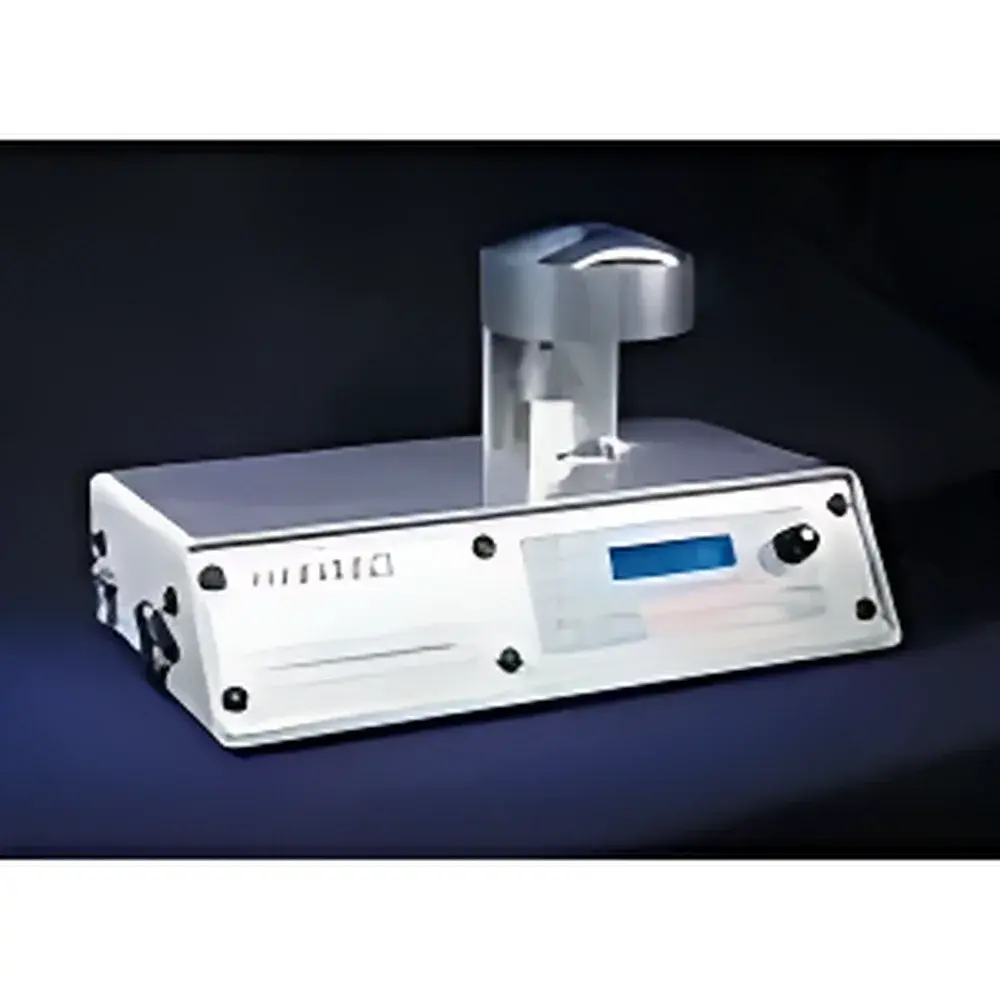
Harvard Apparatus TFA Tail-Flick Analgesia Meter
| Brand | Harvard Apparatus |
|---|---|
| Origin | USA |
| Manufacturer Type | Authorized Distributor |
| Origin Category | Imported |
| Model | TFA |
| Pricing | Upon Request |
Overview
The Harvard Apparatus TFA Tail-Flick Analgesia Meter is a precision-engineered, stimulus-controlled behavioral assay instrument designed for quantitative assessment of nociceptive thresholds in rodent models—primarily rats—under standardized thermal radiant stimulation. It operates on the well-established tail-flick reflex principle, wherein a focused beam of infrared radiation (emitted from a 150 W halogen light source) is directed onto the dorsal surface of the animal’s tail. The onset of a rapid, involuntary tail withdrawal reflex—indicating activation of spinal nociceptive pathways—is detected optically and used to determine latency-to-response. This latency serves as an objective, reproducible endpoint for evaluating central and peripheral analgesic efficacy in preclinical pharmacology studies, particularly in accordance with the D’Amour and Smith (1941) methodology. The system integrates calibrated radiant energy delivery, real-time optical sensing, and high-resolution timing (0.1 s resolution), enabling consistent inter- and intra-laboratory data acquisition aligned with GLP-compliant experimental protocols.
Key Features
- 150 W adjustable halogen light source with parabolic reflector for precise, collimated radiant heat delivery to the tail dorsum
- Digitally displayed energy utilization percentage (0–100%) for real-time monitoring and inter-session consistency
- Optical sensor positioned beneath the focal point; detects tail movement via interruption of the light path—triggering automatic termination of both illumination and timer
- Front-panel start button and optional footswitch for hands-free, operator-independent initiation
- Large LED display showing reaction time in seconds and tenths of seconds (e.g., 3.2 s), eliminating subjective stopwatch error
- Integrated calibration function allowing pre-experiment standardization of irradiance intensity at the target site
- Standard IEEE 1284 parallel port interface for direct connection to laboratory printers, enabling hardcopy documentation of trial number, energy setting (%), and latency value
- Rugged benchtop architecture with ergonomic animal restraint support (not included) and modular cable management
Sample Compatibility & Compliance
The TFA system is validated for use with adult Sprague-Dawley or Wistar rats (200–300 g), with tail positioning standardized to ensure consistent irradiance exposure across subjects. It supports acute, single-dose analgesic screening as well as longitudinal dose-response and time-course studies. The device conforms to widely accepted preclinical testing frameworks including NIH Guide for the Care and Use of Laboratory Animals and AAALAC International standards. While not FDA-cleared as a diagnostic device, its operational parameters align with ASTM E2768-11 (Standard Practice for Conducting Rodent Tail-Flick Assays) and are routinely cited in publications adhering to ICH S5(R3) and OECD TG 420 guidelines. Data output meets minimal requirements for auditability under GLP environments when paired with controlled SOPs and operator training records.
Software & Data Management
The TFA operates as a standalone hardware meter without embedded software or network connectivity. All data acquisition is analog-electronic and displayed in real time; no firmware updates or driver installation are required. The parallel port output generates ASCII-formatted printouts containing three fixed fields per line: trial sequence number, energy setting (%), and measured latency (in 0.1 s increments). These outputs are compatible with standard dot-matrix or thermal lab printers and may be manually transcribed into LIMS or statistical analysis platforms (e.g., GraphPad Prism, SAS, R). For laboratories requiring electronic data capture, third-party serial-to-parallel converters or custom LabVIEW interfaces (developed per institutional IT policy) can be implemented—though such configurations fall outside Harvard Apparatus’ warranty scope. Audit trails, electronic signatures, or 21 CFR Part 11 compliance are not natively supported; manual logbooks remain the recommended record-keeping method per GLP Annex 11.
Applications
- Primary screening of opioid and non-opioid analgesics (e.g., morphine, ibuprofen, gabapentin) in acute pain models
- Dose–response characterization and ED50 determination in pharmacodynamic studies
- Assessment of tolerance development following repeated drug administration
- Investigation of neuropathic or inflammatory hyperalgesia modulation via intrathecal or systemic interventions
- Validation of genetically modified rodent lines with altered nociceptive processing (e.g., TRPV1-KO, Nav1.7 mutants)
- Training platform for undergraduate and graduate neuroscience/pharmacology laboratories emphasizing reflex-based behavioral endpoints
FAQ
What species and strain are most commonly used with the TFA system?
Rats—particularly Sprague-Dawley and Wistar strains—are the primary model due to consistent tail-flick latency baselines (typically 2–4 s at 70% energy); mice may be used but require protocol adaptation and yield higher inter-animal variability.
Is the light source calibrated in radiometric units (e.g., W/cm²)?
No—the TFA displays relative energy utilization (%) only. Absolute irradiance must be verified externally using a calibrated thermopile or photodiode sensor if required for publication-grade reporting.
Can the TFA be integrated with automated animal handling systems?
Not natively. Its control logic is momentary-switch triggered; integration with robotic restraints or synchronized video tracking requires custom electrical interfacing and validation by the end user.
Does the device include tail temperature monitoring?
No. The TFA measures behavioral latency only; concurrent thermography or skin-surface temperature measurement requires separate instrumentation.
What maintenance is required for long-term reliability?
Annual inspection of the halogen bulb (replaced as needed), cleaning of the parabolic reflector surface with lens-grade solvent, and verification of optical sensor alignment using the built-in calibration mode.
Related Products



