BTX ECM399 Exponential Decay Wave Electroporator
| Brand | Harvard Apparatus |
|---|---|
| Origin | USA |
| Manufacturer Type | Authorized Distributor |
| Product Origin | Imported |
| Model | ECM399 |
| Pricing | Upon Request |
Overview
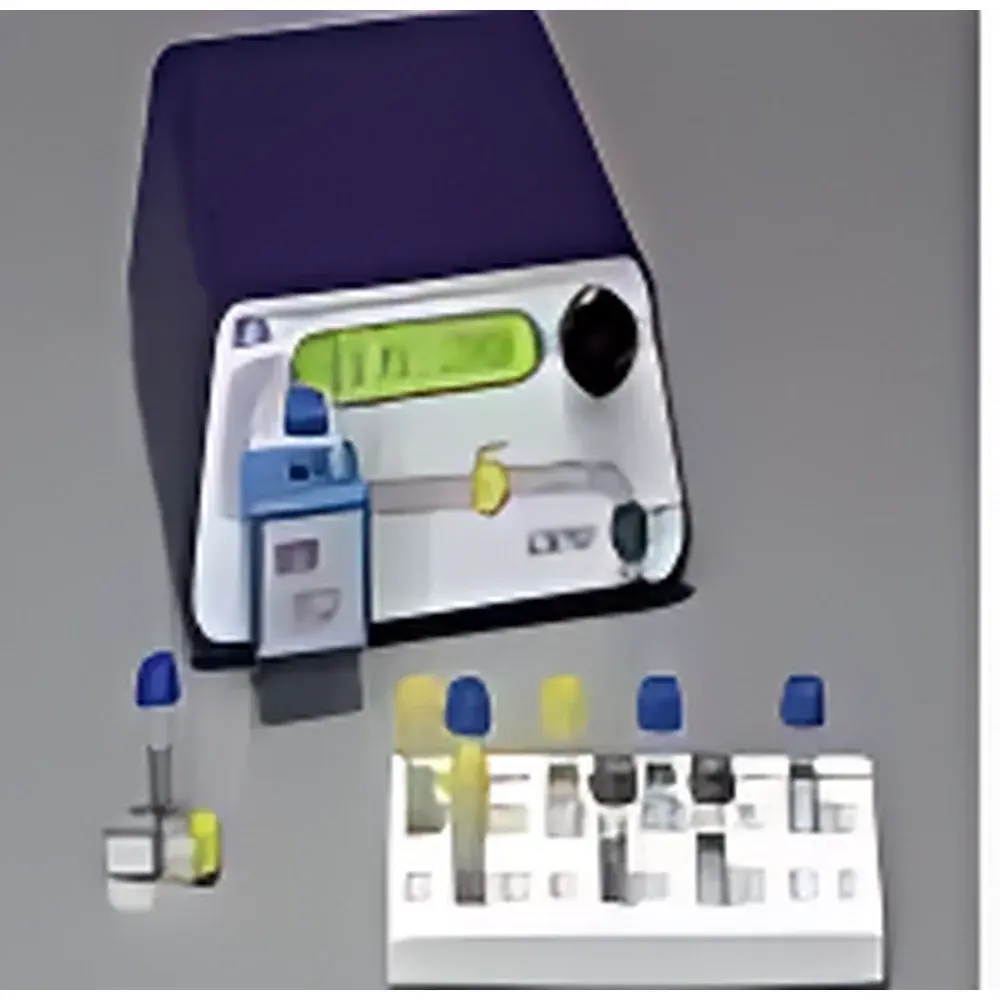
The BTX ECM399 Exponential Decay Wave Electroporator is a benchtop, single-channel electroporation system engineered for reproducible and controlled delivery of nucleic acids, proteins, or other macromolecules into prokaryotic and select eukaryotic cells via transient membrane permeabilization. Operating on the principle of exponential decay waveform delivery—where voltage decays exponentially over time following capacitor discharge—the ECM399 generates defined electric field strengths (E = V/d) across standardized electroporation cuvettes. This waveform is particularly well-suited for bacterial and yeast transformation protocols requiring high-voltage, low-capacitance pulses (e.g., 10–2500 V, 36 µF), while its dual-mode architecture also supports lower-voltage applications (2–500 V, 1050 µF) for certain adherent or suspension mammalian cell lines under optimized conditions. Designed for academic teaching labs and early-stage research workflows, the system emphasizes operational simplicity, real-time voltage monitoring, and intrinsic safety features without reliance on proprietary software or external controllers.
Key Features
- Two selectable operating modes: High-voltage mode (10–2500 V, 10 V increments; 150 Ω internal resistance; 36 µF capacitance) and low-voltage mode (2–500 V, 2 V increments; 151 Ω internal resistance; 1050 µF capacitance)
- Integrated high-resolution LCD display showing real-time peak voltage output and system status indicators
- Hardware-based arc suppression circuitry and short-circuit protection to prevent damage from unintended discharges
- Compact, integrated chassis with built-in handle—designed for portability and space-constrained lab environments
- Compatible with standard BTX electroporation accessories including PEP (Pulse Electrode Platform), safety workstations, and 35 mm dish electrodes
- No external computer or driver software required—fully functional via front-panel controls (power on → set voltage → trigger pulse)
Sample Compatibility & Compliance
The ECM399 supports standard 0.1 cm, 0.2 cm, and 0.4 cm gap electroporation cuvettes (not included), enabling consistent field strength calibration across diverse sample volumes (50–80 µL recommended). It is validated for use with common low-conductivity electroporation buffers (e.g., 10% glycerol in sterile water, sucrose-based formulations) to minimize Joule heating and arcing. While not intended for GMP-regulated production, the instrument’s design aligns with general laboratory safety standards outlined in ANSI/UL 61010-1 and IEC 61010-1 for electrical equipment used in laboratory settings. Its manual operation and absence of audit-trail functionality mean it is best deployed in non-clinical, exploratory, or educational contexts where GLP/GMP traceability is not mandated.
Software & Data Management
The ECM399 operates as a standalone hardware platform with no embedded firmware logging, network interface, or data export capability. All parameter settings are entered manually and not retained between power cycles. No software installation, license management, or FDA 21 CFR Part 11-compliant electronic recordkeeping is provided or supported. Users are responsible for maintaining handwritten or external digital logs of experimental conditions—including voltage, cuvette gap, buffer composition, cell type, and post-pulse recovery protocol—to ensure experimental reproducibility and traceability per institutional biosafety and research integrity policies.
Applications
- Bacterial transformation (E. coli, Bacillus spp.) using plasmid DNA or linear fragments
- Yeast transfection (S. cerevisiae, P. pastoris) with episomal or integrative vectors
- Transient transfection of suspension-adapted mammalian cell lines (e.g., Jurkat, K562) under low-voltage, high-capacitance conditions
- Electrofusion of somatic cells for hybridoma development or protoplast fusion in plant biotechnology
- Undergraduate and graduate teaching laboratories for hands-on instruction in gene delivery principles, membrane biophysics, and parameter optimization
FAQ
What safety precautions must be observed when operating the ECM399?
Always operate the unit in a dry, non-conductive environment away from water sources or flammable vapors. Never touch electrodes, cables, or cuvette contacts during or immediately after pulse delivery. Ensure the cuvette lid is fully closed before initiating a pulse. Allow ≥60 seconds between successive pulses to permit internal thermal dissipation.
Why does arcing occur during electroporation, and how can it be prevented?
Arcing typically results from excessive ionic content in the buffer, residual contaminants on cuvette surfaces, insufficient sample volume (<50 µL), or incorrect gap selection. Pre-testing with blank buffer and strict adherence to BTX-recommended cleaning protocols (sterile water rinse → electroporation buffer rinse → UV sterilization → ethanol storage) significantly reduces incidence.
Can the ECM399 be used for CRISPR/Cas9 RNP delivery?
Yes—when combined with low-ionic-strength buffers and optimized voltage/capacitance settings, the ECM399 has been employed in published protocols for ribonucleoprotein (RNP) electroporation into primary T cells and hematopoietic stem cells, though efficiency varies by cell type and requires empirical validation.
Is the ECM399 compatible with cryopreserved cells?
Cells must be thawed, washed, and resuspended in ice-cold low-conductivity buffer immediately prior to electroporation. Direct electroporation of frozen suspensions is not supported and may cause irreversible cuvette damage or inconsistent field distribution.