
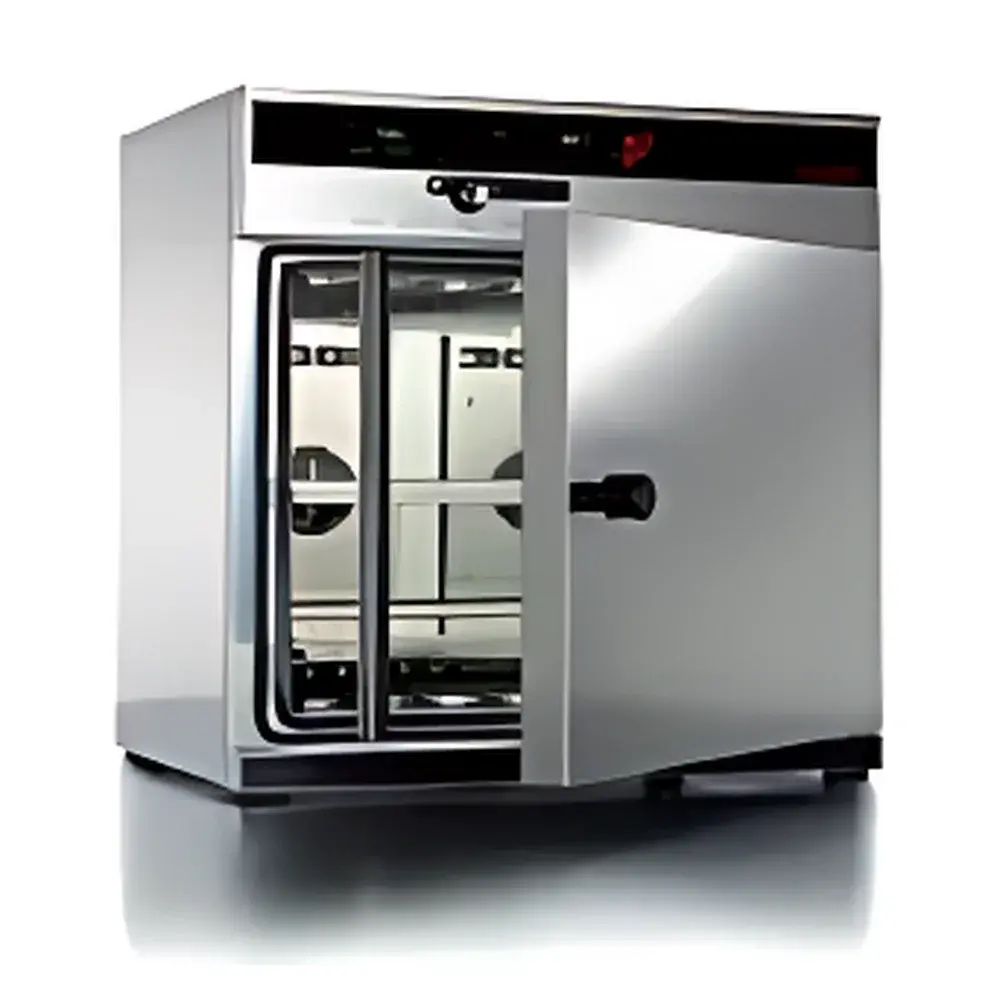
Memmert ICP/IPP Series Low-Temperature Biochemical Incubators
| Key | Origin: Germany |
|---|---|
| Manufacturer Type | Authorized Distributor |
| Origin Category | Imported |
| Model | YIQI030 |
| Price | Upon Request |
Overview
The Memmert ICP (Compressor-Based) and IPP (Semiconductor-Based) Low-Temperature Biochemical Incubators represent precision-engineered environmental control platforms designed for reproducible, GxP-compliant cell culture, enzyme kinetics, protein crystallization, hybridization assays, and long-term sample storage. Built on a dual-technology architecture—ICP models employ high-efficiency refrigeration compressors with gas-jacketed thermal regulation, while IPP units utilize solid-state Peltier elements for silent, vibration-free operation—the series delivers stable, contamination-minimized conditions across defined temperature ranges. Both lines operate on a proven P-type digital controller architecture enabling ±0.1 °C setpoint resolution and real-time feedback-driven thermal management. The gas-jacket system in ICP models eliminates internal condensation and desiccation risks by isolating the chamber from evaporative cooling mechanisms, ensuring optimal humidity retention without active humidification hardware. All units conform to DIN 12880:2015 for incubator performance validation and are CE-marked per Directive 2014/30/EU (EMC) and 2014/35/EU (LVD).
Key Features
- Gas-jacketed (ICP) or forced-air convection (IPP) thermal regulation systems engineered for rapid equilibration and spatial uniformity
- Dual-layer door construction: tempered inner glass panel + outer stainless-steel shell minimizes thermal bridging and enables non-invasive visual monitoring of light- and heat-sensitive specimens
- Stainless-steel interior and exterior (AISI 304) with electropolished finish—resistant to corrosion, compatible with laboratory-grade disinfectants, and compliant with ISO 14644-1 Class 5 cleanroom maintenance protocols
- Adjustable air circulation speed (10% incremental steps via controller) ensures optimized convective heat transfer without mechanical stress on delicate cultures
- Integrated intelligent defrost cycle (ICP only) prevents ice accumulation on evaporator surfaces while preserving chamber integrity and extending service intervals
- Optional programmable fluorescent lighting (ICP models only) simulates diurnal cycles with spectral output calibrated to photobiological standards (e.g., CIE S 026)
- Full data traceability: embedded logging memory, removable MEMory Card XL (40-stage capacity), and Celsius FDA-Edition software supporting 21 CFR Part 11 audit trails and electronic signatures
- Standard RS232 interface plus optional RS485 daisy-chain capability (up to 16 units) for centralized lab-wide monitoring and control
Sample Compatibility & Compliance
The ICP and IPP series accommodate diverse biological and chemical sample formats—including Petri dishes, multiwell plates, flasks, vials, and custom fixtures—without compromising thermal homogeneity. Chamber volume options range from 32 L (IPP200) to 749 L (ICP800/IPP800/IPS749), with configurable shelving (up to 14 stainless-steel perforated trays). Temperature uniformity is validated per DIN 12880 at nine spatial points: ≤±0.3 °C (ICP, 10–37 °C), ≤±0.4 °C (IPP/IPS, 10–37 °C or 18–25 °C). Units ship with factory-issued calibration certificates at 10 °C and 37 °C; optional triple-point certification (0/37/60 °C for ICP; 5/37/60 °C for IPP) satisfies ISO/IEC 17025 documentation requirements. Electrical safety complies with EN 61010-1:2019; electromagnetic compatibility meets EN 61326-1:2013.
Software & Data Management
Celsius FDA-Edition software provides full lifecycle instrument control, including multi-stage ramp-soak programming, real-time graphing, alarm configuration, and automated report generation. The system enforces role-based access control (via V1 user ID cards), electronic signature capture, and immutable audit logs meeting FDA 21 CFR Part 11 Subpart B criteria. Logged data—including chamber temperature, setpoint deviations, error events (H6 fault detection), and external probe inputs (H5/H8)—are exportable in CSV or PDF format. Optional V3 module enables bidirectional communication with MEMory Card XL for offline protocol deployment and post-run data retrieval. All firmware updates maintain backward compatibility with existing validation documentation (IQ/OQ protocols Q1/Q2 available upon request).
Applications
- Cell line expansion and primary tissue culture under tightly regulated hypothermic conditions (e.g., 4–12 °C for stem cell quiescence studies)
- Enzyme inactivation/activation profiling requiring precise thermal transitions (e.g., restriction digest optimization at 25–37 °C)
- Protein crystallization screening across sub-ambient gradients (ICP600–ICP800: –12 to 60 °C)
- Long-term stability testing of biologics and diagnostics per ICH Q5C guidelines
- Controlled environment storage of reagents, antibodies, and nucleic acid libraries
- Material aging studies in electronics QA (e.g., capacitor thermal cycling per JEDEC JESD22-A108)
- Photoperiod-controlled plant tissue culture and circadian rhythm assays (ICP models with R2 lighting)
FAQ
What is the difference between ICP and IPP incubators?**
ICP models use compressor-based refrigeration for broader temperature ranges (down to –12 °C) and higher thermal mass stability; IPP units rely on Peltier technology for ultra-low noise, zero vibration, and energy-efficient operation within 5–60 °C.
Are these incubators suitable for GLP/GMP environments?**
Yes—Celsius FDA-Edition software, integrated audit trail, electronic signatures, and IQ/OQ documentation packages (Q1/Q2) support compliance with GLP (OECD 1998), GMP (EU Annex 11), and FDA 21 CFR Part 11.
Can external temperature probes be connected?**
Yes—optional H5 and H8 Pt100 sensors (NAMUR NE 28 compliant) allow real-time monitoring of sample-level temperatures, with data logged alongside chamber readings.
Is humidity control available?**
These are dry-air incubators; no active humidification is provided. The gas-jacket design inherently maintains stable vapor pressure, minimizing desiccation of open vessels.
What validation support is included?**
Each unit ships with CE declaration, 10 °C/37 °C calibration certificates, and electrical safety test reports. Full IQ/OQ kits (Q1/Q2) and three-point calibration certificates (Z4) are available as accessories.
Related Products





