
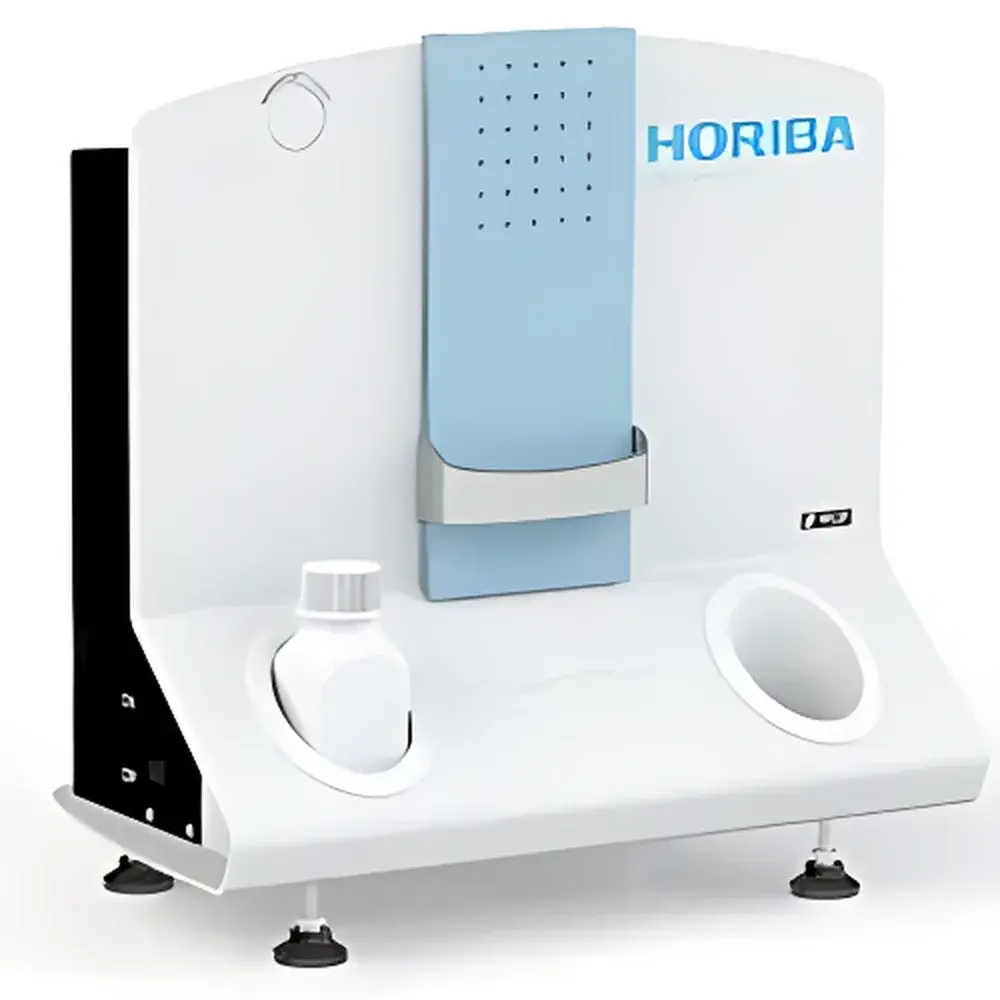
HORIBA SPRi-OpenPlex Surface Plasmon Resonance Imaging System
| Brand | HORIBA |
|---|---|
| Origin | France |
| Model | SPRi-OpenPlex |
| Sample Volume | 200 µL (standard), optional 100/250/500 µL |
| Detection Limit | 10 pg/mm² |
| Minimum Analyte MW | >240 Da |
| Sample Concentration Range | 300 ng/mL (for 100–1000 kDa) to 10 µg/mL (for 4–20 kDa) |
| Temperature Control | Not specified in input |
| Compliance | CE-marked, compatible with GLP/GMP workflows requiring audit trails and instrument qualification |
Overview
The HORIBA SPRi-OpenPlex is a high-content, label-free surface plasmon resonance imaging (SPRi) platform engineered for parallel, real-time analysis of molecular interactions across spatially resolved microarray surfaces. Unlike conventional channel-based SPR systems that monitor one or few ligand-analyte pairs sequentially, the SPRi-OpenPlex employs wide-field optical interrogation coupled with a high-resolution CCD detector to simultaneously capture binding kinetics and affinity profiles across hundreds of immobilized probe spots—enabling true multiplexed interaction screening without fluorescent tags, enzymatic labels, or secondary reagents. Its core measurement principle relies on angular interrogation of the SPR dip under p-polarized light incidence, where changes in local refractive index at the gold-coated sensor surface—induced by mass accumulation during biomolecular binding—are translated into pixel-wise intensity shifts. This enables quantitative, time-resolved mapping of association/dissociation events with sub-second temporal resolution and spatial precision down to ~10 µm per pixel.
Key Features
- True array-based SPR imaging: Simultaneous monitoring of ≥200 independent interaction zones on a single biochip
- Label-free, real-time kinetic profiling: Direct quantification of ka (association rate), kd (dissociation rate), and KD (equilibrium dissociation constant) without signal amplification artifacts
- Flexible fluidic architecture: Open-system design supports user-defined flow paths, custom injection sequences, and integration with external peristaltic pumps or automated sample handlers
- Modular hardware expansion: Optional accessories include SPRi-Array (benchtop contact printing), SPRi-CFM (continuous-flow microspotting), SPRi-Biochips™ (functionalized substrates: CS carboxyl, CO amine, CSe epoxy, COe ethylenediamine, CTg streptavidin, CH hydrophobic)
- Background subtraction engine: On-the-fly referencing using adjacent negative control spots eliminates bulk refractive index drift and non-specific binding contributions
- Temperature-stabilized measurement chamber: Designed for reproducible assays across ambient to physiologically relevant conditions (temperature control range not specified in base configuration but compatible with external thermal modules)
Sample Compatibility & Compliance
The SPRi-OpenPlex accommodates a broad spectrum of analytes—from small molecules (≥240 Da) and peptides to full-length membrane proteins, viral particles, and adherent mammalian cells—without chemical modification or labeling. Immobilization strategies are compatible with standard NHS/EDC coupling, streptavidin-biotin tethering, thiol-gold chemisorption, and passive adsorption. All SPRi-Biochips™ are manufactured under ISO 13485-certified processes and validated for low non-specific binding. The system supports compliance with regulatory frameworks including FDA 21 CFR Part 11 (when used with validated software configurations), ISO/IEC 17025 for testing laboratories, and GLP/GMP documentation requirements through configurable electronic lab notebook (ELN) export and audit-trail-enabled data archiving.
Software & Data Management
SPRi-Lab II™ software provides an integrated environment for experimental design, real-time visualization, kinetic fitting (1:1 Langmuir, bivalent analyte, heterogeneous ligand models), and multi-parameter heat map generation. Raw sensorgrams are stored in vendor-neutral HDF5 format with embedded metadata (timestamp, fluidic event log, chip ID, user annotations). Batch processing supports global fitting across replicate spots and statistical outlier detection. Export options include CSV, Excel, and PNG/SVG for publication-ready figures. Software validation packages—including IQ/OQ documentation, change control records, and cybersecurity assessment reports—are available upon request for regulated environments.
Applications
- High-throughput epitope binning and antibody cross-reactivity screening
- Fragment-based drug discovery (FBDD) with low-MW compound libraries
- Characterization of transient, weak-affinity interactions (KD up to mM range)
- Cell-surface receptor engagement studies using intact primary cells or spheroids
- Development of diagnostic immunoassays and biosensor arrays for pathogen detection
- Structural-functional correlation studies via mutational scanning across protein domains
- Quality control of biologics: batch-to-batch comparability, aggregation state monitoring, and stability-indicating assays
FAQ
What is the minimum molecular weight detectable by the SPRi-OpenPlex?
Analytes with molecular weights greater than 240 Da are reliably detected; sensitivity is optimized for proteins, nucleic acids, and glycans in the 4–1000 kDa range.
Can I use my own custom biochip substrates?
Yes—the open-fluidic architecture and standardized chip holder accept third-party gold-coated glass slides with compatible dimensions (75 × 25 mm); however, HORIBA-validated SPRi-Biochips™ are recommended for reproducible kinetic modeling.
Is the system compliant with FDA 21 CFR Part 11?
When deployed with SPRi-Lab II™ software configured in “regulated mode” (including electronic signatures, role-based access control, and immutable audit trails), the system meets core technical requirements for Part 11 compliance; full validation support is provided under separate service agreement.
How is temperature controlled during assays?
The base system does not include active thermal regulation; however, it is mechanically and electrically compatible with external Peltier-based stage controllers or incubation chambers—commonly deployed for cell-based or temperature-dependent binding studies.
What sample volume is required for a full 200-spot assay?
With the standard 200 µL loop and optimized flow dynamics, one injection cycle suffices for simultaneous interrogation of all spots; larger volumes (up to 500 µL) may be selected for extended association phases or multi-step regeneration protocols.
Related Products





