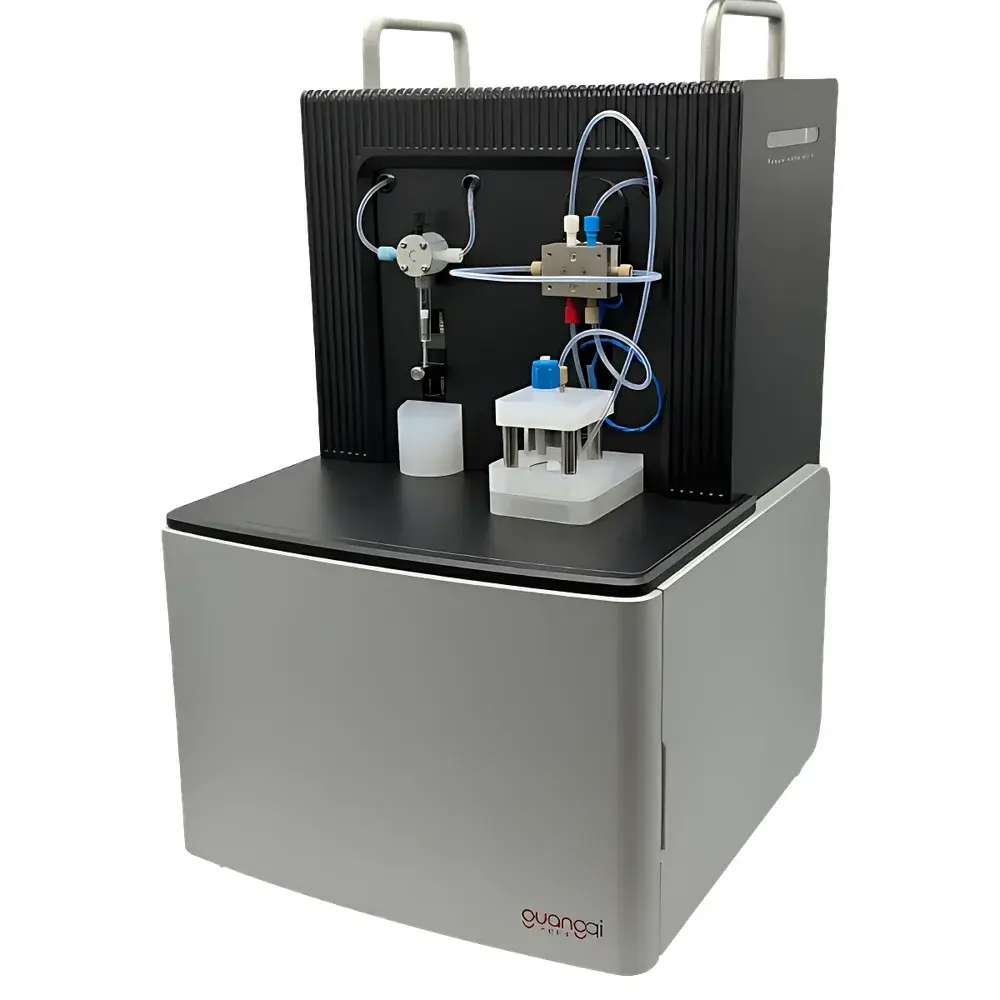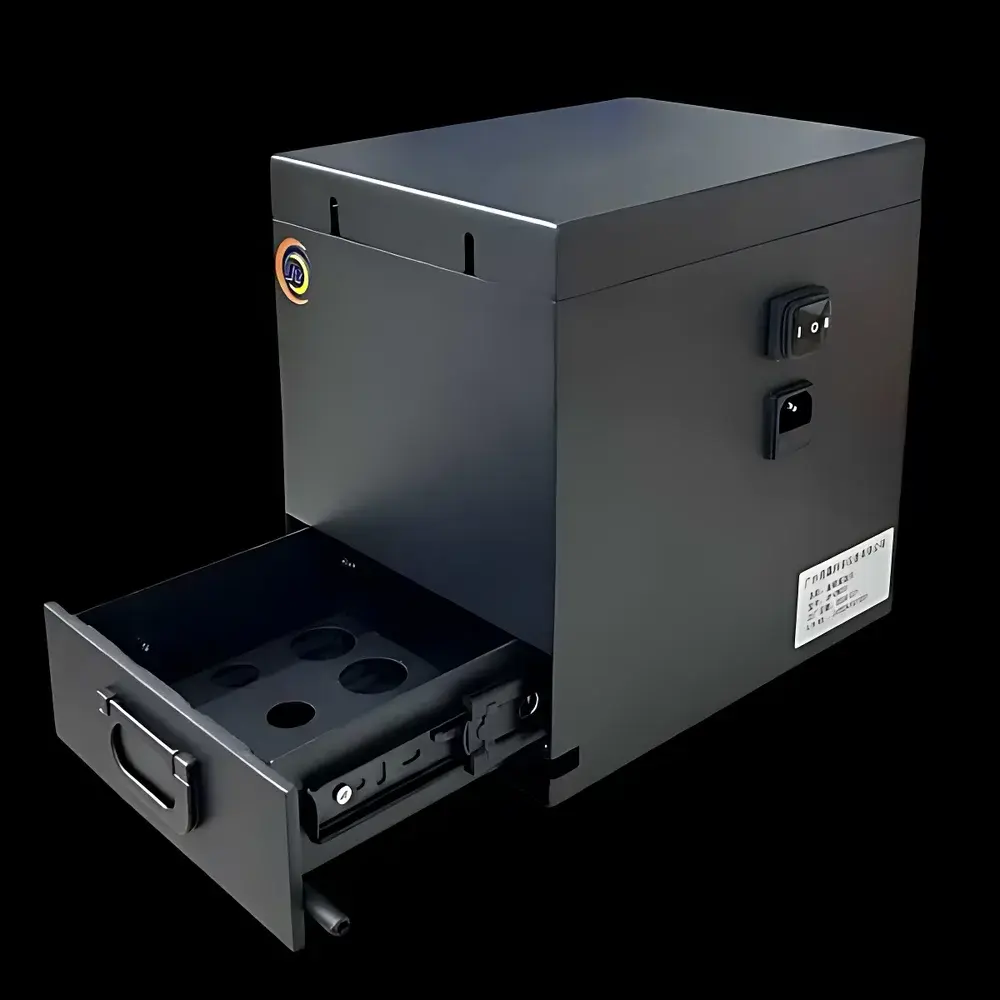
Jingying JY-CM001 Metallographic Etching System
| Brand | Guangzhou Jingying |
|---|---|
| Origin | Guangdong, China |
| Manufacturer Type | Direct Manufacturer |
| Country of Origin | China |
| Model | JY-CM001 |
| Flow Rate Range | 0–39 mL/min (adjustable) |
| Input Voltage | AC 220 V |
| Operating Modes | Etchant Dispense / Deionized Water Rinse / Standby |
| Safety Design | Closed-loop reagent handling with no manual pipetting required |
| Compliance | Designed for ISO/IEC 17025-compliant metallography labs |
Overview
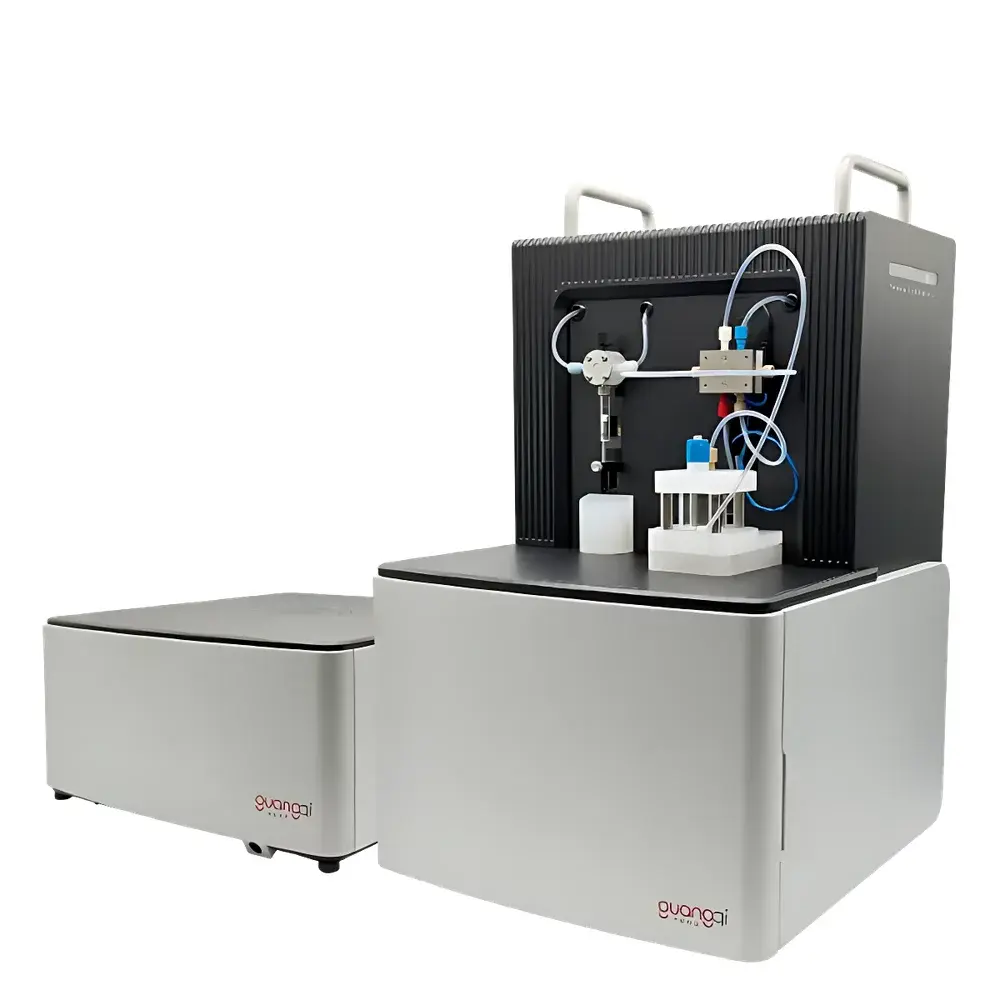
The Jingying JY-CM001 Metallographic Etching System is an automated, benchtop wet-etching instrument engineered for precision sample preparation in metallurgical and semiconductor materials laboratories. It implements controlled chemical etching—primarily via selective dissolution at grain boundaries—to reveal microstructural features such as grain size, phase distribution, twin boundaries, and precipitate morphology in metallic alloys, intermetallics, and compound semiconductors (e.g., GaAs, SiC, and Cu-based interconnect layers). Unlike manual swabbing or immersion techniques, the JY-CM001 delivers reproducible, localized etchant delivery through a calibrated peristaltic dispensing mechanism, minimizing inter-operator variability and eliminating uncontrolled exposure to hazardous reagents (e.g., Nital, Kroll’s, or Murakami’s solutions). The system operates on fundamental electrochemical principles: regions of higher surface energy—including dislocation clusters, grain boundaries, and second-phase interfaces—undergo preferential anodic dissolution in acidic or oxidative etchants, enabling high-contrast optical contrast under reflected-light microscopy.
Key Features
- Automated dual-channel fluid control: Independent, stepless adjustment of etchant and deionized water flow rates (0–39 mL/min), enabling precise dwell time calibration per material class.
- Operator-safe enclosed dispensing architecture: No open beakers or manual dropper use; all reagents are contained within chemically resistant tubing and disposable tip assemblies.
- Three-state mode switching via front-panel toggle: “Etch” (reagent dispense), “Rinse” (ultrapure DI water flush), and “Stop” (system idle with valve isolation).
- Integrated electrical safety compliance: CE-marked power supply with overcurrent protection and grounded chassis design meeting IEC 61010-1 requirements for laboratory equipment.
- Modular consumables interface: Standard Luer-lock connections support interchangeable reagent reservoirs and waste collection vessels compatible with common lab-grade HDPE and PTFE tubing.
Sample Compatibility & Compliance
The JY-CM001 supports planar, polished specimens up to 50 mm × 50 mm × 25 mm (W × L × H), including ferrous alloys (carbon steels, stainless steels), non-ferrous metals (Al, Cu, Ti, Mg), refractory metals (Mo, W), and compound semiconductor wafers requiring post-polish defect delineation. It is routinely deployed in accordance with ASTM E3 – Standard Guide for Preparation of Metallographic Specimens, ASTM E407 – Standard Practice for Microetching Metals and Alloys, and ISO 643 – Steel — Micrographic determination of ferrite grain size. Its closed-fluid-path design facilitates GLP-aligned documentation when integrated into LIMS environments, and its consistent delivery performance supports audit readiness for ISO/IEC 17025 accreditation in accredited testing laboratories.
Software & Data Management
The JY-CM001 operates as a standalone hardware platform without embedded firmware or proprietary software. All operational parameters—including mode selection, flow duration, and sequence logic—are manually controlled via physical switches and calibrated analog dials. This design prioritizes robustness, electromagnetic immunity, and long-term serviceability in high-humidity cleanroom or wet-bench environments. For traceability, users may log settings in external electronic lab notebooks (ELNs) compliant with 21 CFR Part 11 requirements; optional USB-connected digital timers or programmable logic controllers (PLCs) can be interfaced externally for SOP-driven batch processing.
Applications
- Grain boundary delineation in austenitic stainless steels prior to ASTM E112 grain size analysis.
- Revealing eutectic phases and interdendritic segregation in aluminum-silicon casting alloys.
- Identifying carbide network distribution in tool steels after heat treatment.
- Defect mapping on polished SiC power device substrates using optimized HF/HNO3-based etchants.
- Quality assurance in wire bonding pad metallization (e.g., Au/Ni/Cu stacks) where over-etching must be avoided to preserve interfacial integrity.
FAQ
What types of etchants are compatible with the JY-CM001?
The system is compatible with aqueous and alcohol-based etchants—including Nital (2–5% HNO3 in ethanol), Kroll’s reagent (1–3% HF + 1–3% HNO3 in water), and Murakami’s solution—as long as they do not degrade silicone or fluoropolymer tubing (standard configuration: platinum-cured silicone for etchants; FEP-lined for aggressive acids).
Can the JY-CM001 be used for electrochemical etching?
No. The JY-CM001 performs only chemical (non-electrolytic) etching. It does not supply bias voltage or current regulation; it is not designed for electropolishing or anodization applications.
Is calibration certification available?
Flow rate calibration is performed at factory using gravimetric methods traceable to NIST standards; a certificate of conformance is included with each unit. Users may perform periodic verification using timed volumetric collection into a Class A graduated cylinder.
What maintenance is required?
Daily: Rinse fluid paths with DI water after use. Weekly: Inspect tubing for cracking or swelling; replace peristaltic pump tubing every 6 months under typical usage (≈200 hr/year). No lubrication or internal electronics servicing is required.