
XRISM-x X-ray Non-destructive Testing Simulation Software
| Origin | USA |
|---|---|
| Manufacturer Type | Authorized Distributor |
| Origin Category | Imported |
| Model | XRISM-x |
| Price | USD 23,500 (approx.) |
Overview
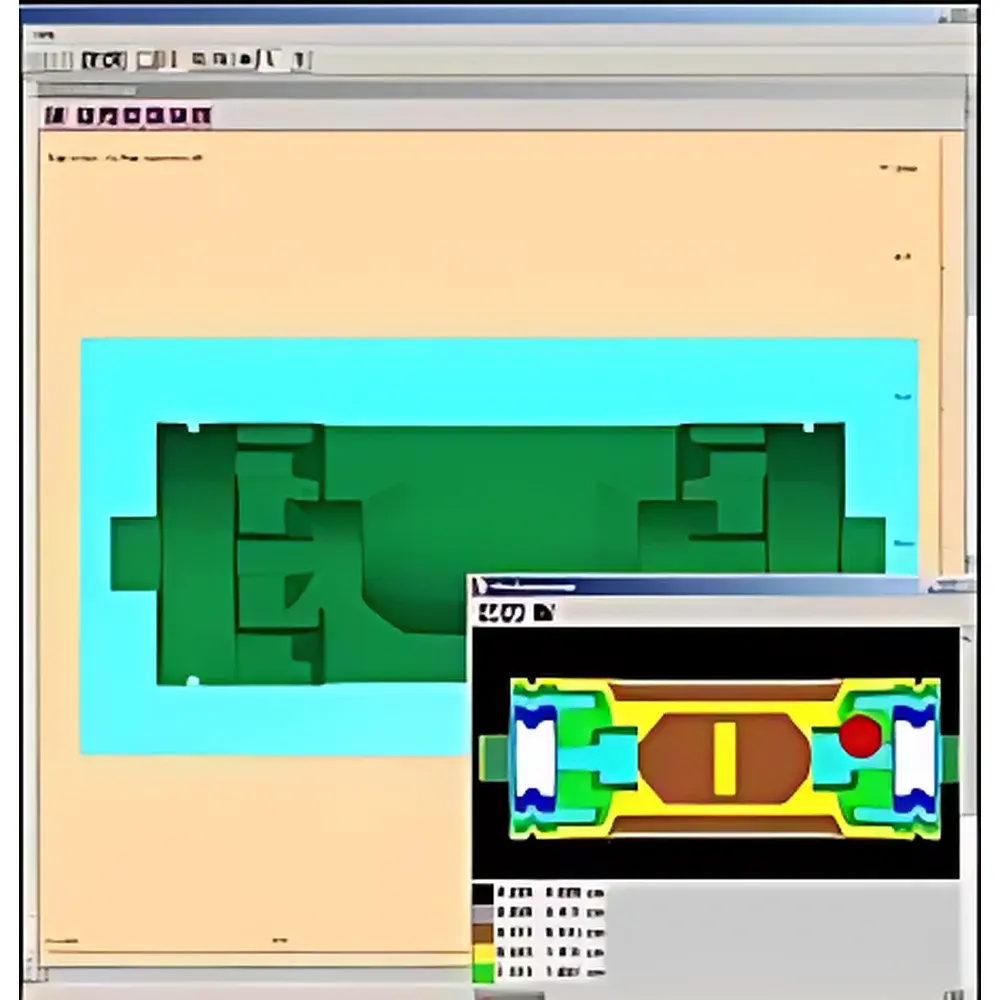
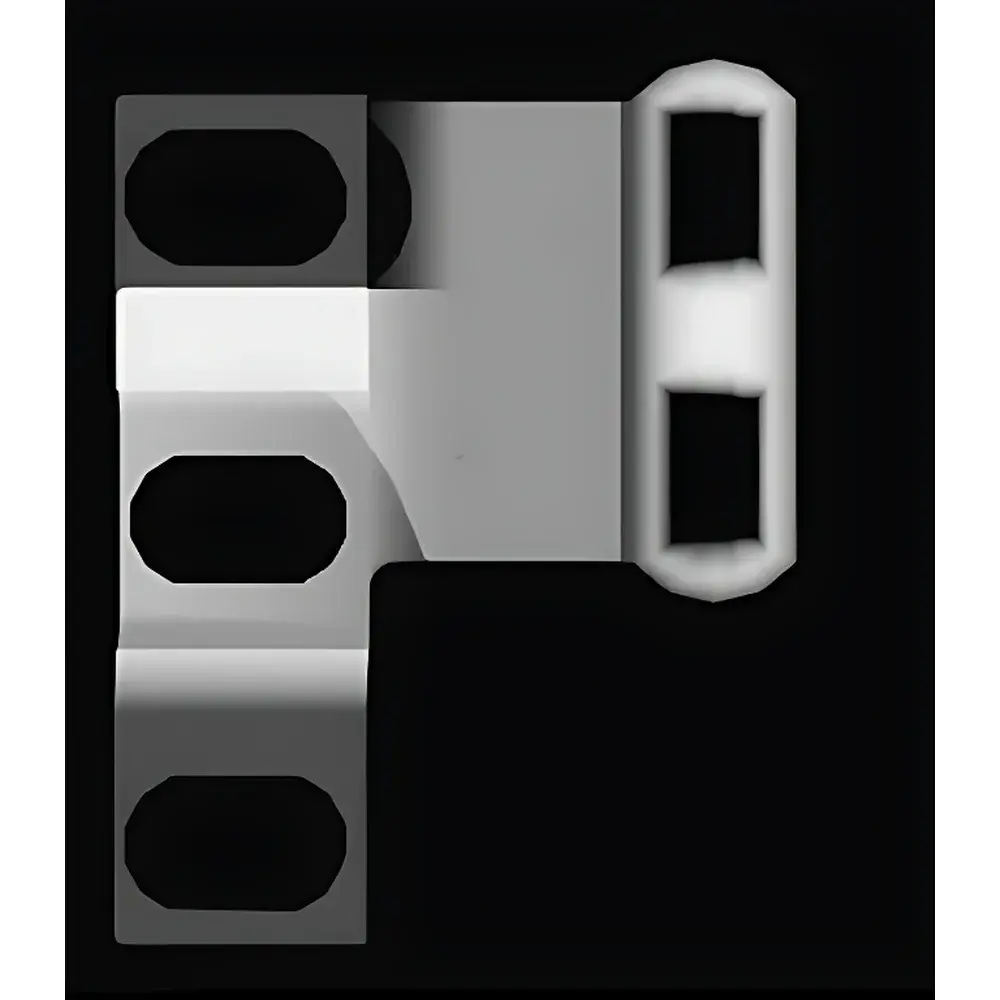
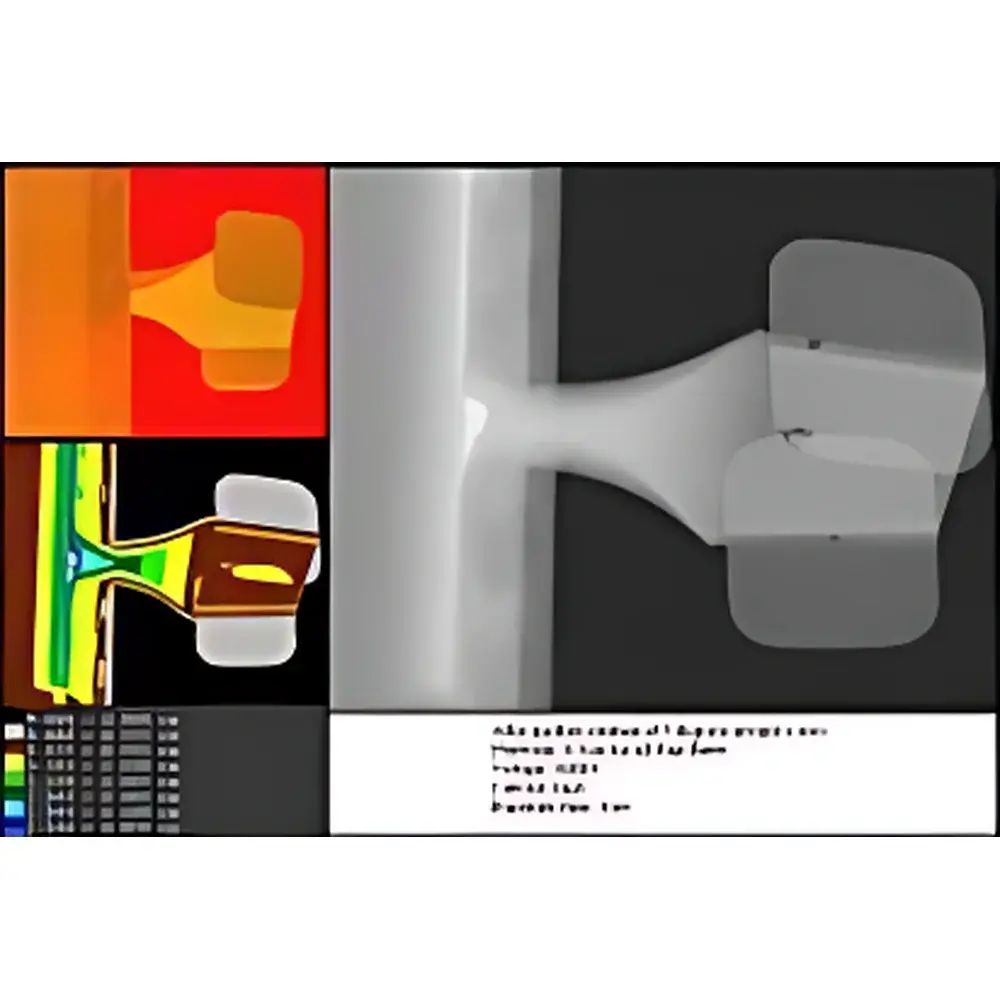
XRISM-x is a physics-based X-ray non-destructive testing (NDT) simulation software developed over 23 years by the Center for NDE at Iowa State University, USA. Engineered for high-fidelity digital radiography and computed tomography (DR/CT) process modeling, XRISM-x implements first-principles radiation transport physics—including photoelectric absorption, Compton scattering, and pair production—governed by the exponential attenuation law and energy-dependent cross-section databases. The software accepts industrial-standard STL geometry files to represent test objects and embedded flaws, enabling predictive simulation of X-ray image formation across diverse source-detector configurations. Unlike empirical or simplified ray-tracing tools, XRISM-x computes spatially resolved energy deposition in detector media—including film emulsion, amorphous silicon flat-panel detectors, image intensifiers, and scintillator-coupled CCDs—accounting for quantum noise, geometric unsharpness, and scatter contribution. Its deterministic Monte Carlo hybrid architecture ensures reproducible results while maintaining computational efficiency suitable for engineering workstations.
Key Features
- Physics-driven simulation engine grounded in fundamental interaction mechanisms between X-ray photons and matter
- Support for multi-part assemblies: up to 20 individual STL components per model, each configurable with up to four discrete flaw types (e.g., voids, inclusions, cracks)
- Configurable X-ray source parameters: anode material (W, Mo, Cu), focal spot size (0.1–5 mm), tube voltage (20–450 kV), filtration, and spectral distribution
- Detector modeling options: film optical density response, digital detector quantum efficiency (DQE), pixel pitch, fill factor, and electronic noise floor
- Low hardware dependency: optimized for standard Windows/Linux workstations (Intel i7/Xeon, 16 GB RAM, OpenGL 4.3+)
- Open API architecture supporting Python scripting for batch parameter sweeps, sensitivity studies, and integration into automated workflow pipelines
- Real-time preview mode for rapid assessment of projection geometry, beam hardening effects, and scatter-to-primary ratio (SPR)
Sample Compatibility & Compliance
XRISM-x accepts triangulated surface meshes (STL format) generated from CAD systems or reverse-engineered scans, enabling direct use of production-representative part models without mesh simplification. Defect geometries—including spherical porosity, planar delaminations, and irregular inclusions—are defined parametrically within the assembly tree. The software supports ASTM E2737-21 (Standard Practice for Digital Radiographic Testing), ISO 17636-2 (Radiographic testing of welds), and aligns with ASME BPVC Section V, Article 2 requirements for simulation-based procedure qualification. While not a certified calibration tool, XRISM-x output meets GLP documentation standards for traceable simulation reports—including full metadata logging of source spectra, detector response curves, and geometry definitions—facilitating internal audit readiness and regulatory review under FDA 21 CFR Part 11 when deployed in validated environments.
Software & Data Management
XRISM-x employs a project-centric file structure (.xrsim) encapsulating geometry, material properties (density, atomic composition), source/detector configuration, and simulation history. All numerical outputs—including grayscale projection images, line profiles, contrast-to-noise ratio (CNR) maps, and detection probability matrices—are exportable in TIFF, CSV, and HDF5 formats. Built-in analysis modules support quantitative evaluation of radiographic sensitivity (IQI visibility), geometric magnification limits, effective focal spot blurring, and coverage mapping for complex curved surfaces. Version-controlled project snapshots enable change tracking across iterative optimization cycles. Audit trails record user actions, parameter modifications, and export events—supporting GMP-aligned validation protocols when integrated into enterprise quality management systems.
Applications
- Optimization of exposure parameters (kVp, mAs, source-to-object distance) prior to physical radiography trials
- Feasibility assessment of flaw detectability under constrained geometry or limited access conditions
- Design of custom IQI configurations and sensitivity benchmarking against ASTM E1025
- Training curriculum development for Level II/III NDT personnel using realistic synthetic radiographs
- Pre-validation of CT reconstruction workflows including beam-hardening correction strategies
- Support for AS9100-compliant process qualification in aerospace component manufacturing
- Rapid iteration of inspection fixture designs to maximize defect coverage on castings, composites, and additive-manufactured parts
FAQ
Does XRISM-x require a dedicated GPU or high-end workstation?
No. XRISM-x is CPU-optimized and runs efficiently on mainstream engineering workstations meeting minimum specifications: Intel Core i7-8700K or AMD Ryzen 5 3600, 16 GB RAM, and OpenGL 4.3-compatible integrated or discrete graphics.
Can XRISM-x simulate pulsed or synchrotron X-ray sources?
XRISM-x currently models continuous-spectrum bremsstrahlung sources from conventional X-ray tubes. Pulsed sources and monochromatic beams (e.g., synchrotron or microfocus monochromators) are not supported in the current release.
Is STL the only supported geometry format?
Yes. XRISM-x imports binary or ASCII STL files exclusively. Conversion from STEP, IGES, or native CAD formats must be performed externally using meshing tools compliant with ISO 5349-2 surface fidelity requirements.
How does XRISM-x handle material heterogeneity, such as fiber-reinforced composites?
Users define bulk material properties (density, effective atomic number) per STL component. Layered or graded materials require explicit segmentation into distinct STL subparts with assigned properties.
Is technical support and software maintenance included?
Annual maintenance contracts include priority email support, version updates, and access to the XRISM-x User Forum hosted by Iowa State University’s Center for NDE.



